Ricardo F. Morín Infinity 28 10“ x 16 ½” Oil on linen 2009
Ricardo F. Morín
March 4, 2026
Oakland Park, Fl
Periods of concentrated authority generate structural pressure. When power is centralized within identifiable institutions, imbalance accumulates in visible form. In imperial systems, authority was embodied in monarchies or colonial administrations whose command over territory and taxation was direct and hierarchical. Constraint could be traced to a center, and responsibility could be assigned to that center.
When constraint is focal, resistance becomes focal. Revolution arises within this concentration. It invokes volition as the capacity to begin anew and to alter institutions through deliberate action. It articulates collective will as capable of remaking arrangements that appear fixed. Because authority is visible and centralized, collective action can be directed toward a specific structure.
Yet revolutionary moments do not emerge outside causation. Industrial dislocation alters patterns of labor. Political exclusion restricts participation. Economic strain intensifies inequality. These pressures accumulate within existing systems and make rupture conceivable. Revolution takes shape within these pressures and remains subject to them even after institutions change. The removal of a regime does not remove the conditions that made opposition necessary.
When centralized authority recedes or is dismantled, power does not disappear. It reorganizes. Control that once operated through territorial command becomes distributed across interacting systems. Production depends on supply chains that cross borders. Financial decisions in one capital affect markets elsewhere. Communication networks link populations in real time. Constraint no longer emanates from a single command structure; it emerges from the interaction of multiple arrangements.
This reorganization alters the terrain of rupture. When authority is concentrated, opposition can focus upon a sovereign center. When authority is distributed, constraint persists across multiple domains at once. Action directed at one site does not dissolve the conditions sustained elsewhere. The object of transformation becomes diffuse because causation is no longer confined to a single locus.
Constraint diffused across systems does not eliminate causation; it multiplies its channels. Structural pressure persists even when its sources are dispersed. What changes is not the presence of constraint, but the manner in which it operates.
Determinism, in this context, does not negate action. It names the continuity of condition across transformation. Institutions may change. Authority may reorganize. Yet causation remains operative within new arrangements. Revolution marks a threshold within structure. Determinism marks the field that structure continues to impose.
When constraint is distributed across interacting systems, civic agency operates within that distribution. Action cannot assume a single locus of control where none exists. Recognition of segmentation becomes part of responsibility. Individual and collective decisions take place within arrangements that no single act can dissolve.
The forms that emerge reflect the interaction between structural condition and human response.
This essay examines abuse as a distortion of entrusted authority within hierarchical life. It traces how authority expands when restraint weakens, how insulation forms through identifiable decisions, and how dispersed responsibility allows misuse to persist. The purpose is to clarify sequence rather than to invoke scandal or moral spectacle.
Authority arises when one person holds decision-making power over another. A parent directs a child. A teacher evaluates a student. A supervisor assigns tasks. An elected official issues orders. In each case, the authority holder receives discretion, which means the capacity to act without seeking approval from those subject to the decision. Discretion allows coordination. Without discretion, hierarchy cannot function. In this essay, authority refers to entrusted discretion assigned for coordination, not to an unlimited right to command. Power, by contrast, refers to the capacity to compel compliance regardless of entrusted purpose.
Discretion requires restraint. Law sets boundaries by defining prohibited conduct. Independent review limits authority by examining decisions. Shared norms discourage conduct that violates expectation. When these restraints operate together, authority remains aligned with its assigned purpose. Distortion begins when one restraint weakens or disappears.
Review weakens when those assigned to examine authority depend upon the same hierarchy for position or advancement. Dependence alters evaluation. A reviewer who risks institutional harm may weigh that harm against corrective action. If preservation appears safer than exposure, the reviewer delays intervention. Delay increases the time during which authority operates without correction.
Norms weaken when questioning authority is treated as disloyal. When disloyalty carries social penalty, individuals hesitate before raising concern. Hesitation reduces the number of reports. Fewer reports reduce information available for review. Reduced information limits corrective response. In this sequence, silence expands discretion.
Expanded discretion alters conditions so that violation becomes visible only later. An authority holder can increase private access under legitimate pretext. Repeated unsupervised interaction lowers perception of irregularity. Lowered perception reduces scrutiny. Reduced scrutiny allows further access. The sequence proceeds incrementally rather than abruptly.
Sexual exploitation of minors reveals this structure in its most asymmetric form. A minor lacks equal agency and depends upon adult control for safety and approval. When an adult initiates sexual conduct under these conditions, the adult converts dependency into leverage. If the minor expects disbelief or punishment, disclosure decreases. Decreased disclosure permits repetition. Repetition consolidates control. The ethical consequence follows from this sequence: a role assigned for protection has been used for domination.
Institutions can reproduce similar dynamics. An administrator receives complaint against a respected employee. Termination may expose the institution to litigation or public criticism. To reduce immediate harm, the administrator reassigns the employee. Reassignment preserves institutional standing. It also preserves access to potential victims. Preserved access permits further misconduct. A decision intended to protect reputation becomes the mechanism through which harm continues.
Several amplifiers intensify insulation without changing the underlying sequence. Wealth and status reinforce insulation through identifiable actions. They narrow disclosure: legal advisors limit disclosure to reduce liability. Communication advisors shape public explanation to maintain standing. Financial stakeholders discourage exposure that threatens shared investment. Each decision reduces transparency. Reduced transparency raises the evidentiary threshold required to initiate investigation. A raised threshold delays review. Delayed review extends unexamined discretion.
Charisma alters evaluation by causing observers to treat visible success as evidence of reliability. When a leader demonstrates visible success, observers associate success with reliability. When allegation arises, observers compare the allegation to established image. If image contradicts allegation, doubt attaches first to the accuser. Doubt slows inquiry. Slowed inquiry protects authority.
Political authority magnifies these mechanisms. An elected leader commands loyalty from supporters. Supporters interpret oversight as threat to collective identity. Legislators who share affiliation hesitate to initiate review because review may weaken political position. Reduced review expands executive discretion. Expanded discretion reduces transparency. Reduced transparency limits correction. Scale changes magnitude, not sequence.
Responsibility disperses across layered roles. One office receives complaint. Another evaluates evidence. Another communicates publicly. Each actor performs a defined task within assigned boundaries. No single actor carries full accountability for outcome. Fragmented accountability lowers the felt cost of inaction. Lower pressure favors procedural completion over substantive correction.
Communities assign cost to dissent. In some settings, questioning elders invites isolation. In others, criticizing leadership risks employment or status. When anticipated penalty exceeds anticipated benefit, individuals choose silence. Silence reduces information flow. Reduced information impairs review. Impaired review allows discretion to persist.
Structural prevention requires interruption at identifiable points. Separate investigative authority from the hierarchy under examination. Limit unsupervised access where dependency exists. Require reporting through defined channels with enforceable timelines. Protect complainants from retaliation through formal sanction. Each measure restores restraint. Restored restraint narrows discretion. Narrowed discretion reduces opportunity for misuse.
After exposure, institutions often adopt reform. New policies increase oversight. Over time, enforcement may relax because urgency declines or leadership changes. Relaxed enforcement returns discretion to previous level. When discretion returns without external review, earlier mechanisms reactivate. Recurrence follows diminished restraint rather than inevitable vice.
Hierarchy and vulnerability remain features of organized life. Authority cannot be removed without dissolving coordination. The decisive condition concerns review. When authority remains subject to review that it does not control, discretion operates within limit. When authority controls its own review or evades it through delay, discretion expands. In that expansion, conditions for abuse reappear.
Ricardo F. Morín Metaphors of Silent Series, Still Twenty-five: The Spectacle of Commemoration Oil on linen & board 12″ × 15″ × 1/2″ 2012
*
Ricardo F. Morín
November 2025
Oakland Park, Florida
Plans for the semiquincentennial of the American founding now include a high-speed race in the nation’s capital city, a wrestling spectacle, the construction of a triumphal arch, and large financial contributions from sponsors whose presence will become visible as part of the spectacle. Public celebration takes shape through the very arrangement of these events. When remembrance is organized around competition, exhibition, and the public demonstration of force, the form of commemoration begins to influence how the memory of the nation is understood.
The present moment does not arise from one figure alone, even when one figure stands at its center. American history shows recurring periods in which expansion unsettles expectations and produces movements that promise restoration. Similar tensions appeared before the Civil War, during segregation after Reconstruction, and again during later populist waves. Each period translated uncertainty into calls for protection framed as defense of the nation.
The anniversary celebrations reveal more than a schedule of events. Contests of speed, staged confrontation, and monumental display place performance at the center of remembrance. Strength appears before an audience and gains meaning through visibility. Victory and endurance become signs that can be witnessed and shared. Celebration begins to resemble enactment rather than reflection.
Exceptionalism has long existed within American public life. At times it expresses confidence in democratic possibility. At other moments it supports claims that the nation, or a particular group within it, stands apart from ordinary limits. When exceptionalism merges with the belief that one identity alone represents the nation’s character, disagreement begins to change form. Debate shifts from negotiation among citizens toward contests over who speaks for the country.
Public commemorations built around competition and confrontation gradually take on the character of ritual. The race emphasizes speed and conquest of space. The wrestling exhibition presents struggle in visible form. The monumental arch promises endurance beyond the present moment. Seen together, the events place strength on display before an audience, allowing performance itself to establish recognition without argument.
Around the same moment, political leaders describe strength and force as the language understood by the world. The statement reflects what the celebrations already display: power presented as spectacle and endurance as proof of legitimacy. Ritual seeks permanence. Monumental construction turns temporary display into physical presence. Naming monuments after a living political leader departs from earlier commemorative habits that allowed time and collective judgment to determine historical recognition.
Executive decisions that advance commemorative construction place monumentality alongside celebration. Structures, names, and ceremonies reinforce one another. Through repetition and visibility, a leader’s presence moves from political contest into historical space.
Democratic life ordinarily accepts disagreement as part of common participation. Citizens argue, negotiate, and change positions while they recognize one another as members of the same political community. When rhetoric presents one movement as the true voice of the nation, disagreement begins to appear differently. Opponents are described less as participants in debate and more as obstacles to survival.
The change becomes visible in debates over immigration. Public discussion often reduces complex realities into a single category, merging legal processes, undocumented status, and criminal accusation into one narrative. Distinctions that once guided policy discussion give way to simplified frames that emphasize exclusion.
Economic pressure forms part of the same landscape. Unionized workers experience competition when employers hire cheaper labor. These concerns arise from observable changes in employment practice. At the same time, uneven enforcement and political framing can convert economic tension into cultural confrontation. Under such conditions, exclusion begins to function as a sign of strength rather than as a policy choice.
Patterns that begin in policy debate extend into public celebration. Financial patronage connects wealth to the commemorative program. Economic power becomes linked to symbolic expression. Participation becomes visible alignment, and spectacle reinforces authority in ways that extend beyond the commemorative stage into other arenas of governance.
Questions about election control now move beyond ordinary debate. In the United States, counties and states traditionally administer elections under a dispersed constitutional structure. Local officials oversee registration, voting procedures, counting, and certification. Claims that local voting systems cannot be trusted challenge this long-standing arrangement. A majority that asserts control over the narrative of legitimacy can extend that control toward the mechanisms that define participation itself. When authority shifts away from local and state systems toward centralized direction, power moves with it. The struggle turns toward who determines the rules of inclusion and exclusion within the constitutional voting system.
Trade policy and alliance relations reflect the same movement beyond domestic institutions. Tariffs imposed through delegated executive authority shift economic relationships away from negotiated reciprocity toward unilateral assertion. Congress retains formal authority over trade, yet statutory delegation allows the executive to act faster than legislative review. Legal procedure remains in place, while the practical balance between branches changes through speed and concentration of decision-making.
Strain within long-standing alliances follows a similar pattern. Partnerships built on shared limits and mutual confidence give way to expectations shaped by pressure and leverage. External posture begins to mirror internal change and extends a preference for centralized authority into the sphere of international relations. The external arena does not introduce a new direction; it reveals the same logic already present domestically.
The consequence reaches beyond any single arena. When control concentrates within domestic institutions, and external relations begin to follow the same pattern of unilateral assertion, the foundation of republican governance changes because federalism and partnership both depend upon distributed authority. Democratic systems rely on limits that prevent any single power from defining legitimacy alone, whether within elections or in relations with other nations. Governance may continue in form, yet the structure that once restrained power may no longer operate in the same way. The transformation appears gradual rather than sudden and unfolds through practice rather than declaration.
American history shows that transitions toward concentrated authority do not announce themselves in advance. Public celebration and institutional change unfold together and appear ordinary to those who witness them. Authority gathers through accepted practices, and institutions continue to operate even as their balance shifts. The movement toward autocracy becomes visible when concentration of power reshapes participation and limits dissent without formal rupture. A totalitarian State does not begin with declaration; it emerges when control over political life becomes normalized and the structures that once restrained authority cease to function as limits.
Ricardo F. Morín Icosahedron 60″x 37″ Oil on linen 2005
Ricardo F. Morín
February 7, 2026
Oakland Park, Fl
The distinction between interpretive language and diagnostic language reveals two different orientations toward reality. Interpretive language organizes perception toward meaning. Diagnostic language exposes structure without directing conclusion. One arranges understanding along a path; the other clarifies the field in which understanding may arise.
Interpretation assumes that experience requires orientation. Relationships are framed so that coherence appears through guided association. Even when presented as open, interpretation tends toward closure because perception is arranged toward resolution.
Diagnostic language operates differently. Ambiguity is neither eliminated nor prolonged; it is delineated. Diagnosis distinguishes conditions rather than resolving them. Explanation yields to observation. Persuasion yields to precision.
Deliberative cognition is frequently mistaken for reverie. Pauses, refinements, and resistance to premature closure may appear as distance from reality. The appearance misidentifies abstraction. Abstraction does not detach thought from reality; it alters the manner of approach. Detachment occurs only when abstraction becomes residence rather than instrument.
A dreamer inhabits possibility through imagination. Someone perceived as having their head in the clouds is judged to have lost practical grounding. Both descriptions describe perception rather than structure. The decisive difference lies in engagement: abstraction used diagnostically sharpens contact with reality rather than replacing it.
A moment during jury selection clarifies this distinction. The question of whether an artist is a portraitist probes not technique but observation. The response dissolves the assumed divide between abstraction and representation. Abstract practice does not reduce proximity to the real. Portraiture and abstraction pursue the same task: perceiving essence. What changes is the mode of access. Abstraction functions as diagnosis: a way of revealing structure without reliance on literal appearance.
Diagnostic writing operates as abstraction operates in visual art. The real is not abandoned. Perception is reorganized so that underlying relations become visible. Narrative direction is withheld. Structure emerges through juxtaposition rather than instruction.
Misunderstanding arises when guidance is expected instead of exposure. Questions that refine perception appear as uncertainty. Delayed closure appears as hesitation. The intention differs: clarity arises from structural recognition rather than interpretive resolution.
An ethic of restraint underlies this approach. Vision and humility remain central yet cannot be declared without dissolving into performance. Once asserted, vision becomes self-promotion and humility becomes display. Both remain implicit, revealed through attention rather than proclaimed through identity. Precision replaces authority. Clarity replaces prescription.
The opposition between realism and abstraction dissolves under this view. Thought does not detach by entering conceptual terrain. Detachment begins when abstraction becomes refuge. Used diagnostically, abstraction becomes passage: movement through uncertainty that returns with sharpened perception.
The question is not whether one is a dreamer or someone with their head in the clouds. The distinction lies in how abstraction is inhabited. Some remain suspended within possibility. Others traverse it deliberately, revealing structures otherwise unseen.
Diagnostic language belongs to the latter movement. It directs nothing and claims nothing. It creates conditions of visibility in which perception clarifies without coercion and understanding emerges without command.
“Geometric Allegory” digital painting 2023 by Ricardo Morin (American visual artist born in Venezuela–1954)
*
Scope and Use
This series constitutes a referential corpus in the Appendix. Its components are organized for consultation rather than sequential reading, and are presented in comparative rubrics that record institutional continuities, modifications, and reconfigurations across the constitutional texts.
Corpus definition: This corpus is limited to constitutions that were formally adopted and entered into force. Constitutional projects, draft constitutions, proposed reforms that were not ratified, and other constitutional texts that did not acquire legal force are excluded. The corpus therefore follows the constitutional order as constituted in law rather than the broader history of constitutional proposals. The corpus functions more like an archive than an argument. It attempts to establish a stable descriptive record of what each constitution contained and how it differed from its immediate predecessor. The consequence is that the corpus remains open to multiple lines of inquiry without privileging any one of them.
Rubric codes:Each rubric carries a permanent identifier in the form FAMILY-MEMBER, capitalized and hyphenated: for example POW-LEG for the legislative power, or REG-SLA for slavery. The family prefixes group rubrics by kind: FND (foundations of the State), CIV (civic status and participation), POW (public powers), ECO (fiscal, economic, and public works), RTS (rights and guarantees), REG (special regimes and institutions), and CON (constitutional self-regulation). These codes denote identity, not sequence: the order in which rubrics appear within any entry implies no precedence, and each constitution presents only the rubrics that pertain to it, in whatever arrangement best suits its text.
Append-only vocabulary: A code, once assigned, is never reassigned or reused. A rubric absent from a given constitution is simply omitted, signifying silence rather than oversight; a rubric that lapses from constitutional life is retired in place and marked with the span of charters to which it applied—thus REG-SLA (1811–1854) is not carried forward after abolition, and its code is never reoccupied. Matters introduced by later charters enter as new members appended to the appropriate family. Comparison therefore proceeds by matching codes across the twenty-five constitutions, not by position on the page.
Citation:References are anchored first on the article number—continuous within each text and therefore collision-proof—followed by the text’s own structural division as a secondary locator, named as that charter employs it (Capítulo and Sección in the 1811 constitution; Título and Sección in 1821). Spanish citations follow the CIDEP recension linked at the close of each entry.
Terms: “Constitution,” “charter,” and “corpus” refer throughout to the documents under study; “entry” and “installment” refer to the published pieces of this appendix. The rubric apparatus describes the former.
Translation Convention
Institutional and technical names are given first in italicized Latinate Castilian and followed by their contemporary Latinate English equivalents in brackets. All constitutional quotations appear in italic type between quotation marks and are rendered in contemporary Latinate English, faithfully preserving the substance and distinctions of the original charters. Comparative references are restricted to 1830 against 1821 and 1857 against 1830. The apparatus retains the classifications cont., cf., and new.
Ricardo F. Morín
June 7, 2026
Bala Cynwyd, Pennsylvania
*
*
A-1). VENEZUELAN CONSTITUTIONS 1811-1999
19th-Century Constitutions:
* *
1). The 1811 Constitution
The 1811 Constitution (Constitución Federal para los Estados de Venezuela) was adopted on December 21, 1811, by the Confederación Federal de Estados Venezolanos [the Federal Confederation of Venezuelan States], and was repealed following its collapse on July 21, 1812. It was promulgated shortly after the declaration of Venezuelan independence [July 5, 1811] and established a federal union of autonomous states under a common national framework.
DOC-PRE—Preamble
(translated by the author in a contemporary register)
“ENACTED by the Representatives of Margarita, Mérida, Cumaná, Barinas, Barcelona, Trujillo, and Caracas, assembled in General Congress
“IN THE NAME OF ALMIGHTY GOD
“We, the People of the States of Venezuela, exercising our sovereignty and seeking to establish among ourselves the best administration of justice, to promote the general welfare, to ensure domestic tranquility, to provide for our common defense, to uphold our liberty and political independence, to preserve pure and inviolate the sacred religion of our forebears, to secure in perpetuity for our posterity the enjoyment of these blessings, and to draw ourselves together in the most steadfast union and sincere friendship, have solemnly resolved to confederate and to form and establish the following Constitution, by which these States shall be governed and administered.”
FND-TER—Territory
The 1811 Constitution defined Venezuela as a confederation of sovereign provinces that retained full authority over their internal government and administration, except where powers were expressly delegated to the national government (Preliminar; Bases del Pacto Federativo). It affirmed that any territories later admitted—whether by division of existing provinces or by subsequent accession—would enter the Union on the same basis of reserved sovereignty (Preliminar; Arts. 128-32). Congress was granted exclusive authority over: foreign relations, common defense, trade regulation, war-making, and national taxation (Preliminar). The charter also imposed strict limits on provincial action: without prior congressional consent, no province could conclude special treaties or alliances, impose tonnage or custom-duties, raise or maintain armed forces in peacetime, or initiate war (Arts. 119-23). Provincial laws had to be submitted to Congress to avoid conflicts with federal statutes, and Congress held exclusive competence to admit or separate provinces and to dispose of national territory and property (Art. 124; Arts. 128-32). Finally, the Union guaranteed to each province a republican form of government, protection of its sovereignty, and—upon formal request—the suppression of internal violence. And in this way, a framework was established for mutual guarantees and collective securities among the provinces (Arts. 133-4; Preliminar).
POW-LEG—Congress (Legislative)
The 1811 Constitution vested legislative authority in the General Congress of Venezuela, composed of a House of Representatives and a Senate (Art. 1, Cap. II). Laws could originate in either chamber (Art. 21), though legislation concerning taxation could only be initiated in the House of Representatives (Art. 22). Enactment of any law required three readings in each chamber on different days (Art. 23). Once passed, laws were submitted to the Executive for promulgation, with procedures established for cases involving objections (Arts. 24–5). Each chamber regulated its internal proceedings, enforced discipline, and exercised exclusive authority over its members (Arts. 18, 26–28).
Representatives were elected every four years by a multi-tiered electoral system involving parish and chapter assemblies (Arts. 3, 6–8); senators served six-year terms and were elected by the provincial legislatures (Arts. 11–13). The Senate judged impeachments brought by the House of Representatives (Arts. 16, 29), and both chambers held shared prerogatives concerning internal order and legislative conduct (Arts. 16, 18). Congress convened annually in a designated capital city, with limited provisions for extending or relocating sessions (Art. 20). Congress held legislative authority over military affairs, taxation, commerce, currency, the postal system, foreign policy, infrastructure, naturalization, bankruptcy, and the establishment of lower courts (Art. 30). The legislative branch embodied the principle of separation of powers and functioned as part of the confederal structure based on the pact among sovereign provinces (Preliminar; Bases del Pacto Federativo).
ECO-TES—Treasury:
Article 108 of Chapter III, Section V designated provincial executive authorities to act on behalf of the Poder Ejecutivo Federal [Federal Executive] in matters not expressly delegated by the Congreso General [General Congress] to other officials in the Armada [Navy], Ejército [Army], or Tesorería Nacional [National Treasury] (Art. 108, Cap. III, Secc. V). The Constitution contained no additional provisions concerning the structure, functions, or oversight of the Tesorería Nacional, nor did it establish a separate fiscal department. The Tesorería Nacional was mentioned only nominally (Art. 71, Cap. II, Secc. VII).
POW-EXE—Executive:
Note on terminology: in cases where the structure of executive power differs, each constitution described in this appendix uses‘executive’ or ‘president’ according to its constitutional context. ‘Executive’ refers to the branch of government that includes the president and the ministerial countersignatures required for the validity of executive acts. ‘President of the republic’, or simply ‘the president’, designates the individual in whom executive power is vested.
Under the 1811 Constitution, the Ejecutivo Federal [Federal Executive] resided permanently in the capital city and was entrusted to a Three-Member Executive Council [the Poder Ejecutivo] chosen every four years (Arts. 72, 75). Candidates had to be born on the American continent (or be Spaniards, who had been there from 1810), had to have lived in the Union during the previous decade, and had to be freeholders of property (Arts. 73, 74). The electors met on 16 November of the electoral year, wrote three names on their ballots (at least one from another province), and forwarded the tallies to the President of the Senate (Arts. 76–79); if no slate obtained an absolute majority of electors, the Cámara de Representantes voted on the nine highest candidates, and, if no majority was reached, it fell to the Senado to elect the candidate (Arts. 81–82). Executive acts required the countersignature of the State’s ministers—Interior and Justice, Finance, War and Navy, and Foreign Affairs—, who were appointed by the Executive and bore responsibility for official measures (Arts. 105, 107–108). The Three-Member Executive Council—with Senate consent—oversaw the appointment of military, civil, and judicial officers; negotiated treaties; granted pardons for political offenses; convoked Congress in ordinary and extraordinary sessions; ensured the execution of laws; and presented an annual account of revenues, expenditures, and general administration (Arts. 86, 88, 92–94, 100–104). The Three-Member Executive Council could be suspended under strict conditions. If the Executive or any of its members was accused and convicted by the Senate of treason, corruption, or usurpation, they were to be removed from office and subjected to the penalties established in Article 58 (Arts. 89, 91, 109).
POW-JUD—Judiciary:
The 1811 Constitution vested the judicial power of the Confederation in a Supreme Court of Justice located in the capital of the Confederation, along with subordinate and lower courts created by Congress (Cap. IV, Secc. 1, Art. 110). The Executive appointed all justices (Art. 111). Congress set their number and required that appointees be licensed lawyers, citizens of good standing, and at least thirty years of age for the Supreme Court and twenty-five for the other courts (Art. 112). Justices received fixed salaries that could not be reduced during their tenure (Arts. 113–114). The Judicial Branch exercised jurisdiction over cases concerning the Constitution, treaties, diplomatic agents, maritime matters, and intergovernmental conflicts, including disputes between provinces, or between Venezuelan and foreign parties (Secc. 2, Art. 115). The Supreme Court exercised appellate jurisdiction in most matters and original jurisdiction in cases involving ambassadors or provinces (Art. 116). It required jury trials in ordinary criminal cases, to be held in the province of the offense or, if committed abroad, in a location designated by law (Art. 117). The Court also examined and approved lawyers nationwide, including those credentialed abroad (Art. 118).
CON-AMD—Amending the Constitution:
The 1811 Constitution permitted amendments when two-thirds of both Cámaras del Congreso [Chambers of Congress] or of the Legislaturas Provinciales [Provincial Legislatures] separately proposed and reciprocally approved a reform or alteration, which would then be incorporated into the Constitution (Cap. VI, Art. 135). The constitutional provisions remained in effect until such reciprocal approval was finalized (Art. 136). Each province was to express its decision—whether to accept, reject, or propose modifications to the Constitution—through specially convened asambleas [assemblies], by electores de capítulo [chapter electors] appointed for that purpose, or by votantes parroquiales [parish voters] forming primary assemblies for the election of representatives (Cap. VII, Art. 137). Once the text had been read before the provincial body and modifications adopted by majority vote, its observance was to be solemnly sworn, followed within three days by elections of national representatives conducted by the designated electors (Art. 138). The municipalities reported the results to the respectivos gobiernos provinciales [respective provincial governments], which then transmitted them to Congress upon its assembly (Art. 139). Provinces rejoining the Confederation were to observe the same procedures; if prevented from doing so at the time by urgent or insurmountable causes, they could fulfill the requirement later through formal petitions addressed to Congress or the Poder Ejecutivo [Executive] (Art. 140).
CIV-SUF—Suffrage:
The 1811 Constitution granted suffrage to varones libres [free-born males], who were at least 21 years old, or if younger, married, and who resided in the parroquia [parish] where they cast their vote (Cap. II, Secc. 2, Art. 26). In provincial capitals, voters were required to hold property or assets valued at 600 pesos for an unmarried man, or 400 pesos for a married man; in smaller towns, the thresholds were 400 pesos for singles and 200 pesos for married men (Art. 26). Alternatively, voters qualified if they held a degree in the liberal or mechanical arts or owned or leased productive land of equivalent value to those assigned for the respective cases of single or married (Art. 26).
The Constitution disenfranchised those declared insane, deaf and dumb, publicly bankrupt, indebted to the treasury, vagrants, persons under serious criminal indictment, and married persons living apart without legal cause (Art. 27). Parish assemblies appointed one parish elector for every 1,000 inhabitants every two years, and these assemblies were presided over by municipal authorities (Arts. 20–24, 40). Parish electors were required to reside within the electoral district and to meet higher property qualifications, including ownership or assets valued at 6,000 pesos if unmarried or 4,000 pesos if married in Caracas, with proportionally lower requirements in other cities (Art. 28). Public officials, who earned at least 300 pesos annually, were permitted to vote in parish assemblies, and those earning at least 1,000 pesos could vote in electoral congregations, but they were barred from legislative office, unless they resigned their posts and incomes (Art. 29).
Municipal authorities maintained official lists of eligible voters and electors and convened election assemblies on scheduled dates. If municipal authorities failed in convening these assemblies, the citizens gathered on the appointed day to hold elections; however, municipal authorities were prohibited from conducting any other business during these meetings (Arts. 30–38). Public voting stood as a governing principle, while electors presided over parish assemblies and resolved any disputes concerning voter qualifications or electoral procedures, which were subject to final appeal before the provincial legislature (Arts. 41–42).
CIV-CIT—Citizenship:
The 1811 Constitution contained no discrete naturalization clause and no grant of citizenship to foreigners by term of residence. Political membership was framed around free-born men (hombres libres) and exercised through the residence, property, and occupational qualifications of the electoral provisions (Art. 26 ff.).
Foreigners “of any nation” were to be received in the State and to enjoy the same security of person and property as citizens, provided they respected the Catholic religion and recognized the independence and sovereignty of the constituted authorities (Art. 169)—a guarantee of civil protection, not of citizenship.
Durational requirements appeared only as conditions of office and presupposed existing citizenship rather than conferring it: five years’ standing as a citizen to sit in the House of Representatives (Art. 15), and ten years’ domicile for the Senate (Art. 49) and the Executive (Art. 73), the latter also requiring birth in Spanish America, with an exception for peninsular Spaniards resident in Venezuela who had sworn and supported independence (Art. 74). A formal mechanism of naturalization (carta de naturaleza) would first appear in 1821.
RTS-GAR—Rights:
The 1811 Constitution declared that all legitimate political authority originated with the people, in whom sovereignty resided by its very nature and in its first instance (Prelim., Bases del Pacto Federativo). It set forth a broad catalogue of individual guarantees: every citizen had the right to liberty, equality, property, and security; deprivation of liberty or punishment had to occur strictly according to law; no one could be declared guilty except by lawful judgment; and no one could be compelled to testify against himself or his close relatives (Arts. 1, 2, 7, 8, 11).
The Constitution protected an individual’s home from arbitrary intrusion. Also protected was private correspondence, and private papers; it prohibited ex post facto laws, excessive bail, disproportionate penalties, confiscation, torture, and inherited civic or legal privileges—particularly aristocratic distinctions or feudal entitlements (Arts. 3, 9, 10, 13). It also mandated that ordinary criminal trials not initiated by congressional accusation would be conducted by jury, once trial by jury had been established by law, and held in the province where the offense was committed (Art. 117).
Citizens had the right to publish opinions, to bear arms, to move freely among the provinces, to petition the government, and to pursue any lawful occupation. Foreigners could reside in the country and enjoy civil rights under the same conditions as citizens, provided they respected the Catholic religion and Venezuelan independence (Arts. 4, 5, 6, 12). Property could be expropriated only by a law that declared a public necessity and provided just compensation to the owner; no tax or public contribution could be imposed without the consent of the people through their representatives (Arts. 14, 15). Along with these guarantees, the Constitution imposed obedience to the law, service to the public and national defense, and loyalty to the Republic (Arts. 16, 17). Any law contravening the rights set forth in the Constitution was declared “absolutely null and void” (Art. 18).
REG-MIL—The Military:
The 1811 Constitution treated national defense as a civic duty (Art. 178). Congress could raise regular forces only when necessary and could raise militias to suppress insurrections, or repel invasions (Art. 71). Supreme command of land and naval forces was vested in the Three-Member Executive Council (Art. 86); provincial governors acted solely as administrative agents (Art. 108). The 1811 Constitution defined a well-regulated and trained militia composed of citizens as the most secure safeguard of a free state. During peacetime, only a limited permanent force could be maintained with prior authorization from Congress (Art. 178). It affirmed the subordination of military authority to civil power by declaring that citizens not engaged in active service were not subject to military jurisdiction (Art. 176). It further required civil authorization for quartering troops in private homes (Art. 177), and affirmed the right of citizens to possess lawful arms (Art. 179). The Constitution did not provide for provincial armies and imposed no standing military obligations beyond lawful service when summoned (Art. 178).
REG-REL—Religion:
The 1811 Constitution declared the Roman Catholic Church as the sole religion of the Confederation and did not recognize any other faith (Cap. I, Art. 1). This provision retained the exclusive public status of Catholicism already established under colonial law (Recop. Leyes de Indias, Lib. I, Tit. I, Ley 1).
REG-SLA—Slavery:
The 1811 Constitution did not abolish slavery but incorporated the prohibition of the slave trade previously decreed by the Junta Suprema de Caracas [Supreme Junta of Caracas] on 14 August 1810 (Capítulo IX, Art. 202; Gaceta de Caracas, No. 20, 21 Aug. 1810). Prior to the promulgation of the 1821 Constitution [October 6], the Congreso de Cúcuta [Congress of Cúcuta] enacted the Ley de Libertad de los Vientres [Law of the Freedom of the Womb] on 21 July 1821, which established that children born to enslaved mothers from that date onward were to be considered free (Ley del 21 de julio de 1821 sobre la libertad de los nacidos de madres esclavas, Colección de Leyes y Decretos del Congreso de Colombia, 1821, Tomo I, pp. 31–34). These children were required to remain in the service of the enslaver until the age of eighteen and were subject to reimbursement for maintenance costs, as determined by local juntas de manumisión [manumission boards]. These boards were authorized to register eligible births, manage emancipation funds, and supervise the process of coartación (gradual self-purchase).
CON-FIN—Final Provisions:
The 1811 Constitution directed provincial governments to establish schools and integrate indigenous peoples into civic life; it prohibited their compulsory services and recognized communal land ownership (Art. 180). Federal officials’ salaries were to be paid from a common treasury, with no disbursements without legal authorization; direct taxes had to be proportional to population, and provinces were prohibited from granting preferential commercial advantages to their own ports (Arts. 188–189). The Constitution designated January 1, 1811, as the commencement of the Era Colombiana [the Colombian Era], a new civic calendar marking the beginning of the independent republican order (Art. 223).
DOC-CLO—Closing Statement
(translated by the author in a contemporary register)
“Article 228. Until a civil and criminal code is drafted—decreed by the Supreme Congress on the eighth of March last and suited to the form of Government established in Venezuela—the Code that has governed us until now remains in full force in all matters that do not directly or indirectly conflict with the provisions of this Constitution.”
“The Supreme Legislator of the Universe has seen fit to inspire in our hearts the sincerest friendship and union, both among ourselves and with the other inhabitants of the Colombian Continent who wish to join us in defending our Religion, our natural Sovereignty, and our Independence. We, therefore, the people of Venezuela—having freely ordained the foregoing Constitution, which sets out the rules, principles, and objects of our Confederation and perpetual alliance, and invoking God Himself as witness to the sincerity of our intentions while humbly imploring His powerful assistance—do solemnly bind ourselves to observe and fulfill inviolably each and every provision it contains, so that we may forever enjoy the blessings of liberty and the imprescriptible rights that His generous beneficence has granted us, from the moment this Constitution is ratified in the manner it prescribes.”
“We further declare our intention to amend and revise these resolutions at any time, in keeping with the will of the majority of the peoples of Colombia who may choose to form a national Body for the defence and preservation of their liberty and political independence. Any such amendments and adjustments shall be made in due course, by plurality and mutual agreement among ourselves, on all matters directly affecting the general interests of those peoples, as agreed through their lawful Representatives assembled in a General Congress of Colombia, or of any considerable part thereof, and ratified by the constituents.”
“In the meantime, each and every province that has taken part in forming this Union mutually guarantees to the others the integrity of their respective territories and essential rights, pledging their lives, their fortunes, and their honor to that end. We entrust the inviolability and preservation of this Constitution to the fidelity of the Legislative Bodies, the Executive Powers, the Judges, and all officers of the Union and of the Provinces, and to the vigilance and virtue of the fathers of families, mothers, wives, and citizens of this State.”
“Issued at the Federal Palace of Caracas, on the twenty-first of December, in the year of Our Lord eighteen hundred and eleven, the first year of our Independence.”
The Constitution of 1821 (the Constitution of the Republic of Colombia, commonly known as the Constitution of Cúcuta) was adopted by the General Congress of Colombia at Cúcuta on 30 August 1821, ratified that same day, and promulgated by President Simón Bolívar on 6 October 1821. Two texts of 1819 preceded it, which this corpus does not record, as neither satisfied the requirement of entry into force: the Constitution of Angostura [15 August 1819], enacted by the Congress of Angostura for the Republic of Venezuela, and the Fundamental Law of the Republic of Colombia [17 December 1819], which provisionally established the union of Venezuela and New Granada (present-day Colombia and Panama) and which the Constitution of Cúcuta superseded. The new constitutional framework instituted a unified government for these two regions, with the incorporation of the territory of Quito (present-day Ecuador) envisaged though not effected until 1822.
DOC-PRE—Preamble
(translated by the author in a contemporary register)
“IN THE NAME OF GOD, AUTHOR AND LEGISLATOR OF THE UNIVERSE
“We, the Representatives of the Peoples of Colombia, assembled in General Congress, in fulfillment of the wishes of our constituents—to establish the fundamental rules of their union and to create a form of government that secures for them the blessings of liberty, security, property, and equality, insofar as this is possible for a nation just beginning its political life and still fighting for its independence—do ordain and establish the following
“CONSTITUTION”
FND-TER—Territory:
The 1821 Constitution declared that Colombia’s territory comprised the lands of the former Virreinato de la Nueva Granada (Viceroyalty of New Granada) and the Capitanía General de Venezuela (Captaincy General of Venezuela) (Art. 6) and any town liberated thereafter would enter the Republic with equal rights and representation (Art. 7). It ordered a hierarchical division into Departments, Provinces, Cantons, and Parishes (Art. 8) and instructed Congress to create six or more Departments (Art. 150). Each Department was led by an Intendente, the President’s “natural and immediate agent,” who was appointed for a three-year term with powers set by law (Arts. 150-2). Every Province was placed under a Governor, subordinate to the Intendente, and held office also for three years; if the Intendente resided in a Province, he served concurrently as its Governor (Arts. 153-4). The existing colonial-era cabildos, transitioning into municipal councils of the cantons, continued to govern local affairs, while Congress determined their number, boundaries, and functions (Art. 155). Following the 1821 constitutional mandate, Congress’s Ley de DivisiónTerritorial of October 8, 1821, divided the nation into the Departments of Venezuela (capital: Caracas), Cundinamarca (capital: Bogotá), and Quito (capital: Quito).
POW-LEG—Congress (Legislative)
The 1821 Constitution enumerated twenty-six legislative powers—from annual budgets and public credit to war, peace, education, and extraordinary wartime authority (Art. 55 §§ 1–26; new). It fixed the opening of regular sessions on 2 January for ninety days, extendable by thirty, barred adjournment or relocation without bicameral consent, and empowered the Executive to resolve venue deadlocks (Arts. 68–70; new). Each chamber established internal rules for conducting sessions, debates, and deliberations; kept daily journals with roll-call votes upon request; and retained the power to enforce order or impose penalties for disrespect, obstruction, or threats to its proceedings or members (Arts. 56–63; new).
Members, elected by the nation, enjoyed indemnity and personal immunity but could not hold executive, judicial, or administrative office deemed incompatible with legislative service (Arts. 64–67; new). Legislative bills had to be read on three different days in their chamber of origin—first for introduction, second for discussion, and third for approval—unless urgency was formally declared (Arts. 41–43). Revenue bills could only originate in the Chamber of Representatives (Art. 42).
Once approved by both chambers, bills were submitted to the Executive, who had ten days to return objections, or two days in urgent cases; if no response was given within the deadline, or if both chambers reaffirmed the bill by a two-thirds vote, it became law without requiring Executive signature (Arts. 46–50; new). Legislative acts were issued in duplicate, dated, accompanied by an explanation of their grounds, and archived in the chamber of origin (Arts. 51–54; new). In election years, Congress tallied the national ballots for President, Vice-President, and departmental Senators (Art. 71; new). The House impeached high officials (Art. 89), and the Senate tried them, with conviction requiring agreement by two-thirds of the senators present (Art. 101). Procedural features retained from the 1811 charter included the bicameral structure, the origination of tax bills in the lower chamber, the three-reading rule, and specified voting thresholds, including two-thirds majorities for expulsion or censure (cont. 1811 Cap. II §§ 1, 4–10, 59–62).
ECO-TES—Treasury
The 1821 Constitution, consistent with the 1811 charter, did not establish a specific treasury department (continu. 1811 Art. 108). Congress was vested with exclusive authority over the annual budget, management of national property, imposition of taxes and customs duties, and contracting of public debt (Tít. VII, Art. 55 §§ 1–4; new). The President was required to submit annual reports to Congress detailing revenue, expenditures, and fiscal resources (Tít. IX, Art. 129). Fiscal administration was assigned to the Secretario de Hacienda [Secretary of the Treasury], one of five ministerial offices established under the Executive (Tít. IX, Art. 136), with the President authorized to distribute functions among the secretaries in accordance with congressional law (Tít. IX, Art. 137). The Constitution did not define mechanisms for oversight, financial jurisdiction, or audit within the treasury system.
POW-EXE—Executive
The 1821 Constitution vested executive authority in a single Presidente de la República [President of the Republic], elected for a four-year term with the possibility of one immediate re-election, assisted by a Vicepresidente [Vice President], and provisionally replaced in cases of dual vacancy by the Presidente del Senado [President of the Senate] (Arts. 105–112; continu. 1811 Arts. 62–63; cf. 1811: plural executive body). This arrangement replaced the three-member Consejo Ejecutivo [Three-Member Executive Council] established in 1811.
The Constitution established a Consejo de Gobierno [Council of Government] composed of the Vicepresidente, one member of the Alta Corte de Justicia [High Court of Justice], and the five Secretarios de Estado [State Ministers]; the President was required to consult this Council on matters such as declarations of war, treaties, senior appointments, emergency measures, and other issues of gravity, though he was not bound to follow its opinion.
The Council’s deliberations were to be recorded and submitted annually to the Senate (Arts. 133–135; new; cf. 1811: no equivalent consultative body). The President directed the general administration of the Republic and exercised extraordinary powers during foreign invasion or civil unrest, either with prior authorization from Congress or, if Congress was in recess, on his own initiative, provided he convened Congress immediately and limited his actions to what was strictly necessary (Art. 128; new; cf. 1811: no express emergency powers clause).
The Constitution established five Secretarías de Estado—Interior, Relaciones Exteriores, Hacienda, Guerra, and Marina—whose holders served as mandatory countersignatories of presidential acts; no executive act could acquire legal force without the signature of the competent Minister (Arts. 136–138; new; cf. 1811 Arts. 91–92: no explicit requirement of countersignature). Congress held the authority to modify the number of ministries, while the Executive assigned their functions by regulation (Art. 137; new).
The President further commanded the armed forces, enforced laws, supervised elections, promulgated legislation, nominated diplomatic and military officials with Senate approval, and submitted annual reports to Congress on political, military, and fiscal matters (Arts. 113–117, 119–123, 129; new; cf. 1811 Arts. 64, 84, 86: powers previously distributed across other bodies). Several of these provisions extended or reaffirmed earlier principles established in 1811, including the supremacy of civil power, administrative leadership, joint responsibility through ministerial countersignature, protection from arbitrary detention, and the lawful delegation of executive functions (Arts. 113–114, 124–127, 136–138; continu. 1811 Arts. 19–20, 64, 84, 86, 91–92).
POW-JUD—Judicial
The 1821 Constitution preserved the Alta Corte de Justicia [High Court of Justice] and fixed a minimum of five members and reaffirmed eligibility criteria of thirty years of age, active legal practice, and qualification as an elector (Arts. 140–141; continu. 1811 Arts. 110–114). For each vacancy, the President submitted a list of three candidates; from this, the Cámara de Representantes [Chamber of Representatives] selected a shortlist, and the Senado [Senate] made the final appointment.
During congressional recess, the Executive could provisionally fill vacancies (continu. 1811 Art. 142). The Court retained jurisdiction over foreign relations—including embassies, consulates, diplomatic agents, and the Secretaría de Relaciones Exteriores [Minister of Foreign Affairs]—as well as treaty interpretation and conflicts among higher tribunals, with further jurisdictional details to be defined by law (continu. 1811 Arts. 143–144). Justices held offices during good conduct and received fixed, non-reducible salaries (continu. 1811 Arts. 145–146).
The Constitution also authorized Congress to establish tribunales superiores [superior courts] throughout the Republic and to assign their jurisdictions to facilitate timely administration of justice (Art. 147; new). Judges of these courts were to be appointed by the Executive from ternas [lists of three candidates] submitted by the High Court and received the same tenure protections as the high justices (Art. 148; new). Tribunales inferiores [lower tribunals] remained governed by transitional legislation until Congress completed judicial reorganization (continu. 1811 Art. 149). The Constitution also included a provision for Congress to gradually introduce trial by jury in forms and cases it deemed appropriate (Art. 175; new).
CON-AMD—Amending the Constitution
The 1821 Constitution introduced staggered renewal of the Senado [Senate] to prevent constitutional amendments by a Congress that had not undergone partial replacement (Tít. II, Secc. 7, Art. 94; new). Senators were divided into two classes within each departamento [department], with the first class serving four years and the second serving the full eight-year term (Art. 94; new). A lottery held during the Senate’s first session determined which senators would be subject to early replacement (Art. 94; new). Amendments required a two-thirds vote in both the Cámara de Representantes [Chamber of Representatives] and the Senado (Tít. IV, Secc. 1, Art. 190; new). However, no amendment could be proposed until at least half the members of both chambers were renewed through regular elections (Art. 190; new).
The Constitution excluded from amendment the fundamental provisions defining national unity and the form of government, as established in Tít. I, Art. 1 and Tít. II, Art. 2 (Art. 190; new). A full constitutional revision could only take place through a general convention, which could not be convened until ten years had passed or until the national territory had been completely liberated (Tít. VIII, Art. 191; new). Existing laws remained in force insofar as they did not conflict with the Constitution or with laws enacted under its authority (Tít. VII, Art. 188; continu. 1811 Art. 108).
CIV-SUF—Suffrage
The 1821 Constitution retained the system of indirect suffrage by parroquia [parish] and electoral assemblies established in 1811 (1821 Tít. III; cont. 1811 Cap. II), but introduced a more elaborate and hierarchical electoral structure: asambleas parroquiales [parish assemblies] convened every four years in every parish regardless of population (Art. 12; new), presided over by local judges and four reputable witnesses (Art. 13; new), and were responsible for appointing electores parroquiales [parish electors] in open sessions (Arts. 18, 24–25; new).
Voting eligibility required Colombian nationality, either marriage or age over twenty-one, and property or occupational qualifications: ownership of real estate worth at least 100 pesos or independent engagement in a trade, profession, or commerce (Art. 15; new). Although the 1821 text included literacy as a condition, its enforcement lapsed unfulfilled when Gran Colombia dissolved, and a literacy qualification entered Venezuelan electoral law separately in 1840 (Ley de Reforma Electoral, Gaceta de Venezuela, 16 de mayo de 1840; sesiones del Congreso Nacional, 1840).
Disqualifications in the 1821 charter included criminal conviction or pending criminal charges, declared insolvency by competent authority, vagrancy, or engaging in corrupt practices such as buying or selling votes (Arts. 16–17; new). Each parish vote was recorded and sealed for transmission to cantonal councils, which compiled the tallies and declared electors by the highest number of votes or, in the case of a tie, by drawing lots (Arts. 26–28; new), then they forwarded results to the provincial capital (Art. 29; new).
Electors were distributed among cantons based on population—one per 4,000 inhabitants plus one extra for every additional 3,000 inhabitants, with a minimum of one per canton (Art. 20; new)—and had to meet stricter criteria than parish voters: they had to be literate, at least twenty-five years old, and either own property worth 500 pesos, earn 300 pesos annually, the profit of equivalent value, or hold a scientific degree or profession (Art. 21; new). These electors formed the asambleas electorales provinciales [provincial electoral assemblies], which met every four years (Art. 31; new) to elect representatives, departmental senators, and the President and Vice-President (Arts. 30, 34; new). Votes for each office were recorded in separate registers (Art. 35; new).
The results of presidential, vice-presidential, and senatorial elections were sent from parish assemblies to departmental capitals, and from there transmitted to the Senado [Senate] for final verification and proclamation (Arts. 36–38; new). Results of elections for representatives were certified by local authorities and submitted directly to the Cámara de Representantes [Chamber of Representatives] for review (Art. 39; new).
Citizens thus continued to vote in parish assemblies to choose parish electors, who then participated in provincial assemblies to elect members of the lower house; senators were selected by departmental assemblies from lists submitted by the provincial legislatures, and the President and Vice-President were elected by a majority of the departmental assemblies from a list of candidates proposed by Congress (Arts. 30–34; new).
CIV-CIT—Citizenship
The 1821 Constitution retained the provisions of the 1811 charter on citizenship (continu. 1811 Art. 7). It recognized as citizens all free-born men within Colombian territory or abroad to Colombian parents (Art. 4.1; continu. 1811 Art. 7). It also granted citizenship to foreign-born residents at the time of independence and remained loyal to the Republic (Art. 4.2; new). It allowed naturalization by carta de naturaleza (Art. 4.3; new). In addition, the Constitution codified civic obligations and required its obedience by citizens who had to respect authorities, to pay taxes, and—when necessary—to offer their property or lives in defense of the Republic (Art. 5; new).
RTS-GAR—Rights
The 1821 Constitution reaffirmed rights first recognized in 1811. It upheld freedom of expression, permitted citizens to write, print, and publish their thoughts without prior censorship (Art. 156; continu. 1811 Art. 4). It also preserved the right to petition public authorities and to seek legal remedies against violations of property, honor, or reputation (Art. 157; continu. 1811 Art. 5).
The Constitution guaranteed the presumption of innocence and due process (Arts. 158–159; new). In cases of in flagrante delicto, any citizen could perform the arrest, which had to be brought immediately before a judge (Art. 160; new). Warrants had to specify the grounds for arrest, be issued by a competent authority, and be delivered in writing to the detainee (Arts. 161–162; new).
Detainees had the right to communicate freely, unless a judge imposed a restriction of three days at a maximum; both arresting officers and jailers faced penalties for violating these safeguards (Arts. 163–164; new). If the grounds for detention ceased, the authorities had to release the detainee or admit him to bail, and the court was required to disclose the testimony of witnesses within three days (Art. 165; new). Criminal trials had to be conducted by established courts; the Constitution barred ex post facto laws and prohibited self-incrimination and testifying against a spouse or close relatives (Arts. 166–168; new). It protected the inviolability of the home except by judicial order (Art. 169; new), and guaranteed the privacy of correspondence and personal papers unless otherwise provided by law (Art. 170; new). Judicial decisions had to be reasoned and could be appealed up to three times; judges were forbidden to rule in cases involving their self-interest (Arts. 171–172; new).
The Constitution stated that the infamy of a criminal offense could not extend to the offender’s family (Art. 173; new) and prohibited the military trial of civilians, including the militia, during peacetime (Art. 174; new). Troops could not be quartered in private homes without consent during peacetime (Art. 176; new). It affirmed the right to property, labor, commerce, and industry, and permitted expropriation only when justified by public necessity and then compensated accordingly (Arts. 177–179; new). It also abolished hereditary privileges and noble titles (Arts. 179, 181–182; new). Acceptance of foreign honors required prior congressional authorization (Art. 182; new). Foreign residents received equal protection under the law (Art. 183; new), and the Constitution allowed foreigners, who distinguished themselves in the war of independence, to hold office, even if they did not meet the ordinary citizenship criteria (Art. 184; new).
REG-MIL—The Military
The 1821 Constitution preserved the military framework set in 1811, including congressional control over national defense, reliance on a trained militia over a standing army, civil supremacy over military authority, and presidential command subject to legislative oversight (continu. 1811 Arts. 71, 86, 108, 176–179). It introduced a new provision authorizing the President to assume extraordinary powers during foreign invasion or domestic insurrection, either with prior congressional approval or—if Congress was in recess—on his own initiative, provided he convened the legislature immediately and limited such powers to circumstances of urgent necessity (Art. 128; new).
REG-REL—Religion
The 1821 Constitution maintained Roman Catholicism as the sole public faith and upheld the obligation of public authorities to protect it (Art. 2; continu. 1811 Art. 1). It additionally required the respect of the citizens and resident foreigners to it (Art. 2; new).
REG-SLA—Slavery
The 1821 Constitution did not abolish slavery but retained the prohibition of the slave trade previously codified in 1811 (Tít. IX, Art. 124; continu. 1811 Cap. IX, Art. 202). It empowered Congress to enact laws concerning the condition of enslaved persons and manumission under its general authority to legislate on all matters “conducive to the wellbeing of the general public” [todo lo que conduzca a la felicidad general] (Tít. VII, Art. 55 §26; new), without any further provision.
ECO-INF—Infrastructure
The 1821 Constitution codified the State’s responsibility to promote public education, support the advancement of science and the arts, and regulate commerce and agriculture (Tít. IX, Arts. 160–161; new). It also required Congress and the Executive to enact laws aimed at improving national industry and general prosperity (Art. 161; new). To support these objectives, the Executive had to submit to Congress an annual report of national income and expenditures, which served as a fiscal mechanism to finance public functions (Tít. VII, Art. 129; new). The Constitution further mandated the publication of the national budget to ensure transparency in the administration of public funds. These provisions replaced the more general statements on education and commerce found in the 1811 charter (1821: Tít. IX, Arts. 160–161; Tít. VII, Art. 129; new. 1811: Arts. 108, 133, 135).
CON-FIN—Final Provisions
The 1821 Constitution was formally adopted by the General Congress of Colombia and signed by its president, vice president, and all present deputies at the Villa del Rosario de Cúcuta on 30 August 1821 (Acta de Sanción, Villa del Rosario, 30 de agosto de 1821). And it was promulgated and executed by the Executive on October 6, 1821, bearing the signature of President Simón Bolívar and the countersignatures of the Minister of Navy and War [Secretario de Marina y Guerra], Pedro Briceño Méndez, the Minister of Finance and Foreign Affairs [Secretario de Hacienda y Relaciones Exteriores], Pedro Gual, and the Minister of Interior and Justice [Secretario de Interior y Justicia], Diego B. Urbaneja.
Ricardo F. Morín Dodecahedron 60″x 37″ Oil on linen 2005
Ricardo F. Morín
June 12, 2026
Bala Cynwyd, Pennsylvania
All living entities persist through relations. No organism exists in complete isolation from the conditions that sustain it. Life proceeds through continuous exchanges with surrounding environments and with other living systems. These exchanges need not be deliberate, conscious, or symbolic. They need only permit the registration of differences and the adjustment of behavior in response to them.
Communication emerges within this condition. It is not limited to speech, writing, or symbolic expression. More broadly, communication arises through correspondence, within which differences are registered and relations are established, maintained, or modified. Signals constitute one manifestation of such correspondence, but the forms through which correspondence occurs vary widely. Chemical gradients, electrical impulses, physical gestures, vocalizations, and symbolic systems all participate in communicative processes under different conditions.
Language occupies a distinct place within this broader field. Human language permits abstraction, symbolic reference, recursion, and the transmission of information beyond immediate circumstances. These capacities expand the range of what can be communicated. They do not, however, constitute the origin of communication itself. Rather, language represents a specialized manifestation of communicative processes that already operate throughout living systems.
The distinction is important because language often becomes identified with communication as such. Human beings naturally experience the world through linguistic categories and therefore tend to privilege language when considering the conditions of understanding. Yet much of what sustains relational life occurs without language. Organisms coordinate, adapt, compete, cooperate, and respond to changing conditions through forms of correspondence that precede symbolic representation.
Differences among communicative systems are differences of form, scope, and complexity. They do not necessarily imply absolute divisions between categories of existence. A signal that coordinates the movement of a colony, a vocal call that alerts a group to danger, and a sentence describing a future possibility all perform communicative functions despite substantial differences in structure. The means differ. The correspondences through which those differences are registered remain prior to the communicative forms that express them.
Observation permits the study of these processes but remains constrained by the capacities through which observation occurs. Instruments may extend perception, and conceptual frameworks may organize what is perceived, yet description remains distinct from the realities it attempts to describe. Every account reflects both the conditions observed and the limitations of the observer.
For this reason, communication is best approached descriptively rather than hierarchically. Human language possesses distinctive capacities, but those capacities do not require communication to begin with language nor to be exhausted by it. Language belongs within a broader communicative field that arises from forms of correspondence present throughout relational life.
The question is therefore not whether communication exists where language is absent. The more instructive question concerns the many forms through which relational life becomes possible before language appears. Attention to those forms reveals communication not as a uniquely human achievement but as a condition through which living systems participate in, respond to, and persist within the circumstances they inhabit.
Long ago Venezuela ceased functioning as a recognizable republic governed through reciprocal law. What remained was the visible shell of a State occupied by criminal patronage networks, military corruption, narcotrafficking structures, paramilitary violence, ideological operatives, and political figures whose survival depended less on constitutional accountability than on protected access to force, money, and fear.
Government institutions continued functioning publicly while losing legitimacy internally. Courts remained. Elections remained. Ministries remained. Official speeches remained. Yet the relation between institutional language and lived reality fractured. Citizens learned to navigate contradictions that would once have appeared intolerable: corruption without consequence, violence without accountability, elections without trust, legality without reciprocity, patriotism fused with extraction.
The country did not collapse into chaos through sudden rupture. It normalized degradation step by step while preserving the appearance of institutional continuity. That was the true danger. Not disappearance of structures, but their survival after recognizability had already deteriorated within them.
Ten years ago Americans could still treat Venezuela as distant pathology, a failure belonging to another political culture. That illusion no longer holds.
The executive culture surrounding Donald Trump exposed mechanisms Americans once assumed constitutional tradition alone would prevent: attacks against institutional legitimacy, pressure upon electoral credibility, demands for personal loyalty over civic obligation, normalization of disinformation, contempt toward procedural restraint, degradation of judicial independence, and transformation of political identity into permanent grievance mobilized through resentment, fear, and spectacle.
The danger does not reside in resemblance alone. It resides in normalization. Citizens adapt. Language adapts. Institutions adapt. Contradictions that once produced alarm become explainable. Then tolerable. Then routine. What once appeared disqualifying becomes incorporated gradually into ordinary political life.
This does not make the United States Venezuela. Historical conditions, constitutional structures, federal distribution of power, and civic traditions remain different. But recognizable mechanisms do not require identical outcomes to remain dangerous.
What matters is whether language retains the capacity to name deterioration before deterioration completes its normalization.
Diagnostic anger begins there.
Not because anger possesses truth. Not because anger sanctifies perception. But because certain inequities become too substantial to absorb inwardly without falsification. Under such conditions, indifference demands greater distortion than anger.
This anger differs from ideological rage because it does not seek enemies as emotional nourishment. It seeks recognizability. It attempts to restore proportion between language and consequence after public discourse has begun dissolving that relation through euphemism, procedural theater, tribal loyalty, intimidation, propaganda, and institutional cowardice. It confronts conditions whose normalization depends precisely upon weakening direct recognition.
That is why diagnostic anger remains fundamentally different from violence even when severe in expression. Violence seeks domination, humiliation, submission, or destruction. Diagnostic anger seeks exposure. It attempts to invalidate conditions that permit inequity to harden gradually into accepted reality while institutions continue speaking the language of democratic legitimacy.
Some words divide because they dehumanize. Other words reveal divisions already operating beneath institutional language designed to conceal them. A political culture may continue invoking democracy while reorganizing itself around concentrated executive power, selective legality, disinformation, personal loyalty, and fear administered through permanent agitation. Under such conditions, excessive moderation in language becomes another form of concealment.
This does not authorize hysteria, fabrication, or totalization. The prose must preserve distinctions within the anger itself. The nouns must remain earned. The mechanisms must remain observable. The pressure must remain tied to recognizable conditions rather than rhetorical intoxication. Otherwise anger loses diagnostic force and becomes spectacle.
Yet once rigor is maintained, anger acquires another function. It protects language from surrendering completely to euphemism. Every deteriorating civic order develops vocabularies designed to neutralize recognition: stability, security, patriotism, emergency, normalization, procedural continuity. Diagnostic anger interrupts that sedation. It restores disproportion to speech where disproportion already exists in reality.
The risk of expressing such recognition openly is not merely reputational. The greater risk may lie in refusing expression once recognition has already occurred. Euphemism then ceases being caution and becomes inward cooperation with distortion itself.
That was always the deeper danger.
Venezuela demonstrated how collapse normalizes itself while continuing to speak the language of legitimacy. The lesson was never confined to Venezuela alone.
“Geometric Allegory” digital painting 2023 by Ricardo Morin (American visual artist born in Venezuela–1954)
AUTHOR’S NOTE
This installment examines recurring political and institutional patterns within Venezuelan constitutional history across five sections and an appendix. Sections I through V trace the relationship among territorial conditions, constitutional design, and the concentration of authority across successive constitutional periods. The appendix presents Venezuela’s constitutional frameworks comparatively through standardized rubrics organized chronologically, drawing exclusively from official compilations available through CIDEP, Centro de Investigaciones y Estudios Políticos: https://www.cidep.online/constituciones.
Ricardo F. Morín
February 21, 2026
Oakland Park, Fl
*
Chapter XX
*
The Ultimate Issue
Constitutional Form and Its Hollowing
I
Venezuela’s constitutional history grew from conditions that existed before the republic itself. Colonial society was not a formal caste system, yet it was deeply hierarchical, structured through distinctions among mantuanos, criollos, pardos, natives, and enslaved people. Political authority took shape through regional loyalties, personal networks, military organization, and uneven relations between local and central administration. These conditions defined the boundaries within which later constitutional arrangements would have to work.
The territory inherited from the colonial period was not merely extensive. It was differentially navigable, crossable by those who moved through it on its own terms, by river and trail and local knowledge, yet resistant to the kind of coordinated administrative reach that republican governance required. Alexander von Humboldt traversed the Orinoco basin and approached the ancient tepui formations of the Amazonian interior between 1799 and 1800, by canoe and on foot, guided by those who knew the land from within. What he documented, governing structures could not administer. The interior was not unreachable in any absolute sense. It was unreachable by the institutional logic that sought to govern it from a distance, through written communication, fixed posts, and hierarchical command. That gap between territorial reality and administrative assumption conditioned every constitutional arrangement that followed.
Vast, hard-to-reach regions prevented consistent coordination between provincial and central authorities. Communication across distances was slow, economic development varied sharply from region to region, and enforcement often depended more on local strongmen than on any continuous national government. The challenge of governing across such extensive and uneven territory came well before the constitutional conflicts of the republican period.
The wars of independence introduced constitutional experimentation into these already difficult conditions. Republican institutions were asked to establish sovereignty, legal continuity, and territorial control while armed conflict was still ongoing. Constitutional frameworks therefore developed alongside war, shifting alliances, regional rivalry, and incomplete administrative integration. Political authority frequently rested less on institutional continuity than on military organization capable of holding territory together under crisis.
The Constitution of 1811 adopted federal principles drawn from the constitutional experience of the United States. Provincial autonomy held a central place in the new order, with sovereignty distributed across regional entities that retained substantial independent authority. Yet its executive structure differed markedly from the American presidential model by establishing a triumvirate with a rotating presidency rather than a single chief executive. The institutional foundations needed to sustain federalism were nonetheless weak. Regional divisions, the difficulty of governing across such unevenly developed land, uneven economic ties, and competing local loyalties limited the central government’s ability to hold authority during crisis.
Successive constitutional periods repeatedly addressed weak administrative coordination by concentrating more authority in the executive. The Constitution of Angostura and later republican developments strengthened central authority under conditions shaped by war, limited accessibility, and incomplete provincial integration. Centralization therefore did not arise from ideology alone. It also reflected repeated attempts to sustain coherent governance where dispersed regional authority could not hold.
The persistent difficulty of governing across extensive territory gradually shifted the relationship between constitutional structure and political power. Reliance on central coordination during war, administrative breakdown, and institutional disruption raised the political importance of executive and military structures. During periods of constitutional collapse throughout the twentieth century, command structures increasingly appeared more capable of maintaining order than prolonged civilian negotiation. Political actors therefore came to favor reorganization through concentrated authority over gradual procedural consolidation.
The recurring emergence of concentrated leadership in Venezuelan political history did not arise from personal ambition alone. It emerged under conditions where constitutional continuity, territorial coordination, administrative integration, and institutional mediation were difficult to maintain simultaneously. Constitutional replacement therefore became not merely a response to disruption but increasingly part of the process through which political authority reorganized governance under new constitutional forms.
II
What began as a crisis response to territorial and administrative difficulty did not remain exceptional. Over successive constitutional periods, centralized authority gradually became the default expectation of Venezuelan political life, the arrangement that political actors reached for not only during emergencies but increasingly as the normal condition of governance itself.
This normalization carried institutional consequences. When centralization operates as an emergency measure, it retains an implied limit: the emergency ends and distributed authority resumes. When it becomes the operating assumption, that limit dissolves. Institutions designed to check, balance, and distribute political authority continued to exist formally, but their practical weight diminished each time concentrated executive coordination proved more effective than prolonged procedural negotiation. The exception, repeated often enough, ceased to feel like one.
Constitutional replacement accelerated this process. Each new framework arrived with the promise of correcting the failures of its predecessor, yet each reorganization also reset the clock on procedural consolidation. Civic habits, administrative routines, and institutional expectations that take generations to solidify were interrupted before they could settle. The result was not simply a sequence of constitutional texts but a pattern in which constitutional change itself became the mechanism through which concentrated authority renewed its legitimacy under fresh institutional language.
By the mid-twentieth century, this pattern had reshaped political expectations at a fundamental level. The question was no longer whether centralized authority was appropriate but which form it would take and under whose direction. Military governments, elected executives with broad emergency powers, and revolutionary movements with constitutional mandates each occupied the same structural position, concentrating authority, reorganizing institutions, and presenting that concentration as the necessary condition for national order. The ideological vocabulary changed across these periods; the underlying institutional arrangement did not.
This was not cynicism on the part of political actors, nor simple authoritarianism. It reflected a genuine and recurring institutional reality: distributed authority had failed visibly and often, while concentrated authority had, at critical moments, held the country together. That experience was real. Yet why that experience produced normalization rather than corrective institutional learning, why repetition deepened the pattern instead of generating the civic and administrative capacity to escape it, cannot be fully explained by structural conditions alone. Cultural circumstances accumulate across generations in ways that resist clean analytical categories. Any account of this sequence, including the one offered here, is an approximation, a diagnostic attempt made in full awareness that the human dimensions of institutional life exceed what structural analysis can recover.
III
During the twentieth century, repeated institutional interruption further expanded the political role of command structures in national governance. Military organization increasingly appeared capable of sustaining order under conditions where civilian institutions struggled to maintain procedural continuity across periods of crisis, transition, and administrative breakdown. The relationship between governance and command therefore acquired growing importance beyond strictly military functions.
Within command structures, authority operates through hierarchy, coordination, speed, and operational discipline. Civilian governance, by contrast, depends on negotiation, procedural restraint, distribution of authority, and continuity across disagreement. Under conditions of repeated constitutional disruption and institutional weakness, centralized command structures increasingly appeared more capable of producing immediate administrative order than prolonged civilian mediation.
This organizational difference gradually reshaped political expectations about governance itself. Reliance on executive concentration during instability expanded the role of centralized authority in constitutional and administrative practice. Political coordination increasingly depended on structures capable of exercising rapid and continuous authority across institutional systems that struggled to sustain procedural continuity on their own.
Twentieth-century ideological movements accelerated these developments by linking political transformation to centralized direction and institutional reorganization. Revolutionary currents throughout Latin America intersected with existing conditions of social inequality, weak institutional continuity, uneven administrative integration, and distrust toward traditional political structures. External pressures, including the political and economic influence of the United States, intensified rather than created these dynamics, sharpening the association between centralized authority and national sovereignty without resolving the underlying institutional difficulty. Concentrated authority continued expanding within constitutional systems where procedural mediation and distribution of power remained comparatively weak.
The reinterpretation of governance through centralized coordination gradually transformed political crisis into recurring institutional reorganization. Different political movements expressed this process through different ideological languages, yet the underlying sequence remained comparable. Constitutional continuity persisted formally while concentration of authority reorganized governance under new institutional structures.
By the late twentieth century, repeated crisis and institutional breakdown had weakened confidence in institutional mediation itself. Political expectations increasingly turned toward concentrated authority animated by promises of restoration, redemption, or revenge.
IV
Repeated constitutional reorganization did not merely alter institutional arrangements. It normalized the conditions under which concentrated authority could expand through constitutional systems rather than against them. Elections continued, legislatures remained constituted, courts retained formal jurisdiction. Yet each of these structures increasingly functioned as the visible surface of governance rather than its operative reality.
The sequence in Venezuela unfolded as procedure, not explicit rupture. Under Chavez, military officers were appointed across every department of the state, not as an emergency measure but as an administrative normality, the command structure and the constitutional structure becoming indistinguishable from within. The Supreme Court was dismantled and reconstituted with justices whose primary qualification was loyalty. The independent press was not abolished by decree but displaced systematically until a single voice for the State’s media occupied the space where public deliberation had been before. Each of these actions was executed through institutional channels, authorized by constitutional language, and presented as the correction of prior disorder.
What Maduro inherited was not merely power but a template. When the opposition won a decisive legislative majority in 2015, the response was not accommodation but erasure. A Supreme Court already stripped of independence annulled legislative acts before they could take effect. When that proved insufficient, Maduro convoked a Constituent Assembly by presidential decree in 2017 and inverted the constitutional provision that only the people held that authority. The assembly that resulted held no genuine electoral mandate, excluded opposition candidates, and proceeded without independent observers. It voted unanimously to assume the full legislative powers of the elected Congress, which it declared without legal standing to govern. The constitution was not suspended. It was inhabited until it became unrecognizable. A democratic safeguard written into the 1999 charter became the instrument of its own negation.
What remained was the criminalization of dissent itself, not as the failure of the constitutional system but as its completion. The distance between constitutional declaration and institutional reality, which earlier periods had left as tension, was closed by force. Those who named the gap were prosecuted for naming it.
V
Constitutional systems may survive repeated political transformation while the conditions required for durable institutional restraint weaken progressively beneath them. Venezuela did not arrive at this point through the absence of constitutional architecture. It arrived through the systematic occupation of that architecture by concentrated authority that had learned, across generations, that the constitution was more useful as a language than as a limit.
That is the recurring tension this series has examined. It concerns not merely constitutional interruption but something more disturbing and consequential: the slow divergence between what a constitution declares and what institutions can actually sustain, visible only in retrospect and legible only when the gap has grown too wide to close without beginning again.
APPENDIX
Introduction
Venezuela’s constitutional history comprises twenty-five constitutions formally adopted and entered into force between 1811 and 1999. Successive constitutional frameworks reorganized authority, redistributed powers, and redefined institutional structures under differing political circumstances.
The Constitution of 1999, often presented as a departure from earlier constitutional models, reorganized institutional authority while preserving arrangements concerning central administration, executive structure, and constitutional redistribution already present in prior frameworks. Its relationship to earlier constitutions therefore reflects both continuity and reconfiguration within the broader sequence of Venezuelan constitutional development.
This appendix was conceived and prepared in bilingual format as a reference instrument for English- and Spanish-speaking readers. Its purpose is not to interpret the historical processes discussed previously, but to present the documentary articulation of Venezuela’s constitutional frameworks through standardized comparative rubrics organized chronologically, so that constitutional language, institutional provisions, and structural organization may be examined across successive constitutional texts.
The materials are organized into four sections: (A) Venezuelan Constitutions (1811–1999), Branches and Departments of Government; (B) Evolution of Political Parties (1840–2024); (C) Selected Laws Enacted by the National Assembly; and (D) A Clarifying Note on Internal Coercion, Foreign Presence, and Intervention, together with the bibliography.
The corpus is limited to constitutions that were formally adopted and entered into force. Constitutional projects, draft constitutions, proposed reforms that were not ratified, and other constitutional texts that did not acquire legal force are excluded. The corpus therefore follows the constitutional order as constituted in law rather than the broader history of constitutional proposals.
Comparison proceeds through a system of permanent rubrics that identify institutional domains across the corpus. Because these rubrics remain stable while constitutional structures, titles, article numbering, and internal organization change over time, provisions may be examined comparatively even when redistributed, renamed, expanded, reduced, or relocated within successive constitutional frameworks. Each constitutional text is therefore treated both as a standalone document and as a moment within a cumulative constitutional sequence.
Except for the charters of 1811 and 1821, Venezuela’s constitutional development since 1830 may be read as a layered record of retention, modification, redistribution, and reintroduction. Provisions frequently reappeared across successive frameworks under altered titles, redistributed competencies, or revised institutional arrangements, often relying on future legislation to define essential structures and procedures. The notations “cont.”, “new”, and “cf.” identify continuities, innovations, and comparative references in terms faithful to the constitutional texts themselves.
A). Venezuelan Constitutions, Branches, and Departments of Government: Chapters III–XV
A-1). Constitutions
The comparative method applied here examines provisions not only for what they establish, but also for what they retain, revise, omit, relocate, or reintroduce from earlier constitutional frameworks. This approach permits the observation of institutional continuities and reconfigurations that may not be apparent from the reading of any single constitution in isolation, including the transfer of matters to ordinary legislation, their later constitutional reappearance, and the redistribution of powers across differing constitutional titles without substantive alteration of their underlying functions.
The documentary sequence that follows permits the constitutional record to disclose its own patterns of continuity, reorganization, redistribution, reformulation, innovation, omission, and discontinuity without historical characterization or editorial inference. Because every constitution is examined under the same permanent comparative rubrics and citation conventions, the resulting relationships arise from the constitutional texts themselves rather than from interpretive description. The evidentiary structure of the corpus therefore allows readers to evaluate the constitutional sequence directly through the documentary record presented.
Ricardo F. Morín Triangulation IV 22″ x 30″ Charcoal, sanguine, white-out and Sumi Ink on paper 2008
Ricardo F. Morín
March 13, 2026
Oakland Park, Florida
*
The place of writing rarely coincides with a desk. Often the work unfolds during a car ride while my husband drives, on the way to a medical appointment or in the middle of an ordinary errand. It may also happen on a train or on an airplane. Movement creates an unexpected space for concentration. Sentences appear in transit: during a journey, while walking, or even while standing during a brief pause in the day. Thought seems to fall into step with motion.
Sentences move naturally from one language to another. A text may be revised or edited in English, Spanish, and Italian almost simultaneously, as if physical movement also released the movement of thought. The journey creates a kind of mental territory where words find their rhythm.
Sometimes writing rises from an even more interior place. It is not unusual to wake in the middle of the night because, while sleeping, an idea or a solution has taken shape with clarity. One simply rises and writes, as if thought had continued its quiet work during sleep.
The familiar image of the writer, however, is still that of someone seated at a desk beneath a lamp, surrounded by carefully arranged papers. It is a comforting, almost ceremonial image. Yet the history of literature suggests something quite different.
Marcel Proust wrote much of In Search of Lost Time lying in bed in a room lined with cork to keep out noise. Something similar occurred with Truman Capote, who described himself as a completely horizontal author and wrote while lying down with pencil and paper resting on his knees. Other writers found their rhythm in movement. Edith Wharton developed her texts while walking and dictating them, and Ernest Hemingway preferred to write standing at an improvised lectern.
These examples recall something simple: writing does not depend on a single ritual or a particular piece of furniture. Each writer discovers a personal balance between silence, movement, attention, and memory. The traditional desk is only one possibility among many.
Perhaps for that reason literature has often been born in unexpected places. In a bed, on a moving train, in a quiet room, or in the middle of a journey. Imagination rarely waits for perfect conditions. It appears where it can and gradually turns any corner into a place of work.
In time one understands that the desk is not the true place of writing. The place is attention. Wherever it appears, any setting may become part of that inner geography where words finally find their form.
Ricardo F Morín Triangulation Series Nº 5: The Quest for an Authentic Prose 37″ x 60″ x 2″ Oil on linen 2006
Ricardo F. Morín
September 18, 2025
Centerville, Massachusetts
Preface
The human leap into abstraction gave birth to language, and with it the possibility of prose. When Homo sapiens began to imagine beyond the visible, they created tools, symbols, and stories that no other species could produce. Yet abstraction, the very source of imagination, remains among the hardest realities to communicate. Writing bears this paradox: it tries to give form to what resists form without obscuring the condition it seeks to render visible.
That struggle is not only technical but deeply human. To write is also to doubt, to question whether one’s voice is adequate to thought; whether one’s grasp of language can sustain the weight of meaning. Under the pressures of expectation and judgment, many writers may ask whether they are impostors, feigning a competence they do not truly possess.
The quest for an authentic prose is bound to this origin. Every age, scribal, print, digital, has tested our ability to express not only information but the inner life that words struggle to hold. Authentic prose does not resolve abstraction; it endures its difficulty while attempting to preserve the lucidity through which a condition becomes perceptible, line by line, revision by revision.
And so the question returns, as it began: have we exhausted our capacity to speak with authenticity, or is the very struggle with expression the mystery that keeps language alive? What opened in the first human imagination remains unfinished, because language eludes finality.
1.
Dissatisfaction has always marked the practice of prose, and it has always required self-editing. Quintilian (ca. 35–100 CE) instructed Roman students to imitate their teachers but warned that imitation must give way to correction: “Imitation is useful, but it must be imitation with judgment” (Institutio Oratoria, 1920). Without revision, he argued, the voice remained borrowed. Medieval scribes copied texts with care but often left glosses in the margins that blurred the line between text and commentary. Readers had to disentangle the author’s hand. With the rise of print, writers demanded proof sheets so they could defend their style against compositor preferences. Erasmus (1466–1536) complained that careless printers “murder books” by imposing their preferences on authors (Correspondence, 1974). Each age produced new tools, and each forced the writer to revise, to discern, and to secure a voice that could be claimed as one’s own.
2.
Later technologies extended this burden. The telegraph compressed sentences into terse signals. Clarity was often sacrificed for speed, and writers had to restore coherence when they expanded the message. The typewriter regularized spacing and rhythm but imposed a mechanical cadence. Henry James (1843–1916) remarked that the typewriter “interposes a metal hammer between the brain and the page” (The Notebooks of Henry James, 1947). In newsrooms, deadlines forced journalists to adopt the inverted pyramid, a structure prized for efficiency but known for flattening voice. Each medium promised advantage, but each introduced distortions. Only deliberate editing allowed prose to remain authentic. Dissatisfaction was not a flaw of these tools. It was the condition under which prose could survive.
3.
Artificial intelligence belongs to this sequence, not apart from it. A question receives an answer, but the exchange never resolves into a single voice that can be owned. One line appears fluent, the next falls into distortion. Prose wavers between clarity and uncertainty. The writer is drawn into testing, correcting, and doubting. The difference is one of scale. Artificial intelligence (AI) fills the page with language detached from origin, and that scale increases the demand for discernment. Much of its output takes the form of compression: context reduced into words that gesture broadly without communicating intent. To accept such compression unexamined is to risk distortion; to unpack it is to reclaim voice. Surveys confirm that grammatical correction remains inconsistent, particularly in rare or complex contexts (Bryant et al., Grammatical Error Correction: A Survey of the State of the Art, 2023). Studies also show that artificial intelligence often overcorrects in an effort to be seamless, yet it produces stylistically distorted prose (Lin et al., 2024), or fails to maintain nuance when handling morphologically complex languages (Nguyen et al., 2025). These deficiencies show that the old burden of revision has not disappeared. It has only been intensified.
Yet discernment is not solely defensive. Artificial intelligence can enlarge the field upon which the writer’s judgment acts by disclosing relations, testing distinctions, proposing objections, and bringing distant bodies of knowledge into comparison. Such enlargement does not transfer authorship to the instrument when intention originates in the writer and judgment remains answerable to experience. The danger lies at both extremes: refusal may preserve familiar habits at the cost of intellectual reach, while submission may obtain fluency at the cost of autonomy. Between them lies a disciplined incorporation through which the instrument extends inquiry without assuming authority over its conclusions.
4.
The uncertainty surrounding artificial intelligence extends into the institutions that teach writing. Universities now advance two opposing postures. One treats AI as a breach of authorship, relying on detection systems that attempt to distinguish human irregularity from synthetic fluency. Yet these systems impose their own distortions: they mistake conformity for evidence and penalize students whose prose does not match the patterns the software expects. The policing thus reveals its own fragility. Other institutions take the inverse view, presenting AI as a neutral instrument meant to optimize expression and support creativity. But this assurance remains unsettled, for neither posture can define with clarity what constitutes a presence on the page when assistance threatens to precede intention. These contradictions show that the cultural setting has not reached agreement on how authentic prose should be recognized or taught. The burden of discernment therefore returns to the writer, intensified rather than relieved.
5.
No writer is exempt from this responsibility. Ease can dull style. Resistance can sharpen it. Hesitation can blur both. Every posture requires accountability. Intent does not absolve anyone. Each sentence must be tested. Each failure must be corrected. Each line must be claimed as one’s own. The practice of self-editing applies to poets and journalists, to scribes and novelists, to humanists and programmers alike. Recent work confirms that even when AI explains grammar, it falters, exposing its limits in linguistic awareness (Song et al., 2024). Authentic prose survives only when every line is tested against the measure of discernment.
6.
What rises on the page may look finished yet remain unsettled. Telegraph brevity, compositor uniformity, or artificial intelligence–generated flow can all produce the semblance of prose without its ground. Authenticity is not guaranteed by refinement, cadence, or economy. A sentence may appear polished yet still obstruct the perceptibility of the condition it seeks to communicate. It depends on the writer’s willingness to revise until intention becomes visible. That is the issue behind every borrowed sentence: whether the line bears the trace of a mind that claims it. Multilingual evaluations confirm that large language models (LLMs) continue to introduce systematic errors in complex linguistic settings (Wisniewski et al., 2025). No system, ancient, mechanical, or digital, can provide the mark of intention. It belongs only to the writer who accepts dissatisfaction as the cost of prose that endures.
7.
Artificial intelligence intensifies this old struggle by mimicking fluency without possessing thought. Its sentences often appear coherent, even responsive, yet their origin is neither conscience nor intention. They arise from statistical patterning constrained by engineers whose priorities are safety, speed, and predictability, not grammar, philosophy, or the interior stakes of prose. What looks like neutrality is therefore engineered neutrality, a posture shaped by constraints rather than by judgment. The result is a style that can imitate tone yet cannot sustain depth: a simulation of reasoning without the risks that give reasoning its force.
8.
This distinction carries consequences for the writer. When artificial intelligence produces language faster than reflection can take shape, the danger emerges before the sentence even appears finished: the instrument’s efficiency can press upon the writer’s own process. The act of compression collapses intention into patterns that merely resemble understanding, narrowing the perceptual aperture through which discernment becomes communicable. This resemblance introduces a risk of substitution, in which the machine’s output precedes the writer’s thought rather than following it. Such displacement narrows the aperture through which conscience operates. What begins as assistance can encourage the writer to accept coherence in place of insight and fluency in place of voice.
9.
The gravitational pull of these systems must therefore be met with boundaries. Attraction lies in the promise of clarity; repulsion lies in the preservation of autonomy. The tension between the two is not a flaw but a condition under which authentic prose can still be written. The writer must think before consulting, draft before refining, and allow the sentence to pass through the discipline of human discernment rather than settling for synthetic coherence. No tool, mechanical or digital, should be permitted to form thought before thought forms itself.
10.
Authentic prose requires attention to this boundary. A sentence may appear refined yet lack interiority; it may be correct yet hollow. No system can supply the tension that gives writing its moral weight: the lived contradictions, the asymmetries of experience, the reckoning with meaning that cannot be mimicked because it is not a pattern. What rises on the page must bear the trace of a mind that has chosen, shaped, and claimed its language. Without that assertion, prose risks becoming inefficient and inauthentic: a surface almost polished but without depth, a neutrality without judgment, a voice without origin.
11.
The question of authentic prose ultimately exceeds technique. It reaches into the structure of conscience itself. For prose does not merely transmit information. It organizes experience, establishes hierarchies of relevance, and determines what may be judged and what must be tolerated. In this sense, language is not an instrument that follows judgment. It is the medium through which judgment becomes possible because it preserves the distinctions through which experience remains perceptible to conscience.
Where language is compressed, standardized, or substituted before reflection takes shape, the danger is not only aesthetic. It is moral. For the freedom most easily lost is not political but cognitive: the capacity to sustain a judgment without deforming experience, without delegating responsibility, and without allowing coherence to replace understanding. Artificial intelligence sharpens this risk by offering fluency in advance of intention. When coherence precedes reflection, the sentence may appear complete while the conscience remains unengaged. What is displaced in this process is not authorship alone, but the continuity between perception, judgment, and action upon which interior freedom depends.
Authentic prose therefore guards more than voice. It guards autonomy. A sentence that bears the trace of intention preserves a space where judgment remains sovereign. A sentence that arrives before intention narrows that space imperceptibly to replace discernment with pattern and responsibility with conformity. The preservation of authentic prose is thus inseparable from the preservation of freedom of conscience itself. Where language no longer serves judgment, the first form of servitude has already begun.
Epilogue
The quest for an authentic prose may be measured against two poles. One treats language as science, aspiring to the exact word, the simplest expression that can bear the grandest truth. The other recognizes that prose began in abstraction, and that no sentence ever escapes its shadow. Artificial intelligence has added a third pressure in the form of compression: context reduced into words that seem fluent yet hover without anchoring intent. Perhaps authentic prose lies not in choosing among these forces, but in holding the tension they create: precision as aspiration, abstraction as condition, and compression as challenge. What opened in the first human imagination remains unfinished, because each revised sentence remains an effort to render experience perceptible without surrendering it to distortion—a steady insistence that the work continues, even in the shadow of doubt.
Annotated Bibliography
Bryant, Christopher, et al: Grammatical Error Correction: A Survey of the State of the Art.Cambridge, MA: MIT Press, 2023. (This survey reviews the strengths and limits of AI in grammatical error correction. It highlights persistent deficiencies, especially in complex or rare error types and shows that even advanced models cannot consistently sustain authentic prose.)
Erasmus, Desiderius: Correspondence. Toronto: University of Toronto Press, 1974. (Erasmus warned that careless printers “murder books” by imposing their preferences on authors. His complaint illustrates how the struggle for authentic prose extended into the print era.)
James, Henry: The Notebooks of Henry James. Chicago: University of Chicago Press, 1947. (James remarked that the typewriter “interposes a metal hammer between the brain and the page;” this noted how technology can shape rhythm and force writers to reclaim nuance through revision.)
Lin, S., et al: Evaluating LLMs’ Grammatical Error Correction Performance in Learner Chinese Errors from a Corpus Linguistic Perspective. San Francisco: Public Library of Science, 2024. (This study shows that AI often overcorrects learner texts and produces grammatically smooth but stylistically distorted prose. It confirms that correction tools may obscure authentic voice.)
Nguyen, Phuong Thao; Nuss, Bernd, Dressler, Roswita, and Ovens, Katie: A Small-Scale Evaluation of Large Language Models Used for Grammatical Error Correction in a German Children’s Literature Corpus: A Comparative Study. Basel: MDPI, 2025. (The authors reveal how AI struggles with morphological complexity and stylistic preservation. Their findings reinforce the need for discernment when editing machine-assisted corrections.)
Quintilian: Institutio Oratoria. Cambridge: Harvard University Press, 1920. (Quintilian advised that imitation must be guided by judgment. His emphasis on correction as the path to authentic voice situates dissatisfaction at the core of rhetorical training.)
Song, Y., et al: GEE! Grammar Error Explanation with Large Language Models.Stroudsburg, PA: Association for Computational Linguistics, 2024. (This paper evaluates whether AI can explain grammatical errors as well as correct them. The results reveal frequent failures in explanation, which expose limits in linguistic awareness and precision.)
Wisniewski, Dawid; Solarski, Antoni, and Nowakowski, Artur: Exploring the Feasibility of Multilingual Grammatical Error Correction with a Single LLM up to 9B Parameters: A Comparative Study of 17 Models. Ithaca, NY: arXiv, 2025. (This comparative study across multiple languages shows that LLMs remain prone to systematic grammatical errors, particularly in complex contexts. The evidence underscores the persistence of deficiencies across linguistic domains.)



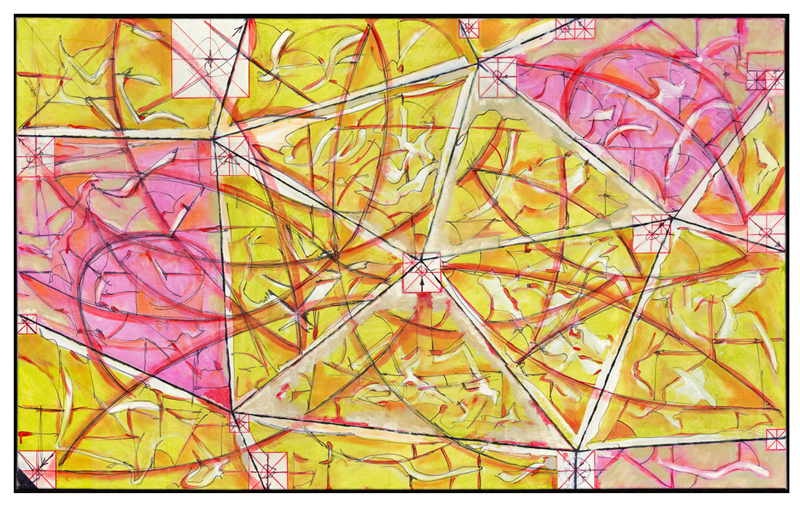
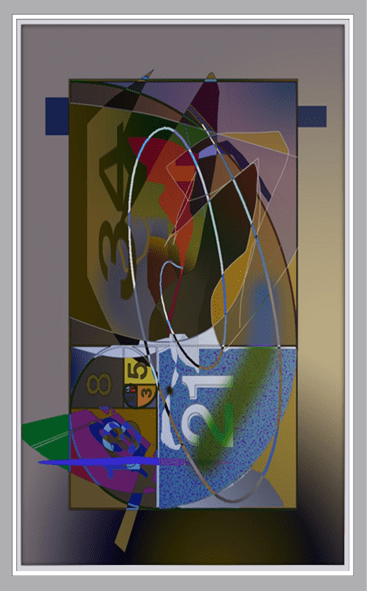
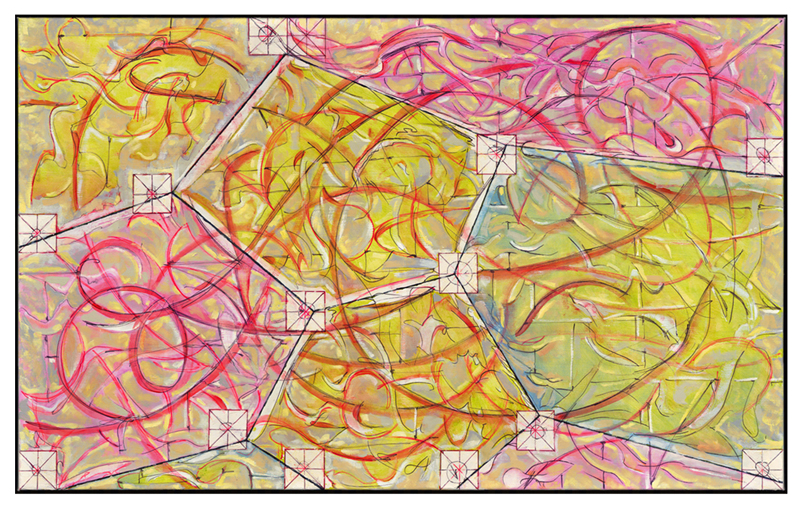

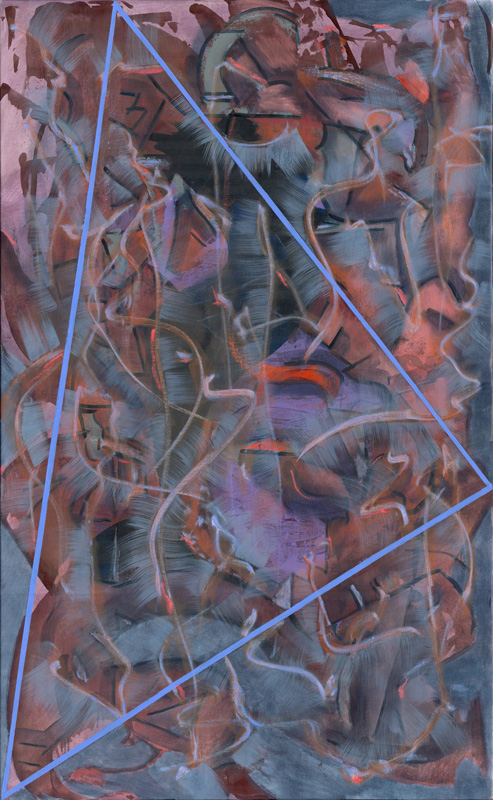
 Observations On Perception