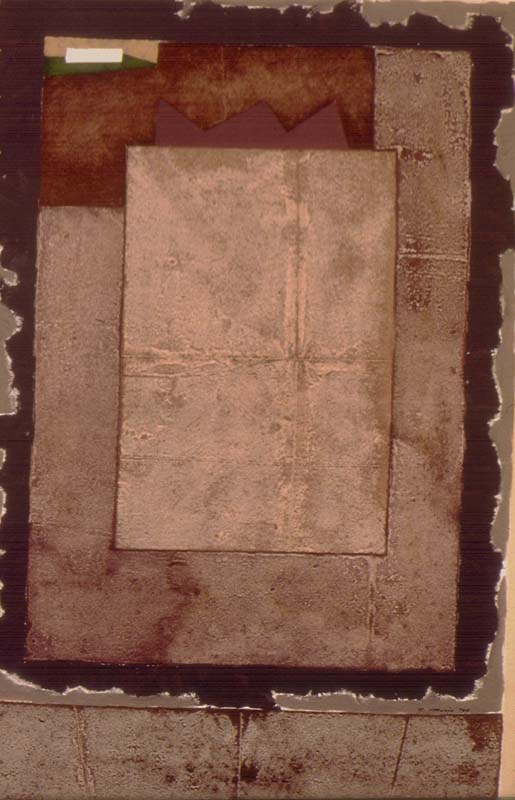
Ricardo F. Morin New York Series, Untitled 24″ x 36″ Oil on canvas 1992
1. A person withdrawn from interruption, judgment, dependency, and noise may begin to believe that solitude clarifies the self. Removed from the continual presence of others, one becomes more aware of habits, memories, reactions, and inward movement ordinarily dispersed through daily relation. Silence appears to gather experience into greater clarity. Yet prolonged isolation reveals something less expected: inward life does not remain still simply because it happens alone.
2. Thought begins circling within its own continuity without resistance. Reflection loses proportion when nothing interrupts it from beyond itself. A memory repeated often enough begins to feel increasingly complete when it is not. A fear unanswered by another perspective deepens within its own enclosure. Even silence changes character. No response arrives. No interruption. Nothing enters from outside oneself.
3. This may be why solitude eventually begins searching for relation again, even where no person is present. The hermit speaks to God, to memory, to nature, or to silence itself. The mind reaches beyond its own enclosure not necessarily from weakness, but because inward life alone cannot fully restore proportion to itself.
4. We do not discover ourselves in abstraction alone. Much of what we call individuality becomes perceptible through relation. Patience, resentment, tenderness, vanity, courage, forgiveness, and responsibility do not fully disclose themselves in separation from others. They emerge through contact, disappointment, affection, misunderstanding, dependence, and care. Another person does not diminish individuality. Something in us becomes more visible in relation than in withdrawal.
5. Communication does not eliminate distance between human beings. It reveals it. No person entirely crosses the interior distance separating one consciousness from another. Suffering, mortality, memory, and perception remain singular experiences. Yet it is often through the effort to communicate that this separateness becomes recognizable at all. We discover how far we remain from one another precisely in the attempt to reach across that distance.
6. Another person is neither an extension of oneself nor a symbolic abstraction. The other remains distinct, vulnerable, and finite. Love therefore cannot consist merely in attachment, possession, or dependence. Its deeper force lies in the capacity to recognize another existence without attempting to dissolve it into one’s own needs, fears, or projections. Compassion arises quietly from this condition.
7. Isolation becomes impossible not because solitude lacks value, but because human life continually reaches beyond private continuity. Even withdrawal retains traces of relation: language, memory, longing, recognition, prayer, imagination. The mind does not merely enclose itself. It responds. Seeks. Recalls. Addresses what remains beyond it.
8. Perhaps this is why the deepest forms of love do not abolish aloneness. They allow it to stand without hardening into enclosure. Compassion does not overcome distance by eliminating difference. Each person remains singular and ultimately unreachable in totality, yet still worthy of care. In that recognition, isolation no longer appears possible as a final condition of human life.
Ricardo F. Morín Golden Landscape 22” x 30” Watercolor and ink 2010
What can be entrusted to fellowship when its meaning is not the same for the people who share it?
No relationship answers this question in advance. Affection may cause unease; silence may preserve a connection or allow it to disappear. Communication begins before either person knows what the encounter will reveal about the bond between them.
Two people may recognize the same bond without giving it the same meaning. For one person, familiarity allows spontaneous contact; for another, connection does not itself grant access. The difference remains hidden while conversation follows familiar paths. It appears when something unexpected enters the relationship: a confidence, a memory, a visit, or a written reflection.
When one person shares something personal, more than content passes between them. Something of an inner life is entrusted to the bond, and the bond itself is placed in the care of both people. The recipient receives what has been shared along with the confidence that the relationship can bear it. That confidence may be moving and may also bring attention, memory, or obligation for which no space has been prepared.
The person who shares gives up control over how the gesture will be understood. The person who receives it must respond to something whose meaning and demands are not yet known. Their vulnerabilities meet but do not match. Neither position reveals the whole meaning of the exchange.
The difference may first appear as discomfort. Irritation, apprehension, pressure, or fatigue search for an explanation and find one in the visible circumstances: poor timing, an unexpected visit, a repeated message, a difficult subject. A rule about how future contact should occur then gives a clear shape to a feeling that is not yet understood.
A limit may become known only when an encounter reaches it. Before that moment, the person who approached could not anticipate it, while the person who felt pressure may not have known how to name it. If the limit is then applied as though it had always been clear, the encounter is judged by terms that arose from the encounter itself.
A rule about future contact may prevent the same disturbance from returning. The visit must be planned, the message preceded by a request, the subject introduced only after permission has been given. These arrangements may make contact possible and also narrow what can enter the relationship. Affection remains, but less of either person’s life is entrusted to the bond.
Grief makes this uncertainty especially visible. After a death, relatives meet while carrying different memories of the same person. Affection, anger, loyalty, resentment, sorrow, and relief may occupy the same emotional space before any of them can be expressed. A visit may carry care and also bring the emotional history of the family nearer. Rules about timing, duration, privacy, or hospitality give practical form to feelings that have not yet found words.
Writing also entrusts something personal to a relationship. A personal essay arrives after its author has already lived with the memories and decisions that shaped it; the recipient encounters everything the text contains at once. Digital media places intimate reflection beside notices, links, and passing remarks. Frequency, length, and placement become immediately visible, while the work and trust placed in the writing remain less apparent.
Prior permission may protect the recipient’s time and attention. It also changes what the relationship is understood to allow. For one person, asking first provides a way for contact to continue; for another, it means that spontaneous confidence no longer belongs to the bond. The same rule can therefore carry a different meaning for each person without resolving what the fellowship itself has become.
People learn what a relationship permits through repeated experience, often before any rule is stated. Children observe which subjects change the atmosphere, which visitors create tension, and which expressions of need cause withdrawal. Without being told, they learn what may be shared, who may approach, and how much closeness the relationship can bear. Through repetition, a response to one event may come to seem like part of the family’s natural order.
Assumptions can enter a relationship before either person knows they are present. Some are imposed from outside through the judgments of others; some are carried into an encounter and left untested. Bias may then shape what is perceived before the gesture has been fully understood. Caution may answer a present circumstance, an earlier experience, or an expectation that has never been tested. Behavior alone does not reveal which possibility is at work.
When the terms of the bond remain unspoken, anticipation may take the place of communication. Subjects are avoided, invitations are withheld, and each person acts according to what the other is expected to refuse. Less is entrusted to the relationship, so the relationship offers less evidence of what it can bear. Limited familiarity sustains caution; caution preserves limited familiarity.
Within this narrowing, a reaction born from vulnerability may become an account of another person’s conduct. An outward rule provides a clear explanation while the feeling that required it remains unexplored. One person may know what cannot be received without yet knowing why. The other may know what was intended without knowing how it arrived. Each knows only part of the encounter.
The bond remains recognizable even when its meaning is no longer shared. Each new gesture arrives marked by what was previously received, refused, or left unanswered. Neither person holds the whole meaning of the relationship. What may be entrusted to it remains uncertain, as does what another encounter might reveal.
Ricardo F. Morín Temple of Zeus Underwater CGI 2003
The siblings had spent many years trying to conclude matters that had survived both of their parents. Their father had died nearly three decades earlier. Their mother died years after him, and even then the responsibilities did not end. Properties remained unsold. Before those matters were completed, another loss entered the family. The middle sister died the year before. Her own property and affairs now had to be incorporated into responsibilities that had already extended across many years.
Old registries and chains of title extending into the nineteenth century carried certifications, seals, and annotations from different decades and governments.
The country itself had changed during the last three decades. Currency and property lost value before transactions could be completed. Offices closed and reopened under different regulations, sometimes even under different names.
To release properties, formalize transfers, and liquidate assets, it became necessary to gather records, certifications, and documentary chains that different offices and fiscal authorities required for review. Procedures stalled among administrative demands, fiscal obligations, and intermediaries capable of accelerating processes that otherwise could remain paralyzed for months. Files accumulated beside seals, signatures, and annotations originating from different decades.
The matters had already extended across months and years. Meanwhile the siblings aged separately on opposite sides of the Atlantic. The oldest, still practicing law in Venezuela, continued moving between courts, registries, and offices in pursuit of unresolved claims and transfers.
At the same time, land previously belonging to the family remained tied to a legal dispute after having been illegally expropriated by the State years earlier. Defending the claim required certifications, archival records, legal filings, authorizations, appeals, and countersuits. Municipal fees, taxes, and procedural costs continued accumulating while the responsibilities themselves remained unfinished.
From outside the country, it was possible to perceive only partially how procedures there changed from month to month and sometimes from day to day. Some introduced further demands. Others became unavailable altogether. Another day had already been spent moving between offices, registries, and courts.
Messages moved constantly between them through calls, forwarded emails, receipts, scanned documents, explanations, and reminders. One sibling asked whether a payment could still be completed before another increase in tax fees made the transfer even more burdensome. The reply listed offices already visited that week and certifications still missing. Before the question returned again, the exchange had shifted toward an earlier disagreement others believed had already been resolved.
The second oldest, who had left Venezuela many years earlier, explained to one sibling that reminders concerning powers of attorney were meant to prevent delays. To another, he explained that unanswered messages were beginning to be understood differently. One sibling wrote late into the night to avoid misunderstanding. Another answered briefly the next morning before returning to the offices.
A signature believed to be sufficient was later rejected for lacking an additional authentication no one had mentioned before. One office requested papers already sent weeks earlier. Another confirmed receipt but could not say when the matter would be reviewed. A delayed response no longer remained only a delay.
Some questions received partial replies. Others were acknowledged and left unanswered. A message asking whether the funds could still be sent before the end of the month received only this reply: “We are doing what we can from here.” Another asking whether the property sale documents had already been submitted received a response about summer travel plans and whether the necessary signature would still be available in time.
He remembered a childhood game in which a sentence passed from one person to another until it returned altered, sometimes accidentally and sometimes not. At the time, the changes were part of the amusement.
When he attempted to describe some of this, one sibling told him that he was philosophizing again. The remark was mild enough to avoid argument, yet the explanation did not continue after that.
A requirement completed one week returned the next with another condition attached to it.
A message revised several times before being sent remained unanswered for days. Another received only a brief acknowledgment that did not refer to what had actually been written. By the time the next reply arrived, what had gone unanswered in the earlier message had already begun shaping the exchange that followed.
Later, a message arrived saying that one of the unresolved matters had finally been completed. No one referred to what had preceded the resolution. The exchanges resumed in a calmer tone, and attention moved toward whatever remained pending.
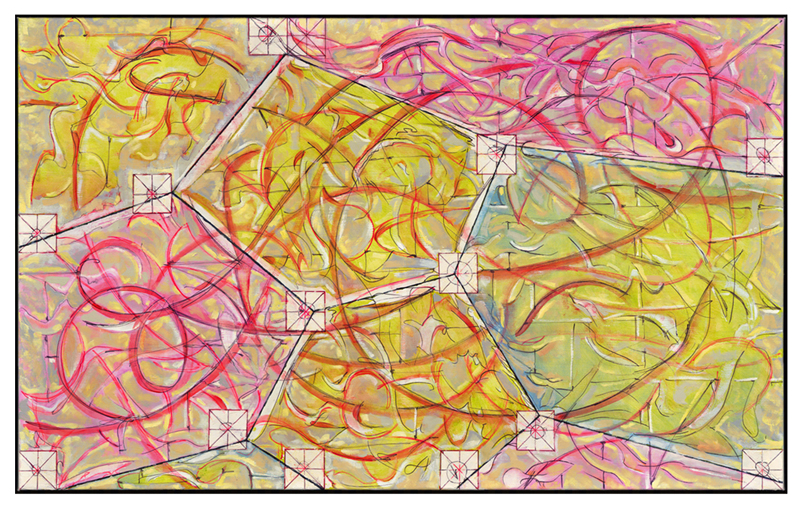
Ricardo F. Morín Dodecahedron 60″x 37″ Oil on linen 2005
Ricardo F. Morín
June 12, 2026
Bala Cynwyd, Pennsylvania
All living entities persist through relations. No organism exists in complete isolation from the conditions that sustain it. Life proceeds through continuous exchanges with surrounding environments and with other living systems. These exchanges need not be deliberate, conscious, or symbolic. They need only permit the registration of differences and the adjustment of behavior in response to them.
Communication emerges within this condition. It is not limited to speech, writing, or symbolic expression. More broadly, communication arises through correspondence, within which differences are registered and relations are established, maintained, or modified. Signals constitute one manifestation of such correspondence, but the forms through which correspondence occurs vary widely. Chemical gradients, electrical impulses, physical gestures, vocalizations, and symbolic systems all participate in communicative processes under different conditions.
Language occupies a distinct place within this broader field. Human language permits abstraction, symbolic reference, recursion, and the transmission of information beyond immediate circumstances. These capacities expand the range of what can be communicated. They do not, however, constitute the origin of communication itself. Rather, language represents a specialized manifestation of communicative processes that already operate throughout living systems.
The distinction is important because language often becomes identified with communication as such. Human beings naturally experience the world through linguistic categories and therefore tend to privilege language when considering the conditions of understanding. Yet much of what sustains relational life occurs without language. Organisms coordinate, adapt, compete, cooperate, and respond to changing conditions through forms of correspondence that precede symbolic representation.
Differences among communicative systems are differences of form, scope, and complexity. They do not necessarily imply absolute divisions between categories of existence. A signal that coordinates the movement of a colony, a vocal call that alerts a group to danger, and a sentence describing a future possibility all perform communicative functions despite substantial differences in structure. The means differ. The correspondences through which those differences are registered remain prior to the communicative forms that express them.
Observation permits the study of these processes but remains constrained by the capacities through which observation occurs. Instruments may extend perception, and conceptual frameworks may organize what is perceived, yet description remains distinct from the realities it attempts to describe. Every account reflects both the conditions observed and the limitations of the observer.
For this reason, communication is best approached descriptively rather than hierarchically. Human language possesses distinctive capacities, but those capacities do not require communication to begin with language nor to be exhausted by it. Language belongs within a broader communicative field that arises from forms of correspondence present throughout relational life.
The question is therefore not whether communication exists where language is absent. The more instructive question concerns the many forms through which relational life becomes possible before language appears. Attention to those forms reveals communication not as a uniquely human achievement but as a condition through which living systems participate in, respond to, and persist within the circumstances they inhabit.
Writing, silence, and the art of understanding in stillness
*
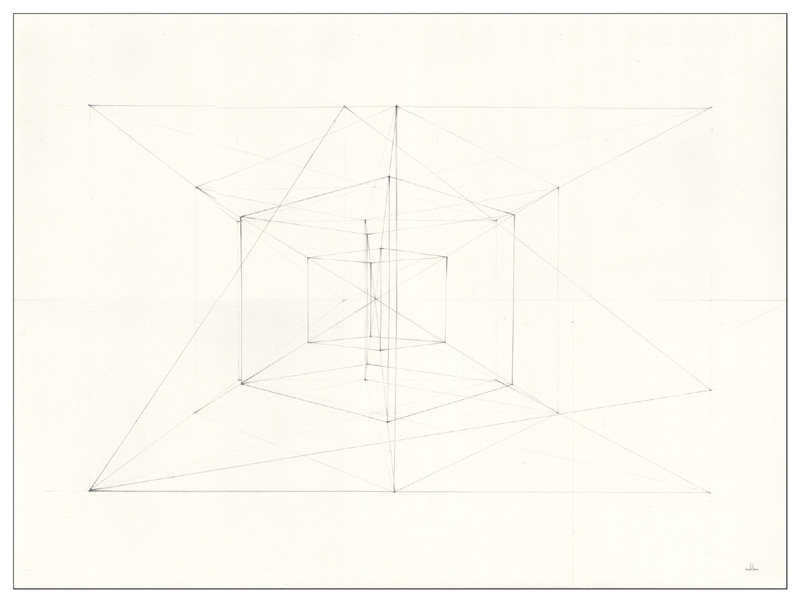
Ricardo Morín Triangulation 4 22″ x 30″ Graphite on paper 2006
To my sister Bonnie
*
Ricardo F. Morín
June 2025
Oakland Park, Florida
Author’s Note
This reflection was originally drafted before The Ethics of Perception, Part I, yet it belongs to the same inquiry into attention, understanding, and ethical relation.
There are moments when the truest form of intimacy is silence. At other times, it’s the quiet labor of reaching for the right word—however incomplete—that brings us closer. Expression, in this light, is not just a vehicle for communication, but an act of care.
To speak, to withhold, to write, to listen—each choice carries a particular weight. Intimacy lives in these gestures: not in grand declarations, but in the ethics of how we reveal ourselves—and how we receive what another dares to offer. What follows is not a theory, but a reflection on how intimacy appears in expression—and in its absence.
I. Prelude: in the pause between words
It’s hard to pinpoint the moment when something becomes intimate. It isn’t always a touch, or a glance, or even a confession. Sometimes, it’s just a pause—a shared pause—between one word and the next, when both people sense that something true is either about to be said or has just been said, without quite naming it.
Once, sitting face to face, I watched someone I cared for stare silently out the window. I said nothing either. There was no gesture, no disclosure, no clarifying words. And yet the silence didn’t feel empty—it felt full. In that stillness, something passed between us—not a message, not even an understanding, but a kind of permission:
To exist without explanation. To be present without having to perform.
That moment stayed with me not because it was dramatic, but because it was unplanned. I hadn’t expected it, and I couldn’t have recreated it. I only knew, afterward, that I had been in the presence of something rare: an intimacy that asked nothing more than to be.
And yet, not all intimacy is born in silence or in someone else’s presence. Some comes later, through writing—in that long interval between feeling and saying. Some is only possible thanks to the quiet distance that makes reflection possible.
II. What we mean when we say “intimate”
The word intimacy often evokes physical closeness: the realm of touch, proximity, lovers, secrets shared in the dark. But what if intimacy were less about closeness than about permission? The permission to be undefended. To move slowly. To be unclear—and still be trusted.
To be intimate with someone is not merely to be known, but to be seen— seen without the pressure to explain yourself quickly or justify what you feel. It’s an opening, and it’s also a risk: the risk of being misunderstood, and the deeper risk of being understood too well.
Some forms of intimacy unfold face to face. Others require distance. Some happen through dialogue. Others need a single voice, speaking on one’s own in a quiet room.
That’s where writing begins— not as performance, but as a long conversation, uninterrupted.
III. The varieties of intimacy
Intimacy shifts with context, with time, with the shape of the self we bring to another. It is not one thing— not just closeness, or tenderness, or vulnerability— but a set of ways we allow ourselves to be known, and sometimes, to know another.
There’s the intimacy of the body— perhaps the most visible and least understood. It belongs to touch, proximity, the instinctive draw toward another’s presence. But this form can deceive: physical closeness without emotional resonance is common— and easily faked. Yet when body and emotion align, there’s a wordless attunement: a hand resting on a shoulder for just the right amount of time; a breath falling into rhythm without intention.
Then there’s emotional intimacy: the slow courage to say what one feels— not just when it’s beautiful or convenient, but when it’s awkward, incomplete, or raw. This kind of intimacy isn’t given—it’s earned. It may take years, or a single night. Trust lives here—or breaks.
There’s also intellectual intimacy: what arises in conversation when ideas flow without anyone guarding their ground. It’s rare. Most social spaces reward speed, the need to shine, or the safety of politeness. But sometimes, with someone equally curious, thought expands in the presence of the other— not in agreement, but in response. There’s nothing to prove— only the pleasure of discovery. That’s intellectual intimacy. It creates a different kind of closeness— not of feeling, but of perception.
Stranger still is narrative intimacy— the kind that forms not between two people in the same room, but between the one who writes and the one who reads, separated by silence and time. It isn’t immediate— but it isn’t less real. A voice emerges from the page and seems to speak directly to you, as if it knew the contours of your mind. You feel understood—without being seen. You may never meet the person who wrote those words, but something in you shifts. You are no longer alone.
These are not rigid categories. They overlap, interrupt, evoke one another. One may deepen another. Physical presence can create emotional safety. Intellectual closeness can open into unexpected tenderness. And still, each has its own rhythm, its own grammar— and its own risks.
In that complexity, intimacy ceases to be a condition. It becomes a practice: something we learn, lose, revise, and sometimes write when no other form is possible.
IV. Writing as intimacy with oneself (and with another)
Writing, too, is a kind of intimacy— not only with others, but with oneself. Especially when it’s honest— when what’s written is not just clever or correct, but true. That kind of writing doesn’t flatter. It doesn’t argue. It reveals.
We write to bring something forth— not just for an audience, but to hear ourselves think, to see what we didn’t yet know we felt. In writing, we become witnesses to our own consciousness— both its lucidity and its evasions.
We follow a sentence not only for its logic, but for the feeling it carries. And when that feeling falters, we know we’ve lost the thread.
So we begin again, and again— trying not just to explain, but to say something that feels just.
In that sense, writing is an ethical act. It demands attention. It requires patience. It invites us to inhabit our own experience with precision— even when that experience is fragmented or unresolved.
And if we are lucky— if we are honest— something in that effort will reach someone else. Not to impress. Not to convince. But to accompany.
V. When intimacy fails or is refused
Sometimes you reach out—carefully, sincerely—and receive silence, indifference, or a response so misaligned it makes you feel naïve for having tried. Other times, the failure is subtler: a conversation that scatters just as something real begins to take shape—or a listener who hears your words, but not your meaning.
Those moments stay with us. Not because they’re dramatic, but because they remind us how precarious intimacy can be. It can’t be forced—just as humility can’t. Both require a quiet letting go—a willingness to offer something without knowing how it will be received. We can prepare the ground, make the gesture, risk the truth—but the rest depends on the other: their timing, their capacity, their willingness to meet us there.
There’s also the experience of being misunderstood—not just in fact, but in essence. You try to say something that matters, and the other person responds to what they think you said—or to a version of you that never was. It’s a blow— that mismatch between what you tried to share and what actually landed. The desire for intimacy becomes exposure without connection—a wound instead of a bridge.
Sometimes we avoid intimacy not because we don’t want it, but because we fear what it might cost. We’ve been made to feel clumsy—for caring too much, or for being too visible. Or we’ve shared something intimate, only to have it treated lightly—or analyzed without feeling. After that, we grow cautious. We speak less—or in fragments—or not at all.
It’s in the wake of such rejections—large or small—that writing ceases to be mere expression. It becomes repair. Writing allows us to recover what was lost in the moment— to name what never reached its destination, to finish the thought no one waited for, to say it again—this time without interruption, without assumptions, without fear.
And while writing cannot undo the failure of a shared moment, it can offer something else: coherence. A record. A form of truth that endures—even if it wasn’t heard.
In this way, writing becomes a quiet act of insistence—not against the world, but on behalf of the self. It’s a way of saying: What I tried to share still matters—even if it wasn’t received.
VI. The gesture that remains
In the end, intimacy is not a state but a gesture— repeated again and again— toward understanding, toward presence, toward a shared sense that may arrive… or may not.
Sometimes that gesture is a word spoken at the right moment. Sometimes it’s a silence held just long enough for the other to speak. And sometimes it’s the act of writing—solitary, patient, unfinished— offered not to a crowd, but to a single imagined reader who, one day, might need what you are now trying to say.
Writing, at its core, is a form of listening. Not only to others, but to the self that doesn’t rush, doesn’t perform, doesn’t need to persuade.
To the self that waits— that wants to be known not by what it manages to say in quick response, but by what it keeps trying to say with care.
That’s why I return to the page: not because it guarantees connection, but because it keeps the door open. Because in a world that demands speed, certainty, and charm, writing makes room for something slower and more faithful: the long, unfinished gesture of trying to reach someone— perhaps even oneself— with something resonant.
And when intimacy happens—on the page or in life— it’s never because we found the perfect words. It’s because someone stayed. Someone listened. Someone let the moment open—without rushing to close it.
That’s what I’m doing now: writing not to end something, but to leave it open— so that something of greater consequence might enter.