Posts Tagged ‘Memory’

“Unmasking Disappointment: Series II”

January 21, 2026

*

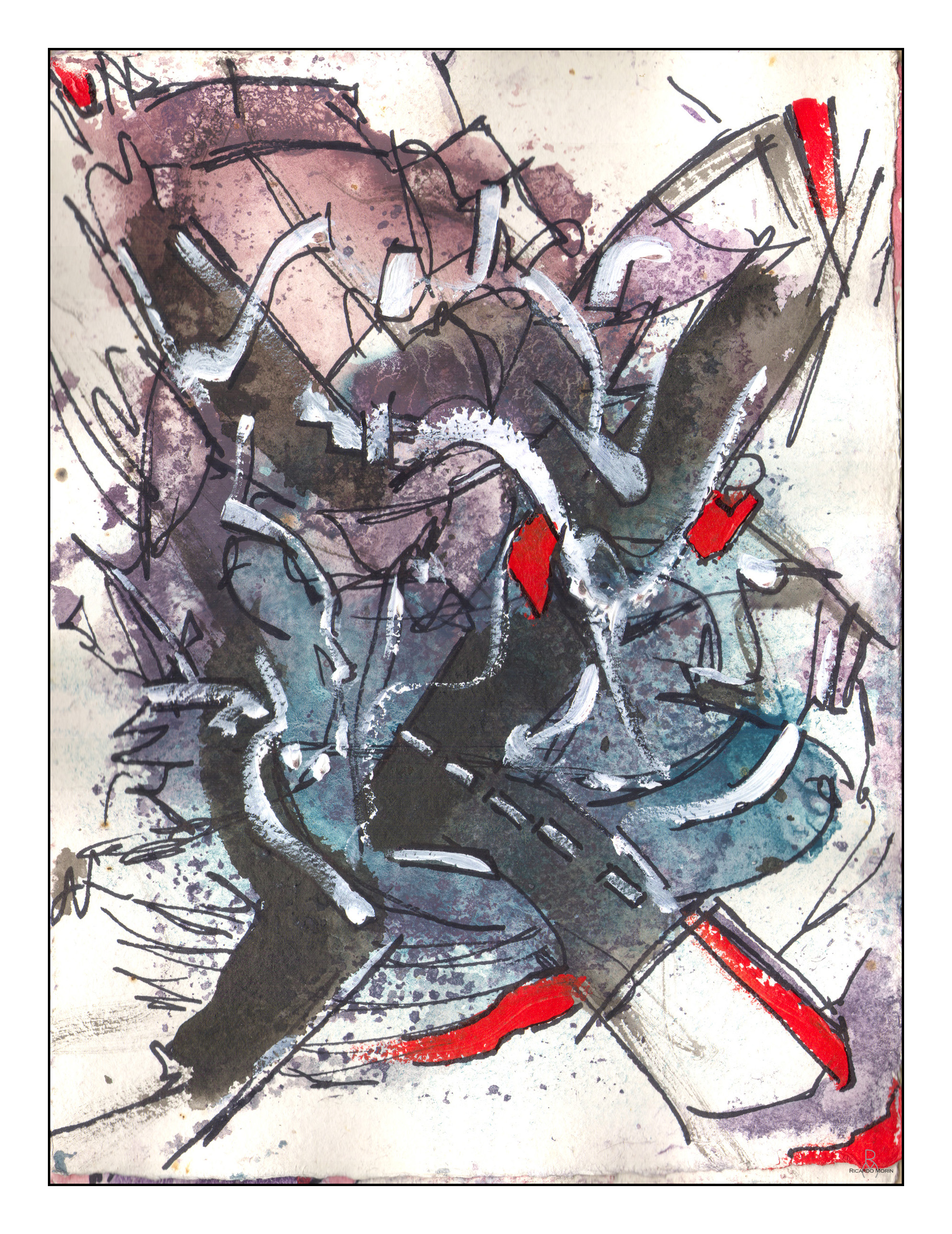
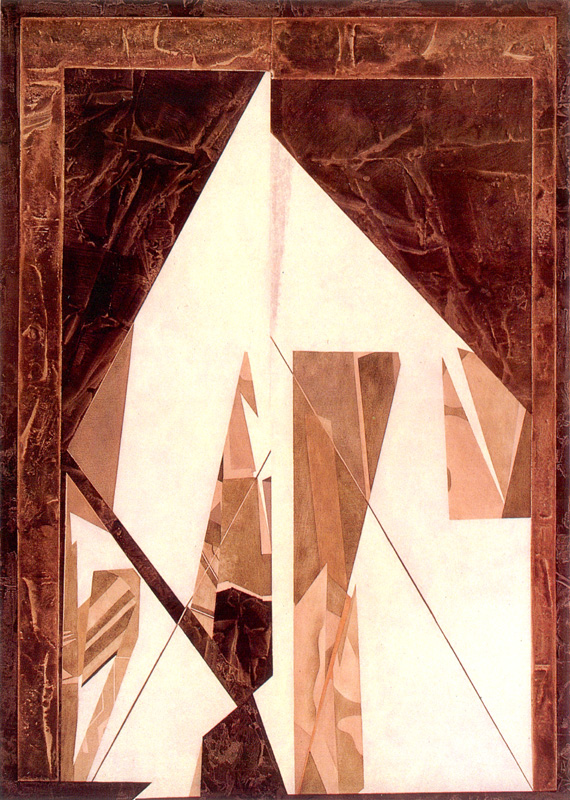
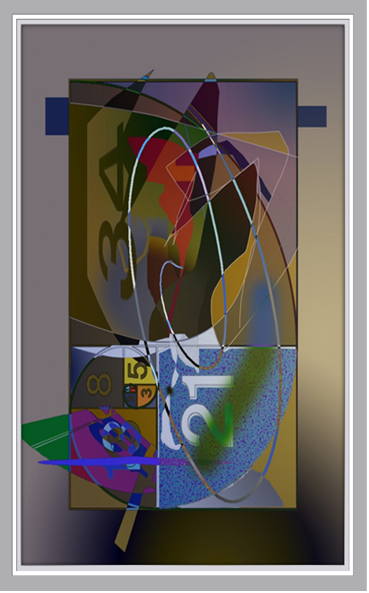
“Geometric Allegory” digital painting ©2023 by Ricardo Morin (American visual artist born in Venezuela–1954)

Ricardo F. Morín

Oakland Park, F.

December 12, 2025

Reflections from previous chapters eventually lead to a more historical inquiry, in which the following archive, Chronicles of Hugo Chávez, becomes another lens through which I approach the Venezuelan experience.


Chronicles of Hugo Chávez

1

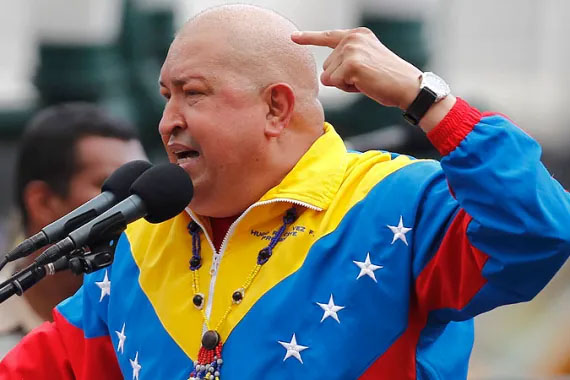
Hugo Chávez, who spearheaded the Bolivarian Revolution, was born on July 28, 1954, in Sabaneta, Venezuela.   He died on March 5, 2013, at 4:25 p.m. VET (8:55 p.m. UTC) in Caracas, at the age of 58.   As the leader of the revolution, Chávez left a discernible imprint on Venezuela’s political history.   To reconstruct this history is to revisit a landscape whose consequences continue to shape Venezuelan life.

At the core of Chavismo lies a deliberate fusion of nationalism, centralized power, and military involvement in politics.   This fusion shaped his vision for a new Venezuela, one that would be fiercely independent and proudly socialist.

~
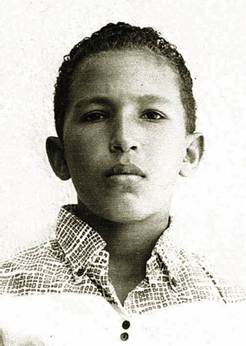
Hugo Chávez at age 11, sixth grade, 1965 (Photo: Reuters).

2

Hugo Chávez’s childhood was spent in a small town in Los Llanos, in the northwestern state of Barinas.   This region has a history of indigenous chiefdoms (i.e., “leaderships,” “dominions,” or “rules”) dating back to pre-Columbian times. [1]   Chávez was the second of six brothers, and his parents struggled to provide for the large family.   As a result, he and his older brother Adán were sent to live with their paternal grandmother, Rosa Inés, in the city of Barinas.   After her death, Chávez honored his grandmother’s memory with a poem; it concludes with a stanza that reveals the depth of their bond:

Entonces, /  abrirías tus brazos/  y me abrazarías/  cual tiempo de infante/   y me arrullarías/  con tu tierno canto/  y me llevarías/  por otros lugares/  a lanzar un grito/  que nunca se apague. [2]

[Author’s translation:   Then, /  you would open your arms /  and draw me in /  as if returned to childhood /  and you would steady me /  with your tender voice /  and you would carry me /  to other places /  to release a cry /  that would not be extinguished].

3

In his second year of high school, Chávez encountered two influential teachers, José Esteban Ruiz Guevara and Douglas Ignacio Bravo Mora, both of whom provided guidance outside the regular curriculum. [3][4]   They introduced Chávez to Marxism-Leninism as a theoretical framework, sparking his fascination with the Cuban Revolution and its principles—a turning point more visible in retrospect than it could have been in the moment.

4

At 17, Chávez enrolled in the Academia Militar de Venezuela at Fuerte Tiuna in Caracas, where he hoped to balance military training with his passion for baseball.  He dreamed of becoming a left-handed pitcher, but his abilities did not match his ambition.   Despite his initial lack of interest in military life, Chávez persisted in his training, graduating from the academy in 1975 near the bottom of his class.

5

Chávez’s military career began as a second lieutenant; he was tasked with capturing leftist guerrillas.   As he pursued them, he found himself identifying with their cause and believed they fought for a better life.   But by 1977, Chávez was prepared to abandon his military career and join the guerrillas.   Seeking guidance, he turned to his brother Adán, who persuaded him to remain in the military by insisting, “We need you there.” [5]   Chávez now felt a sense of purpose and understood his mission as a calling.   In 1982, he and his closest military associates formed the Bolivarian Revolutionary Movement-200:   they aimed to spread their interpretation of Marxism within the armed forces and ultimately hoped to stage a coup d’état. [6]

6

On February 4, 1992, Lieutenant Chávez and his military allies launched a revolt against the government of President Carlos Andrés Pérez.   Their rebellion, however, was swiftly quashed.   Surrounded and outnumbered, Chávez surrendered at the Cuartel de la Montaña, the military history museum in Caracas, near the presidential palace, on the condition that he be allowed to address his companions via television.   He urged them to lay down their arms and to avoid further bloodshed.   He proclaimed, « Compañeros, lamentablemente por ahora los objetivos que nos planteamos no fueron logrados . . . » [Author’s translation:   “Comrades, unfortunately, our objectives have not been achieved… yet,”].[7]   The broadcast marked the beginning of his political ascent.   His words resonated across the nation and sowed the seeds of his political future.

~
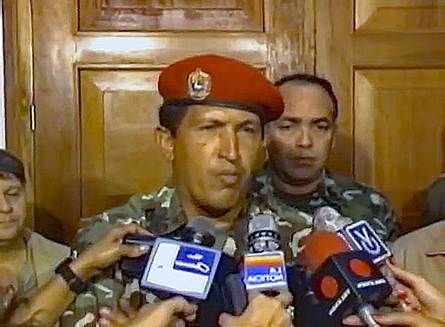
Chávez announces his arrest on national television and urges insurgent troops to surrender.

7

In 1994, newly elected President Rafael Caldera Rodríguez pardoned him. [8]   With this second chance, Chávez founded the Movimiento V República (MVR) in 1997 and rallied like-minded socialists to his cause. [9]   Through a campaign centered on populist appeals, he secured an electoral victory at age 44.

8

In his first year as President, Chávez enjoyed an 80% approval rating.   His policies sought to eradicate corruption in the government, to expand social programs for the poor, and to redistribute national wealth.   Jorge Olavarría de Tezanos Pinto, initially a supporter, emerged by the end of the elections as a prominent voice of the opposition.   Olavarría accused Chávez of undermining Venezuela’s democracy through his appointment of military officers to governmental positions. [10]   At the same time, Chávez was drafting a new constitution, which allowed him to place military officers in all branches of government.   The new constitution, ratified on December 15, 1999, paved the way for the “mega elections” of 2000, in which Chávez secured a term of six years.   Although his party failed to gain full control of the Asamblea Nacional (National Assembly), it passed laws by decree through the mechanism of the Leyes Habilitantes (Enabling Laws). [11][12]   Meanwhile, Chávez initiated reforms to reorganize the State‘s institutional structure, but the constitution’s requirements were not met.   The appointment of judges to the new Corte Suprema de Justicia [CSJ] was carried out without rigor and raised concerns about its legitimacy and competence.   Cecilia Sosa Gómez, the outgoing Corte Suprema de Justicia president, declared the rule of law “buried” and the court “self-dissolved.” [13][14]

9

Although some Venezuelans saw Chávez as a refreshing alternative to the country’s unstable democratic system, which had been dominated by three parties since 1958, many others expressed concern as the Partido Socialista Unido de Venezuela (PSUV) consolidated power and became the sole governing party. [15]   Legislative and executive powers were increasingly centralized, and the narrowing of judicial guarantees limited citizens’ participation in the democratic process.   Chávez’s close ties with Fidel Castro and his desire to model Venezuela after Cuba’s system—dubbed VeneCuba—raised alarm. [16]   He silenced independent radio broadcasters, and he antagonized the United States and other Western nations.  Instead, he strengthened ties with Iraq, Iran, and Libya.   Meanwhile, domestically, his approval rating had plummeted to 30%, and anti-Chávez demonstrations became a regular occurrence.

10

On April 11, 2002, a massive demonstration of more than a million people converged on the presidential palace to demand President Chávez’s resignation.   The protest turned violent when agents of the National Guard and masked paramilitaries opened fire on the demonstrators. [17]   The tragic event—the Puente Llaguno massacre—sparked a military uprising that led to Chávez’s arrest and to the installation of a transitional government under Pedro Francisco Carmona Estanga. [18]   Carmona’s leadership, however, was short-lived; he swiftly suspended the Constitution, dissolved the Asamblea Nacional and the Corte Suprema, and dismissed various officials.   Within forty-eight hours, the army withdrew its support for Carmona.   The vice president, Diosdado Cabello Rondón, was reinstated as president and promptly restored Chávez to power. [19]

11

The failed coup d’état enabled Chávez to purge his inner circle and to intensify his conflict with the opposition.   In December 2002, Venezuela’s opposition retaliated with a nationwide strike aimed at forcing Chávez’s resignation.   The strike targeted the state oil company Petróleos de Venezuela, S.A. (PDVSA), which generated roughly 80% of the country’s export revenues. [20]   Chávez responded by dismissing its 38,000 employees and replacing them with loyalists.   By February 2003, the strike had dissipated, and Chávez had once again secured control over the country’s oil revenues.

12

From 2003 to 2004, the opposition launched a referendum to oust Chávez as president, but soaring oil revenues, which financed social programs, bolstered Chávez’s support among lower-income sectors. [21]   By the end of 2004, his popularity had rebounded, and the referendum was soundly defeated.   In December 2005, the opposition boycotted the elections to the National Assembly and protested against the Consejo Nacional Electoral (National Electoral Council) (CNE). [22]   As anticipated in view of the opposition boycott, Chávez’s coalition capitalized on the absence of an effective opposition and strengthened its grip on the Assembly. [23]    By that point, legislative control rested almost entirely with Chávez’s coalition.    What followed was not a departure from this trajectory, but its extension through formal policy.

13

In December 2006, Chávez secured a third presidential term, a victory that expanded the scope of executive initiative.   He nationalized key industries—gold, electricity, telecommunications, gas, steel, mining, agriculture, and banking—along with numerous smaller entities. [24][25][26][27][28][29]   Chávez also introduced a package of constitutional amendments designed to expand the powers of the executive and to extend its control over the Banco Central de Venezuela (BCV).   In a controversial move, he unilaterally altered property rights and allowed the state to seize private real estate without judicial oversight.   Furthermore, he proposed becoming president for life.   In December 2007, however, the National Assembly narrowly rejected the package of sweeping reforms.

14

In February 2009, Chávez reintroduced his controversial proposals and succeeded in advancing them.   Following strategic counsel from Cuba, he escalated the crackdown on dissent. [30]   He ordered the arrest of elected opponents and shut down all private television stations.

15

In June 2011, Chávez announced that he would undergo surgery in Cuba to remove a tumor, a development that sparked confusion and concern throughout the country. [31]   As his health came under increasing scrutiny, more voters began to question his fitness for office.   Yet, in 2012, despite his fragile health, Chávez campaigned against Henrique Capriles and secured a surprise presidential victory. [32]

~
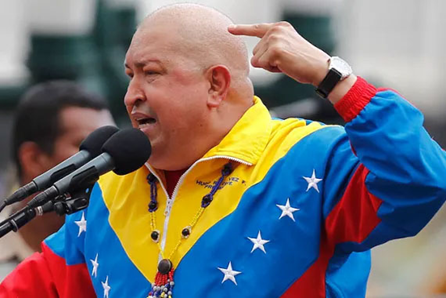
Chávez during the electoral campaign in February 2012.

16

In December 2012, Chávez underwent his fourth surgery in Cuba.   Before departing Venezuela, he announced his plan for transition and designated Vice President Nicolás Maduro as his successor, alongside a powerful troika that included Diosdado Cabello [military chief] and Rafael Darío Ramírez Carreño [administrator of PDVSA]. [33][34][35]   Following the surgery, Chávez was transferred on December 11 to the Hospital Militar Universitario Dr. Carlos Arvelo (attached to the Universidad Militar Bolivariana de Venezuela, or UMBV) in Caracas, where he remained incommunicado, further fueling speculation and rumors.   Some government officials dismissed reports of assassination, while others, including former Attorney General Luisa Ortega Díaz, claimed he had already died on December 28. [36]   Maduro’s cabinet vehemently refuted these allegations and insisted that no crime had been committed.   Amidst the uncertainty, Maduro asked the National Assembly to postpone the inauguration indefinitely.    This further intensified political tensions.

17

The National Assembly acquiesced to Maduro and voted to postpone the inauguration.   Chávez succumbed to his illness on March 5.   His body was embalmed in three separate stages without benefit of autopsy, which further fueled suspicions and conspiracy theories.   Thirty days later, Maduro entered office amid sustained political uncertainty. [37]   The implications of this transition extend beyond chronology; they shape the conditions examined in the chapters that follow in this series, which comprises 19 chapters, miscellaneous rubrics, and an appendix.

~


Endnotes:

§ 2

[1]   Charles S. Spencer and Elsa M. Redmond, Prehispanic Causeways and Regional Politics in the Llanos of Barinas, Venezuela (Cambridge: Cambridge University Press, 2017). Abstract: “…relacionados con la dinámica política de la organización cacical durante la fase Gaván Tardía.” Published in Latin American Antiquity, vol. 9, no. 2 (June 1998): 95-110. https://doi.org/10.2307/971989

[2]   Rosa Miriam Elizalde y Luis Báez, Chávez Nuestro, (La Habana: Casa Editora Abril, 2007), 367-369.    https://docs.google.com/file/d/0BzEKs4usYkReRVdWSG5LQkFYQ3c/edit?pli=1&resourcekey=0-yHaK7-YkA47nelVs-7JuBQ 

§ 3

[3]The Hugo Chávez Show,” PBS Front Line, November 19, 2008.    https://www.pbs.org/wgbh/pages/frontline/hugochavez/etc/ex2.html

[4]   L’Atelier des Archive, “Interview du révolutionnaire:   Douglas Bravo au Venezuela [circa 1960]” (Transcript:   “… conceptos injuriosos en contra de la revolución cubana …” [timestamp 1;11-14]), YouTube, October 14, 2016.   https://www.youtube.com/watch?v=1cx2D5VM8VM

§ 5

[5]   “Hugo Chavez Interview,”YouTube, transcript excerpt and time stamp unavailable:   Original quote in Spanish (translated by the author):  “. . . , if not, maybe I’ll leave the Army, no, you can’t leave, Adam told me so, no, we need you there, but who needs me?”   Retrieved October 12, 2023.

[6]   Dario Azzellini and Gregory Wilpert,Venezuela, MBR–200 and the Military Uprisings of 1992,”in The Wiley-Blackwell Encyclopedia of Revolution and Protest (Wiley 2009).    https://onlinelibrary.wiley.com/doi/epdf/10.1002/9781405198073.wbierp1525

§ 6

[7]   Declarations in a Nationwide Government-Mandated Broadcast,” BancoAgrícolaVe, YouTube, February 4, 1992.    https://www.youtube.com/watch?v=_QqaR1ZjldE

§ 7

[8]   Maxwell A. Cameron and Flavie Major, “Venezuela’s Hugo Chavez: Savior or Threat to Democracy?,” Latin American Research Review, vol. 36, no. 3, (2001):  255-266.    https://www.proquest.com/docview/218146430?sourcetype=Scholarly%20Journals

[9]   Gustavo Coronel, “Corruption, Mismanagement, and Abuse of Power in Hugo Chávez’s Venezuela,” Center for Global Liberty & Prosperity:    Development Policy Analysis, no. 2 (CATO Institute, November 27, 2006).   https://www.issuelab.org/resources/2539/2539.pdf.

§ 8

[10]   Jorge Olavarría Ante El Congreso Bicameral [July 5,1999],” YouTube.    https://youtu.be/_OkqNn8VF-Y?si=Cvuh4Vk391_0Pnut .   Accessed January 9, 2025.

[11]   Mario J. García-Serra, “The ‘Enabling Law’:    The Demise of the Separation of Powers in Hugo Chavez’s Venezuela,” University of Miami Inter-American Law Review, vol.32, no. 2, (Spring – Summer, 2001):   265-293.     https://www.jstor.org/stable/40176554

[12]   “Venezuela:   Chávez Allies Pack Supreme Court,” Human Rights Watch, December 13, 2004.    https://www.hrw.org/news/2004/12/13/venezuela-chavez-allies-pack-supreme-court

[13]   “Top Venezuelan judge resigns,” BBC News, August 25, 1999.   http://news.bbc.co.uk/2/hi/americas/429304.stm

[14]   “Suprema Injusticia:    ‘These are corrupt judges,” Organización Transparencia Venezuela.    https://supremainjusticia.org/cecilia-sosa-gomez-these-are-corrupt-judges/

§ 9

[15]   “United Socialist Party of Venezuela,” PSUV.   http://www.psuv.org.ve/

[16]   “Venezuela and Cuba, ‘VeneCuba,’ a single nation,” The Economist, February 11, 2010.   https://www.economist.com/the-americas/2010/02/11/venecuba-a-single-nation

§ 10

[17] “Photographs reveal the truth about Puente Llaguno massacre,” April 11, 2002, YouTube.    https://youtu.be/NvP7cL-7KL4?si=cUpMAv0myAWH5UWP

[18] “Pedro Carmona Estanga cuenta su verdad 21 años después,” El Nacional de Venezuela.     https://www.elnacional.com/opinion/pedro-carmona-estanga-cuenta-su-verdad-21-anos-despues/

[19] “Diosdado Cabello Rondón:Narcotics Rewards Program: Wanted,” U.S. Department of State.     https://www.state.gov/bureau-of-international-narcotics-and-law-enforcement-affairs/releases/2025/01/diosdado-cabello-rondon

§ 11

[20]   Marc Lifsher, “Venezuela Strike Paralyzes State Oil Monopoly PdVSA,” Wall Street Journal, December 6, 2002.    https://www.wsj.com/articles/SB1039101526679054593

§ 12

[21] “Socialism with Cheap Oil,” The Economist, December 30, 2008.    https://www.economist.com/the-americas/2008/12/30/socialism-with-cheap-oil

[22] “Venezuela: Increased Threats to Free Elections; New Electoral Body Puts Reforms at Risk,” Human Rights Watch, June 22, 2023 7:00AM.    https://www.hrw.org/news/2023/06/22/venezuela-increased-threats-free-elections

[23] Juan Forero, “Chávez Grip Tightens as Rivals Boycott Vote,” The New York Times, December 5, 2005.    https://www.nytimes.com/2005/12/05/world/americas/chavezs-grip-tightens-as-rivals-boycott-vote.html?referringSource=articleShare

§ 13

[24] Louise Egan, “Chavez to nationalize Venezuelan gold industry,” Reuters, August 17, 2011, 2:40 PM.   https://www.reuters.com/article/us-venezuela-gold/chavez-to-nationalize-venezuelan-gold-industry-idUSTRE77G53L20110817/

[25] Juan Forero, “Chavez Eyes Nationalized Electrical, Telcom Firms,” Reuters, January 9, 2007, 6:00 AM ET.    https://www.npr.org/2007/01/09/6759012/chavez-eyes-nationalized-electrical-telcom-firms

[26] James Suggett, “Venezuela Nationalizes Gas Plant and Steel Companies, Pledges Worker Control,” Venezuelanalysis, May 23, 2009.    https://venezuelanalysis.com/news/4464/

[27] David Brunnstrom, “Factbox: Venezuela’s nationalizations under Chavez,” Reuters, October 7, 2012, 10:51 PM.    https://www.reuters.com/article/us-venezuela-election-nationalizations/factbox-venezuelas-nationalizations-under-chavez-idUSBRE89701X20121008/

[28] Frank Jack Daniel–Analysis–, “Food, farms the new target for Venezuela’s Chavez,” Reuters, March 5, 2009, 6:06 PM EST.   https://www.reuters.com/article/us-venezuela-chavez-analysis-sb/food-farms-the-new-target-for-venezuelas-chavez-idUSTRE5246OO20090305/

[29] Daniel Cancel, “Chavez Says He Has No Problem Nationalizing Banks,” Bloomberg, November 29, 2009, 15:02 GMT-5.    https://www.bloomberg.com/news/articles/2009-11-29/chavez-says-he-has-no-problem-nationalizing-banks

§ 14

[30] Angus Berwick, “Special Report: How Cuba taught Venezuela to quash military dissent,” Reuters, August 22, 2019, 8:22 AM ET.    https://www.reuters.com/article/us-venezuela-cuba-military-specialreport/special-report-how-cuba-taught-venezuela-to-quash-military-dissent-idUSKCN1VC1BX/

§ 15

[31] Robert Zeliger, Passport: “Hugo Chavez’s medical mystery,” Foreign Policy, June 24, 2011, 10:20 PM.   https://foreignpolicy.com/2011/06/24/hugo-chavezs-medical-mystery/

[32] Juan Forero, “Hugo Chavez Beats Henrique Capriles,” The Washington Post, October 7, 2012.   https://www.washingtonpost.com/world/venezuelans-flood-polls-for-historic-election-to-decide-if-hugo-chavez-remains-in-power/2012/10/07/d77c461c-10c8-11e2-9a39-1f5a7f6fe945_story.html

§ 16

[33] Bryan Winter and Ana Flor, “Exclusive:   Brazil wants Venezuela election if Chavez dies – sources,” Reuters, January 14, 2013, 9:12 PM EST, updated 12 years ago.    https://www.reuters.com/article/cnews-us-venezuela-chavez-brazil-idCABRE90D12320130114/

[34] “Venezuela National Assembly chief: Diosdado Cabello,” BBC News, March 5, 2013.   https://www.bbc.com/news/world-latin-america-20750536

[35] “Rafael Darío Ramírez Carreño of Venezuela Chair of Fourth Committee,” United Nations, BIO/5031*-GA/SPD/630; 25 September 2017.   https://press.un.org/en/2017/bio5031.doc.htm

[36] Ludmila Vinogradoff, “La exfiscal Ortega confirma que Chávez murió dos meses antes de la fecha anunciada,” ABCInternacional, actualizado Julio 16, 2018, 12:44    https://www.abc.es/internacional/abci-confirman-chavez-murio-meses-antes-fecha-anunciada-201807132021_noticia.html?ref=https://www.google.com/

§ 17

[37] “Cuerpo de Chávez fue tratado tres veces para ser conservado: … intervenido con inyecciones de formol para que pudiera ser velado,” El Nacional De Venezuela – Gda, Enero 27, 2024, 05:50, actualizado Marzo 22, 2013, 20:51.   https://www.eltiempo.com/amp/archivo/documento/CMS-12708339

~
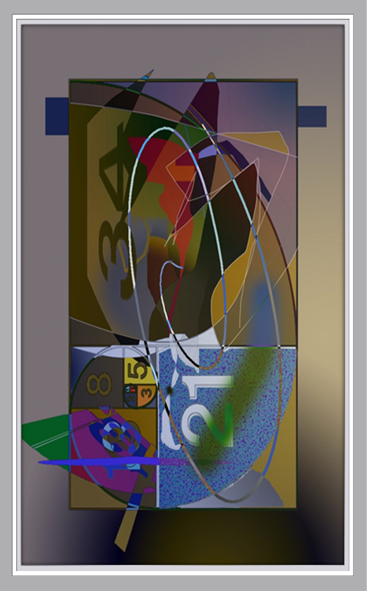
“Unmasking Disappointment: Series I”

January 7, 2026

“Geometric Allegory,” digital painting 2023 by Ricardo Morin (American visual artist born in Venezuela–1954)

To my parents

Preface

Unmasking Disappointment” follows a line of inquiry present throughout my work:   the examination of identity, memory, and the relations that emerge when life unfolds across cultural boundaries.   Although I have lived outside Venezuela for more than five decades and became a naturalized citizen of the United States twenty-four years ago, my relationship to the country of my birth remains a persistent point of reference.   The distance between these conditions—belonging and removal—forms the backdrop against which this narrative takes shape.

This work belongs to a broader autobiographical project that gathers experiences, observations, and questions accumulated over time.   While personal in origin, it does not proceed as confession or memoir.   Its method is sequential rather than expressive:   individual exposure is situated within historical forces and political structures that have shaped Venezuelan life across generations.   The intention is not to reconcile these tensions, but to render them visible through recurrence, record, and consequence.

Series I” introduces the first thematic clusters of this inquiry.   The episodes assembled here do not advance a single thesis, nor do they aim at resolution.   They trace points of friction where private experience intersects with public power, and where political narratives exert pressure on ordinary life.   Across these encounters, patterns emerge—not as abstractions, but as conditions that alter how authority is exercised, how responsibility is displaced, and how agency is constrained.

The chapters that follow examine the pressures produced by systemic inequality and trace contemporary Venezuelan conditions back to their historical formation.   Autocratic rule and popular consent appear not as opposing forces, but as elements that increasingly entangle and weaken one another.   Within this entanglement, truth does not disappear; it becomes less evenly accessible and more readily displaced by narrative.

When public discourse is shaped by propaganda and misinformation, authoritarian structures gain resilience.   Recovering truth under such conditions does not resolve political conflict, but it clarifies the limits within which political life operates.   Agency emerges not as an ideal, but as a condition sustained—or undermined—through practice and consequence.

This work does not propose deterministic explanations or simple remedies.   It proceeds by accumulation, drawing attention to patterns that persist despite changing circumstances.   What it asks of the reader is not agreement, but attention:   to evidence, to sequence, and to the conditions under which political freedom may be meaningfully exercised.

Writing from Bala Cynwyd, Pennsylvania, and Fort Lauderdale, Florida, I remain aware of the distance between the environments in which this work is composed and the conditions it examines.   That distance does not confer authority; it imposes responsibility.

Ricardo Federico Morín
Bala Cynwyd, Pennsylvania, January 21, 2025


*

Table of Contents

  • Chapter I – A Written Language.
  • Chapter II – Our Recklessness.
  • Chapter III – Point of View.
  • Chapter IV – A Dialogue.
  • Chapter V – Abstract.
  • Chapter VI – Chronicles of Hugo Chávez (§§ I-XVII).
  • Chapter VII – The Allegorical Mode.
  • Chapter VIII – The Ideal Government and the Power of Virtue.
  • Chapter IX – The First Sign:   On Political and Social Resentment.
  • Chapter X – The Second Sign:   The Solid Pillar of Power:   The Military Forces.
  • Chapter XI – The Third Sign:  The Asymmetry of Political Parties.
  • Chapter XII – The Fourth Sign:  Autocracy (§§ 1-9):  Venezuela (§§ 10-23), The Asymmetry of Sanctions (§§ 24-32).
  • Chapter XIII – The Fifth Sign:  The Pawned Republic.
  • Chapter XIV – The First Issue:   Partisanship, Non-partisanship, and Antipartisanship.
  • Chapter XV – The Second Issue:   On Partial Truths and Repressive Anarchy.
  • Chapter XVI – The Third Issue:   The Clarion of Democracy.
  • Chapter XVII – The Fourth Issue:   On Human Rights.
  • Chapter XVIII – The Fifth Issue:  On the Nature of Violence.
  • Chapter XIX – The Ultimate Issue:   About the Deliverance of Injustice.
  • Acknowledgments.
  • Epilogue.
  • PostScript.
  • Appendix:   Author’s Note, Prefatory Note.     A). Venezuelan Constitutions [1811-1999], Branches, and Departments of Government.   B) Evolution of Political Parties: 1840-2024.    C) Laws Enacted by the Asamblea Nacional.  D) Clarificatory Note on Domestic Coercion, Foreign Presence, and Intervention.
  • Bibliography.

A Written Language

Stability is often sought where it cannot be secured.   Experience has shown this repeatedly.   Even careful intentions tend to draw one into uncertain terrain, where understanding lags behind consequence.   At the desk, as late-afternoon light reaches the page, writing assumes a practical function:   it becomes a means of ordering what would otherwise remain unsettled.   The act does not resolve vulnerability, but it records it.   Whether time alters such conditions remains uncertain; what can be done is to give them form.

What follows moves from the conditions of writing to the conditions it must confront.


*

Our Recklessness

~

Our painful struggle to deal with the politics of climate change is surely also a product of the strange standoff between science and political thinking.” — Hannah Arendt:   The Human Condition:   Being and Time [1958], Kindle Book, 159.

1

The COVID pandemic and the 2023 Canadian wildfires, among other recent events, have made visible conditions that were already in place.     These events did not introduce new vulnerabilities as much as they revealed the extent to which existing systems depend on economic incentives and political habits that privilege extraction over preservation.   During the period when smoke from the fires reached the northeastern United States, daylight in parts of Pennsylvania was visibly altered and registered the reach of events unfolding at a considerable distance.   Such occurrences do not stand apart from prevailing economic arrangements; they coincide with a model that treats natural conditions as commodities and absorbs their degradation as an external cost.

2

The fires in California in 2025, like those that spread across Canada in 2023, do not present themselves as isolated occurrences.   They form part of a sequence shaped by environmental neglect, political inertia, and sustained industrial expansion.   Conditions such as desertification, resource scarcity, and population displacement no longer appear solely as projected outcomes; they are increasingly registered as present circumstances.   Scientific assessments indicate that these patterns are likely to intensify in the absence of structural change. [1][2][3]   What is brought into view, over time, is not a singular failure but a system that continues to operate according to priorities that favor immediate yield over long-term continuity.

3

The question of balance does not arise solely as a technical problem.   It emerges within a moral and political field shaped by prevailing economic assumptions.   The treatment of nature—and more recently of artificial intelligence—as a commodity reflects a trajectory in which matters of shared survival are increasingly translated into market terms.    Under such conditions, considerations that once belonged to collective responsibility are recast as variables within systems of calculation.

4

Such patterns place increasing strain on conditions necessary for collective survival.   Responses to these conditions vary and range from indifference to urgency, though urgency does not invariably produce clarity.   What becomes apparent, across repeated instances, is a tendency for crisis to recur without sustained adjustment.   This recurrence parallels the political histories examined in the chapters that follow, where warning and consequence frequently fail to align.


Endnotes—Chapter II


*

Point of View

1

Conversations with my editor, Billy Bussell Thompson, have accompanied the development of this work over time.    His attention to research method and to the structure of argument has contributed to the clarification of its scope and direction.    These exchanges, often conducted at a distance and without ceremony, formed part of the process through which the present narrative took shape.    After an extended period of uncertainty regarding how to approach the subject of Hugo Chávez, the contours of Unmasking Disappointment gradually emerged.

2

Hugo Chávez entered national political life as a leader whose authority was exercised in opposition to political liberalism. [1]  While his public discourse emphasized alignment with the poor, the material benefits of power accumulated within a narrow circle. [2]  Over the course of his tenure, democratic institutions in Venezuela experienced progressive weakening, and governance assumed increasingly authoritarian forms.   These developments become more legible when situated within the historical record and examined through documented practice rather than rhetorical claim.

3

The events that followed Chávez’s rule are marked by disorder and unresolved consequence.   Their persistence draws attention to questions of historical accountability and collective responsibility that remain unsettled.   Examining the record of autocratic leadership—its ambitions as well as its failures—provides a means of approaching the problem of justice in Venezuela without presuming resolution.   Through this examination, enduring tensions come into view as conditions to be understood rather than conclusions to be reached.

~


Endnotes—Chapter III

  • [1]   The term caudillo originates in Spanish and has historically been used to describe a leader who exercises concentrated political and military authority.    In the Venezuelan context, the term carries particular resonance and refers to figures associated with the post-independence period of the nineteenth century.    Such leaders tended to consolidate power through a combination of personal authority, allegiance from armed factions, and the promise—whether substantive or rhetorical—of maintaining order under conditions of instability.    While some were regarded as defenders of local or national causes, others became associated with practices that facilitated authoritarian governance and weakened institutional structures.    The concept of the caudillo continues to function within Venezuelan political culture as a descriptive category applied to leadership forms that combine popular support with concentrated power.

Chapter IV

A Dialogue

A series of conversations between BBT and the author accompanied the examination of Venezuelan politics and history developed in this section.   These exchanges formed a transitional space in which reflection gave way to historical inquiry, allowing questions of interpretation, responsibility, and record to be addressed through dialogue rather than exposition.

1

—RFM:   “My writing has been concerned with the evolution of Venezuela’s political landscape, with particular attention to the emergence of authoritarian forms of rule.   The focus has been less on abstract doctrine than on how specific policies translated into everyday conditions for ordinary Venezuelans.”

2

—BBT:   “Examining how authoritarian leadership shapes political conditions is necessary, though the term itself is often contested and applied unevenly.   In Chávez’s case, the use of propaganda was not exceptional in form, but it was consistently employed as an instrument of governance.   How did official narratives during his tenure circulate, and what effects did they have on public perception over time?”

3

—RFM:  “Propaganda is not unique to Chávez; it functions as a recurring instrument across political systems.   In Venezuela, official media regularly attributed economic hardship to external interference rather than to domestic policy decisions.    At the same time, material conditions deteriorated, with shortages emerging from economic mismanagement and later compounded by external restrictions.   Opposition groups also circulated counter-narratives, which in turn elicited responses from the State.    These exchanges unfolded within a historical context shaped by civil conflict and Cold War alignments, and produced a fragmented informational environment.   Within that environment, responsibility for economic decline was frequently displaced, while public perception was managed through repetition rather than resolution.   The social and economic reforms invoked in justification did not, over time, yield the reductions in poverty and inequality that had been promised.”

4

—BBT:  “To render Venezuela’s political conditions with some accuracy, attention must be given to how ordinary citizens encountered these dynamics in daily life.     How were such conditions navigated in practice, particularly where political discourse intersected with immediate economic necessity?”

5

—RFM:  “The economic collapse that followed the decline of the oil-based model intensified poverty and placed sustained pressure on public services.   Examined in sequence, this period shows how colonial legacies and authoritarian practices converged in the formation of Chavismo.   Episodes such as the 1989 riots known as El Caracazo registered widespread disaffection with established parties and democratic institutions.   Under such conditions, the demands of securing basic necessities frequently outweighed engagement with abstract political principles.”

6

—BBT:   “Clarity in narrative depends in part on recognizing the assumptions that guide interpretation.   When these assumptions are made explicit and examined, the account becomes less directive and more accessible, allowing readers to follow the record without being steered toward a predetermined position.”

7

—RFM:  “No narrative proceeds without interpretation, including this one.   Writing provides a means of approaching Venezuela’s history—its colonial formation, episodes of authoritarian rule, and periods of political disruption—without foreclosing alternative readings.    A coherent account need not be exhaustive; it remains open insofar as it attends to implication and consequence rather than resolution.”

8

—BBT:  “The exchange itself underscores the importance of careful narration when approaching Venezuela’s political and social record.    Attending to multiple viewpoints does not resolve complexity, but it allows a more coherent account to emerge without reducing that history to a single explanatory frame.”

The exchange marked a transition from reflective inquiry to historical record.

~


Chapter V

Abstract

1

This section examines the sequence through which the political project articulated under Hugo Chávez assumed autocratic form.    Rather than attributing this outcome to a single cause, the inquiry proceeds by tracing how leadership decisions unfolded within a convergence of historical conditions, institutional arrangements, economic pressures, and geopolitical alignments.   The account does not begin from conclusion, but from record.

2
Attention remains on how authority was exercised and how its effects registered within Venezuelan society.    Historical circumstance, institutional design, and external influence are examined not to simplify the record, but to make visible the interdependencies through which power consolidated over time.    What emerges is not an explanatory thesis, but a configuration whose coherence can be assessed only through sustained attention to sequence and consequence.

~


“River Grass”

December 7, 2025

~

Ricardo Morin
Landscape II: River Grass
18” x 24”
Sepia on newsprint 
2003

Ricardo F Morin

Dec. 6, 2025

Naples. Florida

*

This diptych, “River Grass” and “Naples in the Morning,” brings together a reflection on continuity and a brief observation of everyday life.  Two scenes—one sustained, the other fleeting—register how experience, silence, and attention shape presence.  The first part, “River Grass,” does not present an argument, a confession, or a theory.  It offers an observation shaped over time by proximity rather than distance.   The focus is not on individual psychology or relational conflict, but on patterns that take form across generations and persist quietly within everyday life.

What follows avoids moral explanation and narrative resolution.   It attends instead to continuity—how restraint, generosity, and presence may be transmitted not through instruction or memory, but through posture, habit, and orientation.   The intention is to describe without adjudicating, and to clarify without assigning cause where cause cannot be cleanly isolated.   What is traced here represents one possible orientation among many, shaped by inheritance but not exhaustive of its effects—an invitation not to mistake the channel for the ocean.


Orientation of “River Grass”

What follows attends to what persists when lives are shaped by continuity rather than interruption.

Not all inheritance arrives as memory.   Some is conveyed without story, without date, without language.   It enters through atmosphere rather than narrative—through cadence, restraint, posture, and a preference for continuity over display.   In such cases, history is not recalled; it is carried.

This form of inheritance does not announce itself as trauma.   It leaves no single scene to revisit, no episode that can be isolated and explained.   Instead, it appears as a way of moving through the world:   measured, attentive, resistant to excess.   The past exerts influence not by instruction but by shaping what feels permissible, sustainable, or necessary.

Under these conditions, restraint is not experienced as loss.  It functions as orientation.  Accommodation does not signal submission but competence.   Stability reflects not the absence of desire but the quiet placement of desire among other priorities.   What is transmitted is not fear but caution—an ethic of endurance refined over time.

Because no event is foregrounded, little invites interpretation.   The absence of visible distress encourages the assumption of ease.   Life appears ordered, generous, and intact.   Yet the inheritance remains active and structures conduct without requiring acknowledgment.   It persists not as memory but as form.

Such inheritance often resists recognition precisely because it has succeeded.   The past has not repeated itself.   Continuity has been preserved.   What remains is a posture oriented toward sustaining that continuity—a vigilance so normalized that it passes as temperament rather than history.

Restraint, in this context, does not operate as inhibition or denial.   It functions as a stabilizing orientation—an internal calibration shaped over time.   Action is guided less by expression than by proportion and durability.   What governs choice is not moral judgment but coherence.

Such restraint often coexists with clarity and decisiveness.   Boundaries are maintained without conflict; decisions are made without excess emphasis.   What is avoided is not agency but surplus.   Expression is moderated not through fear of consequence, but through an internal sense of sufficiency.

Accommodation here is frequently misread.   It does not arise from compliance or uncertainty, but from an assessment of impact.   Space yielded to others reflects confidence in structure rather than retreat from position.   Presence remains intact even when it is not foregrounded.

This orientation produces a stability that can appear effortless.   Friction is minimized.   Demands are rare.   The absence of insistence is readily mistaken for ease or contentment.   Yet the restraint at work is active, not passive—and continuously shapes what is articulated, deferred, or left unspoken.

Over time, restraint becomes difficult to distinguish from identity.   It ceases to register as a choice among alternatives and hardens into posture.   The question of expression recedes, replaced by an emphasis on responsibility, proportion, and non-disruption.

Generosity shaped by inherited restraint rarely announces itself.   It does not seek recognition or reciprocation, nor does it depend on visibility for validation.   It appears instead as availability, as the quiet removal of obstacles, as the willingness to yield space without narrative or sacrifice.

In this form, giving is non-transactional.   No balance is tracked; no return anticipated.   What is offered is steadiness rather than favor.   Support unfolds without appeal, often unnoticed, absorbed into ordinary conduct.   The absence of demand is integral rather than incidental.

Because it imposes no weight, such generosity leaves little trace.   Others encounter freedom without sensing its source.   Autonomy is enabled without attribution.   The one who gives remains present yet unmarked.

Over time, the habit of making room for others becomes more practiced than the habit of entering it.   Attention turns outward and refines responsiveness while narrowing self-directed articulation.   What persists is not loss, but redirection.

This configuration resists conventional readings of imbalance.   No grievance emerges; no conflict announces asymmetry.   Generosity remains intact, even exemplary.   What shifts subtly is internal emphasis: presence exercised through allowance rather than assertion.

Desire, within this orientation, is neither denied nor suppressed.   It is repositioned.   Its legitimacy is not questioned, but its urgency is diminished.   What is set aside is not longing itself, but the expectation that longing must organize life.

Desire is acknowledged yet rarely centered.   Expression is permitted elsewhere more readily than inwardly claimed.   Attention gravitates toward what preserves stability rather than what intensifies experience.   Satisfaction arises from coherence rather than culmination.

This produces no vacancy.   Life remains engaged and responsive.   What diminishes is insistence.   Continuity comes to matter more than appetite; durability more than immediacy.

Because this arrangement is not framed as renunciation, it escapes notice.   No moral language surrounds it.   Nothing is named as sacrifice.   Desire persists at a distance—observed, managed, deferred without struggle.

Over time, identity becomes shaped less by pursuit than by maintenance.   Expression gives way to stewardship.   Meaning accrues not through arrival, but through the avoidance of rupture.

Patterns organized around restraint and continuity are often mistaken for moral attainment.   Composure is read as wisdom; accommodation as maturity; silence as depth.   Because no disturbance arises, the orientation escapes examination.   What functions smoothly is presumed complete.

This misreading is reinforced by social frameworks that reward stability over inquiry.   Absence of conflict is taken as evidence of balance.   Generosity without demand is praised rather than interrogated.   Its costs remain obscured precisely because they impose nothing on others.

Virtue, in this setting, becomes indistinguishable from habit.   Adaptive orientation solidifies into character, and character into expectation.   Reliability is affirmed repeatedly, deepening its hold.

The result is not deception but omission.   The steadiness is genuine.   What goes unrecognized is how fully such an arrangement organizes life around preservation rather than presence.   The question of displacement remains unasked, not refused.

Misreading occurs through success.   Relations endure.   Structures hold.   No obvious harm appears.   And so the deeper configuration—quiet, durable, historically shaped—continues beneath the language of virtue.

At a certain threshold, continuity shifts from supporting means to governing end.   Life becomes organized not around fulfillment, but around preservation.   What matters most is that nothing essential is exposed to rupture, whether through excess demand or through untested assertion.

Fulfillment is not rejected, but subordinated.   Satisfaction arises from duration rather than intensity.   Time is oriented toward extension, not culmination.   What is valued is the capacity to carry forward intact.

This proves effective.   The past does not recur.   Stability holds.   Loss is contained rather than amplified.   Inherited imperatives are honored not through recollection, but through conduct.

Yet when continuity occupies this position, the range of permissible movement narrows.   Change must justify itself in advance.   Desire must demonstrate durability before enactment.   Expression yields to maintenance.

The future is approached as responsibility rather than as open terrain.   Meaning accumulates through safeguarding what is essential rather than through the exploration of possibilities.   Success becomes synonymous with the preservation of continuity.

Presence, in its final form here, does not organize itself around position or priority.   It functions laterally and sustains structure without becoming its focus.   Life is held together through attentiveness rather than through claims to authority or justification.   The course of life proceeds without pressure to arrive at an explanation that secures its coherence.

This mode of presence resists visibility.  It does not seek recognition or assert precedence.   Its efficacy lies in what remains intact rather than in what is achieved.  Others move freely, often unaware of the support permitting such freedom.

To remain outside the center is not withdrawal.   Engagement continues—measured, responsive, intact.   What is avoided is domination, not participation.  Influence is exercised through stability rather than direction.

The image implied by the title takes form.   A river that advances without force, reshaping terrain through the sustained persistence of its course.  Motion without spectacle.  Endurance without inscription.  The course is maintained by flowing around obstruction rather than confronting it.

What remains is continuity itself—quietly sustained, seldom noticed, and difficult to name.


*

“Naples in the Morning”

I sat across from my husband at a breakfast place in Naples, Florida.  Diagonally behind him sat a young couple.  The woman was small—almost childlike in scale—next to her husband, who stood well over six feet.

None of us had ordered yet.  She carefully arranged her silverware and napkin, aligning them with deliberate precision, almost ritualistic.   Her hair fell forward, parted to either side of her face like curtains drawn closed.  When she lifted her chin, her facial features—Asian in appearance—came briefly into view.  Despite her slightness, her posture suggested control rather than fragility.

When our glances crossed, she held my gaze longer than expected, nearly staring.  She then lowered her head, hiding again behind her hair.   Moments later, she lifted it once more and made the sign of the cross—forehead, chest, shoulder to shoulder—before turning fully back toward her husband.   No words were exchanged.

When the food arrived, she resumed the same careful demeanor.   She sliced her omelet into small, uniform squares, placed the knife down, and paused.  Each piece was lifted individually, slowly, with unbroken repetition, as if rehearsed.  The sequence carried the quality of performance.   Though she remained oriented toward her husband, her torso shifted intermittently, angling slightly in my direction.

When they finished and moved toward the register, she rose first and walked ahead, chin lowered, hair once again masking her surroundings.  He followed—tall, broad, moving through the room with visible ease.  His stride was expansive, unguarded.

They left without speaking.


“Air Remembers”

November 17, 2025

*

Ricardo Morín
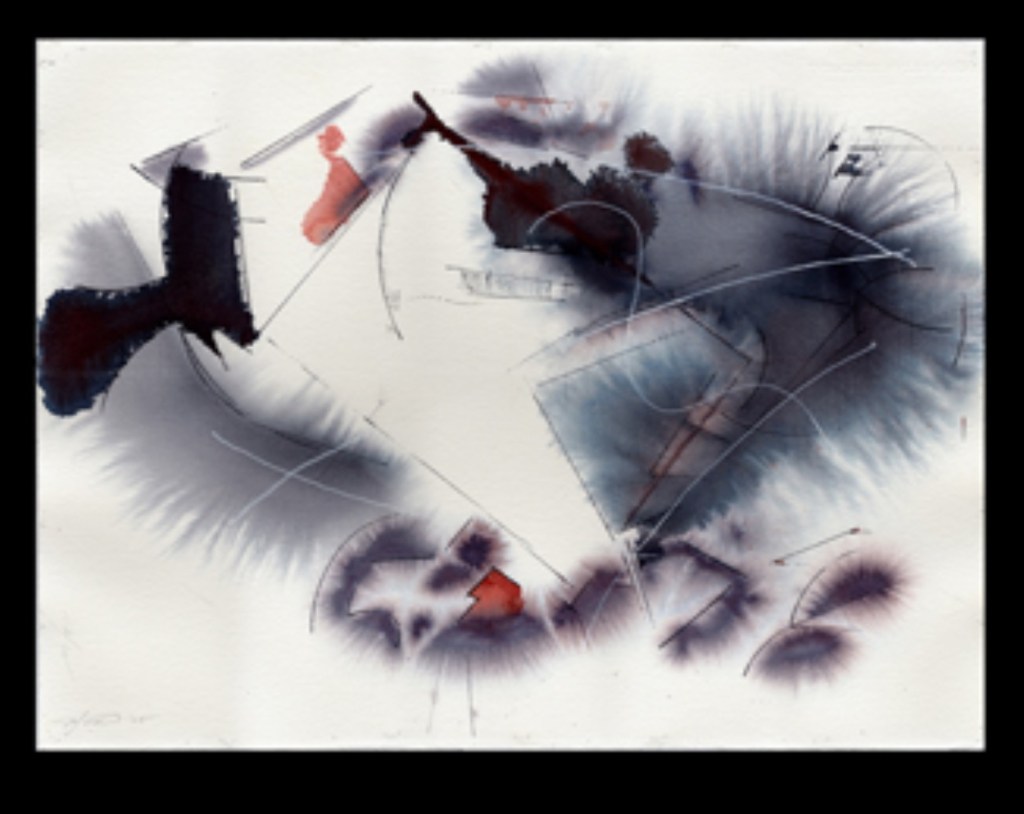
Untitled #1: Air Remembers
10″x12″
Watercolor
2003

By Ricardo F. Morín

October 2025

Oakland Park, Fl.

Memory is air where perception retrieves it.

We are memory; air is its cradle.

Before morning enters, scent holds what the night has carried away.

Before air's touch, we recognize all is breathing.

Each breath returns us to presence:    nothing explained, everything renewed.

Scent reaches us before thought;

Air remembers as we breathe:    recollection becomes present.

Breath is the body’s intelligence:    the mind’s foremost messenger.

Redolence provokes inquiry—the instinct to understand before it is named.

With moisture the world returns to us.

Scent travels on, sound softens, and the body recognizes again itself.

In excess, humidity—once restorative—begins to bury the senses.

All breathes through us and we through all to elicit change before there is voice.

“The Grammar of Conflict”

October 9, 2025

Ricardo F. Morín
Untitled #2
Watercolor
10”x12”
2003

By Ricardo F. Morín

Oct. 9, 2025

Bala Cynwyd, Pa

Conflict endures not only because of the grievances that ignite it, but also because of the internal logic that sustains it.    Hatred, victimhood, hypocrisy, tribalism, and violence do not operate as separate forces; they form an interdependent system that is justified at every turn.   This essay examines a system of conflict as a grammar—a set of rules and patterns through which antagonism shapes thought, legitimizes action, and perpetuates itself across generations.    The objective is not to judge but to expose how conflict becomes self-sustaining, how violence evolves from an instrument into a ritual, and how contradiction becomes the very foundation upon which societies act in ways that betray their own professed values.


1

Conflict, when stripped down to its structure, is less an event than a language.   Conflict is learned, repeated, and transmitted—not as instinct alone but as a structured framework through which people interpret events and justify actions.   Violence is only one expression of conflict; beneath the act lies a sequence of ideas and reactions that not only precede violence but also weave hostility deliberately into a fabric of continuity.   Understanding this grammar of conflict is essential, because it shows how human beings can remain locked in cycles of harm long after the original reasons have disappeared—not by accident, but because the rhetoric sustaining conflict extends the original violence far beyond its initial cause.    What appears spontaneous is often scripted, and what seems inevitable is, more often than not, the cumulative result of choices that have hardened into reflex.

2

Hatred is the first syntax of this grammar.    Conflict does not erupt suddenly but accumulates over time, layer upon layer, through memory, myth, and selective narration.    Conflict is presented as a defense against a perceived threat or subordination; yet its deeper function is preservation.    Hatred sustains identity by defining itself against what it is not.   Conflict, once entrenched, ceases to depend on immediate threat.   Conflict becomes self-justifying.   It becomes a lens that reinterprets evidence in conformity with its narrative and expectations.    Conflict prepares the ground on which it thrives and provides ready-made explanations for future disputes.

3

Victimhood gives hatred an enduring vocabulary.   It converts the suffering from a past event into a permanent political and social resource.   Suffering is a condition we all inhabit.    Yet to make suffering the core of collective identity is strategic.    Suffering allows communities to claim moral authority and to legitimize otherwise illegitimate actions.    The story of injury becomes a foundation for retaliation.    Herein, however, lies a trap:   identity anchored in victimhood threatens the cessation of its narrative.    Without the presence of an adversary, legitimacy loses potency.    The original wound remains open—remembered and weaponized for all that follows.    Each new act of aggression is framed as a defense of dignity and as a reaffirmation of suffering.

4

Hypocrisy is the structure holding this system together.    Hypocrisy enables simultaneous denunciation and deployment of violence.    It is a proclamation of ideals systematically violated.    Hypocrisy not only conceals contradiction; it embodies it.    It is, in fact, a vain attempt to invoke justice, to speak of universal rights, and to decry cruelty.    The resulting duplicity is essential.    Hypocrisy presents violence as a legitimate principle, domination as protection, and exclusion as necessity.

5

Once hatred, victimhood, and hypocrisy have aligned, violence becomes a ritual—not a reaction.    This ritual can claim instrumental goals:    the recovery of lost territory, the righting of past wrongs, or the assurance of safety.    But over time, the purpose fades and the pattern remains.    Each act tries to confirm the legitimacy of the last and to prepare a justification for the next.   The cycle no longer requires triggers; conflict sustains itself through momentum.    Violence becomes a means through which the collective is used to consolidate identity and to institutionalize memory.

6

Tribalism is a ritual of emotional power.   Conflict reduces the complexity of human experience to affiliation and exclusion.  Within this framework, radically different standards judge shifting actions according to who commits them.   What outsiders called terrorism becomes a defensive force within the tribe.   The tyranny of an enemy becomes the tribe’s strength.   Tribalism turns contradiction into coherence; it makes hypocrisy acceptable; it transforms violence into allegiance and reprisal into obligation.    The more deeply divisions define a society, the more indispensable conflict becomes to its sense of purpose.

7

Violence is no longer a response; it is a condition.    Violence persists not because it serves immediate goals, but because it affirms permanence.   Ending a cycle means dismantling its sustaining narratives; it means acknowledging an enemy is not immutable; victimhood is no longer unique; ideals no longer coexist with betrayals.

8

The illusion of inevitability is insidious.    If conflict frames destiny, accountability dissolves.    Reaction explains every action as defensive.   Herein, recognition diminishes agency; violence becomes not a choice but a forced external condition, an illusion allowing the cycle to continue.

9

Breaking the continuation is neither difficult nor mysterious.   Hatred as an explanation simplifies and legitimizes the narrative; it offers ideological reassurance; it sustains a false sense of control.    Together they form a system that seems natural, but familiarity is not fate.    The grammar of conflict is learned; what is learned can be unlearned.   The first step is to elucidate and to recognize what seems inevitable is only a choice disguised as a reaction.   Thus societies can construct new grammars, without enmity, without vengeance, and without domination.

10

To diagnose conflict is not to diminish suffering or to excuse violence.    An understanding of how suffering and violence endure reveals that each helps to sustain the other.    Profound injuries are not those inflicted once but are those kept alive by stories repeated about them.    The cycle endures because unreason has its own reason; it preserves the stories that keep us injured and persuades us of their necessity.    It is not that people act without reason, but that they rationalize the irrational until irrationality itself becomes the organizing principle of their behavior.    Exposing their grammar is not a solution, but it is a beginning:   a way to make visible the architecture of antagonism and, perhaps, to imagine forms of coexistence that no longer depend on perpetual conflict for their justification.


Edited by Billy Bussell Thompson, Oct. 9, 2025, NYC, NY

“Intervals”

September 2, 2025

*

Design cover by Ricardo Morín
Aposento Nº 2
29″ x 36″
Oil on canvas
1994

Author’s Note

Intervals is written in a cadence held taut at the threshold of life and death.   It does not withhold itself, though its language remains stripped of explanation.   Ambivalence may be inescapable, but it is not the aim.   The anonymity of the speaker is deliberate, to keep attention on what is spoken rather than on who speaks.

Ricardo Morín, September 11, 2025. Bala Cynwyd, Pa.

Intervals

To heal himself, he would cover his body in mud and then rinse it away.    Crouched beneath the burning sun, he stared diagonally from a corner across the far end of the yard.   From the clothesline he hung a black umbrella, upside down.    Into it he cast the last handful of potions. From its collapse, heavy with weight, he hoped to avoid his own death.

He covered his books with a black sheet; blindly he pulled one out at a time and, after finding a sentence giving meaning to his thoughts, he put it back.   He waited for revelation.    His mother, now old, took another book out and searched for a better reply.

Exhausted and sleepless, he lay wrapped in a red blanket with his back to the mirror.    Drenched in tears, he felt undone.   Shivers traced his spine, as though his entrails were on fire.

He woke to the sound of running water.   His mother would scrub his garments until the fabric began to fray.    He had painted the walls white; the doors ceased to be brown.    An intruder leapt over the fence.   Then, with a surprising strength, he tore up the garden.

Nights followed without sleep.    He was unaware of sunken cheekbones; only his neighbors’ gaze could see him wasting away.     He managed to fly afar.     Though attentive to life, he found disappointment.

On arrival the hotel summoned an ambulance.    After a ten-hour flight, septic shock seized him; a nurse asked him to choose a destination.    Shivers returned.    He saw many dying, though it was not his turn.     Days later, his flesh returned to life.

With the memory of past ties, he departed again disappointed.    He crossed another distance and knew how fragile his solitude was.

You rescued him and he you.    A bridge was built out of longing.    Three years of passion did not mend the abyss; he took his life and you remained.

A Roman curate attended his mother’s cries, while he twisted her son’s.     Little did the curate know that it was by his own design.     He called for you, a new love, to come.    To love, to sustain the bond of the moment.


Epilogue

Intervals rests on our fearful perception of death, solitude, survival, and rupture (an interval is the rhythm of time and its ending is the emptying of what the consciousness of fear carries in it).    An interval seeks neither consolation nor resolution; it remains with what occurs, in the exposure where solitude and fracture reveal the fragility of existence.


“The Woman at the Glass Shop”

August 6, 2025
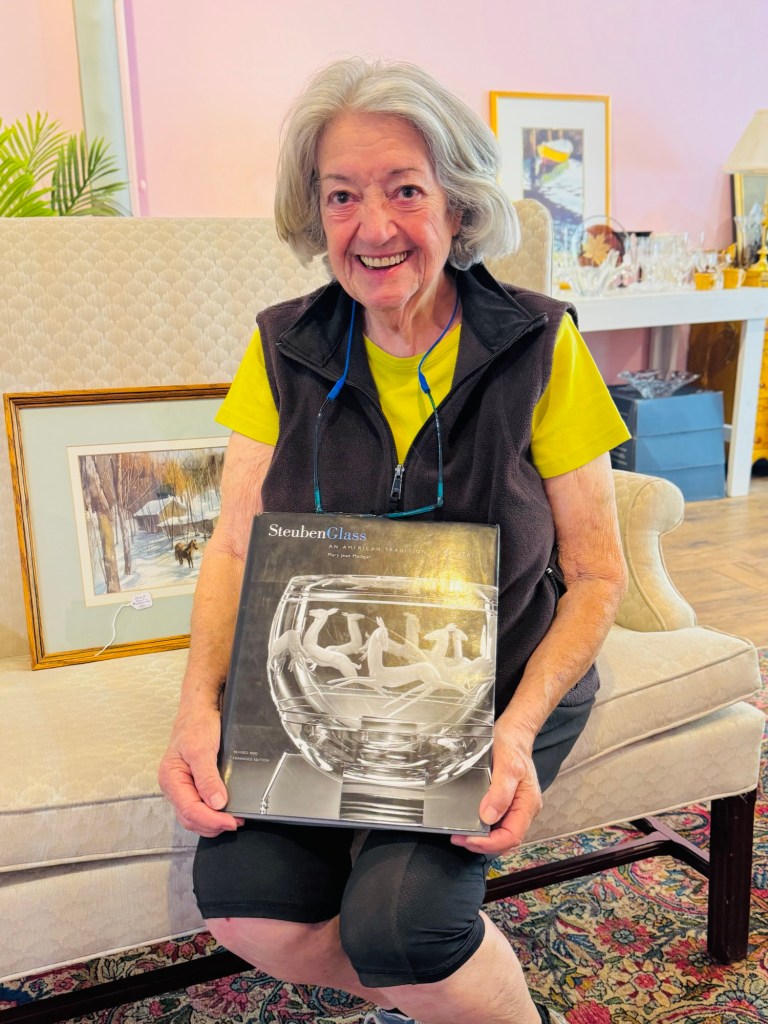
Photo 0f Catarina (Kitty) O’Bryan-Erlacher by Ricardo Morin.
 Kitty is holding the book Steuben Glass: An American Tradition in Crystal by Mary Jean Madigan.
This appears to be the revised and expanded edition, as indicated in the lower left corner of the cover

*

For Kitty O’Bryan-Erlacher, whose friendly grace, profound clarity, and genial wit made a brief moment feel like a lasting gift.

Ricardo Morin — Corning, New York, August 2025

In transit to our cousin Shayna’s wedding to Johnny, we passed through Corning, New York, and spent a few unhurried hours browsing the shops along West Market Street. The sky had the muted softness of a Monday unbothered by haste. On a quiet corner, we came upon the Erlacher Steuben Glass Shop—a space luminous with its own kind of luster.

Inside, we found what would become the wedding gift: a round crystal plate titled Vesta Plate (1993) by Peter Drobny (born 1958). It was displayed simply but with taste, as museum art waiting patiently to be understood. Alongside it stood two glass vases—bold and elegant: one translucent ultramarine, the other an opaque, intense lavender. We decided they too should come with us.

The shop, we learned, was founded in 1960. Its steward now is Catarina (“Kitty”) O’Brian-Erlacher, born in 1938—a woman of 87, with a deep well of charm, intellect, and quiet fortitude. Her husband, Mr. Roland (Max) Erlacher (1933, Vienna – July 2022), had arrived from Vienna in 1957 to work for Steuben Glass (founded in 1903 by Frederick Carder). There, in Corning, he met Kitty. Their story became the store’s story—one of craft, beauty, and the steady guardianship of glass as both object and art.

When I first approached Kitty, I mistook her for a fellow client. We began talking easily, without expectation. Art turned into astrology; numerology followed. I was caught in the kind of exchange that slows time—until my husband, David, interrupted, suggesting I was perhaps being too talkative. I teased, calling him “the boss.” Kitty, smiling, said, “You’re very smart.” I replied, “We should aim to be smarter,” and turned the compliment back to her. She graciously demurred.

As it happened, the cost of our three selections (including one from the Vitrix Hot Glass Studio and another from the Corning Museum of Glass) would, in Kitty’s words, “cover the shop’s needs for the entire month of August.” That small admission made our brief encounter feel suddenly momentous. The wrapping of the pieces—particularly the Vesta Plate—proved difficult. The oversized plate resisted all the available box sizes. Instinctively, I offered help and reassembled one of her boxes to fit the plate precisely. Kitty, watching with both amusement and admiration, called it brilliant.

She then brought out a reference book on her husband’s work. The exuberance of his designs, rooted in the lineage of Art Nouveau, seemed to fill the room with light. But when she spoke of him, words failed. Her eyes grew teary, and all she could manage was, “He was the kindest man.” I paused, gave her a long, knowing glance, and offered only silence in return—more interested in cheering her up than inviting grief.

When David and I finally parted from her, I lingered a moment amid the quiet exchange of goodbyes. Then, slowing my pace as we crossed the threshold, I turned and said softly, “God bless you, dear.”

*


“The Seventh Watch”

August 6, 2025

*


Ricardo Morin
The Seventh Watch
(Template Series, 5th panel)
Watercolor over paper
22” x 30”
2005

Introductory Note

Ricardo Morin is a writer and researcher of the history of thought as a dynamic and evolving practice—a student of unspoken gestures, a language stronger than words, especially when interlocutors no longer listen to each other. Drawing on reflections on the cycles of life and a personal experience approaching the last, he invites readers to consider how quiet vigilance and tenderness can shape a meaningful existence. The Seventh Watch emerges from decades of living attentively, offering a humble testament to dignity through perseverance and care.

71 Years

I’ve lived seventy-one years. That alone still surprises me—not because I ever expected an early end, but because each year has asked more of me than the last. There was no dramatic fall, no single crisis to point to. Just a slow, constant shaping—of the body, of temperament, of the will.

Illness didn’t come in childhood. It arrived later, in my early twenties, during a snowbound winter in Buffalo. I was just beginning to live on my own, full of ambition and unfinished dreams. The diagnosis was mononucleosis—but it wasn’t the name that mattered. It was the way it interrupted momentum, slowed my pace, and revealed something deeper: the lifelong task of learning to live within my own limits.

That was the beginning—not of a medical history, but of a different kind of vigilance. Not directed outward, but inward. A quiet realization took root: that survival, if it was to be meaningful, required not just endurance, but restraint. A way of protecting myself from myself. That discipline wasn’t harsh—it became a kind of devotion. Not to self-denial, but to finding the clarity of a peaceful mind. To living with more care than urgency.

I don’t see illness as noble, but I do see in it a mirror—not for the pain, but for the truth it reflects. What can be tended, what must be relinquished, what deserves attention. I don’t claim wisdom from illness, but I recognize what it’s taught me to let go of: illusion, pride, and the frantic chase after things that do not last—such as the accumulation of wealth or power.

I’ve come to think of it simply as endurance—the kind illness teaches when you stop resisting and begin listening. There’s an ethical arc in this awareness—not born of dogma or belief, but shaped by experience. It bends not toward triumph, but toward tenderness.

This isn’t a story of pathology. It’s a story of attention—of refining the self without hardening it. Of discovering that maturity means knowing when to persist and when to pause. That the quiet act of sustaining one’s life—daily, attentively—is its own form of courage.

I never set out to write a testament. But seventy-one years in, I see the outlines more clearly. And in that, there is dignity.

Yet, dignity is not a reward. It arrives without announcement, without ceremony. It builds slowly—through the daily rituals of rising, of choosing what to carry and what to set down. It does not shield one from sorrow, nor make suffering easier to bear. But it gives the days a certain weight.

I’ve come to cherish that weight—not as a burden, but as proof. Proof that I’ve lived through each season not untouched, but intact. And that, even now, the task is not to escape life’s demands, but to meet them with steadiness.

What I’ve learned isn’t mine alone. Anyone who lives long enough will be asked to reckon with time—not as a thief, but as a sculptor. Illness, especially, teaches us how little control we truly have—yet how much presence we’re still capable of. It humbles and joins us. Not in sameness, but in mutual recognition.

Endurance, I’ve found, is not passive. It’s not about waiting for pain to pass. It is active, quiet, often unseen. It means choosing how to live when choice feels narrow. It means tending to life not with haste, but with attention.

There is no finish line to this work. Just the quiet act of continuing.

So I continue—not because I must, but because life, even in its reduced dimensions, still offers room for meaning. Some days that meaning is faint. Other days it is simply the act of rising, or writing a letter, or remembering the snow. But it is there. And as long as it is, I remain.

*


“A Memorandum on Knowing Oneself”

August 2, 2025

*


Ricardo Morin
Triangulation 40

22″ x 30″
Body color, sanguine, sepia and Sumi ink on paper
2008


By Ricardo Morin

August 2, 2025

Bala Cynwyd, Pennsylvania

*

There are nights when sleep does not bring rest, but fire. Waking comes not from habit, but from the certainty that something must be understood. Not in a romantic sense of inspiration, but from the need to bring coherence to what is felt and remembered. Writing becomes a form of release: a counterweight to fatigue, an effort that both exhausts and restores.

Some days end in hollow silence, especially after confronting old wounds or noting the latent tensions in family history. What begins as scattered, even frantic thought gradually takes shape. A curve appears: from confusion to focus, and from focus to clarity. In that quiet progression, peace returns.

This rhythm is not chosen for comfort. It comes with broken sleep, exposed emotions, and an urgency born not of excess, but of necessity. Circumstances press in. When thought accelerates and the need to give it form becomes insistent, it is not excess but response.

Yet, nothing in this process happens in isolation. Even when no voices are named, no clarity arises without attunement with others—some near, some distant, some unknown. The work does not emerge from a single hand, but from a convergence of attentiveness, reflection, and exchange. Support comes not as authorship or possession, but as atmosphere, influence, and a presence that accompanies.

What is written here is not a record to own, nor a declaration to be remembered. It is a mark—a point of reference, placed not out of fear, but with lucidity. Whether revisited or left behind, it offers a place to return to if the journey darkens again. Nothing more is asked of it. Nothing less is owed.

*


“A Soliloquy”

July 6, 2025

*

Ricardo Morin
New York Series, No. 1
56″ x 84″
Oil on canvas
1992

Preface

What follows does not simplify or announce itself.  It moves inward—through observation, thought, and the tension between clarity and disappearance.  The soliloquy keeps to its own course:  neither performing nor explaining, but sustaining an interior gaze.  To read it is not to be guided, but to remain with it—where thinking becomes presence, and language measures what endures.


Soliloquy

Once upon a time, there lived within the writer a creative energy—its force and passion for self-expression—that sustained him. It was not summoned; it simply endured.  So arresting was this presence that he could not discipline it into routine or mold it into a pattern for physical endurance.  He could not pause it for walks or for any activity not already part of the act of creation itself.  He resorted to standing while writing, walking while reading, sleeping while thinking.

His experience was never an affliction to be named or cured, but a life to be lived on its own terms—a creative testament to the fullness of being, not a clinical footnote to someone else’s definition.  Choosing not to be defined by it honored both its agency and his lifelong work.  It was a condition to be understood alone, even if shared in writing—yet never in search of validation.

Within the boundaries of personal insight, it revealed itself as a form of devotional absorption, one that brought dignity even in moments of physical strain and aging.

His refusal of validation was not an opposition to authority, but a denial that any external pressure should exist.

Some said there was nothing unique in anyone, that all expression merely reflected what had been learned.  The writer did not disagree, yet he knew there was more to being than what one received—even from experience itself.  Perhaps no one was unique, but each voice was distinct—formed from the sum total of an existence that could not be equated. From a random mixture, an ineffable summation, something emerged:  something irreplaceable and irreproducible—not because it exceeded others, but because it belonged only to the one who bore it.

He feared madness—not as spectacle, but as the slow drift of meaning into isolation.  The force within him was real, yet not entirely satisfying unless it discovered truth—truth that resonated not only within his own logic but in the logic of others.  How else could one know oneself if intelligence remained solitary?  Without echo, thought became a sealed chamber:  intricate, yes, but airless.  He did not seek certainty; he sought correspondence.  It was not solitude he feared, but becoming untranslatable.

Life now appeared transient, precarious—timeless in sensation, yet embedded in time.  It moved furtively—through failings, disappointments, and sudden moments of radiant clarity.  Nothing could be reproduced.  But he had come to accept that—not because it was lost, but because even memory altered what it held.  What repeated was not the moment, but the act of noticing—the deepening of attention.   And so he did not live to preserve what was, but to remain present as it changed.  There was no going back, only going further—more attentively, more awake.

*

Ricardo F. Morin Tortolero

In transit on July 6, 2025