Posts Tagged ‘Memory’

“A Soliloquy”

July 6, 2025

*

Ricardo Morin
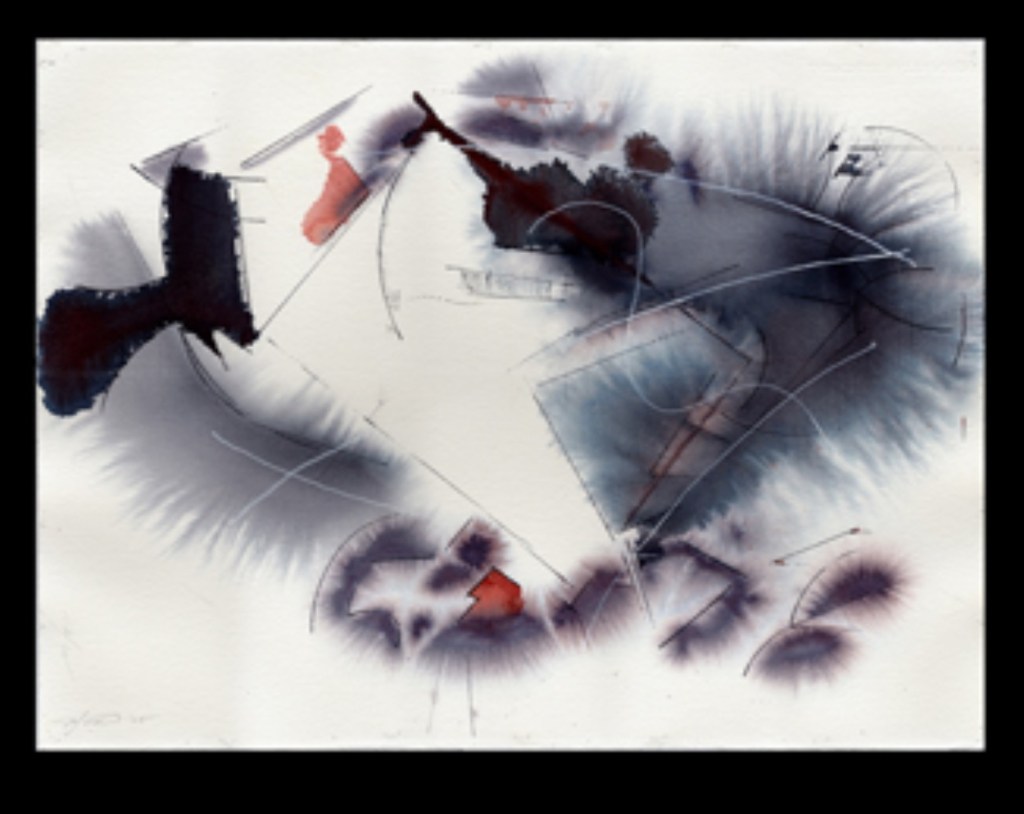
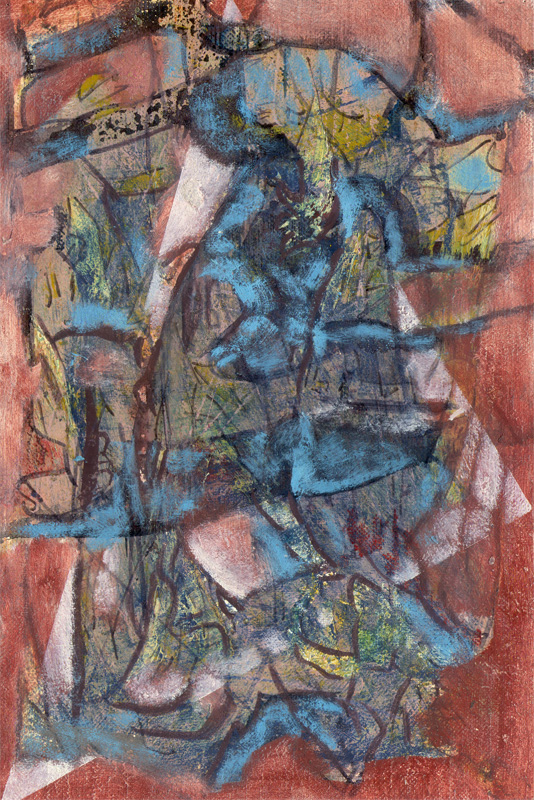
New York Series, No. 1
56″ x 84″
Oil on canvas
1992

Preface

What follows does not simplify or announce itself.  It moves inward—through observation, thought, and the tension between clarity and disappearance.  The soliloquy keeps to its own course:  neither performing nor explaining, but sustaining an interior gaze.  To read it is not to be guided, but to remain with it—where thinking becomes presence, and language measures what endures.


Soliloquy

Once upon a time, there lived within the writer a creative energy—its force and passion for self-expression—that sustained him. It was not summoned; it simply endured.  So arresting was this presence that he could not discipline it into routine or mold it into a pattern for physical endurance.  He could not pause it for walks or for any activity not already part of the act of creation itself.  He resorted to standing while writing, walking while reading, sleeping while thinking.

His experience was never an affliction to be named or cured, but a life to be lived on its own terms—a creative testament to the fullness of being, not a clinical footnote to someone else’s definition.  Choosing not to be defined by it honored both its agency and his lifelong work.  It was a condition to be understood alone, even if shared in writing—yet never in search of validation.

Within the boundaries of personal insight, it revealed itself as a form of devotional absorption, one that brought dignity even in moments of physical strain and aging.

His refusal of validation was not an opposition to authority, but a denial that any external pressure should exist.

Some said there was nothing unique in anyone, that all expression merely reflected what had been learned.  The writer did not disagree, yet he knew there was more to being than what one received—even from experience itself.  Perhaps no one was unique, but each voice was distinct—formed from the sum total of an existence that could not be equated. From a random mixture, an ineffable summation, something emerged:  something irreplaceable and irreproducible—not because it exceeded others, but because it belonged only to the one who bore it.

He feared madness—not as spectacle, but as the slow drift of meaning into isolation.  The force within him was real, yet not entirely satisfying unless it discovered truth—truth that resonated not only within his own logic but in the logic of others.  How else could one know oneself if intelligence remained solitary?  Without echo, thought became a sealed chamber:  intricate, yes, but airless.  He did not seek certainty; he sought correspondence.  It was not solitude he feared, but becoming untranslatable.

Life now appeared transient, precarious—timeless in sensation, yet embedded in time.  It moved furtively—through failings, disappointments, and sudden moments of radiant clarity.  Nothing could be reproduced.  But he had come to accept that—not because it was lost, but because even memory altered what it held.  What repeated was not the moment, but the act of noticing—the deepening of attention.   And so he did not live to preserve what was, but to remain present as it changed.  There was no going back, only going further—more attentively, more awake.

*

Ricardo F. Morin Tortolero

In transit on July 6, 2025


“Unattainable Gestures”

June 14, 2025

“Echoes of a life devoted to the elusive”

*


Ricardo F Morin
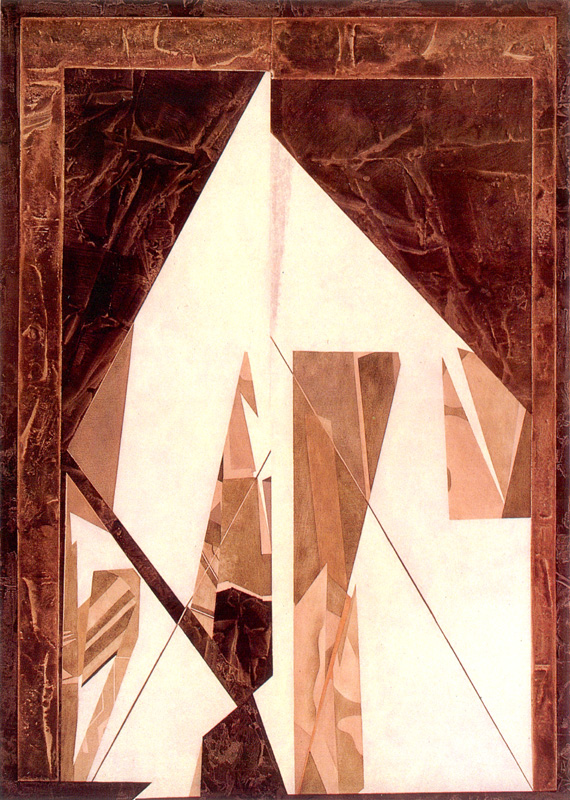
Triangulation Series Nº 38
9” x 13”
Oil on linen
2009

*

In memoriam José Luis Montero


For him, inspiration didn’t strikeit settled.    It arrived not with answers, but with permission to begin.

There was no ritual.    No dramatic turning point.    Only the canvas, the scent of oil, the shifting light across the floor.    One day folding into the next, until the work became its own weather—sometimes clear, sometimes stormy, but always present.

He believed in attention, not mastery.

What moved him wasn’t how the painting was achieved at any given moment, but when deconstructed he had to reclaim it, not out of skill, but out of necessity—when the hand moved before thought, and something more honest than intention began to lead.    And when it happened, it asked everything of him.

Any one watching—anyone but him—would have seen very little.    A trace.    A pause.    A slight adjustment.    But inside, something in him was listening—not to himself, but to the world, the material, the echo of a form not yet known.

He didn’t make work to be remembered, though he carried each piece like a child of his.    He made it to stay alive.    And when he encountered a finished painting years later, it stirred him physically.    It wasn’t nostalgia.    It was the smell of pigment, the sound of bristles, the grief of something nearly realized—lost, then found again.

Some days, the work moved with a kind of ease.    Other days, it refused.    He learned not to chase either.

He always began without knowing what he was after.    A shade.    A flicker of transparency.    A stroke that unsettled the surface.    Often the brush would stop midair, suspended while he waited for the next move to reveal itself.    Sometimes nothing came.    Those pieces sat untouched for weeks—a quiet unease in the corner of the room.

He lived alongside their silence.

The studio was never clean, but always ordered.    Rags folded.    Jars fogged with old turpentine.    Walls bearing soft outlines of past canvases.    The mess wasn’t careless.    It was lived-in—not careless, just lived-in.    Notes of Goethe’s pyramidal harmony hung besides mineral samples, sketches, color wheels, torn letters from art dealers.    Not for revelation—but for proximity.

Not every piece held.    Some failed completely.    Others, losing urgency layer by layer, failed gradually,    He kept those too—not as records, but as reminders.    Where the hand had gone quiet.    Where the work had ceased to ask.    Yet they became platforms—spaces for later returns, for deeper entry.

His days had no fixed schedule, though a rhythm formed over the years—a long devotion, interrupted, resumed, endured.

Now, he arrived late morning from the City.    The studio held the faint scent of wax and turpentine, laced with something older—dust, fabric, memory.    He opened a window if weather allowed.    Not for light but for air.    For movement.    For the slow turning of the fans like breath.

He made tea.    Sometimes he played Bach, or a pianist, whose fingers pressed deeper into the keys than others.    Other mornings:    National Public Radio.    A poet, a scientist, someone trying to say the impossible in ordinary words.    He liked the trying more than the saying.

He painted standing—rarely seated.    Some days he moved constantly between easel, sink, and mixing table.    Other days he barely moved at all.    Just watched.

Lunch was simple.    Bread.    Fruit.    A little cheese.    Sometimes eggs, lentils, soup across several days.    He didn’t eat out much—not out principle, but because it broke the thread.

If tired, he would lie on the couch at the back wall.    Twenty, thirty minutes.    No more.    And when he woke, the light had shifted again—slanted, softened, more forgiving.    The canvas looked changed.    As if it had waited for his absence.

Late afternoons were often the best.    A second wind, free of pressure.    There was a looseness in the air, born from knowing no one would knock or call.    He spoke to the work then—not aloud, but inwardly.    This tint?    Too warm.    This stroke?    Too sure.    Let it break.    Let it breathe.    Let it speak without saying.

Sometimes the medium resisted.    A brush faltered.    A gesture collapsed.    He didn’t fight.    He gave it space.    If he stayed patient, it found its rhythm again.

Not everything reached completion.    Some works remained opennot abandoned, simply finished enough.    Others came suddenly, like music that plays without lifting the fingers.

By evening, he cleaned his tools.    Never rushed.    He wiped the palette.    Rinsed the jars.    Hung the rags to dry.    It was a kind of thanks.    Not to the painting.    To the day.

Then lights out.    Door closed.    Nothing declared.    Nothing completed.    Yet something always moved forward.

Grief, too, remained.    It lived in the room like dust—settled in corners, clinging to stretchers still bare, woven into old white sheets.

His sister’s illness came slowly, then all at once—while Adagio in G Minor played low across the studio.    He painted through it.    Not to escape, but because stopping would have undone him.    In the silence between strokes, he could feel her breath weakening.    Sometimes he imagined she could see the work from wherever she was.    That each finished piece carried a word he hadn’t dared to say aloud.    She would have understood.    She always had.

Later, when his former lover died—alone, unexpectedly, in Berlin—he stopped painting altogether.    The studio felt still in a way he couldn’t enter.    Even the canvas turned away from him.    When he returned, it was with a muted palette.    Dry.    Indifferent.    The first brush stroke broke in two.    He left it.    And continued.

Desire, too, had quieted.    Not vanished.    Just softened.    In youth it had been urgent, irrepressible.    Now it hovered—an echo that came and went.    He didn’t shame it or perform it.    He lived beside it, the way one lives beside a field once burned, now slowly greening.

Grief didn’t interrupt the work.    It deepened it.    Not in theme—but in texture.    Some of those paintings seemed familiar to others.    But he knew what they held—the weight of holding steady while coming apart inside.

Even now, some colors recalled a bedside.    A winter walk.    The sound of someone no longer breathing.    A flat grey.    A blue once brilliant, now tempered between longing and restraint.

He wondered sometimes about that tension.

But when he painted, stillness returned.

Seventeen years ago, when chemotherapy ended, the days grew quieter.

There was no triumph. Just a slow return to rhythm—different now.    The body had changed.    So had the mind.    He couldn’t paint for hours without fatigue.    The gestures once fluid were heavier, more tentative.

He didn’t resist it.

The studio remained, but the center of gravity shifted.    Where once he reached for a brush, now he reached for a pen.    At first, just notes.    Fragments.    A way to hold the day together.    Then came sentences.    Paragraphs.    Not about himself, not directly.    About time.    Memory.    Presence.    Writing became a solace.    A way to shape what the body could no longer carry. A place to move, still, with care.

It wasn’t the end of painting.    Just a pause.    A migration.    Writing required its own attention, its own patience.    And he recognized in that a familiar devotion.

Sometimes, the canvas still called.    It would rest untouched for weeks.    Then one day, without announcement, he would begin again.

The two practices lived side by side.    Some days the brush.    Some days the page.    No hierarchy.    No regret.    Only the quiet persistence of a life still unfolding.

There is no final piece.    No last word.

He understands now:    a life is not made of things finished, but of gestures continued—marks made in good faith, even when no one is watching.    A sentence begun.    A color mixed.    A canvas turned to the wall—not in shame, but because it had said enough.

He no longer asks what comes next.    That question no longer troubles him.

If anything remains, it will not be the name, or the archive, or even the objects themselves.    It will be the integrity of attention—the way he returned, again and again, to meet the moment as it was.

Not to make something lasting.
But to live, briefly, in truth.

*

Ricardo F Morin Tortolero

Bala Cynwyd, Pa., June 14, 2025

Editor:    Billy Bussell Thompson


Author’s Note

This piece, like much of what I’ve made in recent years, exists because of those who have sustained me.

To David Lowenberger—whose love and steadfastness give my life its rhythm.    Without him, continuity itself would falter.

To José Luis Montero, my first art teacher, whose presence early on became a compass I’ve never stopped following.

To my parents, whose quiet influence shaped my regard for form, devotion, and care.

And always, to my friend and editor, Billy Bussell Thompson, whose voice lives quietly in mine.


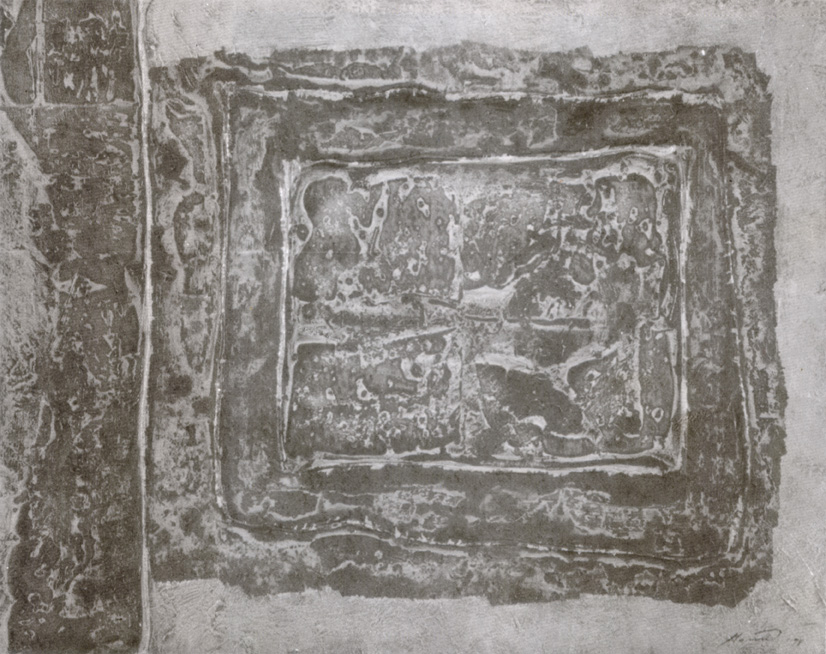
“A Bond’s Trace”

June 3, 2025


Ricardo Morín
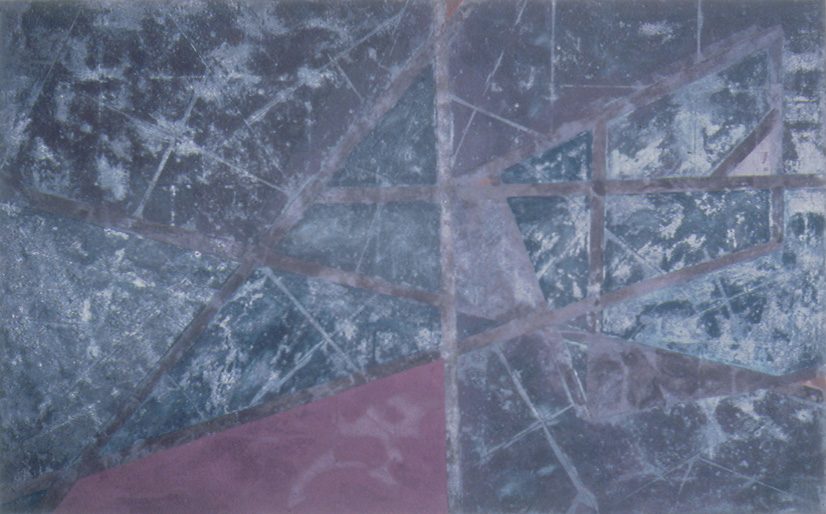
Buffalo Series, Nº 12
46" x 60"
Oil on canvas
1979
Ricardo Morín
Buffalo Series, Nº 12
46″ x 60″
Oil on canvas
1979

For those of us who have lost someone,

whose presence now rests in memory

and whose absence shapes who we are.

May this story preserve something of their enduring trace.


Julian tried to put into writing what he had dreamed.

He wondered:    could writing remain faithful to the one who watches, trembles, and longs to understand?

He dreamed he was offering his mother a bowl of viper’s broth.    The serpent’s head and torn fragments of its body were still writhing, as if unaware of their condition: alive, though undone. He held the bowl with both hands; it had been handed to him by an old woman seated at the far end of a wide, shallow circular pond.    The pond seemed to contain more than water—perhaps time, or memory, or fate.    Around him loomed shadows—blurred figures repeating the same ritual, or perhaps none at all.    He could not tell.

The path to his mother was arduous; the ground was slick with a substance he could not name.    The air was dense, weighted by an oppressive silence that made each step slow, burdensome.    The viper twisted in the broth, struggling to flee.   Even so, he kept the bowl steady.    He believed—in some quiet corner of himself—that if his mother drank, healing might be reached, or understanding, or peace for them both.

When he reached her, he knelt.    He spoke gently, urging her to drink while the broth was still warm.    “Hold the spoon carefully,” he whispered.    “Just small sips.”    But she turned her face away.    She would not drink.    Whether out of fear, pride, or rejection of what was offered, he did not know.    The viper shuddered, and his heart tightened in anguish.

He awoke unsettled, exhausted.    The dream still veiled his perception.    His breath was strained, shallow in the thick air of the room.    Why couldn’t he find calm?    What, exactly, kept him awake?

He wondered if it had been a premonition—a latent fear of his own decline.    Was the writhing snake a vision of his mind losing its serenity?    Were the slow gait, the unstable ground, the trembling hands a rehearsal of his own fading?    Or was it grief—that quiet interloper of the soul, forever hungry, never sated?

He only knew he had tried to help, to steady, to offer comfort that could not be received.    And in doing so, he faced not only the absence of his mother, but the shadow of his own dread—the question of who would walk beside him when his own farewell arrived.

But perhaps—he thought—there is something sacred in the attempt.    In the offering, even when refused.    In the slow advance—however uncertain it may be.


There, humility may dwell:

the kind that does not demand,

and yet disarms pain

by its presence—

too steady to be cast aside.

It meets no resistance—

only the quiet invitation to be welcomed.

Ricardo F. Morin Tortolero

Bala Cynwyd, Pa, June 2, 2025


“What the Mind Forgets but the Heart Quietly Keeps”

April 20, 2025

*

*


“Mario Vargas Llosa was a daring truth-teller.   He was also my friend.”

— Marie Arana, The Washington Post

Read the full article


*

I sent Marie Arana’s moving tribute to my sister, Bonnie, who had directed several of Vargas Llosa’s plays in Madrid and had encountered him on more than one occasion.    I knew this news would strike a deeply personal chord.

“It’s clear how deeply Vargas Llosa’s death has affected you,” I wrote to her.

“You felt close to him—not only as a reader or as a playwright, but as someone whose voice accompanied you through many chapters of your life.    Your grief resonates with me, because I understand what it means to lose a figure who, though not family, becomes part of our inner landscape—someone who shapes our ideas, our convictions, even our way of seeing the world.”

She replied:    “the death of such a brilliant mind—so present for decades—left a void that is hard to name.”    That idea moved me deeply.

“It saddens me profoundly,” I wrote back,

“to consider the silence that now follows him.    I understand why this hits you so hard—perhaps because Vargas Llosa stood for the very opposite:    a luminous intellect, fiercely articulate.   To imagine even he is gone…    it hurts.”

“I’m with you,” I added.

“And even from afar, I hold you in this grief.”

These reflections stirred memories of our own family—of our father, whose cognitive decline began after a traumatic brain injury.    He slowly lost his speech, his clarity, his grasp of the world around him.

And our mother, who held on much longer, also slipped away eventually—her presence fading in slow motion.

Our paternal and maternal uncles, Calixto and Fredy, experienced the same kind of long, quiet departure.    Years of silence.   Gradual disappearances.    Losses we didn’t always know how to name, but which marked us all.

It’s a pattern I can’t overlook.

I’ve done the research.    (You may not know this.)    Genetically, my risk for similar decline falls in a moderate range.   Not a verdict, not a guarantee—just a presence.   A shadow that walks beside me, saying nothing, revealing nothing.

Sometimes I wonder whether knowing this helps or hurts.

But I choose to know.

I choose to face it.

Because if ever I find myself on that road, I want to walk it with the same dignity I saw in our parents—even in confusion, even in silence—when their eyes could still recognize us with a flicker of tenderness.

And I want you to know that.

I want us both to remember.

*

Ricardo Federico Morín Tortolero

April 17, 2025; in transit from Florida to Pennsylvania