Posts Tagged ‘continuity’

“Geographies of Survival”

December 2, 2025

*

Ricardo Morín
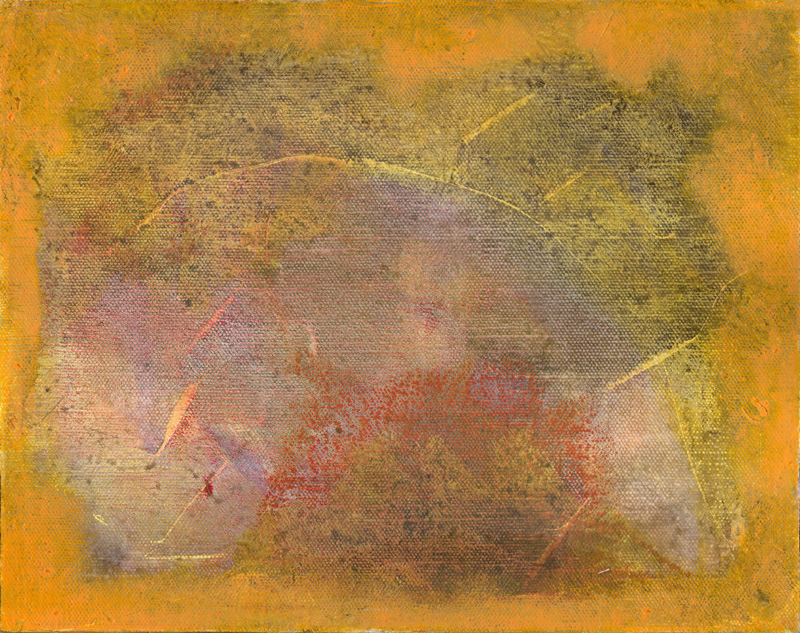
Still Thirty-seven: Geographies of Survival
Oil on linen & board
15″ x 12″ x 1/2″
2012

Ricardo F. Morín

November 2025

Oakland Park, Florida

This essay examines how human groups respond to instability when the conditions that once sustained them begin to fail.  Its focus is not on specific crises, events, or regions, but on the structural pressures that compel populations either to relocate or to defend their ground.   I approach the subject without moral interpretation and without attributing virtue or fault to the choices communities make under duress.  The aim is simply to describe the grammars of behavior that arise when survival becomes uncertain and to trace how identity, claims to legitimacy, and patterns of continuity reorganize themselves under those pressures.  The essay does not propose solutions or anticipate outcomes; it observes the patterns that emerge when stability dissolves and the land itself ceases to offer guarantees.

Geographies of Survival explores two fundamental responses to instability: migration and entrenchment.   When climate disruption, scarcity, or civic breakdown exceed a community’s capacity to endure, populations seek stability either through movement or through defending their position.   Migration reorganizes identity through adaptation to new conditions; entrenchment intensifies identity to preserve continuity in place.   These responses arise from the same pressures and function as parallel strategies for survival rather than opposing moral positions.   The essay examines how claims to legitimacy, patterns of identification, and the search for continuity are reshaped by these pressures, and how the friction between movement and resistance reflects structural forces rather than cultural incompatibility.   Its purpose is to illuminate the conditions under which these survival grammars emerge and the ways they transform the meaning of land, stability, and collective life.


1

Migration is often described as the movement of people from one place to another, but this description obscures the deeper forces at work.   Migration is not merely geography in motion; it is also the expression of a survival grammar that becomes visible whenever a community faces conditions it can no longer absorb.  Climate shifts, failing economies, collapsing states, and persisting insecurities create pressures that exceed the capacity of existing structures.   Under these pressures, a population confronts a choice so fundamental that it precedes ideology:  to move or to entrench.

2

These are not parallel options.   They are opposing responses built from the same materials—fear, instability, and the search for continuity.   Migration seeks stability by relocating; entrenchment seeks stability by confronting the agents of instability directly.   Neither response is superior.   Neither is voluntary.   Both emerge from conditions that compress judgment, narrow possibility, and force communities to defend themselves against forces too large to negotiate.

3

Migration begins when a group concludes that the geography that sustained it can no longer guarantee survival.   The land fails, or institutions collapse, or the future narrows.   Movement becomes the only remaining form of protection.   Yet movement does not dissolve identity—it reorganizes it.   A migrating population must redefine its internal coherence in relation to unfamiliar surroundings.   Identity becomes adaptive not by preference but by necessity.   Adaptation is not reinvention; it is survival.

4

Entrenchment moves in the opposite direction.   When a group chooses to remain in place, it must defend what movement would surrender:   territory, memory, continuity, and the stability that comes from rootedness.   Entrenchment therefore intensifies identification rather than loosening it.   Boundaries become rigid.   Narratives harden.   Conflict becomes a strategy rather than an interruption.   A community that fights to remain where it is must believe that displacement would erase it.   Confrontation becomes a method of preservation.

5

Cultural confrontation arises most sharply when a migrating population settles on land that another group interprets as an extension of its own continuity.   To the migrant community, the land represents safety, possibility, or relief from pressures that made departure unavoidable.   To the entrenched community, the same land represents memory, inheritance, and the boundary that protects its historical coherence.   Each group sees the other as the agent of potential erasure:   migrants perceive exclusion and hostility; entrenched populations perceive encroachment and loss.   Conflict escalates not because either group seeks domination, but because each interprets survival through a different grammar—adaptation for one, preservation for the other.

6

Policies adopted in countries such as Denmark and the United Kingdom illustrate how entrenched societies respond when migration is perceived as a threat. For many asylum seekers, these deterrent measures narrow the distance between the pressures that forced them to leave and the pressures they encounter upon arrival, a condition that makes stability difficult to distinguish from exclusion.   Governments frequently defend entrenched policies by arguing that the resources needed to support asylum seekers are limited, and that extending those resources further would risk weakening existing systems of welfare, housing, and public order.

7

These responses of movement and entrenchment seem incompatible, yet they describe a single reality:   populations under pressure behave according to the survival strategies available to them, not according to idealized accounts of culture or volition.   When migrants and entrenched populations come into contact, each sees the other through the lens of its own pressures.   Migrants see protection; the entrenched see threat.   Migrants carry adaptation; the entrenched carry defense.   Each posture misreads the other because each is responding to different forms of danger.

8

Climate change intensifies these divergent responses, not by determining them but by tightening the conditions under which communities must choose.   Climate does not produce conflict by itself; it alters the margins within which stability is possible.   Regions once predictable become irregular; resources once continuous become intermittent.   As these margins narrow, some populations interpret movement as the only viable safeguard, while others interpret remaining in place as the only defensible continuity.   The same pressure exposes different vulnerabilities, and each community responds according to its own history, capacity, and thresholds of endurance—rather than to climate alone.

9

The friction between these grammars—movement and entrenchment—should not be mistaken for a clash of civilizations.   It is a collision between two interpretations of threat.   One group treats survival as relocation; the other treats survival as resistance.   Both postures emerge from instability; both use identity as a tool shaped by circumstance rather than as a fixed inheritance.   Identity becomes an instrument of continuity, shaped by conditions that leave little room for negotiation or reflection.

10

The world often interprets these collisions through moral, ideological, or geopolitical frames, but such interpretations obscure the deeper movement:   instability reorganizes identity faster than identity reorganizes the world.   When geography shifts, populations adapt.   When populations adapt, meanings shift.   Collective life becomes contested not because cultures are inherently antagonistic, but because survival pressures force groups into patterns they would not otherwise choose.

11

If there is a universal character to the present century, it is this: the pressures that produce migration are the same pressures that produce conflict among those who refuse to migrate.   To understand one without the other is to misunderstand both.   Movement and entrenchment are not opposites but consequences—expressions of the structural instability that now shapes every region, every culture, every claim to continuity.

12

The question that follows is neither predictive nor ideological.   It is simply the next step in the logic of this analysis:   What forms of stability become possible when migration and entrenchment are understood not as opposing moral positions but as parallel responses to the same changing world?   The answer is not yet visible, but the conditions that will shape it already are.


“The Myth of Rupture:

September 30, 2025

Continuity as the Enabling Condition of Change”


Ricardo F. Morín
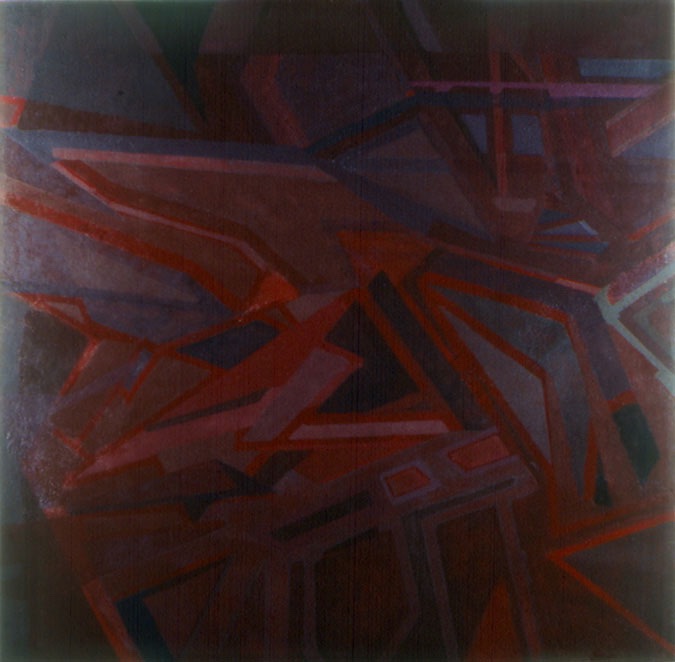
Untitled #6
Watercolor
2003

By Ricardo Morin

September 30, 2025

Bala Cynwyd, Pa

Nothing human begins from nothing.   Institutions, languages, belief systems, and works of art all arise from what preceded them.   Creation is not the rejection of inheritance but the transformation of it.   Every act of making draws upon accumulated perception, memory, and experience.   This insight is crucial to understanding contemporary culture, where claims of unprecedented change often conceal deep continuities beneath the surface of novelty.   Human beings, bound by temporality, cannot detach themselves from what has been; they can only reorder and reinterpret the materials already available to them.

The notion of invention is often described as a break with the past, a leap into the unknown.   Yet even the most radical departures are shaped by what came before.   The ideals of modern democracy, for example, did not emerge spontaneously.   They were built upon classical Greek ideas of citizenship as a shared civic responsibility, rooted in isonomia—equality before the law—and in the belief that legitimate authority derives from the deliberation and participation of free citizens.   They also drew deeply on Roman conceptions of law as a universal and rational order capable of binding diverse peoples into a common political framework, and on the Roman principle of res publica, which conceived the State as a public entity oriented toward the common good rather than the will of a single ruler.   These foundational ideas, adapted and reinterpreted over centuries, provided the intellectual architecture on which modern democratic institutions were constructed.   Perception frames invention.   It provides the vocabulary, assumptions, and conceptual tools that make new ideas possible.   What seems entirely new still carries the imprint of what it sought to move beyond.   On closer examination, the products of creativity are not isolated acts of originality but reconfigurations of existing structures.   Evolution, rather than spontaneous emergence, governs how ideas, institutions, and cultures take shape.

Memory underlies this process.   It is not a passive record of events but an active medium through which possibilities are conceived and action becomes intelligible.   Imagination draws its material from memory; it combines and redirects memory toward conditions not yet realized.   This is nowhere more evident than in the idea of freedom, a concept that resists simple definition yet has long carried two complementary meanings.   The first, articulated most clearly in the classical Greek tradition, understands freedom as eleutheria—the condition of living without domination or external constraint, a state in which individuals are not subject to arbitrary power.   The second, rooted in the Roman legal and civic tradition, conceives freedom as libertas—the capacity to participate actively in the governance of a political community and to shape its laws and institutions.   Both meanings reveal how deeply freedom depends on historical precedent:   it requires language to articulate its claims, institutions to guarantee its exercise, and collective memory to frame its significance.   Far from existing apart from what has been, freedom is shaped and enabled by what has already been conceived, argued, and enacted.   Prior experience supplies the references and alternatives against which choices acquire meaning.   Without that reservoir of knowledge, novelty would lack coherence and direction, and the exercise of freedom would collapse into arbitrary impulse.   Human beings do not invent in a void; they work within the continuity of time and adapt what has been lived and learned into forms suited to what is yet to come.

This same dynamic defines the formation of identity.   Selfhood is not an isolated act of invention but a continuous negotiation with what has been received.   The very idea of the self has itself evolved through history:   in classical philosophy, it was often conceived as a psyche—an inner essence shaped by reason and virtue and embedded within a larger cosmic order.   Christian thought reinterpreted this understanding through the notion of the soul as a unique bearer of moral responsibility, oriented toward salvation and defined by its relationship to God.   Early modern thinkers such as John Locke then transformed this inheritance by grounding personal identity in memory and consciousness — a conception that would later inform modern ideas of individual autonomy.   Even the impulse to define oneself against the past relies on categories inherited from it.   Identity is therefore neither static nor wholly self-created; it is a process of reinterpretation through which the individual positions what is given in relation to what is chosen.   Human beings exist in the tension between inheritance and aspiration, between the weight of memory and the desire for renewal.   That tension is not an obstacle to authenticity but its condition, for without the framework provided by the past there would be nothing from which to depart.   Continuity and change are not opposing forces.   Without continuity, there is no ground on which to become.   Without change, continuity hardens into mere repetition.   The act of becoming depends on the dynamic between the two.

Viewed from this perspective, the human condition is defined less by pure invention than by the capacity to transform.   What is called “new” is the familiar reorganized with new intentions, the established redirected toward new purposes.   Recognizing this does not diminish creativity.   It clarifies its nature.   Humanity’s most significant achievements—in politics, art, science, and thought—are not escapes from what has been.   They are deliberate reinterpretations of what has been, shaped to answer new questions and confront new circumstances.   In the sciences, paradigmatic shifts often described as revolutions still follow this pattern.   Einstein’s theory of relativity did not erase Newtonian mechanics; it incorporated and extended its principles, a revision that revealed their limits while preserving their usefulness within a broader understanding of space, time, and motion.   This same principle governs artistic innovation.   The Renaissance revival of classical forms did not merely reproduce antiquity; it reinterpreted ancient visual languages to express the spiritual and humanistic concerns of a new era.   The evolution of digital communication and artificial intelligence reflects a comparable continuity.   The internet did not replace human interaction; it expanded its reach and scale, a transformation that altered how language circulates, how memory is archived, and how collective knowledge is formed.   Similarly, artificial intelligence—often portrayed as autonomous or unprecedented—rests on centuries of linguistic, mathematical, and conceptual developments.   These systems extend rather than supersede the cognitive inheritance from which they originate.   The future is built in this way:   not in its rejection of the past but in its continuous interaction with it.

Resistance to this understanding persists wherever the idea of evolution is denied.   Such resistance is rarely a matter of evidence alone.   It reflects a desire for permanence—for a beginning that is untouched by change and a truth that stands apart from time.   It offers certainty where process allows none and promises stability in place of adaptation.   Yet even this resistance is shaped by the forces it seeks to escape.   Languages evolve, beliefs adjust, and traditions adapt, even as they proclaim their immutability.   Those who defend what is fixed do so with concepts and arguments that themselves have been shaped by historical change.   The very doctrines that claim timeless authority — such as the medieval conception of divine sovereignty, once invoked to legitimize monarchies and later transformed into the principle of popular sovereignty in modern constitutional systems—reveal this dependence:   they persist not by remaining unchanged but by being continually reinterpreted to meet new contexts.   The contrast, therefore, is not between evolution and its absence, but between recognition and refusal.   The reality remains:   existence unfolds through transformation, and humanity, whether consciously or not, participates in that unfolding—a truth with profound implications for how societies remember their past, shape their present, and imagine their future.


Further Reading:

  • Arendt, Hannah: Between Past and Future: Eight Exercises in Political Thought. New York: Viking Press, 1961.
  • Kuhn, Thomas S.: The Structure of Scientific Revolutions. Chicago: University of Chicago Press, 1962.
  • MacIntyre, Alasdair: After Virtue: A Study in Moral Theory. Notre Dame, IN: University of Notre Dame Press, 1981.
  • Floridi, Luciano: The Philosophy of Information. Oxford: Oxford University Press, 2011.
  • Koselleck, Reinhart: Futures Past: On the Semantics of Historical Time. Translated by Keith Tribe. New York: Columbia University Press, 2004.