Posts Tagged ‘Presence’

“The Ethics of Expression, Part II”

June 13, 2025

*


Ricardo Morín
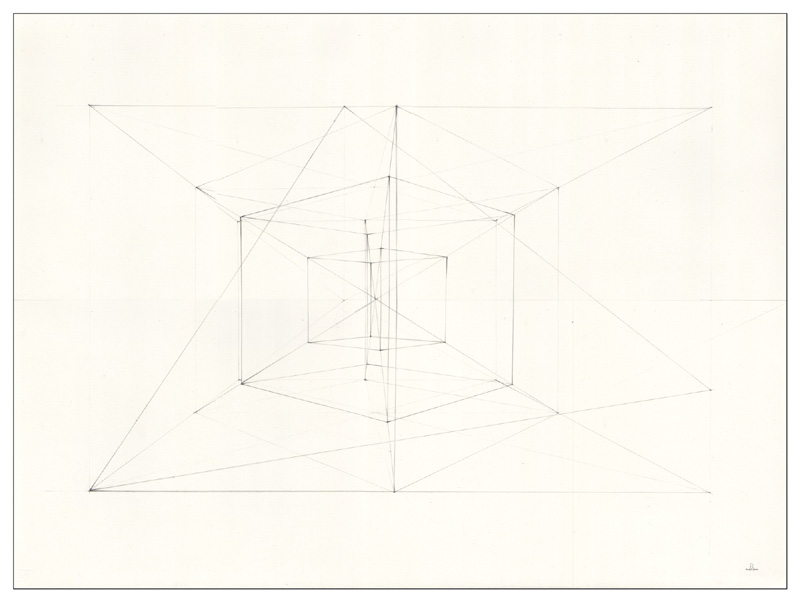
Triangulation 4
22″ x 30″
Graphite on paper
2006

To my sister Bonnie

*

Ricardo F. Morín

June 2025

Oakland Park, Florida

Author’s Note

This reflection was originally drafted before The Ethics of Perception, Part I, yet it belongs to the same inquiry into attention, understanding, and ethical relation.


There are moments when the truest form of intimacy is silence.
At other times, it’s the quiet labor of reaching for the right word—however incomplete—that brings us closer.
Expression, in this light, is not just a vehicle for communication, but an act of care.

To speak, to withhold, to write, to listen—each choice carries a particular weight.   
Intimacy lives in these gestures:    not in grand declarations, but in the ethics of how we reveal ourselves—and how we receive what another dares to offer.
What follows is not a theory, but a reflection on how intimacy appears in expression—and in its absence.

It’s hard to pinpoint the moment when something becomes intimate.
It isn’t always a touch, or a glance, or even a confession.
Sometimes, it’s just a pause—a shared pause—between one word and the next, when both people sense that something true is either about to be said or has just been said, without quite naming it.

Once, sitting face to face, I watched someone I cared for stare silently out the window.
I said nothing either.
There was no gesture, no disclosure, no clarifying words.
And yet the silence didn’t feel empty—it felt full.
In that stillness, something passed between us—not a message, not even an understanding, but a kind of permission:

To exist without explanation.
To be present without having to perform.

That moment stayed with me not because it was dramatic, but because it was unplanned.
I hadn’t expected it, and I couldn’t have recreated it.
I only knew, afterward, that I had been in the presence of something rare:
an intimacy that asked nothing more than to be.

And yet, not all intimacy is born in silence or in someone else’s presence.
Some comes later, through writing—in that long interval between feeling and saying.
Some is only possible thanks to the quiet distance that makes reflection possible.

The word intimacy often evokes physical closeness:
the realm of touch, proximity, lovers, secrets shared in the dark.
But what if intimacy were less about closeness than about permission?
The permission to be undefended.
To move slowly.
To be unclear—and still be trusted.

To be intimate with someone is not merely to be known, but to be seen—
seen without the pressure to explain yourself quickly or justify what you feel.
It’s an opening, and it’s also a risk:
the risk of being misunderstood, and the deeper risk of being understood too well.

Some forms of intimacy unfold face to face.
Others require distance.
Some happen through dialogue.
Others need a single voice, speaking on one’s own in a quiet room.

That’s where writing begins—
not as performance, but as a long conversation, uninterrupted.

Intimacy shifts with context, with time,
with the shape of the self we bring to another.
It is not one thing—
not just closeness, or tenderness, or vulnerability—
but a set of ways we allow ourselves to be known,
and sometimes, to know another.

There’s the intimacy of the body—
perhaps the most visible and least understood.
It belongs to touch, proximity,
the instinctive draw toward another’s presence.
But this form can deceive:
physical closeness without emotional resonance is common—
and easily faked.
Yet when body and emotion align,
there’s a wordless attunement:
a hand resting on a shoulder for just the right amount of time;
a breath falling into rhythm without intention.

Then there’s emotional intimacy:
the slow courage to say what one feels—
not just when it’s beautiful or convenient,
but when it’s awkward, incomplete, or raw.
This kind of intimacy isn’t given—it’s earned.
It may take years, or a single night.
Trust lives here—or breaks.

There’s also intellectual intimacy:
what arises in conversation
when ideas flow without anyone guarding their ground.
It’s rare.
Most social spaces reward speed,
the need to shine, or the safety of politeness.
But sometimes, with someone equally curious,
thought expands in the presence of the other—
not in agreement, but in response.
There’s nothing to prove—
only the pleasure of discovery.
That’s intellectual intimacy.
It creates a different kind of closeness—
not of feeling, but of perception.

Stranger still is narrative intimacy—
the kind that forms not between two people in the same room,
but between the one who writes and the one who reads,
separated by silence and time.
It isn’t immediate—
but it isn’t less real.
A voice emerges from the page
and seems to speak directly to you,
as if it knew the contours of your mind.
You feel understood—without being seen.
You may never meet the person who wrote those words,
but something in you shifts.
You are no longer alone.

These are not rigid categories.
They overlap, interrupt, evoke one another.
One may deepen another.
Physical presence can create emotional safety.
Intellectual closeness can open into unexpected tenderness.
And still, each has its own rhythm,
its own grammar—
and its own risks.

In that complexity, intimacy ceases to be a condition.
It becomes a practice:
something we learn,
lose,
revise,
and sometimes write
when no other form is possible.

Writing, too, is a kind of intimacy—
not only with others,
but with oneself.
Especially when it’s honest—
when what’s written is not just clever or correct,
but true.
That kind of writing doesn’t flatter.
It doesn’t argue.
It reveals.

We write to bring something forth—
not just for an audience,
but to hear ourselves think,
to see what we didn’t yet know we felt.
In writing, we become witnesses to our own consciousness—
both its lucidity and its evasions.

We follow a sentence
not only for its logic,
but for the feeling it carries.
And when that feeling falters,
we know we’ve lost the thread.

So we begin again, and again—
trying not just to explain,
but to say something that feels just.

In that sense, writing is an ethical act.
It demands attention.
It requires patience.
It invites us to inhabit our own experience
with precision—
even when that experience is fragmented or unresolved.

And if we are lucky—
if we are honest—
something in that effort will reach someone else.
Not to impress.
Not to convince.
But to accompany.

Sometimes you reach out—carefully, sincerely—and receive silence, indifference, or a response so misaligned it makes you feel naïve for having tried.
Other times, the failure is subtler:
a conversation that scatters just as something real begins to take shape—or a listener who hears your words, but not your meaning.

Those moments stay with us.
Not because they’re dramatic, but because they remind us how precarious intimacy can be.
It can’t be forced—just as humility can’t.
Both require a quiet letting go—a willingness to offer something without knowing how it will be received.
We can prepare the ground, make the gesture, risk the truth—but the rest depends on the other: their timing, their capacity, their willingness to meet us there.

There’s also the experience of being misunderstood—not just in fact, but in essence.
You try to say something that matters, and the other person responds to what they think you said—or to a version of you that never was.
It’s a blow—
that mismatch between what you tried to share and what actually landed.
The desire for intimacy becomes exposure without connection—a wound instead of a bridge.

Sometimes we avoid intimacy not because we don’t want it, but because we fear what it might cost.
We’ve been made to feel clumsy—for caring too much, or for being too visible.
Or we’ve shared something intimate, only to have it treated lightly—or analyzed without feeling.
After that, we grow cautious.
We speak less—or in fragments—or not at all.

It’s in the wake of such rejections—large or small—that writing ceases to be mere expression.
It becomes repair.
Writing allows us to recover what was lost in the moment—
to name what never reached its destination,
to finish the thought no one waited for,
to say it again—this time without interruption, without assumptions, without fear.

And while writing cannot undo the failure of a shared moment, it can offer something else:
coherence.
A record.
A form of truth that endures—even if it wasn’t heard.

In this way, writing becomes a quiet act of insistence—not against the world, but on behalf of the self.
It’s a way of saying:
What I tried to share still matters—even if it wasn’t received.

In the end, intimacy is not a state but a gesture—
repeated again and again—
toward understanding,
toward presence,
toward a shared sense that may arrive… or may not.

Sometimes that gesture is a word spoken at the right moment.
Sometimes it’s a silence held just long enough for the other to speak.
And sometimes it’s the act of writing—solitary, patient, unfinished—
offered not to a crowd,
but to a single imagined reader
who, one day, might need what you are now trying to say.

Writing, at its core, is a form of listening.
Not only to others,
but to the self that doesn’t rush,
doesn’t perform,
doesn’t need to persuade.

To the self that waits—
that wants to be known not by what it manages to say in quick response,
but by what it keeps trying to say with care.

That’s why I return to the page:
not because it guarantees connection,
but because it keeps the door open.
Because in a world that demands speed, certainty, and charm,
writing makes room for something slower and more faithful:
the long, unfinished gesture of trying to reach someone—
perhaps even oneself—
with something resonant.

And when intimacy happens—on the page or in life—
it’s never because we found the perfect words.
It’s because someone stayed.
Someone listened.
Someone let the moment open—without rushing to close it.

That’s what I’m doing now:
writing not to end something,
but to leave it open—
so that something of greater consequence might enter.

*

Ricardo F Morín Tortolero

Capitol Hill, D.C., June 9, 2025
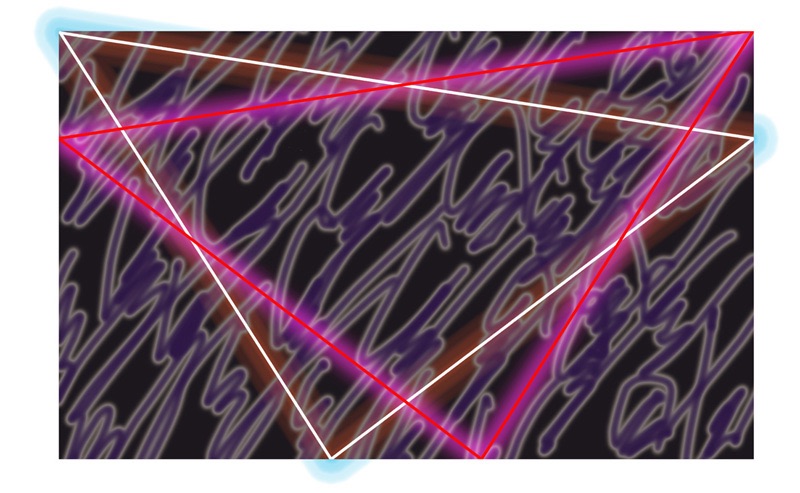

“Notes From Within” 

May 28, 2025
Triangulation Series M
C-Print
2007

“On Vulnerability”

*

Dedicated to my siblings

There’s a certain kind of person the world seems to admire—sharp-tongued, composed, deliberate.    He moves through life as if he’s never doubted the sound of his own voice.    His gestures are practiced, his opinions unshakable.    It’s a performance of authority, and to many, it’s compelling.

But I’ve never fit that mold.    I don’t hold myself like someone bracing for a fight with the world.    I don’t presume to master a room.    And more and more, I’ve come to believe that what makes a person is not how forcefully he presents himself, but how honestly he shows up.

Vulnerability has never been fashionable.    It doesn’t draw applause or dominate the stage. But it’s where I’ve found the most truth.    Not in being right, or revered, or untouchable—but in admitting how little I know, how often I’ve failed, and how much of life resists explanation.

We’re taught to act as if we’ve earned our place—through effort, through cleverness, through some innate worth.    But I’ve lived long enough to see how much is assumed, how much is favored, how many doors open not because of merit but because of circumstance, appearance, proximity to power.    The world flatters performance.    It often mistakes loudness for depth, certainty for wisdom.

But beneath all that, we’re fallible—achingly so.    We get things wrong.    We hurt people.    We retreat when we should have stayed, and speak when silence would have been kinder.    We tell ourselves stories to survive, not always to understand.

And yet, that fallibility isn’t shameful.    It’s not a flaw to be punished—it’s the most human part of us.    The mistake is not in being wrong; it’s in pretending we’re not.    Intimacy begins where performance ends—when we stop curating ourselves and let others see what is:    our confusion, our fear, our imperfect love.

I’ve stopped wanting to impress.    I want to be known.    I want to know others—not through their accomplishments or their poses, but through the quiet truths they carry.    I don’t need anyone to be flawless.    I need them to be present, to meet me somewhere beneath the surface.

That, to me, is strength.    Not the kind that commands a crowd, but the kind that sits across from others, unguarded, and says, “Me too. I don’t have it either.”

The world may never reward dishonesty with applause.    But it will reward it with connection—with moments that feel real, human, and lasting.    And in the end, I think that’s the only recognition that ever matters.    Not the illusion of certainty or the performance of strength, but the willingness to return, again and again, to the quiet inside us—the one where we are fallible, open, and fully alive.

*

Ricardo F Morin

Bala Cynwyd, Pa; May 28, 2025

Editor:    Billy Bussell Thompson


“What the Mind Forgets but the Heart Quietly Keeps”

April 20, 2025

*

*


“Mario Vargas Llosa was a daring truth-teller.   He was also my friend.”

— Marie Arana, The Washington Post

Read the full article


*

I sent Marie Arana’s moving tribute to my sister, Bonnie, who had directed several of Vargas Llosa’s plays in Madrid and had encountered him on more than one occasion.    I knew this news would strike a deeply personal chord.

“It’s clear how deeply Vargas Llosa’s death has affected you,” I wrote to her.

“You felt close to him—not only as a reader or as a playwright, but as someone whose voice accompanied you through many chapters of your life.    Your grief resonates with me, because I understand what it means to lose a figure who, though not family, becomes part of our inner landscape—someone who shapes our ideas, our convictions, even our way of seeing the world.”

She replied:    “the death of such a brilliant mind—so present for decades—left a void that is hard to name.”    That idea moved me deeply.

“It saddens me profoundly,” I wrote back,

“to consider the silence that now follows him.    I understand why this hits you so hard—perhaps because Vargas Llosa stood for the very opposite:    a luminous intellect, fiercely articulate.   To imagine even he is gone…    it hurts.”

“I’m with you,” I added.

“And even from afar, I hold you in this grief.”

These reflections stirred memories of our own family—of our father, whose cognitive decline began after a traumatic brain injury.    He slowly lost his speech, his clarity, his grasp of the world around him.

And our mother, who held on much longer, also slipped away eventually—her presence fading in slow motion.

Our paternal and maternal uncles, Calixto and Fredy, experienced the same kind of long, quiet departure.    Years of silence.   Gradual disappearances.    Losses we didn’t always know how to name, but which marked us all.

It’s a pattern I can’t overlook.

I’ve done the research.    (You may not know this.)    Genetically, my risk for similar decline falls in a moderate range.   Not a verdict, not a guarantee—just a presence.   A shadow that walks beside me, saying nothing, revealing nothing.

Sometimes I wonder whether knowing this helps or hurts.

But I choose to know.

I choose to face it.

Because if ever I find myself on that road, I want to walk it with the same dignity I saw in our parents—even in confusion, even in silence—when their eyes could still recognize us with a flicker of tenderness.

And I want you to know that.

I want us both to remember.

*

Ricardo Federico Morín Tortolero

April 17, 2025; in transit from Florida to Pennsylvania


“A Threshold of Silence”

February 12, 2025

*

Michael Basso
(June 28, 1955 – May 28, 2025)

~


During the last decade of his life, Michael’s health declined steadily, much as his father’s had in the years before him, burdened by a succession of illnesses that gradually narrowed the ordinary horizons of living.  Yet he continued to embrace each day with quiet resolve, even as the growing uncertainty of his own body became impossible to ignore.  His suffering was never his alone.  It was shared by the husband who remained at his side and by those who loved him. His final years revealed a condition that ultimately belongs to every human life.

*

Sometimes suddenly, sometimes almost imperceptibly through the passing years, there comes a moment when mortality ceases to be an abstraction.  It is no longer a distant eventuality, safely concealed beneath the routines of ordinary life or softened by the expectation of time still remaining.  It becomes immediate, undeniable, and inseparable from the consciousness through which we experience the world.

For some, this awakening begins with the quiet betrayals of the body.  A stiffness that no longer disappears with rest, a memory that hesitates before returning, a step taken with unexpected caution, each becomes a subtle reminder that permanence was always an illusion.  For others, it begins with loss.  The death of a friend, a sibling, a parent, or a spouse quietly reveals that what has happened to another now belongs, inevitably, to oneself.

Such awareness alters the measure of time.  The future no longer appears boundless, nor does the past remain merely a record of what has been.  Each assumes a different proportion.  Without consciously intending it, we begin to measure life less by what has been accomplished than by what still remains possible.

The mind instinctively resists this recognition.  It seeks refuge in plans, obligations, familiar routines, and the reassuring continuity of ordinary existence, as though attention itself might postpone what reason already knows.  Mortality becomes something acknowledged intellectually while remaining emotionally distant.

This awakening is neither an achievement nor a failure.  It is simply one of the conditions of being human.  From the moment mortality is no longer imagined but personally recognized, every subsequent experience of decline, suffering, endurance, and acceptance acquires a meaning it could not previously possess.

~


*

II. The Decline: Mind and Body

Decline rarely announces itself through a single decisive event.  More often, it advances quietly, measured by changes so gradual that they are first mistaken for passing inconveniences.  The body no longer responds with its former certainty.  Movements once performed without thought require intention.  Strength diminishes, endurance shortens, and the senses begin, almost imperceptibly, to surrender their former clarity.

The mind follows a similar course.  Memory hesitates where it once answered effortlessly.  Thoughts arrive more slowly or dissolve before reaching completion.  Attention becomes increasingly fragile, interrupted by moments of uncertainty that were once unknown.  Yet awareness often remains sufficiently intact to perceive these changes with unsettling precision.  There is a particular solitude in witnessing the gradual alteration of one’s own faculties while still possessing the clarity to understand what is being lost.

Medicine seeks, rightly, to preserve function, relieve suffering, and extend the years in which life may continue with purpose.  Its achievements have transformed the experience of aging and illness beyond what earlier generations could have imagined.  Yet no intervention alters the fundamental condition from which every life begins.  The body remains finite, and every effort to preserve it ultimately encounters limits beyond which restoration is no longer possible.

The deepest transformation, however, is neither physical nor intellectual.  It lies in the gradual recognition that decline is not an interruption of life, but one of its final expressions.  What first appeared exceptional slowly reveals itself to be part of the same natural order through which every living being passes.

~


*

III. The Distractions That Delay Acceptance

To recognize mortality is not the same as to accept it.  Awareness may arrive suddenly, yet acceptance often remains distant, deferred by the mind’s persistent inclination to continue living as though time were still without measure.  We do not turn away because we are incapable of understanding death.  We turn away because we remain deeply attached to life.

This attachment reveals itself in countless ways.  We make plans, pursue ambitions, strengthen the body, cultivate the mind, and seek new remedies for the illnesses that accompany advancing age.  We continue to build, repair, organize, and anticipate tomorrow, not merely because these activities possess value in themselves, but because they reaffirm our place within a future we instinctively presume will continue.

The reluctance to let go arises from more than fear alone.  Lives remain unfinished.  Promises have yet to be fulfilled, conversations remain incomplete, responsibilities endure, and those we love continue to depend upon us.  Even after a long and abundant life, there persists the quiet conviction that something essential still awaits completion.  What binds us to life is often less the fear of dying than the unwillingness to leave unfinished what we believe still belongs to our care.

These attachments are neither weaknesses nor illusions to be dismissed.  They are expressions of love, responsibility, curiosity, and hope, the very qualities through which life acquires meaning.  Yet they also postpone the inward stillness from which acceptance may eventually emerge.  Before the end can be received with peace, the mind must gradually relinquish not only its fear of death, but also its expectation that life must always continue.

~


*

IV. The Weight of Suffering and Endurance

Suffering is among the few certainties shared by every sentient being.   It is neither rare nor exceptional, but woven into the fabric of existence from its first breath to its last.   Yet, for all its universality, suffering remains profoundly individual.   No two lives experience it in precisely the same way, nor can its weight be fully measured by those who do not bear it.

Pain assumes many forms.   It may arise from illness, injury, or the gradual weakening of the body.   It may also emerge from quieter losses, the diminishing of memory, the erosion of independence, the loneliness of watching the world continue without us, or the grief that accompanies every meaningful attachment.   Some burdens are visible and readily acknowledged.   Others remain concealed, carried in silence and known only to the one who endures them.

Suffering, however, is not the same as endurance.   Suffering is what life imposes.   Endurance is the human response to what has been imposed.   It is the quiet capacity to continue despite pain, uncertainty, or loss.   It allows ordinary lives to bear extraordinary burdens without surrendering the desire to remain engaged with the world.

The measure of endurance cannot be determined from the outside.   What one person carries with apparent ease may overwhelm another.   A burden once thought unbearable may gradually become part of daily existence, while a seemingly lesser sorrow may exhaust reserves that have long been silently diminishing.   Endurance follows no universal scale, for it reflects not only the magnitude of suffering but also the unique history, temperament, relationships, and inner resources of the individual who bears it.

For this reason, suffering should never be confused with weakness, nor endurance with invulnerability.   To endure is not to deny pain, but to continue living in its presence.   It is one of the quietest expressions of human dignity, requiring neither recognition nor admiration to possess its full measure.

Every life eventually encounters the limits of endurance, although those limits cannot be predicted or judged by others.   They reveal themselves only within the silent experience of the individual who bears them.   Before acceptance becomes possible, one must first come to understand not only the reality of suffering, but also the extraordinary capacity to endure it.

~


*

V. The Unseen Threshold

Life does not depart all at once.   It recedes quietly at first, almost imperceptibly in its withdrawal.   The breath grows shallower, not in gasps but in a gradual easing, as though the body has begun to ask less of the world.   Weight diminishes, not only in flesh but also in presence.   The self appears to loosen its attachment to the demands that once defined ordinary existence.   A once restless mind drifts more freely, its thoughts lingering less upon the past, the future, or even the urgency of the present.

These changes need not be understood as signs of failure or defeat.   They often resemble a gradual lessening of effort.   The body begins to relinquish tasks it once performed without thought.   Rest occupies more of the day than activity.   Silence becomes more welcome than conversation.   Even the struggle to remain gradually yields to intervals of quiet that seem neither forced nor resisted.   The body often appears to recognize this transition before the mind fully understands it.

There also comes a moment of recognition that seldom announces itself dramatically.   It is rarely defined by a diagnosis or measured by the calendar.   Rather, it emerges through lived experience.   Some continue to resist its approach and devote their remaining strength to extending each day.   Others seem gradually to accommodate its presence, much as one yields to sleep after a long period of wakefulness.

Within this progression, control itself begins to assume a different meaning.   The effort to command every remaining moment often gives way to a willingness to accompany the body’s own course.   What earlier appeared to demand resistance may gradually invite release.   The conclusion of life comes to resemble not an interruption of its order, but one of its final expressions.

Death remains neither something to be conquered nor something that can be indefinitely postponed.   It stands as the final threshold of every life, unseen until it is approached and fully known only by the one who crosses it.

~


*

To think of death without fear, to sit with it unguarded and allow it to be what it is, may represent one of the last transformations of consciousness.   For much of life the mind recoils from its certainty, surrounding it with distractions, explanations, ambitions, and unfinished obligations.   Yet there often comes a time when these gradually lose their urgency, and death no longer appears as an interruption but as the natural conclusion of a life that has followed its own course.

As this change unfolds, fear itself may begin to assume a different character.   The body has already entered the work of relinquishment.   The mind, more slowly, begins releasing its attachment to unfinished meanings, unresolved questions, and the expectation that one more day might alter what has already become complete.   Acceptance does not arise from certainty.   It emerges gradually as resistance itself becomes less necessary.

No single course belongs to every life.   Some meet mortality with acceptance, others with fear, resistance, or uncertainty.   Illness, circumstance, or the limits of consciousness may leave little opportunity for reflection.   The experience admits no universal progression.   Yet where acceptance gradually emerges, it reveals not a victory over death, but one possible way of inhabiting its certainty.

Stillness differs from resignation.   Resignation suggests defeat before an unwanted circumstance.   Stillness suggests something quieter, an increasing harmony between the body’s condition and the mind’s understanding of it.   The effort to negotiate with what cannot be altered slowly diminishes.   What remains is neither triumph nor surrender, but a growing reconciliation with the course life has taken.

From within that reconciliation, life may be seen differently.   Its value no longer depends upon its indefinite continuation, but upon having been lived.   The quiet that once seemed empty gradually becomes sufficient in itself.   Little remains to be defended.   Little remains to be explained.   What has been given begins to appear complete.

~


*

VII. The Living Memory

No life is lived in solitude, and no journey toward acceptance is completed alone.   Along the way we are shaped, guided, and sustained by those whose lives become inseparable from our own.   Even after they are gone, their presence continues in memory, affection, and the countless ways they have altered the lives they touched.

Michael’s final years offered such a presence.   Those who remained beside him witnessed not only the gradual demands of illness, but also the quiet persistence with which he continued to inhabit each day.   His life, no less than his death, reminds us that mortality is never experienced by one person alone.   It is shared by families, by companions, and by all who accompany another through the final chapters of life.

Death strips away much that once appeared essential.   What remains is often simpler than we had imagined.   Affection endures.   Gratitude remains.   Memory continues its work long after physical presence has departed.

To those who have accompanied us through life, we owe more than remembrance.   We owe the recognition that much of who we have become was formed through their companionship, their patience, and their love.   Their absence does not erase that gift.   It leaves it more clearly visible.

They are no longer present as they once were.   Yet what they entrusted to those who loved them continues beyond their lives, carried quietly within the memory and affection of others.   In that continuing presence, gratitude finds its most enduring expression.

*

Ricardo F. Morín Tortolero

June 11, 2025, Capitol Hill , D.C.


*