Posts Tagged ‘Silence’

“Unattainable Gestures”

June 14, 2025

“Echoes of a life devoted to the elusive”

*
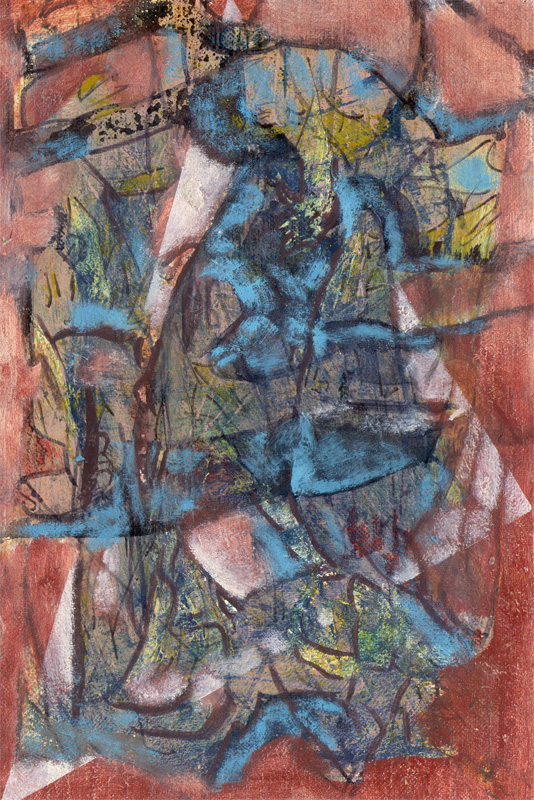

Ricardo F Morin
Triangulation Series Nº 38
9” x 13”
Oil on linen
2009

*

In memoriam José Luis Montero


For him, inspiration didn’t strike—it settled.    It arrived not with answers, but with permission to begin.

There was no ritual.    No dramatic turning point.    Only the canvas, the scent of oil, the shifting light across the floor.    One day folding into the next, until the work became its own weather—sometimes clear, sometimes stormy, but always present.

He believed in attention, not mastery.

What moved him wasn’t how the painting was achieved at any given moment, but when deconstructed he had to reclaim it, not out of skill, but out of necessity—when the hand moved before thought, and something more honest than intention began to lead.    And when it happened, it asked everything of him.

Any one watching—anyone but him—would have seen very little.    A trace.    A pause.    A slight adjustment.    But inside, something in him was listening—not to himself, but to the world, the material, the echo of a form not yet known.

He didn’t make work to be remembered, though he carried each piece like a child of his.    He made it to stay alive.    And when he encountered a finished painting years later, it stirred him physically.    It wasn’t nostalgia.    It was the smell of pigment, the sound of bristles, the grief of something nearly realized—lost, then found again.

Some days, the work moved with a kind of ease.    Other days, it refused.    He learned not to chase either.

He always began without knowing what he was after.    A shade.    A flicker of transparency.    A stroke that unsettled the surface.    Often the brush would stop midair, suspended while he waited for the next move to reveal itself.    Sometimes nothing came.    Those pieces sat untouched for weeks—a quiet unease in the corner of the room.

He lived alongside their silence.

The studio was never clean, but always ordered.    Rags folded.    Jars fogged with old turpentine.    Walls bearing soft outlines of past canvases.    The mess wasn’t careless.    It was lived-in—not careless, just lived-in.    Notes of Goethe’s pyramidal harmony hung besides mineral samples, sketches, color wheels, torn letters from art dealers.    Not for revelation—but for proximity.

Not every piece held.    Some failed completely.    Others, losing urgency layer by layer, failed gradually,    He kept those too—not as records, but as reminders.    Where the hand had gone quiet.    Where the work had ceased to ask.    Yet they became platforms—spaces for later returns, for deeper entry.

His days had no fixed schedule, though a rhythm formed over the years—a long devotion, interrupted, resumed, endured.

Now, he arrived late morning from the City.    The studio held the faint scent of wax and turpentine, laced with something older—dust, fabric, memory.    He opened a window if weather allowed.    Not for light but for air.    For movement.    For the slow turning of the fans like breath.

He made tea.    Sometimes he played Bach, or a pianist, whose fingers pressed deeper into the keys than others.    Other mornings:    National Public Radio.    A poet, a scientist, someone trying to say the impossible in ordinary words.    He liked the trying more than the saying.

He painted standing—rarely seated.    Some days he moved constantly between easel, sink, and mixing table.    Other days he barely moved at all.    Just watched.

Lunch was simple.    Bread.    Fruit.    A little cheese.    Sometimes eggs, lentils, soup across several days.    He didn’t eat out much—not out principle, but because it broke the thread.

If tired, he would lie on the couch at the back wall.    Twenty, thirty minutes.    No more.    And when he woke, the light had shifted again—slanted, softened, more forgiving.    The canvas looked changed.    As if it had waited for his absence.

Late afternoons were often the best.    A second wind, free of pressure.    There was a looseness in the air, born from knowing no one would knock or call.    He spoke to the work then—not aloud, but inwardly.    This tint?    Too warm.    This stroke?    Too sure.    Let it break.    Let it breathe.    Let it speak without saying.

Sometimes the medium resisted.    A brush faltered.    A gesture collapsed.    He didn’t fight.    He gave it space.    If he stayed patient, it found its rhythm again.

Not everything reached completion.    Some works remained open—not abandoned, simply finished enough.    Others came suddenly, like music that plays without lifting the fingers.

By evening, he cleaned his tools.    Never rushed.    He wiped the palette.    Rinsed the jars.    Hung the rags to dry.    It was a kind of thanks.    Not to the painting.    To the day.

Then lights out.    Door closed.    Nothing declared.    Nothing completed.    Yet something always moved forward.

Grief, too, remained.    It lived in the room like dust—settled in corners, clinging to stretchers still bare, woven into old white sheets.

His sister’s illness came slowly, then all at once—while Adagio in G Minor played low across the studio.    He painted through it.    Not to escape, but because stopping would have undone him.    In the silence between strokes, he could feel her breath weakening.    Sometimes he imagined she could see the work from wherever she was.    That each finished piece carried a word he hadn’t dared to say aloud.    She would have understood.    She always had.

Later, when his former lover died—alone, unexpectedly, in Berlin—he stopped painting altogether.    The studio felt still in a way he couldn’t enter.    Even the canvas turned away from him.    When he returned, it was with a muted palette.    Dry.    Indifferent.    The first brush stroke broke in two.    He left it.    And continued.

Desire, too, had quieted.    Not vanished.    Just softened.    In youth it had been urgent, irrepressible.    Now it hovered—an echo that came and went.    He didn’t shame it or perform it.    He lived beside it, the way one lives beside a field once burned, now slowly greening.

Grief didn’t interrupt the work.    It deepened it.    Not in theme—but in texture.    Some of those paintings seemed familiar to others.    But he knew what they held—the weight of holding steady while coming apart inside.

Even now, some colors recalled a bedside.    A winter walk.    The sound of someone no longer breathing.    A flat grey.    A blue once brilliant, now tempered between longing and restraint.

He wondered sometimes about that tension.

But when he painted, stillness returned.

Seventeen years ago, when chemotherapy ended, the days grew quieter.

There was no triumph. Just a slow return to rhythm—different now.    The body had changed.    So had the mind.    He couldn’t paint for hours without fatigue.    The gestures once fluid were heavier, more tentative.

He didn’t resist it.

The studio remained, but the center of gravity shifted.    Where once he reached for a brush, now he reached for a pen.    At first, just notes.    Fragments.    A way to hold the day together.    Then came sentences.    Paragraphs.    Not about himself, not directly.    About time.    Memory.    Presence.    Writing became a solace.    A way to shape what the body could no longer carry. A place to move, still, with care.

It wasn’t the end of painting.    Just a pause.    A migration.    Writing required its own attention, its own patience.    And he recognized in that a familiar devotion.

Sometimes, the canvas still called.    It would rest untouched for weeks.    Then one day, without announcement, he would begin again.

The two practices lived side by side.    Some days the brush.    Some days the page.    No hierarchy.    No regret.    Only the quiet persistence of a life still unfolding.

There is no final piece.    No last word.

He understands now:    a life is not made of things finished, but of gestures continued—marks made in good faith, even when no one is watching.    A sentence begun.    A color mixed.    A canvas turned to the wall—not in shame, but because it had said enough.

He no longer asks what comes next.    That question no longer troubles him.

If anything remains, it will not be the name, or the archive, or even the objects themselves.    It will be the integrity of attention—the way he returned, again and again, to meet the moment as it was.

Not to make something lasting.
But to live, briefly, in truth.

*

Ricardo F Morin Tortolero

Bala Cynwyd, Pa., June 14, 2025

Editor:    Billy Bussell Thompson


Author’s Note

This piece, like much of what I’ve made in recent years, exists because of those who have sustained me.

To David Lowenberger—whose love and steadfastness give my life its rhythm.    Without him, continuity itself would falter.

To José Luis Montero, my first art teacher, whose presence early on became a compass I’ve never stopped following.

To my parents, whose quiet influence shaped my regard for form, devotion, and care.

And always, to my friend and editor, Billy Bussell Thompson, whose voice lives quietly in mine.

“The Ethics of Expression, Part II”

June 13, 2025

*


Ricardo Morín
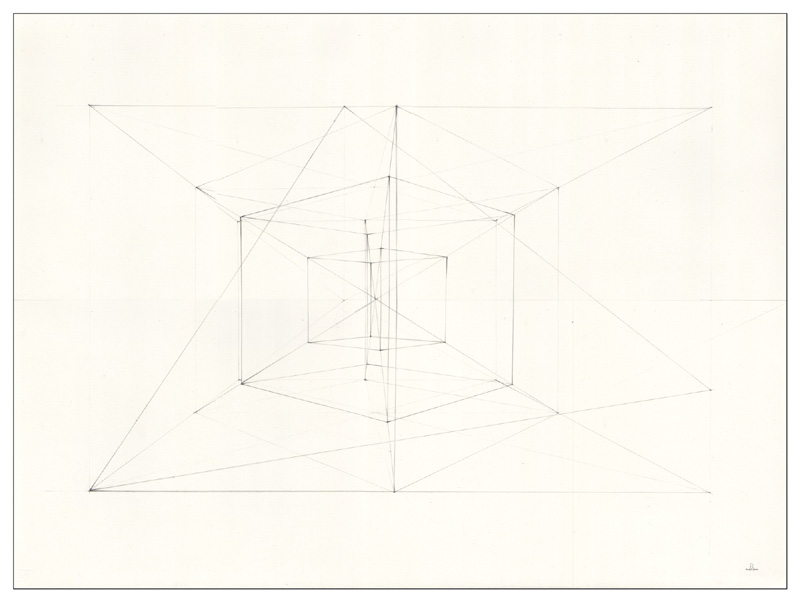
Triangulation 4
22″ x 30″
Graphite on paper
2006

To my sister Bonnie

*

Ricardo F. Morín

June 2025

Oakland Park, Florida

Author’s Note

This reflection was originally drafted before The Ethics of Perception, Part I, yet it belongs to the same inquiry into attention, understanding, and ethical relation.


There are moments when the truest form of intimacy is silence.
At other times, it’s the quiet labor of reaching for the right word—however incomplete—that brings us closer.
Expression, in this light, is not just a vehicle for communication, but an act of care.

To speak, to withhold, to write, to listen—each choice carries a particular weight.   
Intimacy lives in these gestures:    not in grand declarations, but in the ethics of how we reveal ourselves—and how we receive what another dares to offer.
What follows is not a theory, but a reflection on how intimacy appears in expression—and in its absence.

It’s hard to pinpoint the moment when something becomes intimate.
It isn’t always a touch, or a glance, or even a confession.
Sometimes, it’s just a pause—a shared pause—between one word and the next, when both people sense that something true is either about to be said or has just been said, without quite naming it.

Once, sitting face to face, I watched someone I cared for stare silently out the window.
I said nothing either.
There was no gesture, no disclosure, no clarifying words.
And yet the silence didn’t feel empty—it felt full.
In that stillness, something passed between us—not a message, not even an understanding, but a kind of permission:

To exist without explanation.
To be present without having to perform.

That moment stayed with me not because it was dramatic, but because it was unplanned.
I hadn’t expected it, and I couldn’t have recreated it.
I only knew, afterward, that I had been in the presence of something rare:
an intimacy that asked nothing more than to be.

And yet, not all intimacy is born in silence or in someone else’s presence.
Some comes later, through writing—in that long interval between feeling and saying.
Some is only possible thanks to the quiet distance that makes reflection possible.

The word intimacy often evokes physical closeness:
the realm of touch, proximity, lovers, secrets shared in the dark.
But what if intimacy were less about closeness than about permission?
The permission to be undefended.
To move slowly.
To be unclear—and still be trusted.

To be intimate with someone is not merely to be known, but to be seen—
seen without the pressure to explain yourself quickly or justify what you feel.
It’s an opening, and it’s also a risk:
the risk of being misunderstood, and the deeper risk of being understood too well.

Some forms of intimacy unfold face to face.
Others require distance.
Some happen through dialogue.
Others need a single voice, speaking on one’s own in a quiet room.

That’s where writing begins—
not as performance, but as a long conversation, uninterrupted.

Intimacy shifts with context, with time,
with the shape of the self we bring to another.
It is not one thing—
not just closeness, or tenderness, or vulnerability—
but a set of ways we allow ourselves to be known,
and sometimes, to know another.

There’s the intimacy of the body—
perhaps the most visible and least understood.
It belongs to touch, proximity,
the instinctive draw toward another’s presence.
But this form can deceive:
physical closeness without emotional resonance is common—
and easily faked.
Yet when body and emotion align,
there’s a wordless attunement:
a hand resting on a shoulder for just the right amount of time;
a breath falling into rhythm without intention.

Then there’s emotional intimacy:
the slow courage to say what one feels—
not just when it’s beautiful or convenient,
but when it’s awkward, incomplete, or raw.
This kind of intimacy isn’t given—it’s earned.
It may take years, or a single night.
Trust lives here—or breaks.

There’s also intellectual intimacy:
what arises in conversation
when ideas flow without anyone guarding their ground.
It’s rare.
Most social spaces reward speed,
the need to shine, or the safety of politeness.
But sometimes, with someone equally curious,
thought expands in the presence of the other—
not in agreement, but in response.
There’s nothing to prove—
only the pleasure of discovery.
That’s intellectual intimacy.
It creates a different kind of closeness—
not of feeling, but of perception.

Stranger still is narrative intimacy—
the kind that forms not between two people in the same room,
but between the one who writes and the one who reads,
separated by silence and time.
It isn’t immediate—
but it isn’t less real.
A voice emerges from the page
and seems to speak directly to you,
as if it knew the contours of your mind.
You feel understood—without being seen.
You may never meet the person who wrote those words,
but something in you shifts.
You are no longer alone.

These are not rigid categories.
They overlap, interrupt, evoke one another.
One may deepen another.
Physical presence can create emotional safety.
Intellectual closeness can open into unexpected tenderness.
And still, each has its own rhythm,
its own grammar—
and its own risks.

In that complexity, intimacy ceases to be a condition.
It becomes a practice:
something we learn,
lose,
revise,
and sometimes write
when no other form is possible.

Writing, too, is a kind of intimacy—
not only with others,
but with oneself.
Especially when it’s honest—
when what’s written is not just clever or correct,
but true.
That kind of writing doesn’t flatter.
It doesn’t argue.
It reveals.

We write to bring something forth—
not just for an audience,
but to hear ourselves think,
to see what we didn’t yet know we felt.
In writing, we become witnesses to our own consciousness—
both its lucidity and its evasions.

We follow a sentence
not only for its logic,
but for the feeling it carries.
And when that feeling falters,
we know we’ve lost the thread.

So we begin again, and again—
trying not just to explain,
but to say something that feels just.

In that sense, writing is an ethical act.
It demands attention.
It requires patience.
It invites us to inhabit our own experience
with precision—
even when that experience is fragmented or unresolved.

And if we are lucky—
if we are honest—
something in that effort will reach someone else.
Not to impress.
Not to convince.
But to accompany.

Sometimes you reach out—carefully, sincerely—and receive silence, indifference, or a response so misaligned it makes you feel naïve for having tried.
Other times, the failure is subtler:
a conversation that scatters just as something real begins to take shape—or a listener who hears your words, but not your meaning.

Those moments stay with us.
Not because they’re dramatic, but because they remind us how precarious intimacy can be.
It can’t be forced—just as humility can’t.
Both require a quiet letting go—a willingness to offer something without knowing how it will be received.
We can prepare the ground, make the gesture, risk the truth—but the rest depends on the other: their timing, their capacity, their willingness to meet us there.

There’s also the experience of being misunderstood—not just in fact, but in essence.
You try to say something that matters, and the other person responds to what they think you said—or to a version of you that never was.
It’s a blow—
that mismatch between what you tried to share and what actually landed.
The desire for intimacy becomes exposure without connection—a wound instead of a bridge.

Sometimes we avoid intimacy not because we don’t want it, but because we fear what it might cost.
We’ve been made to feel clumsy—for caring too much, or for being too visible.
Or we’ve shared something intimate, only to have it treated lightly—or analyzed without feeling.
After that, we grow cautious.
We speak less—or in fragments—or not at all.

It’s in the wake of such rejections—large or small—that writing ceases to be mere expression.
It becomes repair.
Writing allows us to recover what was lost in the moment—
to name what never reached its destination,
to finish the thought no one waited for,
to say it again—this time without interruption, without assumptions, without fear.

And while writing cannot undo the failure of a shared moment, it can offer something else:
coherence.
A record.
A form of truth that endures—even if it wasn’t heard.

In this way, writing becomes a quiet act of insistence—not against the world, but on behalf of the self.
It’s a way of saying:
What I tried to share still matters—even if it wasn’t received.

In the end, intimacy is not a state but a gesture—
repeated again and again—
toward understanding,
toward presence,
toward a shared sense that may arrive… or may not.

Sometimes that gesture is a word spoken at the right moment.
Sometimes it’s a silence held just long enough for the other to speak.
And sometimes it’s the act of writing—solitary, patient, unfinished—
offered not to a crowd,
but to a single imagined reader
who, one day, might need what you are now trying to say.

Writing, at its core, is a form of listening.
Not only to others,
but to the self that doesn’t rush,
doesn’t perform,
doesn’t need to persuade.

To the self that waits—
that wants to be known not by what it manages to say in quick response,
but by what it keeps trying to say with care.

That’s why I return to the page:
not because it guarantees connection,
but because it keeps the door open.
Because in a world that demands speed, certainty, and charm,
writing makes room for something slower and more faithful:
the long, unfinished gesture of trying to reach someone—
perhaps even oneself—
with something resonant.

And when intimacy happens—on the page or in life—
it’s never because we found the perfect words.
It’s because someone stayed.
Someone listened.
Someone let the moment open—without rushing to close it.

That’s what I’m doing now:
writing not to end something,
but to leave it open—
so that something of greater consequence might enter.

*

Ricardo F Morín Tortolero

Capitol Hill, D.C., June 9, 2025


“Notes From Within” 

May 28, 2025
Triangulation Series M
C-Print
2007

“On Vulnerability”

*

Dedicated to my siblings

There’s a certain kind of person the world seems to admire—sharp-tongued, composed, deliberate.    He moves through life as if he’s never doubted the sound of his own voice.    His gestures are practiced, his opinions unshakable.    It’s a performance of authority, and to many, it’s compelling.

But I’ve never fit that mold.    I don’t hold myself like someone bracing for a fight with the world.    I don’t presume to master a room.    And more and more, I’ve come to believe that what makes a person is not how forcefully he presents himself, but how honestly he shows up.

Vulnerability has never been fashionable.    It doesn’t draw applause or dominate the stage. But it’s where I’ve found the most truth.    Not in being right, or revered, or untouchable—but in admitting how little I know, how often I’ve failed, and how much of life resists explanation.

We’re taught to act as if we’ve earned our place—through effort, through cleverness, through some innate worth.    But I’ve lived long enough to see how much is assumed, how much is favored, how many doors open not because of merit but because of circumstance, appearance, proximity to power.    The world flatters performance.    It often mistakes loudness for depth, certainty for wisdom.

But beneath all that, we’re fallible—achingly so.    We get things wrong.    We hurt people.    We retreat when we should have stayed, and speak when silence would have been kinder.    We tell ourselves stories to survive, not always to understand.

And yet, that fallibility isn’t shameful.    It’s not a flaw to be punished—it’s the most human part of us.    The mistake is not in being wrong; it’s in pretending we’re not.    Intimacy begins where performance ends—when we stop curating ourselves and let others see what is:    our confusion, our fear, our imperfect love.

I’ve stopped wanting to impress.    I want to be known.    I want to know others—not through their accomplishments or their poses, but through the quiet truths they carry.    I don’t need anyone to be flawless.    I need them to be present, to meet me somewhere beneath the surface.

That, to me, is strength.    Not the kind that commands a crowd, but the kind that sits across from others, unguarded, and says, “Me too. I don’t have it either.”

The world may never reward dishonesty with applause.    But it will reward it with connection—with moments that feel real, human, and lasting.    And in the end, I think that’s the only recognition that ever matters.    Not the illusion of certainty or the performance of strength, but the willingness to return, again and again, to the quiet inside us—the one where we are fallible, open, and fully alive.

*

Ricardo F Morin

Bala Cynwyd, Pa; May 28, 2025

Editor:    Billy Bussell Thompson


“The Limits of Suffering”

March 14, 2025

*

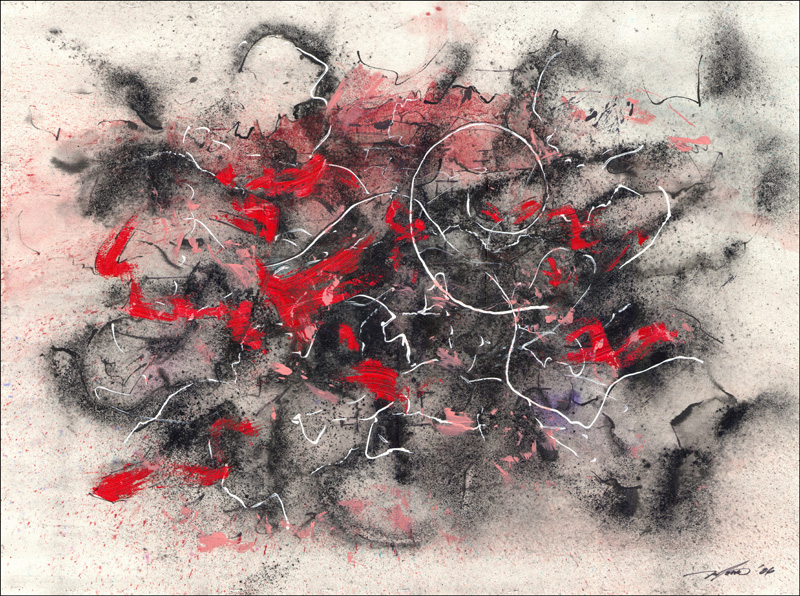
Untitled 012 by Ricardo Morín
22" x 30"
Watercolors, charcoal, oil, white-out and ink on paper
2006
Untitled 012 by Ricardo Morín
22″ x 30″
Watercolors, charcoal, oil, white-out and ink on paper
2006

There exists a threshold beyond which suffering ceases to be endurance and becomes something else: something raw, incommunicable.      It is not simply a matter of pain, nor even of despair, but of a silent depletion where the self finds itself at the precipice of its own dissolution.      Yet, how does one define this limit?

It is tempting to believe suffering has purpose, that it can be transmuted into wisdom or resilience.      This belief sustains us through its early stages.      We endure in the name of meaning, in the hope that suffering refines rather than annihilates.      But there comes a point where suffering becomes a force unto itself, severed from justification.      It no longer instructs, no longer dignifies, only persists.

The problem of suffering is not only how much one can bear, but how much one should reveal.      Silence often protects both the sufferer and the witness.      There are pains too intimate, too profound to translate into language without reducing them to spectacle.      To expose suffering in its entirety risks transforming it into something unrecognizable, stripping it of the dignity that private endurance affords.      Yet, concealment can create its own form of exile, a loneliness where pain festers unseen.

Some attempt to navigate this tension by offering fragments, enough to acknowledge suffering’s presence without inviting intrusion.      Others say nothing at all.      This is not cowardice but a final assertion of control, a refusal to be defined by pain.      To impose the expectation of disclosure upon those who suffer is to misunderstand the nature of their burden.      The gravity of suffering is not only in the experience itself but in the impossible task of making it understood.

We live under the illusion that the mind and body will hold, that endurance is limitless.      But suffering reminds us otherwise.      There is a breaking point, whether visible or silent, sudden or drawn out.     

It is not the same for everyone.      Some withstand more than others, not through superior strength, but through a different alchemy of circumstance, temperament, and sheer chance.      What remains constant is that all thresholds, eventually, are met. There is no single way to live with suffering.    Sometimes, what brings relief is not endurance, but the quiet act of self-recognition.    To speak, when one can.    To remain silent, when one must.    In the space between what cannot be said and what must be accepted, a simple truth may emerge: even uncertainty can sustain us, if we meet it with honesty.

And when that release is impossible, when suffering stretches beyond its own limits, only the silent acknowledgment of its presence remains: a weight that, sooner or later, must either be laid down or consume what is left.

Ricardo Federico Morín Tortolero

March 16, 20025; Oakland Park, Florida

“A Threshold of Silence”

February 12, 2025

*

Michael Basso
(June 28, 1955 – May 28, 2025)

~


During the last decade of his life, Michael’s health declined steadily, much as his father’s had in the years before him, burdened by a succession of illnesses that gradually narrowed the ordinary horizons of living.  Yet he continued to embrace each day with quiet resolve, even as the growing uncertainty of his own body became impossible to ignore.  His suffering was never his alone.  It was shared by the husband who remained at his side and by those who loved him. His final years revealed a condition that ultimately belongs to every human life.

*

Sometimes suddenly, sometimes almost imperceptibly through the passing years, there comes a moment when mortality ceases to be an abstraction.  It is no longer a distant eventuality, safely concealed beneath the routines of ordinary life or softened by the expectation of time still remaining.  It becomes immediate, undeniable, and inseparable from the consciousness through which we experience the world.

For some, this awakening begins with the quiet betrayals of the body.  A stiffness that no longer disappears with rest, a memory that hesitates before returning, a step taken with unexpected caution, each becomes a subtle reminder that permanence was always an illusion.  For others, it begins with loss.  The death of a friend, a sibling, a parent, or a spouse quietly reveals that what has happened to another now belongs, inevitably, to oneself.

Such awareness alters the measure of time.  The future no longer appears boundless, nor does the past remain merely a record of what has been.  Each assumes a different proportion.  Without consciously intending it, we begin to measure life less by what has been accomplished than by what still remains possible.

The mind instinctively resists this recognition.  It seeks refuge in plans, obligations, familiar routines, and the reassuring continuity of ordinary existence, as though attention itself might postpone what reason already knows.  Mortality becomes something acknowledged intellectually while remaining emotionally distant.

This awakening is neither an achievement nor a failure.  It is simply one of the conditions of being human.  From the moment mortality is no longer imagined but personally recognized, every subsequent experience of decline, suffering, endurance, and acceptance acquires a meaning it could not previously possess.

~


*

II. The Decline: Mind and Body

Decline rarely announces itself through a single decisive event.  More often, it advances quietly, measured by changes so gradual that they are first mistaken for passing inconveniences.  The body no longer responds with its former certainty.  Movements once performed without thought require intention.  Strength diminishes, endurance shortens, and the senses begin, almost imperceptibly, to surrender their former clarity.

The mind follows a similar course.  Memory hesitates where it once answered effortlessly.  Thoughts arrive more slowly or dissolve before reaching completion.  Attention becomes increasingly fragile, interrupted by moments of uncertainty that were once unknown.  Yet awareness often remains sufficiently intact to perceive these changes with unsettling precision.  There is a particular solitude in witnessing the gradual alteration of one’s own faculties while still possessing the clarity to understand what is being lost.

Medicine seeks, rightly, to preserve function, relieve suffering, and extend the years in which life may continue with purpose.  Its achievements have transformed the experience of aging and illness beyond what earlier generations could have imagined.  Yet no intervention alters the fundamental condition from which every life begins.  The body remains finite, and every effort to preserve it ultimately encounters limits beyond which restoration is no longer possible.

The deepest transformation, however, is neither physical nor intellectual.  It lies in the gradual recognition that decline is not an interruption of life, but one of its final expressions.  What first appeared exceptional slowly reveals itself to be part of the same natural order through which every living being passes.

~


*

III. The Distractions That Delay Acceptance

To recognize mortality is not the same as to accept it.  Awareness may arrive suddenly, yet acceptance often remains distant, deferred by the mind’s persistent inclination to continue living as though time were still without measure.  We do not turn away because we are incapable of understanding death.  We turn away because we remain deeply attached to life.

This attachment reveals itself in countless ways.  We make plans, pursue ambitions, strengthen the body, cultivate the mind, and seek new remedies for the illnesses that accompany advancing age.  We continue to build, repair, organize, and anticipate tomorrow, not merely because these activities possess value in themselves, but because they reaffirm our place within a future we instinctively presume will continue.

The reluctance to let go arises from more than fear alone.  Lives remain unfinished.  Promises have yet to be fulfilled, conversations remain incomplete, responsibilities endure, and those we love continue to depend upon us.  Even after a long and abundant life, there persists the quiet conviction that something essential still awaits completion.  What binds us to life is often less the fear of dying than the unwillingness to leave unfinished what we believe still belongs to our care.

These attachments are neither weaknesses nor illusions to be dismissed.  They are expressions of love, responsibility, curiosity, and hope, the very qualities through which life acquires meaning.  Yet they also postpone the inward stillness from which acceptance may eventually emerge.  Before the end can be received with peace, the mind must gradually relinquish not only its fear of death, but also its expectation that life must always continue.

~


*

IV. The Weight of Suffering and Endurance

Suffering is among the few certainties shared by every sentient being.   It is neither rare nor exceptional, but woven into the fabric of existence from its first breath to its last.   Yet, for all its universality, suffering remains profoundly individual.   No two lives experience it in precisely the same way, nor can its weight be fully measured by those who do not bear it.

Pain assumes many forms.   It may arise from illness, injury, or the gradual weakening of the body.   It may also emerge from quieter losses, the diminishing of memory, the erosion of independence, the loneliness of watching the world continue without us, or the grief that accompanies every meaningful attachment.   Some burdens are visible and readily acknowledged.   Others remain concealed, carried in silence and known only to the one who endures them.

Suffering, however, is not the same as endurance.   Suffering is what life imposes.   Endurance is the human response to what has been imposed.   It is the quiet capacity to continue despite pain, uncertainty, or loss.   It allows ordinary lives to bear extraordinary burdens without surrendering the desire to remain engaged with the world.

The measure of endurance cannot be determined from the outside.   What one person carries with apparent ease may overwhelm another.   A burden once thought unbearable may gradually become part of daily existence, while a seemingly lesser sorrow may exhaust reserves that have long been silently diminishing.   Endurance follows no universal scale, for it reflects not only the magnitude of suffering but also the unique history, temperament, relationships, and inner resources of the individual who bears it.

For this reason, suffering should never be confused with weakness, nor endurance with invulnerability.   To endure is not to deny pain, but to continue living in its presence.   It is one of the quietest expressions of human dignity, requiring neither recognition nor admiration to possess its full measure.

Every life eventually encounters the limits of endurance, although those limits cannot be predicted or judged by others.   They reveal themselves only within the silent experience of the individual who bears them.   Before acceptance becomes possible, one must first come to understand not only the reality of suffering, but also the extraordinary capacity to endure it.

~


*

V. The Unseen Threshold

Life does not depart all at once.   It recedes quietly at first, almost imperceptibly in its withdrawal.   The breath grows shallower, not in gasps but in a gradual easing, as though the body has begun to ask less of the world.   Weight diminishes, not only in flesh but also in presence.   The self appears to loosen its attachment to the demands that once defined ordinary existence.   A once restless mind drifts more freely, its thoughts lingering less upon the past, the future, or even the urgency of the present.

These changes need not be understood as signs of failure or defeat.   They often resemble a gradual lessening of effort.   The body begins to relinquish tasks it once performed without thought.   Rest occupies more of the day than activity.   Silence becomes more welcome than conversation.   Even the struggle to remain gradually yields to intervals of quiet that seem neither forced nor resisted.   The body often appears to recognize this transition before the mind fully understands it.

There also comes a moment of recognition that seldom announces itself dramatically.   It is rarely defined by a diagnosis or measured by the calendar.   Rather, it emerges through lived experience.   Some continue to resist its approach and devote their remaining strength to extending each day.   Others seem gradually to accommodate its presence, much as one yields to sleep after a long period of wakefulness.

Within this progression, control itself begins to assume a different meaning.   The effort to command every remaining moment often gives way to a willingness to accompany the body’s own course.   What earlier appeared to demand resistance may gradually invite release.   The conclusion of life comes to resemble not an interruption of its order, but one of its final expressions.

Death remains neither something to be conquered nor something that can be indefinitely postponed.   It stands as the final threshold of every life, unseen until it is approached and fully known only by the one who crosses it.

~


*

To think of death without fear, to sit with it unguarded and allow it to be what it is, may represent one of the last transformations of consciousness.   For much of life the mind recoils from its certainty, surrounding it with distractions, explanations, ambitions, and unfinished obligations.   Yet there often comes a time when these gradually lose their urgency, and death no longer appears as an interruption but as the natural conclusion of a life that has followed its own course.

As this change unfolds, fear itself may begin to assume a different character.   The body has already entered the work of relinquishment.   The mind, more slowly, begins releasing its attachment to unfinished meanings, unresolved questions, and the expectation that one more day might alter what has already become complete.   Acceptance does not arise from certainty.   It emerges gradually as resistance itself becomes less necessary.

No single course belongs to every life.   Some meet mortality with acceptance, others with fear, resistance, or uncertainty.   Illness, circumstance, or the limits of consciousness may leave little opportunity for reflection.   The experience admits no universal progression.   Yet where acceptance gradually emerges, it reveals not a victory over death, but one possible way of inhabiting its certainty.

Stillness differs from resignation.   Resignation suggests defeat before an unwanted circumstance.   Stillness suggests something quieter, an increasing harmony between the body’s condition and the mind’s understanding of it.   The effort to negotiate with what cannot be altered slowly diminishes.   What remains is neither triumph nor surrender, but a growing reconciliation with the course life has taken.

From within that reconciliation, life may be seen differently.   Its value no longer depends upon its indefinite continuation, but upon having been lived.   The quiet that once seemed empty gradually becomes sufficient in itself.   Little remains to be defended.   Little remains to be explained.   What has been given begins to appear complete.

~


*

VII. The Living Memory

No life is lived in solitude, and no journey toward acceptance is completed alone.   Along the way we are shaped, guided, and sustained by those whose lives become inseparable from our own.   Even after they are gone, their presence continues in memory, affection, and the countless ways they have altered the lives they touched.

Michael’s final years offered such a presence.   Those who remained beside him witnessed not only the gradual demands of illness, but also the quiet persistence with which he continued to inhabit each day.   His life, no less than his death, reminds us that mortality is never experienced by one person alone.   It is shared by families, by companions, and by all who accompany another through the final chapters of life.

Death strips away much that once appeared essential.   What remains is often simpler than we had imagined.   Affection endures.   Gratitude remains.   Memory continues its work long after physical presence has departed.

To those who have accompanied us through life, we owe more than remembrance.   We owe the recognition that much of who we have become was formed through their companionship, their patience, and their love.   Their absence does not erase that gift.   It leaves it more clearly visible.

They are no longer present as they once were.   Yet what they entrusted to those who loved them continues beyond their lives, carried quietly within the memory and affection of others.   In that continuing presence, gratitude finds its most enduring expression.

*

Ricardo F. Morín Tortolero

June 11, 2025, Capitol Hill , D.C.


*