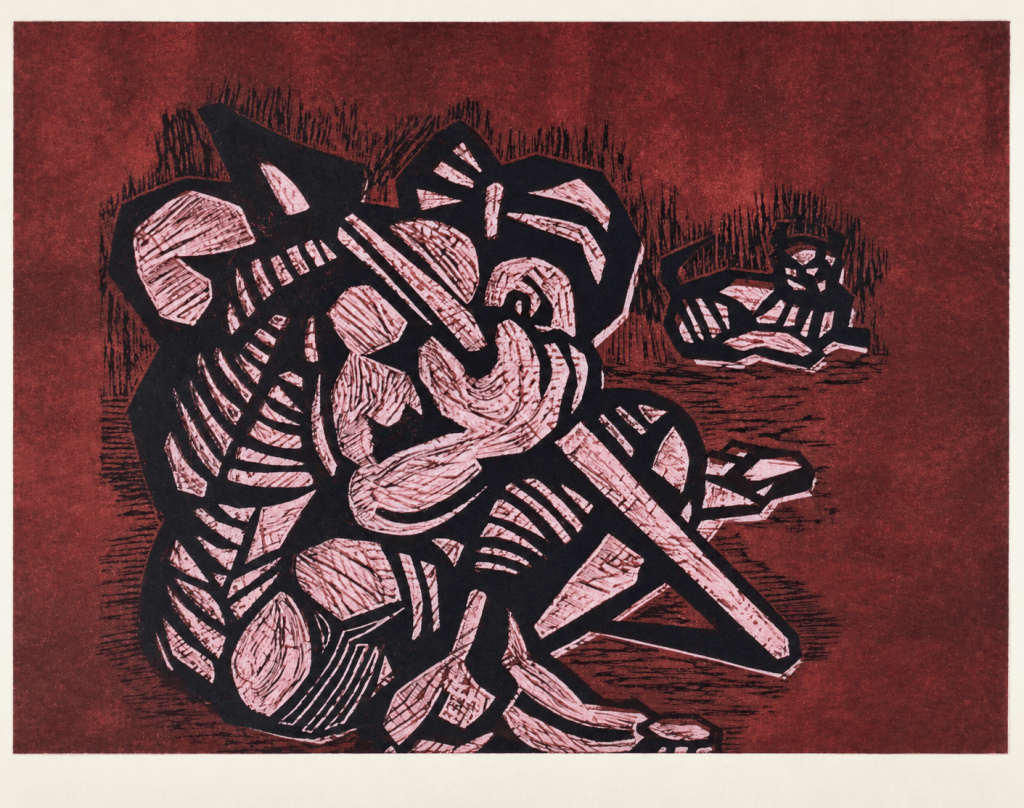
Ricardo F. Morín Warrior at Rest Linoleum block print Approximately 8¾″ high × 12″ wide 1975
I had heard Nightbirde’s words before: “You can’t wait until life isn’t hard anymore before you decide to be happy.” Today they moved me with a force I could not remember from the first hearing. Had I felt it then? Would I feel it as strongly again? I could answer neither question. Yet I wanted to keep those words somewhere within reach. (parade.com)
A sentence can remain in memory while the feeling it awakened becomes difficult to recover. I can repeat the words, understand their meaning, and assent to them. Whether they will sustain me when I need them is another matter. The wish to preserve them arises partly from that uncertainty. Something has reached me, and I would like to be able to return to it.
The remark brings happiness into the present, where so much remains unresolved. If I make happiness depend upon relief from every difficulty, I entrust it to circumstances whose course I cannot determine. There will always be reasons to wait. Even the expectation of improvement can absorb the attention through which something pleasurable might become available now.
Yet the word “decide” gives me pause. I know how little command a person may have over what can be felt. Suffering can exhaust the very capacity through which pleasure is received. A sentence that sustains me today cannot establish what I should have been able to feel yesterday, or what anyone else ought to feel under the weight of a different life. Its force belongs to this encounter.
Perhaps that is why I hesitate to call what happened resilience. The name suggests a capacity I might possess and call upon again. What I experienced carries no such assurance. I heard familiar words and felt a possibility become immediate. I want that possibility to accompany me, including through moments when I may have difficulty recognizing it.
Writing this down preserves something of the encounter. It records that the words reached me again, that familiarity had left room for an intensity I did not anticipate. A later reading may disclose something quieter, or something I cannot foresee from here. I would like to leave room for that as well.
Will I feel it as strongly next time? I still do not know. I hope the words will be there when I reach for them, and that I will remain able to receive whatever they may offer then.
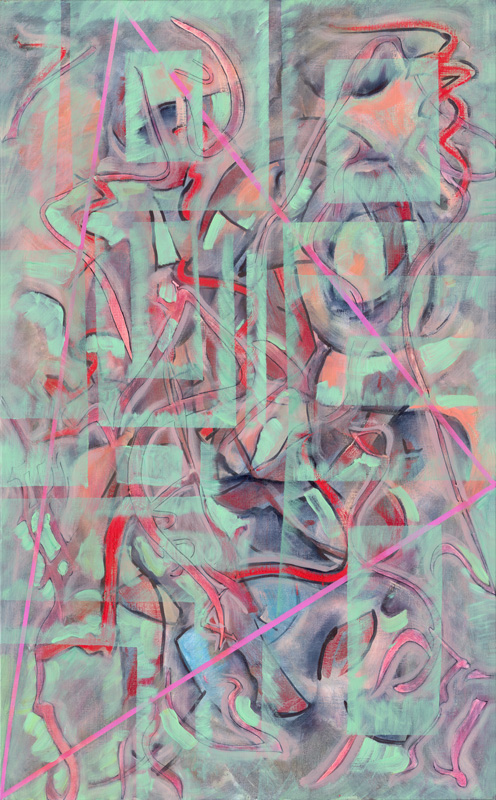
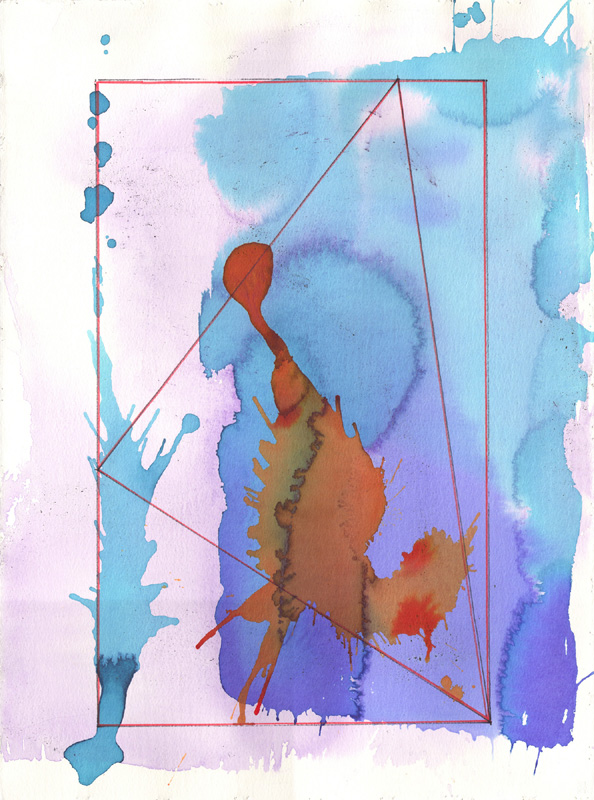
Ricardo F. Morín Triangulation Series Nº 7 37″ x 60″ x 2″ Oil on linen 2006
An elderly man stands beside a piece of luggage near the edge of a wide sidewalk at a public bus stop. A younger man notices him from a distance, and as he approaches, his attention remains fixed upon the older man rather than upon the bus stop itself. The older man perceives the stare as calculating, purposeful, and determined. There is room to pass. Instead, he changes course and strikes the older man with enough force to displace him from his position, then continues walking without explanation or apology. No dispute precedes the contact, and no serious injury follows.
The change of course makes the contact appear directed, though the encounter reveals little of what prompted it. Contempt, irritation, resentment, or the wish to impose upon someone may be imagined. None becomes certain merely because it would make the action intelligible. The younger man’s attention can be followed as far as the contact; his motive cannot be followed with the same assurance.
The older man was noticed before he was struck. Whatever the younger man perceived was sufficient to direct an approach, yet being noticed does not establish how much of a person has been acknowledged. Attention may be exact about where an act will arrive while remaining indifferent to the life upon which it intrudes.
Ordinarily, one passes a stranger without requiring an account of his presence. The man waiting beside his luggage need not explain where he is going or why he has stopped there. Almost nothing about him has to become known for the simple accommodation of passing without contact to occur.
Someone who would make that accommodation elsewhere may withhold it from a person expected to offer little resistance or to impose no consequence. Restraint weakens selectively, and another’s vulnerability can become an opportunity to act. Whether age or an expectation of impunity influenced the younger man’s choice remains unknown. Even if resentment were established, the question would remain why it found this particular recipient who is a total stranger.
The younger man had only to pass. Those charged with protecting a population face circumstances in which leaving the source of danger undisturbed may expose others to further injury. They may have to use force, and those awaiting their decision may have urgent reasons to demand it.
A government defending its territory, one invading another country, and one acting upon a danger it anticipates do not confront the same circumstances or bear the same responsibility. The suffering that follows cannot erase responsibility for how a war began. Neither can responsibility for its beginning settle every judgment concerning its subsequent conduct.
Those making the next decision must confront what remains dangerous, what has changed, and what another action could accomplish. People still exposed to attack may require defense long after the initial injury, while a brief operation may inflict harm for which no adequate ground ever existed. Neither the duration of a war nor the depth of the loss already suffered can settle what should happen next.
For those who have endured an attack, however, the first injury may remain more immediate than the changing circumstances through which a response proceeds. A danger recedes, an objective is reached, or further action creates risks absent at the beginning, while what happened continues to demand an answer. Asked what another strike would accomplish, a leader can return to the losses already sustained. The answer may be entirely sincere and still leave the question unanswered.
Grief may preserve a fidelity to the dead that no change in circumstances can satisfy. Political action nevertheless proceeds among the living. The demand that a loss receive an answer can persist after a particular response has ceased to serve the protection for which it was undertaken. At that point, reconsideration may be experienced as disloyalty even when the conditions of protection require it.
Those who receive the force may meanwhile become known chiefly through where they live or the people with whom they are associated. The person who directed an attack, the person who supported it, and the person who happened to live where it originated can be brought within the same field of action, though they do not bear the same responsibility. No one need deny that each has a history or a capacity to suffer. Those facts can be acknowledged and then set aside as having no bearing upon what is to be done.
The people exposed to an operation may be known to those directing it only through briefings, surveillance, casualty reports, and the observations passed through a chain of command. These can disclose what those deciding cannot see for themselves. Through a report, someone far from danger may learn what those enduring it have no means of bringing before him themselves. The distance between them can be reduced by the very procedures through which the decision is made.
Yet the reports may continue to arrive after the decision to proceed has ceased to admit reconsideration. Someone can register a loss accurately and still receive it only as something to be entered before the next authorization. The people affected remain visible in the record, while what becomes known about them is denied any bearing upon continuation. The information has arrived; the grounds of action have been protected from it.
Someone entrusted with the safety of others may knowingly cause harm while believing that refusing to act would cause more. The conflict may be real, and a clearer account of the consequences may not resolve it. But when those acting become certain that their responsibility supplies its own justification, the people who will bear the harm can appear only as a cost already accepted. Those who question the harm may then be treated as though they were opposing the protection itself.
An official may possess the authority to order an action and the means to carry it through, while those who will bear its consequences have little power to contest either. He can make the decision prevail without answering what he owes them. The question of justice remains, even when he acts with a sincere intention to protect others.
The older man was close enough to be deliberately approached. A distant population may be described in exhaustive detail. Neither proximity nor information establishes how another’s presence has entered a decision. Attention may narrow to what facilitates an act; an understanding of the suffering it will cause may also remain clear while the act proceeds. The failure can occur within attention itself.
A person may understand an injury, condemn its infliction, and nevertheless permit a comparable injury against someone placed outside the protection of that judgment. What is understood remains intact while its reach contracts. An account of the person’s fear, grievance, or conviction may make his conduct more intelligible without resolving how he accommodates what he condemns.
The younger man continues on his way without explaining himself. The absence of an explanation leaves a question about him; it does not make the force of the encounter disappear. What prompted him might become clearer if more were known, but he owed the older man the ordinary restraint that would have left him standing where he was.
The other remains someone whose life exceeds the terms under which he has been encountered. Grievance, threat, procedure, and necessity can each restrict what is permitted to matter about him. The person has not become fully known. The decision to act as though nothing further about him could matter may nevertheless already have been made.
Ricardo F. Morín October 6. 2026 Bala Cynwyd, Pennsylvania
Author’s Note: The conditions described here were examined earlier, through the structure of language rather than through particular encounters, in “The Grammar of Conflict”.
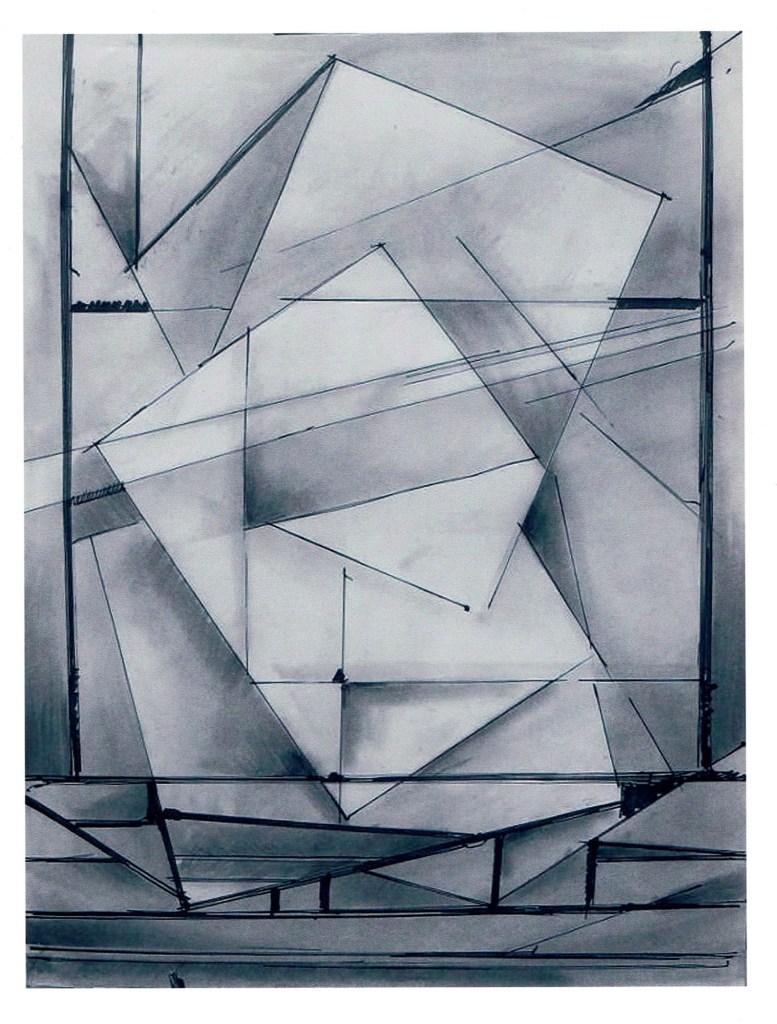
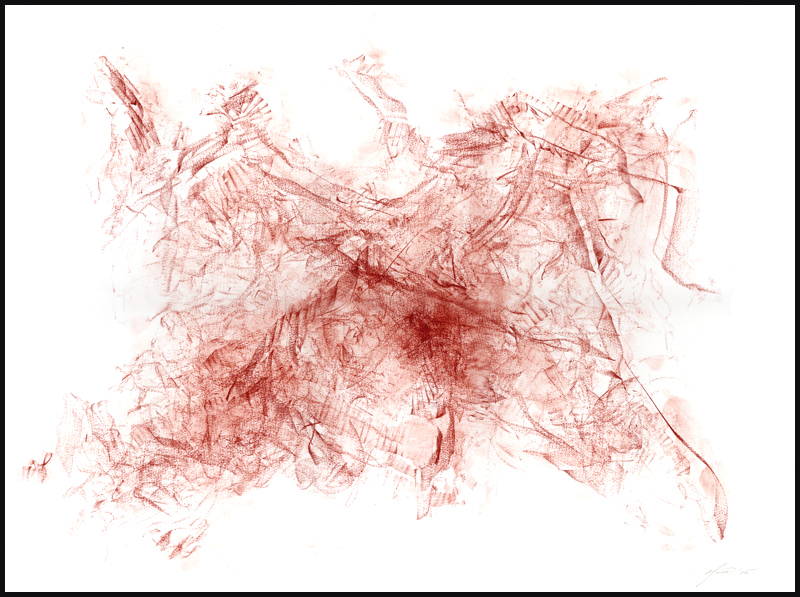
Ricardo F. Morín Untitled, 2005 Charcoal and black Sharpie pen 24 × 18 inches
Developers, governments, and those affected by artificial intelligence assign different significance to the same technical achievement. A developer seeking commercial advantage may treat an advance as grounds for ownership. A government concerned with strategic predominance may treat it as an instrument of national power. Those exposed to its consequences may judge it through its effects upon employment, education, communication, or public judgment. Each perspective depends upon relations that the achievement alone does not disclose.
These relations participate in development itself. Investors influence which problems receive attention. Owners determine who may use a capability and under what conditions. Governments establish permissions, restrictions, and incentives. The technology available to a user embodies decisions whose purposes need not be evident in its operation.
An answer appears on a screen. Its fluency may lead the user to accept it as sufficient for understanding. Yet the answer alone does not disclose how developers trained the system, which sources informed its response, what restrictions govern its output, or how developers organize its presentation to invite confidence. The user may find the answer useful without knowing all these conditions. That usefulness does not establish the adequacy of the answer.
Mediation names this dependence: understanding rests upon relations that attention to its immediate object does not necessarily reveal. The answer occupies the user’s attention. The conditions supporting its production, presentation, and acceptance remain only partially visible.
The public accounts of artificial intelligence exhibit a comparable dependence. Commercial accounts identify innovation through investment, demand, and return. Strategic accounts identify technological capacity through advantage over competitors. Security accounts identify uses through the dangers they introduce or prevent. Each account directs attention toward relations relevant to its purpose. Each leaves questions that its governing purpose cannot adequately answer.
These accounts also inform decisions. An institution that measures achievement through commercial return has grounds to favor applications for which customers will pay. A government that measures achievement through strategic advantage has grounds to favor capabilities that strengthen its position. The criteria through which an institution recognizes value therefore bear upon the purposes it authorizes and the resources it assigns. What remains outside those criteria may lack an effective claim upon its decisions.
Those who determine the terms of recognition can influence which needs count as reasons for action. Their authority does not follow from the completeness of their account. It may rest upon ownership, financial resources, statutory powers, or control over infrastructure. An account can govern development and can still leave much of its social significance unexamined.
The United States’ 2025 AI Action Plan explicitly frames development as a race for global dominance, and links technological leadership with economic and military advantage. The United Nations’ Global Digital Compact places international governance within a commitment to public benefit and inclusive participation. The former sets out actions for federal agencies; the latter records commitments among participating states. The purposes expressed in these documents operate through different institutional means. Their coexistence supplies no common authority for deciding between them when their demands conflict. [1]
Commercial success establishes that a product attracts expenditure. It does not establish how its benefits and burdens are distributed. National predominance establishes an advantage relative to other powers. It does not establish that the advantage improves the circumstances of those subject to its consequences. Protection against malicious use addresses a necessary concern. Authorized uses may also diminish the ability of people to understand, question, or influence decisions affecting them.
The capacities under development nevertheless permit achievements of substantial human value. Researchers can incorporate particular capabilities into successive stages of inquiry, and use them to examine complex relations, formulate hypotheses, and assist the design of inventions. Particular applications may support advances in medicine, materials, or other fields concerned with human welfare. The value of an achievement depends upon what it enables people to do and upon the consequences of its use. Commercial ownership or strategic sponsorship does not exhaust that value.
The same capacity to assist inquiry introduces uncertainty when institutions delegate decisions and actions to systems. Developers and users may permit a system to select means, initiate operations, or act upon other systems with limited intervention. Its effects then depend upon the scope of that permission, the conditions governing its operation, and the ability of those responsible to inspect or interrupt its actions.
Agency in these circumstances need not resemble human intention to exert power over human affairs. A system can influence conduct through recommendations that institutions routinely accept, classifications upon which access depends, or operations carried out under delegated authority. Uncertainty concerns how its actions will interact with circumstances its designers and users cannot fully anticipate, and how effectively human beings can retain control over those interactions.
The system may also influence the relations through which people understand and authorize its use. If an institution relies upon it to identify priorities, assess evidence, or evaluate performance, its outputs inform decisions about subsequent delegation. Authority initially granted by human beings can therefore support operations that shape the grounds upon which further authority is granted. The institution’s reliance upon the system extends beyond the performance of a task to the judgment of what tasks deserve performance and under whose direction.
Incremental benefit and uncertainty about agency can coexist within the same arrangement. An invention may improve human welfare, and may increase reliance upon systems that those affected cannot readily examine or contest. That reliance may rest upon cost, infrastructure, contractual restrictions, or the absence of practicable alternatives. Limited understanding can impede scrutiny of the arrangement without constituting its sole cause. The achievement retains its value. That value supplies no sufficient account of the reliance established through its use.
The betterment of society consequently depends upon more than the intentions of those directing development. If those institutions retain exclusive authority to define improvement, their criteria govern which consequences receive recognition. A gain in productivity may accompany diminished security of employment. Greater access to information may accompany greater reliance upon a small number of providers. Expanded capabilities may leave those affected with fewer means of challenging their application.
Who receives the benefit, who bears the burden, and who possesses authority to decide are distinct questions. An assessment confined to aggregate improvement can conceal the differences upon which its judgment rests.
The global reach of artificial intelligence extends those differences across societies. Worldwide availability does not establish worldwide participation in determining its purposes. A community may receive a system without the resources to adapt it to its language, examine its limitations, or challenge its terms of use. Providers extend access while they retain control over the conditions of participation. The technology serves a wider population without a corresponding distribution of authority over its development.
Nor does an appeal to the common good settle whose purposes should govern. Judgments about the common good depend upon whose circumstances receive attention, which consequences carry weight, and what forms of reliance people are prepared to accept. Institutions may affirm universal benefit while excluding affected communities from those judgments.
Technical competence, financial resources, political authority, security, and social need each sustain claims upon development. None supplies a sufficient account of the whole. Their unequal institutional power bears upon which claims govern, which remain negotiable, and which lack any effective means of expression.
Where institutions treat one criterion as sufficient, their judgments substitute a partial measure for the relations supporting it. Commercial actors identify expansion with progress. Governments identify predominance with protection. Security authorities identify the prevention of prohibited uses with safety. Providers identify availability with participation. Each identification leaves dependencies outside the account through which the undertaking is justified.
The answer on the screen offers the user something immediately available for judgment. Its usefulness may be real. Its fluency does not disclose who determined its conditions, what authority supports its use, or how reliance upon it influences subsequent judgment. The emerging capacities of artificial intelligence extend the consequences of those relations. Those who delegate authority to systems require knowledge of the conditions governing the systems and powers to withhold, limit, or revoke that delegation. Those affected without participating in the delegation stand in a different relation: their ability to contest its consequences depends upon access to the grounds of decisions and institutional means of holding the delegating authorities answerable.
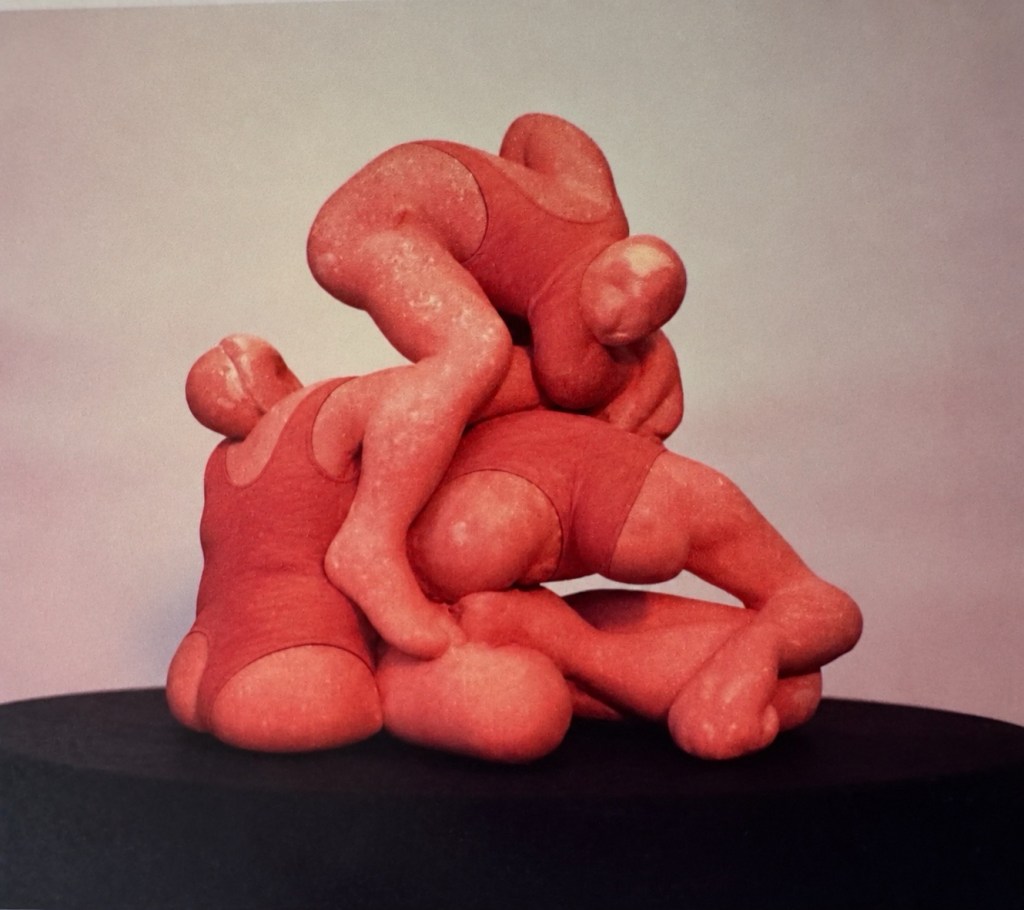
Ricardo Morín, Wrestlers, 2026. CGI after the artist’s original clay sculpture of 1975. 12 × 9 in., excluding the oval pedestal.
The Cybertruck makes its material character unusually conspicuous. Along its side, a rising windshield meets a pronounced roof crest before the upper outline descends toward the rear. Broad stainless-steel planes extend beneath this angular profile, interrupted by dark wheel surrounds and panel boundaries. Reflections change abruptly at the folds; across the larger surfaces, they spread with comparatively little modulation from curvature. The circular wheels provide a contrasting geometry, but the dominant impression of the body remains the repetition of flatness and sharp transition. Its conspicuousness concentrates attention on a small number of insistently reiterated features.
Tesla’s Q4 and FY 2024 Update, released on 29 January 2025, describes the steel’s contribution to structural stiffness and the bending process developed to manufacture its exterior. These are engineering achievements with ascertainable purposes. [1] Their technical significance leaves the perceptual relationship among the surfaces unresolved. The eye encounters extensive planes and emphatic boundaries; an account of material strength does not introduce further differentiation into those surfaces. Knowledge of their construction can inform attention without determining the quality of the encounter. The reasons for producing a form cannot substitute for the experience of encountering it.
Departure from convention acquires aesthetic significance through what the departure makes perceptible. In her account of Cubism for the Metropolitan Museum of Art, Sabine Rewald describes the fragmentation of familiar objects, the compression of pictorial depth, and the combination of contrasting viewpoints within a composition. [2] These operations altered the visible relations through which a subject could be apprehended. Recognition persisted while the means of recognition became unstable. The encounter demanded renewed attention to how objects were represented and perceived. Angularity participated in that transformation; angularity alone did not constitute it.
Arte Povera likewise gave unconventional materials a specific artistic function. The Museum of Modern Art’s account identifies the use of soil, rags, and other ordinary substances with an effort to develop a sculptural language that challenged the commercialization of art. [3] Their material poverty concerned their standing within artistic hierarchies, rather than demonstrating an absence of artistic sensibility. The economic relation changes when an exposed industrial surface becomes a distinction through which a manufactured commodity acquires desirability. Resemblance between materials does not preserve the purposes for which they are employed. The appearance of artistic departure can become a recognizable attribute detached from the perceptual discovery that gave the departure significance.
Drabness can consequently coexist with conspicuousness. An object may distinguish itself sharply from its surroundings while offering relatively little variation within its dominant gesture. Scale, brightness, and strangeness can secure immediate attention without sustaining a comparably differentiated encounter. Elaborate references can produce a similar limitation when their recognition exhausts what they offer. The initial impression promises an experience that continued attention finds little opportunity to develop.
Mystified drabness arises when the promise acquires greater authority than the encounter. Exposed material becomes evidence of authenticity; conspicuous difference becomes evidence of innovation; historical quotation becomes evidence of cultural depth. Each attribute may contribute to an accomplished work. The substitution occurs when recognition of the attribute is accepted as sufficient evidence of that accomplishment. Taste approaches its own antithesis as the identification of approved signs displaces the exercise of discrimination.
The language through which these attributes acquire authority can reproduce the same condition. A preliminary formulation of this argument attributed the Cybertruck’s appearance to the use of the wrong mathematics. That formulation gave an aesthetic judgment the apparent precision of a technical finding. Yet it identified neither an erroneous calculation nor a geometric relationship whose correction would establish the perceptual quality of the form. Its certainty supplied what its terms left unexamined. Recognition of mathematical authority can secure assent before the reader asks what has actually been demonstrated.
The substitution becomes consequential when such a judgment circulates independently of its grounds. The charge of employing the wrong mathematics can be detached and repeated while retaining the appearance of an explanation. An account of proportion, surface, scale, and transition requires the relationships under consideration to remain available for examination. Where attention acquires commercial value, the brevity and apparent completeness of the declaration can become advantages: the claim offers a conclusion that can be recognized and transmitted with little accompanying context. The same compression that facilitates circulation can conceal the work the judgment has omitted.
Firmness remains compatible with discrimination when its reach is supported by what the reader can examine. Demonstration gives emphasis its substance. The substitution occurs when the force of the sentence is accepted in place of that work. Whether conveyed through language or embodied in an object, the sign of accomplishment can become easier to circulate than the relationships through which accomplishment would be established.
Architecture gives this substitution an encompassing physical setting. A Disneyland aesthetic emerges where historical and cultural symbols are simplified into immediately recognizable effects. Picturesque façades, ornamental quotations, and theatrical sequences solicit the imagination through associations already selected and arranged for consumption. History supplies atmosphere; cultural difference supplies decorative variety. The circumstances that gave the borrowed forms their significance recede behind the impressions they can be made to deliver.
The invitation to imagine is itself commodified. Participation is directed toward identifying the allusion, receiving its promised mood, and moving to the next impression. The tensions, ambiguities, and accumulated experience through which a symbol acquires depth become obstacles to immediate legibility. Their removal makes the encounter easier to package and repeat. Different façades promise different worlds while reproducing the same abbreviated relation to their subjects. Symbolic abundance conceals the poverty of that relation, and the succession of effects distracts from how little remains to be encountered beyond them.
Mathematical complexity can sustain the same condition through another visual vocabulary. Elaborate geometry offers an immediately legible sign of technical distinction, just as a picturesque façade offers a sign of historical continuity. Neither establishes how entrances, thresholds, daylight, acoustics, and gathering places support the life conducted within a building. When the image supplies the principal measure of achievement, the continuing experience of occupation becomes subordinate to the impression prepared for recognition. Theatrical historicism and geometric spectacle can thus converge in their treatment of the inhabitant as the recipient of an effect.
In Vienna during the late nineteenth and early twentieth centuries, the search for an architecture responsive to contemporary life prompted a reconsideration of historical styles, the role of ornament, and the organization of inhabited spaces. The different responses to these questions show how sensibility could operate through both ornament and restraint. The Vienna Secession’s architectural history records how Joseph Maria Olbrich coordinated geometric volumes, symbolic ornament, and exhibition space in its building. The institution’s continuing use of those spaces also demonstrates their capacity to accommodate changing artistic activity. [4] Adolf Loos pursued another relationship between restraint and experience. In her study for the National Gallery of Victoria, curator Amanda Dunsmore describes his attention to timber, marble, and brass, together with his preference for interiors that inhabitants could adapt to their own tastes. His opposition to prescribed decoration coexisted with concern for comfort and individual use. [5] Ornament and its suppression therefore provide insufficient grounds for distinguishing sensibility from impoverishment. The distinction emerges through the relationships a work sustains among its materials, its spaces, and those who encounter it.
The resources through which such relationships acquire physical presence are consequential. The Secession’s building history records that the City of Vienna provided the site and that patrons, including the industrialist Karl Wittgenstein, contributed to construction funding. Proceeds from the association’s inaugural exhibition supplied the remaining funds. [4] Its institutional departure depended on arrangements that enabled an alternative to acquire a physical presence. The imagination that conceives a different environment must negotiate access to the means of realizing it.
Those means remain profoundly unequal. The World Inequality Report 2026 estimates that the wealthiest tenth of the global population owns three-quarters of its wealth, while the poorest half owns two per cent. [6] These figures do not establish an aesthetic consequence by themselves. Their relevance lies in the unequal resources available to commission buildings, secure premises, maintain workshops, and sustain work whose value may take time to become recognized. The capacity to imagine another environment and the capacity to bring it into existence are distributed differently.
Greater access to expression has not removed this disparity. In its published overview of the 2026 report Re|Shaping Policies for Creativity, UNESCO describes expanded access to creative tools, markets, and audiences alongside persistent insecurity in creators’ livelihoods. [7] Individual distinction can become highly visible while the means of sustaining independent practice remain fragile. The circulation of an image, a declaration, or an unconventional appearance establishes its visibility; the resources required to develop and sustain the practice behind it remain a separate concern.
Dress, possessions, and private surroundings offer immediate fields of choice. These choices can preserve and develop sensibility, but their availability does not confer comparable influence over the spaces beyond them. Where individuality finds its most accessible expression through purchasable distinctions, the market can accommodate dissatisfaction without surrendering control over the conditions that occasion it. The capacity to select among available signs of difference can expand while the capacity to determine shared conditions remains restricted.
Countercultural activity persists within this interval. Its existence demonstrates that sensibility has not disappeared. Its visibility cannot establish that the resources, institutions, and collective continuity required for a broader transformation have assembled. Dissatisfaction, creative invention, and the power to alter shared conditions remain distinct. The distance between them gives the present uncertainty its substance. [8]
Ricardo F. Morin New York Series, Untitled 24″ x 36″ Oil on canvas 1992
1. A person withdrawn from interruption, judgment, dependency, and noise may begin to believe that solitude clarifies the self. Removed from the continual presence of others, one becomes more aware of habits, memories, reactions, and inward movement ordinarily dispersed through daily relation. Silence appears to gather experience into greater clarity. Yet prolonged isolation reveals something less expected: inward life does not remain still simply because it happens alone.
2. Thought begins circling within its own continuity without resistance. Reflection loses proportion when nothing interrupts it from beyond itself. A memory repeated often enough begins to feel increasingly complete when it is not. A fear unanswered by another perspective deepens within its own enclosure. Even silence changes character. No response arrives. No interruption. Nothing enters from outside oneself.
3. This may be why solitude eventually begins searching for relation again, even where no person is present. The hermit speaks to God, to memory, to nature, or to silence itself. The mind reaches beyond its own enclosure not necessarily from weakness, but because inward life alone cannot fully restore proportion to itself.
4. We do not discover ourselves in abstraction alone. Much of what we call individuality becomes perceptible through relation. Patience, resentment, tenderness, vanity, courage, forgiveness, and responsibility do not fully disclose themselves in separation from others. They emerge through contact, disappointment, affection, misunderstanding, dependence, and care. Another person does not diminish individuality. Something in us becomes more visible in relation than in withdrawal.
5. Communication does not eliminate distance between human beings. It reveals it. No person entirely crosses the interior distance separating one consciousness from another. Suffering, mortality, memory, and perception remain singular experiences. Yet it is often through the effort to communicate that this separateness becomes recognizable at all. We discover how far we remain from one another precisely in the attempt to reach across that distance.
6. Another person is neither an extension of oneself nor a symbolic abstraction. The other remains distinct, vulnerable, and finite. Love therefore cannot consist merely in attachment, possession, or dependence. Its deeper force lies in the capacity to recognize another existence without attempting to dissolve it into one’s own needs, fears, or projections. Compassion arises quietly from this condition.
7. Isolation becomes impossible not because solitude lacks value, but because human life continually reaches beyond private continuity. Even withdrawal retains traces of relation: language, memory, longing, recognition, prayer, imagination. The mind does not merely enclose itself. It responds. Seeks. Recalls. Addresses what remains beyond it.
8. Perhaps this is why the deepest forms of love do not abolish aloneness. They allow it to stand without hardening into enclosure. Compassion does not overcome distance by eliminating difference. Each person remains singular and ultimately unreachable in totality, yet still worthy of care. In that recognition, isolation no longer appears possible as a final condition of human life.
Ricardo F. Morín Infinity 3 30″x 22″ Sanguine on paper 2005
Two forms may be distinguished by their construction: an open curve, continuous along its course and capable of extension without closure, and a Möbius strip, formed by joining the ends of a band after a half-turn. The curve admits extension without return; the strip sustains a single continuous side through its return upon itself. Both are continuous. What differs is how continuity is held.
The open curve admits passage without requiring completion. It holds at each point without reference to return. The strip, received through its self-return, presents its course as already complete. Its coherence is apprehended through the relation that binds it to itself.
The curve may be followed without asking where it ends. A path along the strip’s interior may return indefinitely without meeting its single edge. The strip’s finite extent does not impose a final circuit. In both cases, continuity suffices.
The difference appears when attention shifts from what is given to how it is maintained. Along the curve, continuity is enacted in following. The path holds only insofar as no interruption occurs. The strip, received as a whole, appears to contain that continuity without requiring its course to be traced.
The strip’s return can thus sustain the invocation of infinity. An inexhaustible passage is received as already given within a finite form. The continuity that sustains this appearance remains implicit. The open curve offers no comparable assurance of completion. Its further extension must be followed, and its coherence depends on the unbroken relation along its course.
So long as the strip is received as given, the distinction holds. Infinity appears as already in place, and continuity remains absorbed within that appearance. The curve, by contrast, makes continuity operative without naming it.
The shift begins when what is given can no longer hold on its own. The strip’s apparent completeness no longer suffices. What appeared as a field without end must now be traced through the relation that sustains it.
The curve always depended on continuity, though it did not name it. Tracing the strip discloses the same dependence. What appeared as infinity is no longer primary. Its appearance depends on the continuity that had remained implicit.
The curve remains open, and the strip retains its return. Continuity is not confined to extension or return. It is what allows either to hold.
The appearance of infinity depends on continuity, but continuity does not require that appearance. It holds wherever relation is unbroken, including along a finite course.
Receiving accepts what appears without first requiring an explanation of what sustains it. Tracing follows the relations that sustain what appears and examines whether its coherence holds. Each entails a distinct discipline. Neither excludes the other.
The two modes remain distinct, yet not separate. The continuity that sustains the appearance in one is examined in the other. Their common ground does not make their requirements interchangeable.
In the invoking mode, virtue lies in receiving without imposing closure, in allowing what appears to remain unforced by premature explanation. The task is not to verify, but to receive without distortion.
In the diagnostic mode, virtue lies in sustaining relation without allowing coherence to be assumed. What appears must be traced, not to reduce it, but to prevent it from holding without what sustains it. Here the task is not merely to remain open, but to maintain relation.
Neither mode dispenses with the relation that sustains what appears. In receiving, that relation may remain implicit. In tracing, it must be maintained without substituting an imposed order for what was given.
The modes do not resolve into one another. Receptivity does not establish coherence, and tracing does not by itself prevent distortion. Passage between them requires attention to what each preserves and what each may alter.
Virtue does not belong to one mode alone. It appears wherever the proper condition of each is maintained without excess. In one, by not forcing completion. In the other, by not allowing what appears to hold without relation.
What differs is not what is given, but how it is held.
Ricardo F. Morin, October 6, 2026, Bala Cynwyd, Pennsylvania
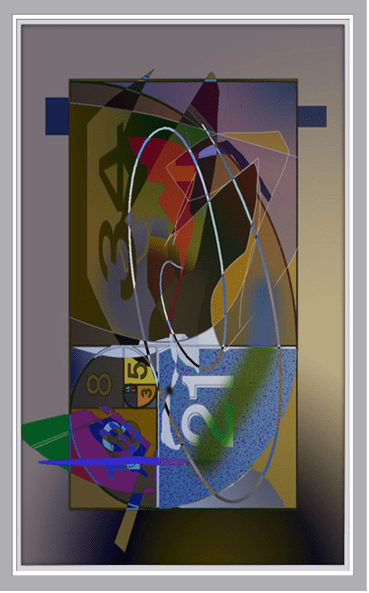
“Geometric Allegory” digital painting (2023) by Ricardo Morín (American visual artist, born in Venezuela, 1954)
*
Scope and Use
This entry forms part of the constitutional corpus presented in the Appendix, comprising the constitutions of Venezuela organized for consultation rather than sequential reading. Comparison proceeds through permanent rubric codes whose identities remain constant throughout the corpus; absent rubrics signify constitutional silence, while retired rubrics are not reassigned. Citations are anchored first on the article number and follow the CIDEP recension linked at the close of the entry. The corpus definition, editorial methodology, and citation convention are set forth in the Scope and Use note introducing the nineteenth-century constitutions in Unmasking Disappointment: Series XI.
Ricardo F. Morín September 5, 2026 Bala Cynwyd, Pennsylvania
17) The Constitution of 1928
The 1928 Constitución de los Estados Unidos de Venezuela [Constitution of the United States of Venezuela], dated 22 May 1928 at the Palacio Federal Legislativo [Federal Legislative Palace], Caracas, was ordered executed at the Palacio Federal [Federal Palace], Caracas, on 23 May 1928 by President Juan Vicente Gómez. (CIDEP 1928, p. 23, closing and execution formulas).
DOC-PRE—Preamble
(modern Latinate English translation by the author from the CIDEP recension)
“The Congress of the United States of Venezuela, in the name of Almighty God, and in exercise of the authority conferred upon it by Article 133 of the Federal Pact in force, decrees the present Constitution.”
(CIDEP 1928, p. 3, preamble).
FND-TER—Territory
The Nación Venezolana [Venezuelan Nation] consists of all Venezuelans united in a political pact under the name Estados Unidos de Venezuela [United States of Venezuela]; it is permanently and irrevocably free and independent of foreign domination or protection. The territory is that belonging to the Capitanía General de Venezuela [Captaincy General of Venezuela] before the political transformation of 1810, with modifications resulting from treaties. No part may be ceded, transferred, leased or otherwise alienated to a foreign power, even temporarily. (Arts. 1–2; cont., 1925, Arts. 1–2).
The national territory is divided into Estados [States], the Distrito Federal [Federal District], Territorios Federales [Federal Territories] and Dependencias Federales [Federal Dependencies]. The twenty Estados [States] are Anzoátegui, Apure, Aragua, Bolívar, Carabobo, Cojedes, Falcón, Guárico, Lara, Mérida, Miranda, Monagas, Nueva Esparta, Portuguesa, Sucre, Táchira, Trujillo, Yaracuy, Zamora and Zulia. (Arts. 3–4; cont., 1925, Arts. 3–4).
State boundaries follow the provincial boundaries established by the Law of 28 April 1856, subject to the creation of the Distrito Federal [Federal District], Territorios Federales [Federal Territories] and Dependencias Federales [Federal Dependencies], the Constitution of 5 August 1909 and the 1917 agreement between Aragua and Carabobo. Neighbouring Estados [States] may alter their common boundary through agreements approved by their respective legislatures, including reciprocal territorial compensation or cession. (Art. 5; cont., 1925, Art. 5).
The Distrito Federal [Federal District] comprises the departments Libertador and Vargas. The text places Caracas and the outlying parishes El Recreo, El Valle, La Vega, Antímano, Macarao and Macuto in Libertador. A special law organizes the district and determines its municipal powers so that federal political action is not obstructed. (Art. 6; cont., 1925, Art. 6).
Caracas is the capital and seat of federal government, subject to Art. 100, powers 24(b) and 25. (Art. 7; cont., 1925, Art. 7).
Amazonas and Delta Amacuro are Territorios Federales [Federal Territories], organized by special laws. Their boundaries, and those of the Distrito Federal [Federal District] with neighbouring Estados [States], may be modified by agreements concluded by the Poder Ejecutivo Federal [Federal Executive Power] and the respective state governments and approved by the Congreso [Congress] and the respective Asambleas Legislativas [Legislative Assemblies]. (Art. 8; cont., 1925, Art. 8).
A Territorio Federal [Federal Territory] may become a Estado [State] upon attaining the population required for one deputy and proving to the Congreso [Congress] that it can maintain every branch of public service and meet the necessary expenditure. (Art. 9; cont., 1925, Art. 9).
The Dependencias Federales [Federal Dependencies] comprise the Venezuelan islands in the Caribbean Sea except Margarita and Coche, which constitute Nueva Esparta. Their government and administration belong directly to the executive until the law elevates them to the category of Territorios Federales [Federal Territories]. (Art. 10; cf. 1925, Art. 10: “except the island of Margarita, which constitutes the Estado [State] of Nueva Esparta”).
The Corte Federal y de Casación [Federal and Cassation Court] decides boundary disputes between Estados [States], and those arising between them and the Distrito Federal [Federal District] or Territorios Federales [Federal Territories], through the procedure prescribed by law. (Art. 11; cf. 1925, Art. 11: “Existing disputes between the Estados [States] concerning their boundaries, and those subsequently arising from the same cause”).
POW-LEG—Congress
The Poder Legislativo [Legislative Power] is exercised by the Congreso de los Estados Unidos de Venezuela [Congress of the United States of Venezuela], consisting of the Cámara de Diputados [Chamber of Deputies] and Cámara del Senado [Senate]. Both Diputados [Deputies] and Senadores [Senators] serve three-year terms. (Art. 55; cf. 1925, Art. 55: “composed of two Chambers, one of Diputados [Deputies] and the other of Senadores [Senators]”).
Each Estado [State] elects Diputados [Deputies] directly under its Ley de Elecciones [Electoral Law], one per 35,000 inhabitants and one additional deputy for an excess of 15,000. A Estado [State] with fewer than 35,000 inhabitants elects one deputy. An equal number of Suplentes [Alternates] is elected to fill vacancies in the order of election. (Art. 56; cont., 1925, Art. 56).
The Diputados [Deputies] serve three years and are renewed in their entirety. (Art. 56, final paragraph; cont., 1925, Art. 56, final paragraph).
A deputy must be Venezuelan by birth and have completed twenty-one years of age. The Distrito Federal [Federal District] and Territorios Federales [Federal Territories] attaining the prescribed population elect Diputados [Deputies] directly under the formalities fixed by law. The population basis excludes indígenas no reducidos [unreduced Indigenous people]. (Arts. 57–58; cont., 1925, Arts. 57–58).
The Cámara de Diputados [Chamber of Deputies] may give a voto de censura [vote of censure] to Ministros del Despacho [Cabinet Ministers] whose acts it considers to warrant it. The Presidente de la República [President of the Republic] is not obliged to remove them until the Corte Federal y de Casación [Federal and Cassation Court] declares that legal grounds exist for putting them on trial. Other powers may be assigned by law. (Art. 59; cont., 1925, Art. 59).
Each state Asamblea Legislativa [Legislative Assembly] elects, from outside its own membership, two principal Senadores [Senators] and two Suplentes [Alternates], the latter filling vacancies in election order. A senator must be Venezuelan by birth and over thirty years of age. (Arts. 60–61; cont., 1925, Arts. 60–61).
Art. 60 ends with the order for filling vacancies. The senatorial term is stated in Art. 55. (Arts. 55, 60; cf. 1925, Art. 60: “The Senadores [Senators] shall serve for three years and shall be renewed in their entirety.”).
The Cámara del Senado [Senate] may authorize the transfer of the remains of illustrious Venezuelans to the Panteón Nacional [National Pantheon] after twenty-five years from their death; consent to national officials accepting gifts, offices, honours or rewards from foreign governments; and consent to military promotions from Coronel [Colonel] and naval promotions from Capitán de Navío [Naval Captain], inclusive. (Art. 62(1–3); cont., 1925, Art. 62(1–3)).
The Cámara del Senado [Senate] also has the powers assigned to it by law. (Art. 62(4); cont., 1925, Art. 62(4)).
The Cámaras Legislativas [Legislative Chambers] meet annually in the capital on 19 April or the nearest possible day, without prior convocation. Ordinary sessions last ninety days and cannot be extended; every day and hour within that period is available for ordinary sessions. Extraordinary sessions convened by the executive address the matters specified in the convocation and connected legislation requiring amendment. (Art. 63; cont., 1925, Art. 63).
Opening sessions require two-thirds of the membership; those present without that number form a Comisión Preparatoria [Preparatory Commission] and take measures to secure attendance. Subsequent sessions require an absolute majority. Sessions are public unless the respective Chamber resolves that they shall be secret. (Arts. 64–65; cont., 1925, Arts. 64–65).
Each Chamber adopts its Reglamento Interior y de Debates [Rules of Internal Procedure and Debate], disciplines infringements, controls order in its building, corrects or punishes disorderly spectators, removes impediments to its lawful functions, executes its exclusive resolutions, determines the qualifications of its members and receives their resignations. Both Chambers sit in the same town and open and close sessions on the same day and hour; suspension or relocation requires the other Chamber’s consent, with disagreements decided in joint session. (Arts. 66–67; cont., 1925, Arts. 66–67).
During sessions, any public office is incompatible with membership of either Chamber. Remuneration is fixed by law and may be increased only for the following term. (Arts. 68–69; cont., 1925, Arts. 68–69).
Legislative inmunidad [immunity] runs from thirty days before 19 April until thirty days after the close of sessions. Members cannot be imprisoned, arrested, confined, detained or obstructed in their functions, even upon committing an offence during that period. Where the alleged offence carries a pena corporal [penalty restricting personal liberty], the sumario [preliminary criminal investigation] is stayed during immunity, while investigative steps continue. Members need not answer claims, take oaths or answer judicial interrogatories during the same period, which is excluded from procedural time limits. The Chambers cannot waive this immunity. (Art. 70; cont., 1925, Art. 70).
Art. 70(1) states the exclusion of Art. 32(15)(c) with the qualification “with respect to the duration of the sumario [preliminary criminal investigation]”. (Art. 70(1); cf. 1925, Art. 70(1): “without the provision contained in letter c), guarantee 15, Article 32 of this Constitution applying in this case”).
Members are not responsible for opinions expressed in their Chambers. They cannot make contracts with the Ejecutivo Federal [Federal Executive] on their own or another’s behalf, or pursue others’ claims before it. (Arts. 71–72; cont., 1925, Arts. 71–72).
When the list of senatorial Suplentes [Alternates] is exhausted or reduced by death or another permanent vacancy, the respective Asamblea Legislativa [Legislative Assembly] fills it for the remainder of the legislative term. State constitutions and the Ley Orgánica del Distrito Federal [Organic Law of the Federal District] determine how vacancies in the Cámara de Diputados [Chamber of Deputies] are filled. (Art. 73; cf. 1925, Art. 73: “for the remainder of the replaced member’s or members’ term”).
The Chambers act separately but sit jointly when the Constitution or laws require it, or when one invites the other and the latter agrees and fixes the meeting time. Their separate acts as co-legislators are Leyes [Laws]; acts adopted jointly, or separately on matters exclusive to one Chamber, are Acuerdos [Resolutions]. The presiding officer of the Cámara del Senado [Senate] presides over the Congreso [Congress], and that of the Cámara de Diputados [Chamber of Deputies] serves as its vice-president. (Arts. 74–76; cont., 1925, Arts. 74–76).
In joint session the Congreso [Congress] conducts the elections assigned to it, receives the resignation of the Presidente de la República [President of the Republic], examines the annual Mensaje [Message], approves or disapproves ministerial Memorias y Cuentas [Reports and Accounts], admits qualifying Territorios Federales [Federal Territories] as Estados [States], and examines Créditos Adicionales [Additional Appropriations] for compliance with the constitutional procedure. (Art. 77; cont., 1925, Art. 77).
As co-legislators the Chambers decree national taxes and loans, regulate national debt, create and suppress national offices, legislate on federal administration and currency, and authorize the disposal of nationally owned immovable property. Compulsory circulation of banknotes or any paper representation of value is prohibited, and the patrón de oro [gold standard] must be maintained. Weights and measures follow the metric decimal system. (Art. 78(1–4, 7–8); cont., 1925, Art. 78(1–4, 7–8)).
Treaties and diplomatic conventions require legislative approval before ratification or exchange. The approving law receives the Ejecútese [Let it be executed] only when the other party’s acceptance is established; official publication follows ratification and exchange. Contracts for railways, aerial haulage cables, telegraphic or wireless communications, immigration and other authorized matters of national interest require legislative approval. concesiones mineras [mining concessions] and titles to tierras baldías [ungranted public lands] granted under their respective laws are exempt from that approval. (Art. 78(5–6); cont., 1925, Art. 78(5–6)).
The Chambers enact the Ley de Presupuesto General de Rentas y Gastos Públicos [General Revenue and Public Expenditure Budget Law], fixing federal salaries and expenditure for the fiscal year. Outside that law, they cannot order another specified expenditure through a special law or resolution. They examine and approve the Censo Nacional [National Census], prescribe the special administration of Territorios Federales [Federal Territories], and increase the population basis for electing Diputados [Deputies] when the approved census requires it. (Art. 78(9–12); cont., 1925, Art. 78(9–12)).
General laws govern civil pensions, retirement benefits and montepíos militares [military survivors’ pension funds] payable by the Tesoro Nacional [National Treasury]. The budget supplies aggregate appropriations, distributed by the executive through the competent minister under the law. The Chambers decree war, require peace negotiations, legislate on recruitment and replacement of land and sea forces, grant amnistías [amnesties], and legislate on the security of ports and coasts. (Art. 78(13–17); cont., 1925, Art. 78(13–17)).
Legislative powers include the Censo electoral [Electoral Register], Instrucción Pública [Public Instruction], Hacienda Nacional [National Public Finance Administration], air, maritime and river navigation, docks, Correos [Postal Services], Telégrafos [Telegraphs], wireless communications, railways, national roads and motor traffic, tierras baldías [ungranted public lands], salinas [saltworks], pearl fishing and mines, together with the subjects listed in Art. 15(4) and other matters of federal competence. (Art. 78(18–19); cont., 1925, Art. 78(18–19)).
A bill may originate in either Chamber upon presentation by at least three of its members, or through the minister responsible for a proposal from the executive. After admission it receives three discussions separated by at least one day. The other Chamber follows the same procedure and returns any amendments. If disagreement persists after written reasons from the originating Chamber, joint session decides disputed and connected articles by majority vote and may adopt a different wording. (Arts. 79–82; cont., 1925, Arts. 79–82).
Rejected bills cannot be presented again until the following year or later. Bills left pending at the close of sessions require a new presentation and all discussions in a subsequent year. An amending law must reproduce its entire text and repeal the previous law in full; repeal follows the same formalities as enactment. (Arts. 83–84, 86–87; cont., 1925, Arts. 83–84, 86–87).
The legislative formula is the name of the Congreso de los Estados Unidos de Venezuela [Congress of the United States of Venezuela] followed by “Decrees:”. Enacted texts are prepared in duplicate without alterations, signed by the presiding officers and secretaries of the Congreso [Congress], and dated with final approval. One copy goes to the Presidente de la República [President of the Republic] for countersignature with the competent ministers and official publication. Printing errors require corrected republication or a ministerially certified errata notice. (Arts. 85, 88–89; cont., 1925, Arts. 85, 88–89).
A law takes effect on its stated date or, if none is stated, upon official publication. Legislative power cannot be delegated. Legislation is not retroactive except where it imposes a lesser penalty. Procedural laws apply immediately to pending cases; in criminal cases, evidence already taken is assessed under the law in force when it was offered insofar as that benefits the accused. (Arts. 90–92; cont., 1925, Arts. 90–92).
ECO-TES—Treasury
The federal authorities have competence over Aduanas [Customs Houses], import duties and duties on foreign goods passing through to foreign destinations. The Impuesto Territorial [Territorial Tax] remains payable at Aduanas [Customs Houses] until abolished by law and enters the Tesoro Nacional [National Treasury]. Exports are free of tax. Federal revenues include estampillas o timbres fiscales [fiscal stamps or revenue stamps], cigarettes, tobacco, registration, inheritance, matches, spirits, liquors and other taxes established as national taxes by law. (Art. 15(14, 17); cont., 1925, Art. 15(14, 17)).
The Situado Constitucional [Constitutional Revenue Allocation] equals twelve per cent of total revenue, calculated for each fiscal year from receipts in the immediately preceding calendar year and included annually in the national expenditure budget. It is distributed among the Estados [States], Distrito Federal [Federal District] and Territorios Federales [Federal Territories] in proportion to population. (Art. 17(4)(1); cf. 1925, Art. 17(4)(1): “The sum thus fixed shall be distributed among all the Estados [States] in proportion to their population”).
Art. 17(4)(1) states the twelve-per-cent allocation without the initial three-year provision for a fixed annual sum. (Art. 17(4)(1); cf. 1925, Art. 17(4)(1): “in the sum of ten million bolívares per year […] After this Constitution has been in force for three years”).
State revenues also include the tax on papel sellado [stamped paper], consumption taxes and contributions established by their Asambleas Legislativas [Legislative Assemblies]. papel sellado [stamped paper] cannot be demanded for assessment or payment of national taxes, or used to collect prohibited contributions. Estados [States] cannot create Aduanas [Customs Houses], levy import or export duties, tax foreign goods in transit abroad, invade national or municipal tax subjects, tax interstate transit, tax goods before they are offered for consumption, prohibit consumption of goods from elsewhere, discriminate against such goods, require federal tax officials to collect state taxes, or impose payment in personal labour or its monetary equivalent. (Art. 17(4)(2–3); cont., 1925, Art. 17(4)(2–3)).
Municipal revenue powers carry the restrictions in Art. 17(4)(3). patentes [business licence taxes] on agriculture, livestock raising and the catching of edible fish are prohibited at municipal, state and national levels. Estados [States] and Municipalidades [Municipalities] cannot contract loans abroad. (Arts. 18(3), 24; cont., 1925, Arts. 18(3), 24).
No tax may be collected without legal authorization. Expenditure from the Tesoro Nacional [National Treasury] requires an appropriation in the Ley de Presupuesto General de Rentas y Gastos Públicos [General Revenue and Public Expenditure Budget Law] or a previously decreed Crédito Adicional [Additional Appropriation]. Officials who contravene this rule are civilly liable to the Tesoro Nacional [National Treasury] for the amounts paid. (Art. 48; cf. 1925, Art. 48: “in the Presupuesto General de Gastos Públicos [General Public Expenditure Budget]”).
The Presidente de la República [President of the Republic], in the Consejo de Ministros [Council of Ministers], may decree Créditos Adicionales [Additional Appropriations] when a budget chapter is insufficient or an expense was not foreseen, provided available funds cover them without impairing ordinary expenditure, which takes precedence. The Congreso [Congress] examines compliance with these conditions. Ministers account for funds handled; the minister responsible for national revenues prepares the budget bill in consultation with the others. (Arts. 100(30), 77(6), 109; cont., 1925, Arts. 100(30), 77(6), 109).
Each Estado [State] retains ownership of its salinas [saltworks], tierras baldías [ungranted public lands], their products, ostrales de perlas [pearl-oyster beds] and mines, while administration belongs to the Ejecutivo Federal [Federal Executive]. The resulting revenue, including sales of tierras baldías [ungranted public lands], enters the Tesoro Nacional [National Treasury]. salinas [saltworks] are inalienable. tierras baldías [ungranted public lands] on maritime, river and lake islands cannot be alienated, and their use cannot directly or indirectly transfer ownership. (Art. 15(18); cont., 1925, Art. 15(18)).
concesiones mineras [mining concessions] are temporary. Laws governing the sale, lease or gratuitous grant of tierras baldías [ungranted public lands] must establish a derecho de preferencia [right of preference] for occupants. (Art. 15(18); cf. 1925, Art. 15(18): “that concesiones mineras [mining concessions] shall not be perpetual”).
The occupant-preference clause occurs in Art. 15(18) of the 1928 recension; it does not occur in Art. 15(18) of the 1925 recension.
POW-EXE—Executive
Federal administration not assigned by the Constitution to another authority belongs to the Poder Ejecutivo Federal [Federal Executive Power], exercised by the Presidente de los Estados Unidos de Venezuela [President of the United States of Venezuela]. The laws determine the federal employees and agents through whom administration operates; assistance may be required from state governments in constitutionally permitted cases. (Arts. 93–94; cf. 1925, Art. 93: “in conjunction with the Ministros del Despacho [Cabinet Ministers]”).
The Presidente de la República [President of the Republic] must be Venezuelan by birth, over thirty, of estado seglar [lay status] and in possession of all civil and political rights. (Art. 95; cont., 1925, Art. 95).
Arts. 95–99 provide for the Presidente de la República [President of the Republic] and ministerial substitution; they contain no office of Vicepresidente de la República [Vice-President of the Republic]. (Arts. 95–99; cf. 1925, Art. 95: “There shall also be a Vicepresidente de la República [Vice-President of the Republic], who must meet the same conditions required for the President.”).
Within the first fifteen days of its installation in the year beginning the constitutional term, the Congreso [Congress] elects the Presidente de la República [President of the Republic]. The election sitting is fixed at least five days in advance and the notice is officially published. The oath is taken before the Congreso [Congress], or before the Corte Federal y de Casación [Federal and Cassation Court] if circumstances prevent the former. (Arts. 96, 99; cf. 1925, Art. 96: “to elect the Presidente y Vicepresidente de los Estados Unidos de Venezuela [President and Vice-President of the United States of Venezuela]”).
A temporary presidential absence is filled by the Ministro del Despacho [Cabinet Minister] designated by the Presidente de la República [President of the Republic]. Upon a permanent vacancy, the Congreso [Congress] elects a replacement for the remainder of the term. Until that person takes office, the minister already acting continues; if none is acting, the Gabinete [Cabinet] chooses a minister by majority vote. If the Congreso [Congress] is not in ordinary session, the acting minister convenes extraordinary sessions. (Art. 97; cf. 1925, Art. 98: “Temporary and permanent absences of the Presidente de la República [President of the Republic] shall be filled by the Vicepresidente de la República [Vice-President of the Republic]”).
Absence from the capital within national territory is not a temporary absence from office. From any place in the country, the Presidente de la República [President of the Republic] may instruct ministers concerning resolutions to be issued in the capital and receive foreign diplomatic ministers. (Art. 98; cf. 1925, Art. 98: “is not obliged to leave the exercise of office merely through absence from the capital”).
Federal constitutional terms last seven years and are counted from 19 April 1922. Presidential service runs from the oath until 19 April in the year when the term ends. On that date the executive is delivered to a member or alternate of the Corte Federal y de Casación [Federal and Cassation Court] designated by that Court under Art. 120(17), pending the accession of the elected successor. (Arts. 54, 103, 120(17); cf. 1925, Art. 103: “the Presidente de la Corte Federal y de Casación [President of the Federal and Cassation Court] shall take charge of the executive power”).
The Presidente de la República [President of the Republic] appoints and removes Ministros del Despacho [Cabinet Ministers], receives foreign diplomatic ministers, signs official letters to heads of state, administers the Distrito Federal [Federal District] and Territorios Federales [Federal Territories], and may designate a Ministro del Despacho [Cabinet Minister] to exercise the presidency temporarily and resume office during the constitutional term. (Art. 100(1–6); cf. 1925, Art. 100(6): “To call the Vicepresidente de la República [Vice-President of the Republic] to exercise the presidency when he considers it appropriate”).
The Presidente de la República [President of the Republic] orders the Constitution and laws executed and published; issues implementing Decretos [Decrees] and Reglamentos [Regulations] in the Consejo de Ministros [Council of Ministers] without altering the laws’ spirit, purpose or reason; negotiates legislatively authorized loans through the appropriate minister with Gabinete [Cabinet] approval; regulates public or private health, postal, telegraph and telephone services in the Consejo de Ministros [Council of Ministers]; and orders the census and submits it for legislative approval. (Art. 100(7–11); cont., 1925, Art. 100(7–11)).
Through the appropriate ministers, the Presidente de la República [President of the Republic] issues patentes de navegación [navigation licences] and nationality certificates, appoints national officials whose selection belongs to no other official and removes them, and administers national revenues. In the Consejo de Ministros [Council of Ministers], the Presidente de la República [President of the Republic] creates and funds necessary public services during legislative recess. With Gabinete [Cabinet] approval, the Presidente de la República [President of the Republic] orders the Ministerio Público Federal [Federal Public Ministry] to prosecute officials where grounds exist and convenes the Congreso [Congress] extraordinarily. War is declared after the Congreso [Congress] has decreed it. (Art. 100(12–19); cont., 1925, Art. 100(12–19)).
The Presidente de la República [President of the Republic] conducts diplomatic negotiations personally or through the competent minister, and concludes treaties through chosen plenipotentiaries with Consejo de Ministros [Council of Ministers] approval and subsequent legislative approval. Treaties cannot impair Arts. 37–39 and must provide for arbitramento [arbitration] of differences over interpretation or execution. Authorized contracts of national interest are made through the competent ministers with Consejo de Ministros [Council of Ministers] approval and submitted to the Congreso [Congress]. Entry of foreigners may be prohibited and expulsion ordered in cases permitted by international law or national legislation. (Art. 100(20–22); cont., 1925, Art. 100(20–22)).
The Presidente de la República [President of the Republic] directs war, commands the Ejército [Army] and Armada [Navy] personally or appoints their commander, organizes the Ejército [Army] and Milicia Nacional [National Militia] under the law, and fixes the strength of land and sea forces. (Art. 100(23); cont., 1925, Art. 100(23)).
The Presidente de la República [President of the Republic] decrees suspension of garantías constitucionales [constitutional guarantees] in the cases specified in Art. 36. During civil or international war, additional powers permit requesting state assistance, temporarily relocating federal powers, ordering prosecution for traición a la Patria [treason against the Nation], reorganizing Estados [States] controlled by rebels or participating in rebellion, and issuing patentes de corso [letters of marque] and authorizing represalias [reprisals]. (Art. 100(24); cont., 1925, Art. 100(24)).
During an official visit with some or all Ministros del Despacho [Cabinet Ministers] to Estados [States] or Territorios Federales [Federal Territories], the seat of the Poder Ejecutivo Federal [Federal Executive Power] is the place where the Presidente de la República [President of the Republic] is located; the visit decree regulates routine administration in Caracas. The Presidente de la República [President of the Republic] may use the fuerza pública [public force] to end armed conflict between Estados [States] after good offices fail, exercise functions delegated by state constitutions, grant indultos [pardons], and order the issue of titles granting or leasing tierras baldías [ungranted public lands] and concesiones mineras [mining concessions]. (Art. 100(25–29); cf. 1925, Art. 100(25): “together with all or some of the Ministros del Despacho [Cabinet Ministers] and the Secretario general [Secretary-General]”).
The annual Mensaje [Message] is presented personally or through a minister within the first ten days of ordinary sessions and accounts for acts of administration and the condition of the Republic. (Art. 101, first paragraph; cf. 1925, Art. 101: “and shall indicate the improvements which, in his judgment, it would be appropriate to adopt in the legislation in force”).
In the final year of the presidential term, the Mensaje [Message] is presented on 19 April or left signed with the acting president for transmission when the Congreso [Congress] meets. (Art. 101, final paragraph; new).
The Presidente de la República [President of the Republic] is responsible only for traición a la Patria [treason against the Nation] and ordinary offences. (Art. 102; cf. 1925, Art. 102: “The Presidente de la República [President of the Republic] or whoever acts in his stead is responsible only for traición a la Patria [treason against the Nation] and ordinary offences.”).
The Ministros del Despacho [Cabinet Ministers] are the legally required organs through which presidential powers are exercised. The law fixes their functions and organizes their departments. Presidential decrees require countersignature by the competent ministers, who issue the resolutions and orders within the presidential powers. Without that requirement presidential dispositions have no effect, except ministerial appointments and designation of an acting minister under Art. 100(6). A freely appointed and removable Gobernador del Distrito Federal [Governor of the Federal District] is the presidential organ for administration of the Distrito Federal [Federal District]. (Arts. 104–105; cf. 1925, Art. 104: “The President’s acts shall have no effect without that requirement.”).
A Ministro del Despacho [Cabinet Minister] must be Venezuelan by birth, over thirty and in possession of civil and political rights. Decisions are taken in the Gabinete [Cabinet] when the Constitution or laws require it or the Presidente de la República [President of the Republic] convenes it because of the matter’s importance. Otherwise, the competent minister or ministers countersign or execute the presidential decision. (Arts. 106–107; cf. 1925, Art. 106: “To be a Ministro del Despacho [Cabinet Minister] and Secretario general [Secretary-General]”).
Arts. 104–107 contain the ministerial provisions without the office of Secretario general [Secretary-General] provided in the antecedent charter. (Arts. 104–107; cf. 1925, Art. 105: “The Presidente de los Estados Unidos de Venezuela [President of the United States of Venezuela] shall also have a Secretario general [Secretary-General]”).
Ministers’ acts must conform to the Constitution and laws. Their personal responsibility is not excused by presidential orders, even written orders; responsibility for acts resolved in the Gabinete [Cabinet] is joint. Ministers submit reasoned and documented Memorias y Cuentas [Reports and Accounts] within the first ten days of annual sessions. Ministers may speak in the Chambers and must attend when summoned to provide information. (Arts. 108, 109 (first paragraph), 110; cont., 1925, Arts. 108, 109 (first paragraph), 110).
In the final presidential year, ministers present their Memorias y Cuentas [Reports and Accounts] on 19 April or, if the Cámaras Legislativas [Legislative Chambers] have not yet assembled, leave them with the acting president for transmission when the Congreso [Congress] meets. (Art. 109, final paragraph; new).
POW-JUD—Judiciary
The Poder Judicial [Judicial Power] resides in the Corte Federal y de Casación [Federal and Cassation Court] and the other courts established by law. Jueces Federales [Federal Judges] are appointed for a fixed period and cannot be removed during it except in cases prescribed by law. (Arts. 116–117; cont., 1925, Arts. 116–117).
The Corte Federal y de Casación [Federal and Cassation Court] consists of seven Vocales [Members of the Court], Venezuelans by birth, over thirty and lawyers of the Republic, serving seven years. At the end of their term they remain until their replacements take office. The Court acts in Salas [Divisions of the Court], whose membership is fixed by law. (Art. 118; cf. 1925, Art. 118: “who shall hold office for seven years”).
The Congreso [Congress] elects each of the seven Vocales [Members of the Court] separately by absolute majority during the first thirty days of sessions in the year beginning the constitutional term. At the same sitting it elects seven numbered Suplentes [Alternates], who fill temporary and permanent vacancies in that order. The Court fills incidental absences under the law. The Congreso [Congress] completes a depleted list of Suplentes [Alternates], placing the new appointees at its end; successive excuses from service without resignation are treated as incidental absences. (Art. 119; cf. 1925, Art. 119: “Incidental absences shall be filled as the law provides.”).
The Court hears accusations against the Presidente de la República [President of the Republic] or acting president, Ministros del Despacho [Cabinet Ministers], the Procurador General de la Nación [Procurator General of the Nation], the Gobernador del Distrito Federal [Governor of the Federal District] and its own members, and against state presidents and other high state officials designated by state law. It hears civil and criminal cases involving diplomatic officials where international law permits, and criminal cases concerning Venezuelan diplomatic agents’ misconduct abroad. (Art. 120(1–4); cont., 1925, Art. 120(1–4)).
Its jurisdiction includes the recurso de casación [appeal in cassation], other appeals assigned by law, causas de presas [prize cases], disputes among the specified political officials and federal or state entities, and conflicts of judicial competence where no other authority exists to decide them. (Art. 120(5–8); cont., 1925, Art. 120(5–8)).
The Court declares the nulidad [nullity] of national or state laws conflicting with the Constitution, limiting nullity to the conflicting provisions unless their connection with the rest requires invalidation of the whole law. It determines which national or state law, or which conflicting provisions of one law, must prevail. It annuls legislative or executive acts violating state rights or autonomy and state or municipal acts violating the specified restrictions on revenue powers. (Art. 120(9–11); cont., 1925, Art. 120(9–11)).
The Court annuls executive Decretos [Decrees] and Reglamentos [Regulations] that alter the spirit, reason or purpose of laws, and acts within Arts. 42–43 issued by national authorities, authorities of the Distrito Federal [Federal District] or high state officials. A ministerial resolution concerning execution, interpretation or lapse of a federal contract requires the procedure in Art. 120(13). (Art. 120(12); cont., 1925, Art. 120(12)).
In juicio contencioso [contentious proceedings], the Court decides disputes between the Nation and contractors or concessionaires concerning nullity, lapse, termination, scope, interpretation or performance of federal contracts, concesiones mineras [mining concessions] and grants of tierras baldías [ungranted public lands], including refusals of titles claimed as due. Matters reserved by the law applicable at the time to executive decision without judicial recourse remain excepted. Subject to treaties and statutory conditions, the Court gives foreign judgments enforceable effect and hears statutory claims for damages and other monetary claims against the Nation. (Art. 120(13–15); cont., 1925, Art. 120(13–15)).
The Court decides the boundary disputes specified in Art. 11. (Art. 120(16); cf. 1925, Art. 120(16): “To decide boundary disputes arising between the Estados [States] of the Union under Article 11.”).
On 19 April at the beginning of each federal term, the Court designates a principal member or alternate to take charge of the executive under Art. 103. A principal member leaves the Court upon taking executive office. The person designated continues until the elected Presidente de la República [President of the Republic] takes office, even if the Court is renewed in the meantime. (Art. 120(17); new).
Other matters of federal competence may be assigned to the Court by the Constitution and laws. (Art. 120(18); cont., 1925, Art. 120(17)).
For accusations under Art. 120(1–2), the Court summarily decides whether there are grounds for formación de causa [commencement of criminal proceedings], considering the evidence submitted and evidence it orders obtained. An affirmative decision suspends the official during the case; a negative decision ends proceedings. Ordinary offences pass to the competent ordinary court, while political offences remain before the Court through final judgment. The Court sends the Congreso [Congress] an annual report of its work and proposed legislative reforms. (Arts. 121–122; cont., 1925, Arts. 121–122).
Federal judicial competence includes the Court’s assigned cases, ordinary justice in the Distrito Federal [Federal District], Territorios Federales [Federal Territories] and Dependencias Federales [Federal Dependencies], and Tribunales Federales [Federal Courts] acting even within Estados [States] in cases involving the Nation, military proceedings, tierras baldías [ungranted public lands], mines, salinas [saltworks], federal taxation and other cases determined by law. The law may entrust federal judicial functions to Tribunales de los Estados [State Courts]. (Art. 15(7); cf. 1925, Art. 15(7), final clause: “in the cases just mentioned”).
The Ministerio Público Federal [Federal Public Ministry] represents the Ejecutivo Federal [Federal Executive] before federal and state courts when required by the Constitution and laws. It is headed by the Procurador General de la Nación [Procurator General of the Nation], freely appointed and removable by the Presidente de la República [President of the Republic], with subordinate appointments governed by law. It supervises lawful application in criminal cases and cases involving the Fisco Nacional [National Fisc], public order or public morals; supplies legal opinions to the executive or the Court; exercises the Ministerio Fiscal [Prosecutorial Office] in Art. 120(1–3) cases; and represents the Nation in litigation. The Procurador General de la Nación [Procurator General of the Nation] follows lawful executive instructions transmitted through the competent ministry. (Arts. 111–115; cont., 1925, Arts. 111–115).
At the request of the Ejecutivo Federal [Federal Executive], the Procurador General de la Nación [Procurator General of the Nation] brings accusations before the competent authority against federal officials whose conduct gives grounds for prosecution. (Art. 114(3); cont., 1925, Art. 114(3)).
POW-SUB—Subnational Government
The Estados [States] recognize one another’s autonomy and political equality and retain soberanía [sovereignty] not delegated by the Constitution. Their first duty and that of the Federation is preservation of national independence and integrity. They cannot break national unity, ally with foreign powers, request their protection or cede territory to them. National and state government is republican, federal, democratic, elective, representative, responsible and alternating. (Arts. 12–13; cont., 1925, Arts. 12–13).
The Estados [States] are divided into Distritos [Districts] with autonomía municipal [municipal autonomy], independent of state political power in their administrative affairs within constitutional restrictions. During foreign or internal war, a state executive may assume district administration under the state constitution. (Art. 14; cont., 1925, Art. 14).
The Estados [States] adopt constitutions and laws organizing their public powers, elect those powers under their constitutions and laws, and may delegate specified functions to the Presidente de la República [President of the Republic]. They may retain or change their names. They administer civil and criminal justice through their own courts except in matters reserved to federal judges; their judgments are reviewed only by the Corte Federal y de Casación [Federal and Cassation Court] through the remedies and with the effects prescribed by law. (Art. 17(1–3, 5); cont., 1925, Art. 17(1–3, 5)).
The Municipalidades [Municipalities] organize police, food supplies, cemeteries, municipal ornamentation, civil architecture, street lighting, aqueducts, urban tramways and other municipal services. They administer ejidos [municipal common lands] and other municipal lands, which cannot thereafter be alienated except for construction. (Art. 18(1–2); cont., 1925, Art. 18(1–2)).
Hygiene services follow federal health laws and regulations and remain “under the inspection of the federal sanitary service”. (Art. 18(1); cf. 1925, Art. 18(1): “under the supreme inspection of the federal sanitary service”).
The Estados [States] must comply with and execute the federal Constitution, laws and lawful federal orders. The Estados [States] and Municipalidades [Municipalities] give full faith and execution to public and judicial acts from federal authorities, other Estados [States] and the Distrito Federal [Federal District]. (Arts. 16, 19; cf. 1925, Art. 19: “emanating from federal authorities or the other Estados [States]”).
Federal judges, public prosecutors, administrative and revenue officials, and forces assigned to borders, public peace, garrisons, arsenals, coasts and ports may operate within the Estados [States]. Their jurisdiction is limited to their functions; they have no special personal jurisdiction or privilege distinguishing them from other residents. Estados [States] cannot impose duties incompatible with their federal service. The federal government may build the works needed for its administration. (Arts. 20–21; cont., 1925, Arts. 20–21).
The Estados [States] must prevent recruitment or levies intended to attack another nation’s peace, liberty or independence, or disturb internal peace. They cannot make war on one another and must remain neutral in disputes among other Estados [States] until required to act by the federal government. (Arts. 22–23; cont., 1925, Arts. 22–23).
Two or more Estados [States] may unite to form a single Estado [State], while retaining the freedom to recover their autonomy. In either case they notify the federal executive, the Congreso [Congress] and the other Estados [States]. (Art. 25; cf. 1925, Art. 25: “but always retaining the freedom to recover their status as Estados [States]”).
Official acts and documents of the Nation, Estados [States], Distrito Federal [Federal District], Territorios Federales [Federal Territories] and Municipalidades [Municipalities] must carry the calendar date and the years of Independence, counted from 19 April 1810, and Federation, counted from 20 February 1859. (Art. 26; cf. 1925, Art. 26: “of the Nation and of the Estados [States]”).
Poder Público [Public Power] is distributed among federal, state and municipal authorities within constitutional limits. The Poder Federal [Federal Power] is divided into legislative, executive and judicial branches. (Art. 51; cont., 1925, Art. 51).
CON-AMD—Amending the Constitution
Total or partial reform is declared by the Congreso [Congress] in ordinary sessions upon requests from three-quarters of the state Asambleas Legislativas [Legislative Assemblies], likewise meeting in ordinary sessions. Amendments and additions may address only points upon which a majority of Estados [States] agree. (Art. 123; cont., 1925, Art. 123).
Amendments and additions follow the procedure for enacting laws. Once the Congreso [Congress] approves them, its presiding officer submits them to the Asambleas Legislativas [Legislative Assemblies] for final ratification. (Arts. 124–125; cont., 1925, Arts. 124–125).
The Congreso [Congress] may also initiate amendments or additions under the procedure in Arts. 124–125; they are enacted upon ratification by two-thirds of the state Asambleas Legislativas [Legislative Assemblies]. Whether the initiative originated in the Asambleas Legislativas [Legislative Assemblies] or the Cámaras Legislativas [Legislative Chambers], the final state votes return to the Congreso [Congress] for scrutiny. (Arts. 126–127; cf. 1925, Art. 126: “by the procedure indicated in the preceding Article”).
CIV-SUF—Suffrage
The right of sufragio [suffrage] makes Venezuelans over twenty-one who are not subject to interdicción [judicial interdiction] or a criminal conviction involving inhabilitación política [political disqualification] electors and eligible for public office, subject to constitutional restrictions and statutory requirements of competence or capacity for particular offices. (Art. 32(12); cont., 1925, Art. 32(12)).
State constitutions must provide direct, secret voting for Concejos Municipales [Municipal Councils], Asambleas Legislativas [Legislative Assemblies] and Diputados [Deputies], using the Censo electoral [Electoral Register] under federal law. Diputados [Deputies] are directly elected; Senadores [Senators] are chosen by the state Asambleas Legislativas [Legislative Assemblies] from outside their membership. The Congreso [Congress] elects the members and alternates of the Corte Federal y de Casación [Federal and Cassation Court]. (Arts. 17(1), 56, 58, 60, 119; cont., 1925, Arts. 17(1), 56, 58, 60, 119).
The Congreso [Congress] elects the Presidente de la República [President of the Republic]. (Art. 96; cf. 1925, Art. 96: “to elect the Presidente y Vicepresidente de los Estados Unidos de Venezuela [President and Vice-President of the United States of Venezuela]”).
The constitutional age requirement is completion of twenty-one years for a deputy and age over thirty for a senator. The Presidente de la República [President of the Republic] must be over thirty, Venezuelan by birth, of estado seglar [lay status] and in possession of civil and political rights. (Arts. 57, 61, 95; cont., 1925, Arts. 57, 61, 95).
Troops must remain in barracks during electoral periods. (Art. 47; cont., 1925, Art. 47).
CIV-CIT—Citizenship
Venezuelan nacionalidad [nationality] belongs by birth and is acquired by naturalización [naturalization]. Those born in national territory and children of Venezuelan parents, wherever born, are Venezuelan by birth. (Arts. 27–28; cont., 1925, Arts. 27–28).
Art. 29(1) includes adult children born abroad to a father and mother who are Venezuelan by naturalización [naturalization], if they establish domicile in the country and declare their intention to be Venezuelan. (Art. 29(1); cf. 1925, Art. 29(1): “of a father or mother who are Venezuelan by naturalización [naturalization]”).
This comparison records the conjunction printed in each CIDEP recension; it does not establish whether the variant originated in the enacted instrument or in its reproduction.
The remaining categories are persons born in the Ibero-American republics who establish residence and declare their intention to be Venezuelan; foreigners obtaining a carta de naturaleza [certificate of naturalization] under the law; and a foreign woman married to a Venezuelan while the marriage subsists, or who, within one year after its dissolution, declares her intention to remain Venezuelan. (Art. 29(2–4); cont., 1925, Art. 29(2–4)).
The declarations under Art. 29(1), (2) and (4) are made before the Registrador Principal [Principal Registrar] for the jurisdiction where the person establishes domicile. The declaration is entered in the Protocolo [Register] and copied to the Ejecutivo Federal [Federal Executive] for official publication after the procedures required by law. nacionalidad [nationality] is not acquired before that publication. (Art. 30; cf. 1925, Art. 30: “The declarations of intention referred to in the preceding Article”).
Venezuelans must defend the country and obey the Constitution, laws and lawful implementing orders. They cannot undertake service against Venezuela and, if they do, are punishable as traitors under the law. The law fixes foreigners’ rights and duties, which cannot exceed those of Venezuelans. Foreigners participating in Venezuelan political contests incur the same responsibilities as Venezuelans and the measures specified by the charter. (Arts. 31, 37–38; cont., 1925, Arts. 31, 37–38).
Neither nationals nor foreigners may claim compensation from the Nation, Estados [States] or Municipalidades [Municipalities] for damage, loss or expropriation not carried out by legitimate authorities acting in their public capacity. (Art. 39; cont., 1925, Art. 39).
RTS-GAR—Rights
Life is inviolable, and no law or authority may establish or impose the pena de muerte [death penalty]. Property is subject to lawful contributions and taking for works of public utility through juicio contradictorio [adversarial proceeding] and indemnización previa [prior compensation], under the law. Owners must obey legislation on public hygiene, conservation of forests and waters, and comparable community requirements. (Art. 32(1–2); cf. 1925, Art. 32(2): “a prior juicio contradictorio [adversarial proceeding] and compensation”).
Postal and telegraphic correspondence and private papers are inviolable; seizure requires a competent judicial order and legal formalities, preserving secrecy for domestic and private matters unrelated to the case. The home may be entered only to prevent the commission or completion of an offence, execute lawful judicial decisions or carry out lawful sanitary visits. (Art. 32(3–4); cont., 1925, Art. 32(3–4)).
Personal liberty includes abolition of reclutamiento forzoso [compulsory recruitment], with military service governed by law; permanent prohibition of slavery and freedom for any enslaved person entering the country; liberty to do what harms no one else; and freedom from obligations not legally imposed or prohibitions not established by law. (Art. 32(5); cont., 1925, Art. 32(5)).
Thought may be expressed orally, in writing or through the press, subject to legal penalties for injuria [insult], calumnia [calumny], difamación [defamation], ultraje [outrage] and instigación a delinquir [incitement to commit offences]. Propaganda of communism is prohibited. (Art. 32(6); cf. 1925, Art. 32(6): “the offences of injuria [insult], calumnia [calumny], difamación [defamation] or ultraje [outrage]”).
Persons may travel without a passport, change domicile subject to legal formalities, leave and return to the Republic, and take and bring their property. Work and industry are free subject to public order and public morals. Industrial monopolies are prohibited, subject to the temporary privileges expressly permitted by Art. 32(8). (Art. 32(7–8); cont., 1925, Art. 32(7–8)).
Unarmed public or private assembly is free from coercion by the authorities; association remains subject to statutory restrictions and prohibitions. Petitions to public officials or official bodies carry a right to timely reply. Officials who violate their duties may be accused before competent courts. Freedom of teaching is guaranteed. (Art. 32(9–11, 13); cont., 1925, Art. 32(9–11, 13)).
No person may be imprisoned for debt not arising from an offence or tried by specially created tribunals or commissions instead of their Jueces naturales [legally competent judges] under pre-existing law. Arrest or detention requires a información sumaria [preliminary evidentiary inquiry] establishing an offence carrying a pena corporal [penalty restricting personal liberty] and a written order stating the reason, unless the person is caught in fraganti [in the act of committing the offence]. The sumario [preliminary criminal investigation] may not extend beyond thirty days after detention. (Art. 32(15)(a–c); cont., 1925, Art. 32(15)(a–c)).
No person may be held incommunicado or compelled to swear or undergo criminal interrogation against themselves, their ascendants, relatives within the fourth degree of consanguinity or second degree of affinity, or their spouse. Detention must end when a final judicial decision destroys its grounds or sufficient fianza [bail] is furnished in cases where provisional release is permitted by law. (Art. 32(15)(d–f); cont., 1925, Art. 32(15)(d–f)).
Criminal punishment requires personal notification of the charges and a hearing in the legal form. A pena corporal [penalty restricting personal liberty] cannot exceed twenty years. penas infamantes [infamous penalties] and perpetual penalties, including those not restricting personal liberty, are prohibited. No person may be tried twice for the same offence. (Art. 32(15)(g–i); cont., 1925, Art. 32(15)(g–i)).
All are subject to the same laws, equal legal protection throughout national territory, and equal duties, services and contributions; exemptions require legal authorization. Titles of nobility, hereditary distinctions and offices paying beyond the duration of service cannot be granted. Official address is limited to ciudadano [citizen] and usted [you, in formal address], except diplomatic formulas. (Art. 32(16); cont., 1925, Art. 32(16)).
Enumeration of rights does not deny other rights belonging to citizens. Federal laws, state constitutions and laws, and municipal ordinances impairing guaranteed rights are null, as declared by the Corte Federal y de Casación [Federal and Cassation Court]. Persons issuing, signing, executing or ordering rights-violating measures are punishable under the law, subject to the exception for competent official measures in the circumstances of Art. 36. (Arts. 33–35; cont., 1925, Arts. 33–35).
During international war, civil war or imminent danger of either, the Presidente de la República [President of the Republic] in the Consejo de Ministros [Council of Ministers] declares the circumstance and suspends garantías constitucionales [constitutional guarantees] nationally or in the area specified, until peace is restored. Life remains inviolable and infamous punishments remain prohibited. confiscación [confiscation] is prohibited except as reciprocal represalias [reprisals] against nationals of an enemy country that has first confiscated Venezuelans’ property. (Art. 36(1–2); cont., 1925, Art. 36(1–2)).
Nationals or foreigners opposing the preservation or restoration of peace may be arrested, subjected to confinamiento [confinement to a specified locality] or expelled. These measures cease with the circumstances giving rise to them, except that the executive may leave an expulsion of foreigners in force. (Art. 36(3); cont., 1925, Art. 36(3)).
soberanía [sovereignty] resides in the people and is exercised through public powers. Defined functions limit those powers, and excess constitutes usurpation. The law regulates nulidad [nullity] for acts exceeding authority; decisions exacted by force or by a public gathering in a subversive attitude are null. Officials incur individual responsibility for excess of authority or breach of the law governing their office, subject to Art. 102, and remain punishable for other offences. (Arts. 40–44; cont., 1925, Arts. 40–44).
One person cannot hold more than one remunerated public office; acceptance of the second constitutes resignation from the first. Exceptions cover alternates before replacing a principal and employment in academies, hospitals, incidental courts and educational institutions. The law regulates the oath taken by national officials upon assuming office. (Arts. 46, 53; cf. 1925, Art. 46: “except for public-education teachers, employees in academies or hospitals, and incidental judges”).
REG-MIL—The Military
The Ejército [Army], Armada [Navy] and Aviación Militar [Military Aviation] belong to federal competence. Estados [States] and Municipalidades [Municipalities] may maintain only police and prison guards, except forces organized on federal orders. The Ejército [Army] is formed from contingents drawn proportionately to population from the Estados [States], Distrito Federal [Federal District], Territorios Federales [Federal Territories] and Dependencias Federales [Federal Dependencies]. The law regulates milicias ciudadanas [citizen militias] and may establish enganches por contrato [contractual enlistment]. All war matériel in or introduced into the country belongs to the Nation. (Art. 15(8); cont., 1925, Art. 15(8)).
Civil and military authority cannot be exercised simultaneously by one official except the Presidente de la República [President of the Republic], or a civil official given military functions by law during war. The fuerza armada [armed force] may not deliberate; it is passive and obedient. Armed bodies may seek requisitions or assistance only through civil authorities in the manner fixed by law. Troops remain in barracks during elections, and commanders violating these rules are punishable. (Arts. 45, 47; cont., 1925, Arts. 45, 47).
reclutamiento forzoso [compulsory recruitment] is abolished and military service follows the law. The Cámara del Senado [Senate] consents to promotions from Coronel [Colonel] and Capitán de Navío [Naval Captain], inclusive. The Congreso [Congress] legislates on formation and replacement of land and sea forces. (Arts. 32(5)(a), 62(3), 78(15); cont., 1925, Arts. 32(5)(a), 62(3), 78(15)).
The Presidente de la República [President of the Republic] directs war, commands the Ejército [Army] and Armada [Navy] personally or through an appointed commander, organizes the Ejército [Army] and Milicia Nacional [National Militia], and fixes the numbers of land and sea forces. (Art. 100(23); cont., 1925, Art. 100(23)).
REG-REL—Religion
Religious liberty is guaranteed under the supreme inspection of all forms of worship by the Ejecutivo Federal [Federal Executive] in accordance with law, preserving Patronato Eclesiástico [Ecclesiastical Patronage]. The Nation exercises that right under the Law of 28 July 1824. The Presidente de la República [President of the Republic] must possess estado seglar [lay status]. (Arts. 32(14), 52, 95; cont., 1925, Arts. 32(14), 52, 95).
ECO-INF—Infrastructure
Federal legislation governs civil, commercial, criminal and procedural matters; banks and credit institutions; social provision; Sanidad [Public Health]; conservation and development of forests, waters and other natural resources; labour; marcas de fábrica [trademarks]; literary, artistic and industrial property; public registration; expropiación por causa de utilidad pública [expropriation for public utility]; immigration; naturalización [naturalization]; admission and expulsion of foreigners; and regulation of constitutional guarantees. (Art. 15(4); cont., 1925, Art. 15(4)).
The federal authorities legislate on Instrucción Pública [Public Instruction]. Elementary primary instruction is compulsory and instruction in official institutions is free. National census and statistical work requires state and municipal cooperation; population-based acts use the latest census approved by the Congreso [Congress]. Art. 15(10) expressly includes the Nation, Estados [States], Distrito Federal [Federal District] and Territorios Federales [Federal Territories]. (Art. 15(9–10); cf. 1925, Art. 15(10): “both of the Nation and of the Estados [States]”).
Air, maritime and river navigation, docks and landing works are federal matters. Navigation of rivers and other navigable waters requiring no special works cannot be restricted by taxes or privileges. Correos [Postal Services], Telégrafos [Telegraphs], Teléfonos [Telephones] and wireless communications likewise belong to federal competence. (Art. 15(13, 15); cont., 1925, Art. 15(13, 15)).
National roads are those passing through a Estado [State], the Distrito Federal [Federal District] or a Territorio Federal [Federal Territory] and extending beyond its boundaries. Federal competence also covers aerial haulage cables and railways even within one Estado [State]. Urban tramways and urban haulage cables are conceded and regulated by the respective Municipalidades [Municipalities]. (Art. 15(16); cont., 1925, Art. 15(16)).
Federal competence extends to necessary public works throughout national territory without restricting the right of Estados [States] and Municipalidades [Municipalities] to undertake works on their own account. Federal administrative works within Estados [States] may include forts, docks, warehouses, shipyards, penitentiaries and estaciones de cuarentenas [quarantine stations]. (Arts. 15(19), 21; cont., 1925, Arts. 15(19), 21).
Statutory privilegios temporales [temporary exclusive privileges] may protect intellectual property, patentes de invención [patents of invention] and marcas de fábrica [trademarks], and may authorize railways, aerial navigation enterprises, canals, tramways, telephone or telegraph lines and wireless systems for a limited period. The works must be constructed or installed at the concessionaire’s expense, without guaranteed returns or subsidies from the Nation or Estados [States]. (Art. 32(8); cont., 1925, Art. 32(8)).
Public-interest contracts cannot be transferred, wholly or partly, to foreign governments. They incorporate a clause assigning unresolved disputes to competent Venezuelan courts under Venezuelan law and excluding foreign claims. Such contracts cannot be concluded with, or transferred to, companies not legally domiciled in Venezuela. (Art. 50; cont., 1925, Art. 50).
CON-FIN—Final Provisions
The presidential period begun on 19 April 1922 continues, and the incumbent Presidente de la República [President of the Republic] remains for its remainder. Senadores [Senators] and Diputados [Deputies] retain their mandates for the remainder of their three-year terms. Once the Constitution takes effect, the Congreso [Congress] elects seven principal Vocales [Members of the Court] and seven Suplentes [Alternates] to serve until the election prescribed by Art. 119 in the next constitutional period. (Art. 128; cf. 1925, Art. 128: “the current Presidente de la República [President of the Republic] and Vicepresidente de la República [Vice-President of the Republic] and the Vocales [Members of the Court] of the Corte Federal y de Casación [Federal and Cassation Court] shall continue in office”).
Existing state constitutions continue in force until the respective Estados [States] repeal them. (Art. 129; cf. 1925, Art. 129: “The Presidente de la República [President of the Republic] shall provisionally organize the Estados [States] of the Union while they enact their new Constitutions”).
The transitional provisions contain no counterpart to the 1925 direction to fill the office of Procurador General de la Nación [Procurator General of the Nation] under Art. 113. (Arts. 128–129 (transitional provisions); cf. 1925, Art. 128, final sentence: “With respect to the Procurador General de la Nación [Procurator General of the Nation], the Presidente de los Estados Unidos de Venezuela [President of the United States of Venezuela] shall fill the office under the provisions of Article 113.”).
The transitional provisions contain no counterpart to the 1925 waiver by the Estados [States] of rights to balances of their situados constitucionales [constitutional revenue allocations] through fiscal year 1924–1925, inclusive, and the Nation’s reciprocal waiver of claims against the Estados [States] through the same fiscal year. (Arts. 128–129 (transitional provisions); cf. 1925, Art. 130: “The Estados [States] waive in favour of the Nation any right that may belong to them concerning balances of their situados constitucionales [constitutional revenue allocations] through fiscal year 1924–1925, inclusive. Reciprocally, the Nation waives in favour of the Estados [States] any claim it has against them through that fiscal year, inclusive.”).
Following scrutiny of the state ratifications, the Constitution is promulgated with the presidential Ejecútese [Let it be executed] and takes effect on the day of publication in the Gaceta Oficial [Official Gazette]. (Art. 130; cf. 1925, Art. 131: “shall be promulgated and enter into force as soon as, after the Congreso [Congress] has scrutinized the votes of the state Asambleas Legislativas [Legislative Assemblies], it is found that they have ratified it”).
The Constitution dated 24 June 1925, ordered complied with and published on 1 July 1925, is repealed. The 1928 constitutional text closes with the date 22 May 1928; the execution formula signed J. V. Gómez is dated 23 May 1928. (Art. 131; closing and execution formulas).
Recension
Centro para la Integración y el Derecho Público [Centre for Integration and Public Law] (CIDEP).
The 1929 Constitución de los Estados Unidos de Venezuela [Constitution of the United States of Venezuela] was declared sanctioned by the Congreso [Congress] in its agreement of 29 May 1929, issued at the Palacio Federal Legislativo [Federal Legislative Palace], Caracas, following the unanimous ratification by the Asambleas Legislativas de los Estados [State Legislative Assemblies] recorded in that agreement. Its execution was ordered at the Palacio Federal [Federal Palace], Caracas, on the same date by President Juan Bautista Pérez. (CIDEP 1929, p. 3, prefatory agreement; p. 23, execution formula).
Historical reference
Following the conclusion of President Juan Vicente Gómez’s 1922–1929 term, President Juan Bautista Pérez exercised the presidency in an acting capacity from 19 April 1929 and became constitutional President on 30 May 1929. During Pérez’s presidency, which ended on 13 June 1931, Gómez held military command as Comandante en Jefe del Ejército Nacional [Commander-in-Chief of the National Army].
Source: Manuel Rodríguez Campos, “Pérez, Juan Bautista,” Diccionario de Historia de Venezuela, Fundación Empresas Polar:
(modern Latinate English translation by the author from the CIDEP recension)
“The Congress of the United States of Venezuela, in the name of Almighty God and in exercise of the authority conferred upon it by Article 126 of the Federal Pact in force, the present Constitution.”
(CIDEP 1929, p. 3, preamble).
The CIDEP preamble (p. 3) contains no enactment verb.
FND-TER—Territory
The Nación Venezolana [Venezuelan Nation] consists of all Venezuelans united in a political pact under the name Estados Unidos de Venezuela [United States of Venezuela]; it is permanently and irrevocably free and independent of foreign domination or protection. The territory is that belonging to the Capitanía General de Venezuela [Captaincy General of Venezuela] before the political transformation of 1810, with modifications resulting from treaties. No part may be ceded, transferred, leased or otherwise alienated to a foreign power, even temporarily. (Arts. 1–2; cont., 1928, Arts. 1–2).
The national territory is divided into Estados [States], the Distrito Federal [Federal District], Territorios Federales [Federal Territories] and Dependencias Federales [Federal Dependencies]. The twenty Estados [States] are Anzoátegui, Apure, Aragua, Bolívar, Carabobo, Cojedes, Falcón, Guárico, Lara, Mérida, Miranda, Monagas, Nueva Esparta, Portuguesa, Sucre, Táchira, Trujillo, Yaracuy, Zamora and Zulia. (Arts. 3–4; cont., 1928, Arts. 3–4).
State boundaries follow the provincial boundaries established by the Law of 28 April 1856, subject to the creation of the Distrito Federal [Federal District], Territorios Federales [Federal Territories] and Dependencias Federales [Federal Dependencies], the Constitution of 5 August 1909 and the 1917 agreement between Aragua and Carabobo. Neighbouring Estados [States] may alter their common boundary through agreements approved by their respective legislatures, including reciprocal territorial compensation or cession. (Art. 5; cont., 1928, Art. 5).
The Distrito Federal [Federal District] comprises the departments Libertador and Vargas. The text places Caracas and the outlying parishes El Recreo, El Valle, La Vega, Antímano, Maracao and Macuto in Libertador. A special law organizes the district and determines its municipal powers so that federal political action is not obstructed. (Art. 6; cf. 1928, Art. 6: “Macarao and Macuto”).
The CIDEP recension prints the parish name Maracao in Art. 6; the 1928 recension prints Macarao. The printed forms are retained here.
Caracas is the capital and seat of federal government, subject to Art. 100, powers 23(b) and 24. (Art. 7; cf. 1928, Art. 7: “subject to the provisions of subparagraph b), power 24 of Article 100, and power 25 of the same Article”).
Amazonas and Delta Amacuro are Territorios Federales [Federal Territories], organized by special laws. Their boundaries, and those of the Distrito Federal [Federal District] with neighbouring Estados [States], may be modified by agreements concluded by the Poder Ejecutivo Federal [Federal Executive Power] and the respective state governments and approved by the Congreso [Congress] and the respective Asambleas Legislativas [Legislative Assemblies]. (Art. 8; cont., 1928, Art. 8).
A Territorio Federal [Federal Territory] may become a Estado [State] upon attaining the population required for one deputy and proving to the Congreso [Congress] that it can maintain every branch of public service and meet the necessary expenditure. (Art. 9; cont., 1928, Art. 9).
The Dependencias Federales [Federal Dependencies] comprise the Venezuelan islands in the Caribbean Sea except Margarita and Coche, which constitute Nueva Esparta. Their government and administration belong directly to the executive until the law elevates them to the category of Territorios Federales [Federal Territories]. (Art. 10; cont., 1928, Art. 10).
The Corte Federal y de Casación [Federal and Cassation Court] decides boundary disputes between Estados [States], and those arising between them and the Distrito Federal [Federal District] or Territorios Federales [Federal Territories], through the procedure prescribed by law. (Art. 11; cont., 1928, Art. 11).
POW-LEG—Congress
The Poder Legislativo [Legislative Power] is exercised by the Congreso de los Estados Unidos de Venezuela [Congress of the United States of Venezuela], consisting of the Cámara de Diputados [Chamber of Deputies] and Cámara del Senado [Senate]. Both Diputados [Deputies] and Senadores [Senators] serve three-year terms. (Art. 55; cont., 1928, Art. 55).
Each Estado [State] elects Diputados [Deputies] directly under its Ley de Elecciones [Electoral Law], one per 35,000 inhabitants and one additional deputy for an excess of 15,000. A Estado [State] with fewer than 35,000 inhabitants elects one deputy. An equal number of Suplentes [Alternates] is elected to fill vacancies in the order of election. (Art. 56; cont., 1928, Art. 56).
Art. 56 ends with the provision for Suplentes [Alternates]; the three-year term remains in Art. 55. (Arts. 55–56; cf. 1928, Art. 56, final paragraph: “The Diputados [Deputies] shall serve for three years and shall be renewed in their entirety.”).
A deputy must be Venezuelan by birth and have completed twenty-one years of age. The Distrito Federal [Federal District] and Territorios Federales [Federal Territories] attaining the prescribed population elect Diputados [Deputies] directly under the formalities fixed by law. The population basis excludes indígenas no reducidos [unreduced Indigenous people]. (Arts. 57–58; cont., 1928, Arts. 57–58).
The Cámara de Diputados [Chamber of Deputies] may give a voto de censura [vote of censure] to Ministros del Despacho [Cabinet Ministers] whose acts it considers to warrant it. The Presidente de la República [President of the Republic] is not obliged to remove them until the Corte Federal y de Casación [Federal and Cassation Court] declares that legal grounds exist for putting them on trial. Other powers may be assigned by law. (Art. 59; cont., 1928, Art. 59).
Each state Asamblea Legislativa [Legislative Assembly] elects, from outside its own membership, two principal Senadores [Senators] and two Suplentes [Alternates], the latter filling vacancies in election order. A senator must be Venezuelan by birth and over thirty years of age. (Arts. 60–61; cont., 1928, Arts. 60–61).
The Cámara del Senado [Senate] may authorize the transfer of the remains of illustrious Venezuelans to the Panteón Nacional [National Pantheon] after twenty-five years from their death; consent to national officials accepting gifts, offices, honours or rewards from foreign governments; and consent to military promotions from Coronel [Colonel] and naval promotions from Capitán de Navío [Naval Captain], inclusive. (Art. 62(1–3); cont., 1928, Art. 62(1–3)).
Art. 62 contains three numbered powers. (Art. 62; cf. 1928, Art. 62(4): “4. Such other powers as the laws assign to it.”).
The Cámaras Legislativas [Legislative Chambers] meet annually in the capital on 19 April or the nearest possible day, without prior convocation. Ordinary sessions last ninety days and cannot be extended; every day and hour within that period is available for ordinary sessions. Extraordinary sessions convened by the executive address the matters specified in the convocation and connected legislation requiring amendment. (Art. 63; cont., 1928, Art. 63).
Opening sessions require two-thirds of the membership; those present without that number form a Comisión Preparatoria [Preparatory Commission] and take measures to secure attendance. Subsequent sessions require an absolute majority. Sessions are public unless the respective Chamber resolves that they shall be secret. (Arts. 64–65; cont., 1928, Arts. 64–65).
Each Chamber adopts its Reglamento Interior y de Debates [Rules of Internal Procedure and Debate], disciplines infringements, controls order in its building, corrects or punishes disorderly spectators, removes impediments to its lawful functions, executes its exclusive resolutions, determines the qualifications of its members and receives their resignations. Both Chambers sit in the same town and open and close sessions on the same day and hour; suspension or relocation requires the other Chamber’s consent, with disagreements decided in joint session. (Arts. 66–67; cont., 1928, Arts. 66–67).
During sessions, any public office is incompatible with membership of either Chamber. Remuneration is fixed by law and may be increased only for the following term. (Arts. 68–69; cont., 1928, Arts. 68–69).
Legislative inmunidad [immunity] runs from thirty days before 19 April until thirty days after the close of sessions. Members cannot be imprisoned, arrested, confined, detained or obstructed in their functions, even upon committing an offence during that period. Where the alleged offence carries a pena corporal [penalty restricting personal liberty], the sumario [preliminary criminal investigation] is stayed during immunity, while investigative steps continue. Members need not answer claims, take oaths or answer judicial interrogatories during the same period, which is excluded from procedural time limits. The Chambers cannot waive this immunity. (Art. 70; cont., 1928, Art. 70).
Art. 70(1) states the exclusion of Art. 32(15)(c) with the qualification “with respect to the duration of the sumario [preliminary criminal investigation]”. (Art. 70(1); cont., 1928, Art. 70(1)).
Members are not responsible for opinions expressed in their Chambers. They cannot make contracts with the Ejecutivo Federal [Federal Executive] on their own or another’s behalf, or pursue others’ claims before it. (Arts. 71–72; cont., 1928, Arts. 71–72).
When the list of senatorial Suplentes [Alternates] is exhausted or reduced by death or another permanent vacancy, the respective Asamblea Legislativa [Legislative Assembly] fills it for the remainder of the legislative term. State constitutions and the Ley Orgánica del Distrito Federal [Organic Law of the Federal District] determine how vacancies in the Cámara de Diputados [Chamber of Deputies] are filled. (Art. 73; cont., 1928, Art. 73).
The Chambers act separately but sit jointly when the Constitution or laws require it, or when one invites the other and the latter agrees and fixes the meeting time. Their separate acts as co-legislators are Leyes [Laws]; acts adopted jointly, or separately on matters exclusive to one Chamber, are Acuerdos [Resolutions]. The presiding officer of the Cámara del Senado [Senate] presides over the Congreso [Congress], and that of the Cámara de Diputados [Chamber of Deputies] serves as its vice-president. (Arts. 74–76; cont., 1928, Arts. 74–76).
In joint session the Congreso [Congress] conducts the elections assigned to it, receives the resignation of the Presidente de la República [President of the Republic], examines the annual Mensaje [Message], approves or disapproves ministerial Memorias y Cuentas [Reports and Accounts], admits qualifying Territorios Federales [Federal Territories] as Estados [States], and examines Créditos Adicionales [Additional Appropriations] for compliance with the constitutional procedure. (Art. 77; cont., 1928, Art. 77).
The reference governing examination of Créditos Adicionales [Additional Appropriations] is Art. 100(29). (Art. 77(6); cf. 1928, Art. 77(6): “the procedures indicated in power 30 of Article 100”).
As co-legislators the Chambers decree national taxes and loans, regulate national debt, create and suppress national offices, legislate on federal administration and currency, and authorize the disposal of nationally owned immovable property. Compulsory circulation of banknotes or any paper representation of value is prohibited, and the patrón de oro [gold standard] must be maintained. Weights and measures follow the metric decimal system. (Art. 78(1–4, 7–8); cont., 1928, Art. 78(1–4, 7–8)).
Treaties and diplomatic conventions require legislative approval before ratification or exchange. The approving law receives the Ejecútese [Let it be executed] only when the other party’s acceptance is established; official publication follows ratification and exchange. Contracts for railways, aerial haulage cables, telegraphic or wireless communications, immigration and other authorized matters of national interest require legislative approval. concesiones mineras [mining concessions] and titles to tierras baldías [ungranted public lands] granted under their respective laws are exempt from that approval. (Art. 78(5–6); cont., 1928, Art. 78(5–6)).
The Chambers enact the Ley de Presupuesto General de Rentas y Gastos Públicos [General Revenue and Public Expenditure Budget Law], fixing federal salaries and expenditure for the fiscal year. Outside that law, they cannot order another specified expenditure through a special law or resolution. They examine and approve the Censo Nacional [National Census], prescribe the special administration of Territorios Federales [Federal Territories], and increase the population basis for electing Diputados [Deputies] when the approved census requires it. (Art. 78(9–12); cont., 1928, Art. 78(9–12)).
General laws govern civil pensions, retirement benefits and montepíos militares [military survivors’ pension funds] payable by the Tesoro Nacional [National Treasury]. The budget supplies aggregate appropriations, distributed by the executive through the competent minister under the law. The Chambers decree war, require peace negotiations, legislate on recruitment and replacement of land and sea forces, grant amnistías [amnesties], and legislate on the security of ports and coasts. (Art. 78(13–17); cont., 1928, Art. 78(13–17)).
Legislative powers include the Censo electoral [Electoral Register], Instrucción Pública [Public Instruction], Hacienda Nacional [National Public Finance Administration], air, maritime and river navigation, docks, Correos [Postal Services], Telégrafos [Telegraphs], wireless communications, railways, national roads and motor traffic, tierras baldías [ungranted public lands], salinas [saltworks], pearl fishing and mines, together with the subjects listed in Art. 15(4) and other matters of federal competence. (Art. 78(18–19); cont., 1928, Art. 78(18–19)).
A bill may originate in either Chamber upon presentation by at least three of its members, or through the minister responsible for a proposal from the executive. After admission it receives three discussions separated by at least one day. The other Chamber follows the same procedure and returns any amendments. If disagreement persists after written reasons from the originating Chamber, joint session decides disputed and connected articles by majority vote and may adopt a different wording. (Arts. 79–82; cont., 1928, Arts. 79–82).
Rejected bills cannot be presented again until the following year or later. Bills left pending at the close of sessions require a new presentation and all discussions in a subsequent year. An amending law must reproduce its entire text and repeal the previous law in full; repeal follows the same formalities as enactment. (Arts. 83–84, 86–87; cont., 1928, Arts. 83–84, 86–87).
The legislative formula is the name of the Congreso de los Estados Unidos de Venezuela [Congress of the United States of Venezuela] followed by “Decrees:”. Enacted texts are prepared in duplicate without alterations, signed by the presiding officers and secretaries of the Congreso [Congress], and dated with final approval. One copy goes to the Presidente de la República [President of the Republic] for countersignature with the competent ministers and official publication. Printing errors require corrected republication or a ministerially certified errata notice. (Arts. 85, 88–89; cont., 1928, Arts. 85, 88–89).
A law takes effect on its stated date or, if none is stated, upon official publication. Legislative power cannot be delegated. Legislation is not retroactive except where it imposes a lesser penalty. Procedural laws apply immediately to pending cases; in criminal cases, evidence already taken is assessed under the law in force when it was offered insofar as that benefits the accused. (Arts. 90–92; cont., 1928, Arts. 90–92).
The publication named in Arts. 88–90 is the Gaceta Oficial de los Estados Unidos de Venezuela [Official Gazette of the United States of Venezuela]. (Arts. 88–90; cf. 1928, Art. 90: “from its publication in the Gaceta Oficial [Official Gazette]”).
ECO-TES—Treasury
The federal authorities have competence over Aduanas [Customs Houses], import duties and duties on foreign goods passing through to foreign destinations. The Impuesto Territorial [Territorial Tax] remains payable at Aduanas [Customs Houses] until abolished by law and enters the Tesoro Nacional [National Treasury]. Exports are free of tax. Federal revenues include estampillas o timbres fiscales [fiscal stamps or revenue stamps], cigarettes, tobacco, registration, inheritance, matches, spirits, liquors and other taxes established as national taxes by law. (Art. 15(14, 17); cont., 1928, Art. 15(14, 17)).
The Situado Constitucional [Constitutional Revenue Allocation] equals twelve per cent of total revenue, calculated for each fiscal year from receipts in the immediately preceding calendar year and included annually in the national expenditure budget. It is distributed among the Estados [States], Distrito Federal [Federal District] and Territorios Federales [Federal Territories] in proportion to population. (Art. 17(4)(1); cont., 1928, Art. 17(4)(1)).
State revenues also include the tax on papel sellado [stamped paper], consumption taxes and contributions established by their Asambleas Legislativas [Legislative Assemblies]. papel sellado [stamped paper] cannot be demanded for assessment or payment of national taxes, or used to collect prohibited contributions. Estados [States] cannot create Aduanas [Customs Houses], levy import or export duties, tax foreign goods in transit abroad, invade national or municipal tax subjects, tax interstate transit, tax goods before they are offered for consumption, prohibit consumption of goods from elsewhere, discriminate against such goods, require federal tax officials to collect state taxes, or impose payment in personal labour or its monetary equivalent. (Art. 17(4)(2–3); cont., 1928, Art. 17(4)(2–3)).
Municipal revenue powers carry the restrictions in Art. 17(4)(3). patentes [business licence taxes] on agriculture, livestock raising and the catching of edible fish are prohibited at municipal, state and national levels. Estados [States] and Municipalidades [Municipalities] cannot contract loans abroad. (Arts. 18(3), 24; cont., 1928, Arts. 18(3), 24).
No tax may be collected without legal authorization. Expenditure from the Tesoro Nacional [National Treasury] requires an appropriation in the Ley de Presupuesto General de Rentas y Gastos Públicos [General Revenue and Public Expenditure Budget Law] or a previously decreed Crédito Adicional [Additional Appropriation]. Officials who contravene this rule are civilly liable to the Tesoro Nacional [National Treasury] for the amounts paid. (Art. 48; cont., 1928, Art. 48).
The Presidente de la República [President of the Republic], in the Consejo de Ministros [Council of Ministers], may decree Créditos Adicionales [Additional Appropriations] when a budget chapter is insufficient or an expense was not foreseen, provided available funds cover them without impairing ordinary expenditure, which takes precedence. The Congreso [Congress] examines compliance with these conditions. Ministers account for funds handled; the minister responsible for national revenues prepares the budget bill in consultation with the others. (Arts. 100(29), 77(6), 109; cont., 1928, Arts. 100(30), 77(6), 109).
Each Estado [State] retains ownership of its salinas [saltworks], tierras baldías [ungranted public lands], their products, ostrales de perlas [pearl-oyster beds] and mines, while administration belongs to the Ejecutivo Federal [Federal Executive]. The resulting revenue, including sales of tierras baldías [ungranted public lands], enters the Tesoro Nacional [National Treasury]. salinas [saltworks] are inalienable. tierras baldías [ungranted public lands] on maritime, river and lake islands cannot be alienated, and their use cannot directly or indirectly transfer ownership. (Art. 15(18); cont., 1928, Art. 15(18)).
concesiones mineras [mining concessions] are temporary. Laws governing the sale, lease or gratuitous grant of tierras baldías [ungranted public lands] must establish a derecho de preferencia [right of preference] for occupants. (Art. 15(18); cont., 1928, Art. 15(18)).
POW-EXE—Executive
Federal administration not assigned by the Constitution to another authority belongs to the Poder Ejecutivo Federal [Federal Executive Power], exercised by the Presidente de los Estados Unidos de Venezuela [President of the United States of Venezuela]. The laws determine the federal employees and agents through whom administration operates; assistance may be required from state governments in constitutionally permitted cases. (Arts. 93–94; cont., 1928, Arts. 93–94).
The Presidente de la República [President of the Republic] must be Venezuelan by birth, over thirty, of estado seglar [lay status] and in possession of all civil and political rights. (Art. 95; cont., 1928, Art. 95).
Within the first fifteen days of its installation in the year beginning the constitutional term, the Congreso [Congress] elects the Presidente de la República [President of the Republic]. The election sitting is fixed at least five days in advance and the notice is officially published. The oath is taken before the Congreso [Congress], or before the Corte Federal y de Casación [Federal and Cassation Court] if circumstances prevent the former. (Arts. 96, 99; cont., 1928, Arts. 96, 99).
A temporary presidential absence is filled by the Ministro del Despacho [Cabinet Minister] designated by the Presidente de la República [President of the Republic]. Upon a permanent vacancy, the Congreso [Congress] elects a replacement for the remainder of the term. Until that person takes office, the minister already acting continues; if none is acting, the Gabinete [Cabinet] chooses a minister by majority vote. If the Congreso [Congress] is not in ordinary session, the acting minister convenes extraordinary sessions. (Art. 97; cont., 1928, Art. 97).
Absence from the capital within national territory is not a temporary absence from office. From any place in the country, the Presidente de la República [President of the Republic] may instruct ministers concerning resolutions to be issued in the capital and receive foreign diplomatic ministers. (Art. 98; cont., 1928, Art. 98).
Federal constitutional terms last seven years. Presidential service runs from the oath until 19 April in the year when the term ends. On that date the executive is delivered to a member or alternate of the Corte Federal y de Casación [Federal and Cassation Court] designated by that Court under Art. 120(17), pending the accession of the elected successor. (Arts. 54, 103, 120(17); cont., 1928, Arts. 54, 103, 120(17)).
Art. 54 fixes the beginning of the federal periods at 19 April 1929. (Art. 54; cf. 1928, Art. 54: “shall be counted from 19 April 1922 and shall last seven years”).
For the current constitutional period, the Congreso [Congress] elects a Comandante en Jefe del Ejército Nacional [Commander-in-Chief of the National Army]. The Presidente de la República [President of the Republic] must exercise the powers numbered 1, 4, 17, 18, 23, 25 and 27 in Art. 100 in agreement with that officer: appointment and removal of ministers, administration of the Distrito Federal [Federal District], extraordinary convocation of the Congreso [Congress], declaration of war, suspension of guarantees and the listed wartime measures, armed intervention in conflict between Estados [States], and indultos [pardons]. (Art. 128; new).
The Presidente de la República [President of the Republic] appoints and removes Ministros del Despacho [Cabinet Ministers], receives foreign diplomatic ministers, signs official letters to heads of state, administers the Distrito Federal [Federal District] and Territorios Federales [Federal Territories], and may designate a Ministro del Despacho [Cabinet Minister] to exercise the presidency temporarily and resume office during the constitutional term. (Art. 100(1–6); cont., 1928, Art. 100(1–6)).
The Presidente de la República [President of the Republic] orders the Constitution and laws executed and published; issues implementing Decretos [Decrees] and Reglamentos [Regulations] in the Consejo de Ministros [Council of Ministers] without altering the laws’ spirit, purpose or reason; negotiates legislatively authorized loans through the appropriate minister with Gabinete [Cabinet] approval; regulates public or private health, postal, telegraph and telephone services in the Consejo de Ministros [Council of Ministers]; and orders the census and submits it for legislative approval. (Art. 100(7–11); cont., 1928, Art. 100(7–11)).
Through the appropriate ministers, the Presidente de la República [President of the Republic] issues patentes de navegación [navigation licences] and nationality certificates, appoints national officials whose selection belongs to no other official and removes them, and administers national revenues. In the Consejo de Ministros [Council of Ministers], the Presidente de la República [President of the Republic] creates and funds necessary public services during legislative recess. With Gabinete [Cabinet] approval, the Presidente de la República [President of the Republic] orders the Ministerio Público Federal [Federal Public Ministry] to prosecute officials where grounds exist and convenes the Congreso [Congress] extraordinarily. War is declared after the Congreso [Congress] has decreed it. (Art. 100(12–19); cont., 1928, Art. 100(12–19)).
The Presidente de la República [President of the Republic] conducts diplomatic negotiations personally or through the competent minister, and concludes treaties through chosen plenipotentiaries with Consejo de Ministros [Council of Ministers] approval and subsequent legislative approval. Treaties cannot impair Arts. 37–39 and must provide for arbitramento [arbitration] of differences over interpretation or execution. Authorized contracts of national interest are made through the competent ministers with Consejo de Ministros [Council of Ministers] approval and submitted to the Congreso [Congress]. Entry of foreigners may be prohibited and expulsion ordered in cases permitted by international law or national legislation. (Art. 100(20–22); cont., 1928, Art. 100(20–22)).
The Presidente de la República [President of the Republic] decrees suspension of garantías constitucionales [constitutional guarantees] in the cases specified in Art. 36. During civil or international war, additional powers permit requesting state assistance, temporarily relocating federal powers, ordering prosecution for traición a la Patria [treason against the Nation], reorganizing Estados [States] controlled by rebels or participating in rebellion, and issuing patentes de corso [letters of marque] and authorizing represalias [reprisals]. (Art. 100(23); cont., 1928, Art. 100(24)).
During an official visit with some or all Ministros del Despacho [Cabinet Ministers] to Estados [States] or Territorios Federales [Federal Territories], the seat of the Poder Ejecutivo Federal [Federal Executive Power] is the place where the Presidente de la República [President of the Republic] is located; the visit decree regulates routine administration in Caracas. The Presidente de la República [President of the Republic] may use the fuerza pública [public force] to end armed conflict between Estados [States] after good offices fail, exercise functions delegated by state constitutions, grant indultos [pardons], and order the issue of titles granting or leasing tierras baldías [ungranted public lands] and concesiones mineras [mining concessions]. (Art. 100(24–28); cont., 1928, Art. 100(25–29)).
The annual Mensaje [Message] is presented personally or through a minister within the first ten days of ordinary sessions and accounts for acts of administration and the condition of the Republic. (Art. 101, first paragraph; cont., 1928, Art. 101, first paragraph).
In the final year of the presidential term, the Mensaje [Message] is presented on 19 April or left signed with the acting president for transmission when the Congreso [Congress] meets. (Art. 101, final paragraph; cont., 1928, Art. 101, final paragraph).
The Presidente de la República [President of the Republic] is responsible only for traición a la Patria [treason against the Nation] and ordinary offences. (Art. 102; cont., 1928, Art. 102).
The Ministros del Despacho [Cabinet Ministers] are the legally required organs through which presidential powers are exercised. The law fixes their functions and organizes their departments. Presidential decrees require countersignature by the competent ministers, who issue the resolutions and orders within the presidential powers. Without that requirement presidential dispositions have no effect, except ministerial appointments and designation of an acting minister under Art. 100(6). A freely appointed and removable Gobernador del Distrito Federal [Governor of the Federal District] is the presidential organ for administration of the Distrito Federal [Federal District]. (Arts. 104–105; cont., 1928, Arts. 104–105).
A Ministro del Despacho [Cabinet Minister] must be Venezuelan by birth, over thirty and in possession of civil and political rights. Decisions are taken in the Gabinete [Cabinet] when the Constitution or laws require it or the Presidente de la República [President of the Republic] convenes it because of the matter’s importance. Otherwise, the competent minister or ministers countersign or execute the presidential decision. (Arts. 106–107; cont., 1928, Arts. 106–107).
Ministers’ acts must conform to the Constitution and laws. Their personal responsibility is not excused by presidential orders, even written orders; responsibility for acts resolved in the Gabinete [Cabinet] is joint. Ministers submit reasoned and documented Memorias y Cuentas [Reports and Accounts] within the first ten days of annual sessions. Ministers may speak in the Chambers and must attend when summoned to provide information. (Arts. 108, 109 (first paragraph), 110; cont., 1928, Arts. 108, 109 (first paragraph), 110).
In the final presidential year, ministers present their Memorias y Cuentas [Reports and Accounts] on 19 April or, if the Cámaras Legislativas [Legislative Chambers] have not yet assembled, leave them with the acting president for transmission when the Congreso [Congress] meets. (Art. 109, final paragraph; cont., 1928, Art. 109, final paragraph).
POW-JUD—Judiciary
The Poder Judicial [Judicial Power] resides in the Corte Federal y de Casación [Federal and Cassation Court] and the other courts established by law. Jueces Federales [Federal Judges] are appointed for a fixed period and cannot be removed during it except in cases prescribed by law. (Arts. 116–117; cont., 1928, Arts. 116–117).
The Corte Federal y de Casación [Federal and Cassation Court] consists of seven Vocales [Members of the Court], Venezuelans by birth, over thirty and lawyers of the Republic, serving seven years. At the end of their term they remain until their replacements take office. The Court acts in Salas [Divisions of the Court], whose membership is fixed by law. (Art. 118; cont., 1928, Art. 118).
The Congreso [Congress] elects each of the seven Vocales [Members of the Court] separately by absolute majority during the first thirty days of sessions in the year beginning the constitutional term. At the same sitting it elects seven numbered Suplentes [Alternates], who fill temporary and permanent vacancies in that order. The Court fills incidental absences under the law. The Congreso [Congress] completes a depleted list of Suplentes [Alternates], placing the new appointees at its end; successive excuses from service without resignation are treated as incidental absences. (Art. 119; cont., 1928, Art. 119).
The Court hears accusations against the Presidente de la República [President of the Republic] or acting president, Ministros del Despacho [Cabinet Ministers], the Procurador General de la Nación [Procurator General of the Nation], the Gobernador del Distrito Federal [Governor of the Federal District] and its own members, and against state presidents and other high state officials designated by state law. It hears civil and criminal cases involving diplomatic officials where international law permits, and criminal cases concerning Venezuelan diplomatic agents’ misconduct abroad. (Art. 120(1–4); cont., 1928, Art. 120(1–4)).
Its jurisdiction includes the recurso de casación [appeal in cassation], other appeals assigned by law, causas de presas [prize cases], disputes among the specified political officials and federal or state entities, and conflicts of judicial competence where no other authority exists to decide them. (Art. 120(5–8); cont., 1928, Art. 120(5–8)).
The Court declares the nulidad [nullity] of national or state laws conflicting with the Constitution, limiting nullity to the conflicting provisions unless their connection with the rest requires invalidation of the whole law. It determines which national or state law, or which conflicting provisions of one law, must prevail. It annuls legislative or executive acts violating state rights or autonomy and state or municipal acts violating the specified restrictions on revenue powers. (Art. 120(9–11); cont., 1928, Art. 120(9–11)).
The Court annuls executive Decretos [Decrees] and Reglamentos [Regulations] that alter the spirit, reason or purpose of laws, and acts within Arts. 42–43 issued by national authorities, authorities of the Distrito Federal [Federal District] or high state officials. A ministerial resolution concerning execution, interpretation or lapse of a federal contract requires the procedure in Art. 120(13). (Art. 120(12); cont., 1928, Art. 120(12)).
In juicio contencioso [contentious proceedings], the Court decides disputes between the Nation and contractors or concessionaires concerning nullity, lapse, termination, scope, interpretation or performance of federal contracts, concesiones mineras [mining concessions] and grants of tierras baldías [ungranted public lands], including refusals of titles claimed as due. Matters reserved by the law applicable at the time to executive decision without judicial recourse remain excepted. Subject to treaties and statutory conditions, the Court gives foreign judgments enforceable effect and hears statutory claims for damages and other monetary claims against the Nation. (Art. 120(13–15); cont., 1928, Art. 120(13–15)).
The Court decides the boundary disputes specified in Art. 11. (Art. 120(16); cont., 1928, Art. 120(16)).
On 19 April at the beginning of each federal term, the Court designates a principal member or alternate to take charge of the executive under Art. 103. A principal member leaves the Court upon taking executive office. The person designated continues until the elected Presidente de la República [President of the Republic] takes office, even if the Court is renewed in the meantime. (Art. 120(17); cont., 1928, Art. 120(17)).
Other matters of federal competence may be assigned to the Court by the Constitution and laws. (Art. 120(18); cont., 1928, Art. 120(18)).
For accusations under Art. 120(1–2), the Court summarily decides whether there are grounds for formación de causa [commencement of criminal proceedings], considering the evidence submitted and evidence it orders obtained. An affirmative decision suspends the official during the case; a negative decision ends proceedings. Ordinary offences pass to the competent ordinary court, while political offences remain before the Court through final judgment. The Court sends the Congreso [Congress] an annual report of its work and proposed legislative reforms. (Arts. 121–122; cont., 1928, Arts. 121–122).
Federal judicial competence includes the Court’s assigned cases, ordinary justice in the Distrito Federal [Federal District], Territorios Federales [Federal Territories] and Dependencias Federales [Federal Dependencies], and Tribunales Federales [Federal Courts] acting even within Estados [States] in cases involving the Nation, military proceedings, tierras baldías [ungranted public lands], mines, salinas [saltworks], federal taxation and other cases determined by law. The law may entrust federal judicial functions to Tribunales de los Estados [State Courts]. (Art. 15(7); cont., 1928, Art. 15(7)).
The Ministerio Público Federal [Federal Public Ministry] represents the Ejecutivo Federal [Federal Executive] before federal and state courts when required by the Constitution and laws. It is headed by the Procurador General de la Nación [Procurator General of the Nation], freely appointed and removable by the Presidente de la República [President of the Republic], with subordinate appointments governed by law. It supervises lawful application in criminal cases and cases involving the Fisco Nacional [National Fisc], public order or public morals; supplies legal opinions to the executive or the Court; exercises the Ministerio Fiscal [Prosecutorial Office] in Art. 120(1–3) cases; and represents the Nation in litigation. The Procurador General de la Nación [Procurator General of the Nation] follows lawful executive instructions transmitted through the competent ministry. (Arts. 111–115; cont., 1928, Arts. 111–115).
At the request of the Ejecutivo Federal [Federal Executive], the Procurador General de la Nación [Procurator General of the Nation] brings accusations before the competent authority against officials whose conduct gives grounds for prosecution. (Art. 114(3); cf. 1928, Art. 114(3): “an accusation against federal officials who give grounds for being prosecuted”).
POW-SUB—Subnational Government
The Estados [States] recognize one another’s autonomy and political equality and retain soberanía [sovereignty] not delegated by the Constitution. Their first duty and that of the Federation is preservation of national independence and integrity. They cannot break national unity, ally with foreign powers, request their protection or cede territory to them. National and state government is republican, federal, democratic, elective, representative, responsible and alternating. (Arts. 12–13; cont., 1928, Arts. 12–13).
The Estados [States] are divided into Distritos [Districts] with autonomía municipal [municipal autonomy], independent of state political power in their administrative affairs within constitutional restrictions. During foreign or internal war, a state executive may assume district administration under the state constitution. (Art. 14; cont., 1928, Art. 14).
The Estados [States] adopt constitutions and laws organizing their public powers, elect those powers under their constitutions and laws, and may delegate specified functions to the Presidente de la República [President of the Republic]. They may retain or change their names. They administer civil and criminal justice through their own courts except in matters reserved to federal judges; their judgments are reviewed only by the Corte Federal y de Casación [Federal and Cassation Court] through the remedies and with the effects prescribed by law. (Art. 17(1–3, 5); cont., 1928, Art. 17(1–3, 5)).
The Municipalidades [Municipalities] organize police, food supplies, cemeteries, municipal ornamentation, civil architecture, street lighting, aqueducts, urban tramways and other municipal services. They administer ejidos [municipal common lands] and other municipal lands, which cannot thereafter be alienated except for construction. (Art. 18(1–2); cont., 1928, Art. 18(1–2)).
Hygiene services follow federal health laws and regulations and remain “under the supreme inspection of the federal sanitary service”. (Art. 18(1); cf. 1928, Art. 18(1): “under the inspection of the federal sanitary service”).
The Estados [States] must comply with and execute the federal Constitution, laws and lawful federal orders. The Estados [States] and Municipalidades [Municipalities] give full faith and execution to public and judicial acts from federal authorities, other Estados [States] and the Distrito Federal [Federal District]. (Arts. 16, 19; cont., 1928, Arts. 16, 19).
Federal judges, public prosecutors, administrative and revenue officials, and forces assigned to borders, public peace, garrisons, arsenals, coasts and ports may operate within the Estados [States]. Their jurisdiction is limited to their functions; they have no special personal jurisdiction or privilege distinguishing them from other residents. Estados [States] cannot impose duties incompatible with their federal service. The federal government may build the works needed for its administration. (Arts. 20–21; cont., 1928, Arts. 20–21).
The Estados [States] must prevent recruitment or levies intended to attack another nation’s peace, liberty or independence, or disturb internal peace. They cannot make war on one another and must remain neutral in disputes among other Estados [States] until required to act by the federal government. (Arts. 22–23; cont., 1928, Arts. 22–23).
Two or more Estados [States] may unite to form a single Estado [State], while retaining the freedom to recover their autonomy. In either case they notify the federal executive, the Congreso [Congress] and the other Estados [States]. (Art. 25; cont., 1928, Art. 25).
Official acts and documents of the Nation, Estados [States], Distrito Federal [Federal District], Territorios Federales [Federal Territories] and Municipalidades [Municipalities] must carry the calendar date and the years of Independence, counted from 19 April 1810, and Federation, counted from 20 February 1859. (Art. 26; cont., 1928, Art. 26).
Poder Público [Public Power] is distributed among federal, state and municipal authorities within constitutional limits. The Poder Federal [Federal Power] is divided into legislative, executive and judicial branches. (Art. 51; cont., 1928, Art. 51).
CON-AMD—Amending the Constitution
Total or partial reform is declared by the Congreso [Congress] in ordinary sessions upon requests from three-quarters of the state Asambleas Legislativas [Legislative Assemblies], likewise meeting in ordinary sessions. Amendments and additions may address only points upon which a majority of Estados [States] agree. (Art. 123; cont., 1928, Art. 123).
Amendments and additions follow the procedure for enacting laws. Once the Congreso [Congress] approves them, its presiding officer submits them to the Asambleas Legislativas [Legislative Assemblies] for final ratification. (Arts. 124–125; cont., 1928, Arts. 124–125).
The Congreso [Congress] may also initiate amendments or additions under the procedure in Arts. 124–125; they are enacted upon ratification by two-thirds of the state Asambleas Legislativas [Legislative Assemblies]. Whether the initiative originated in the Asambleas Legislativas [Legislative Assemblies] or the Cámaras Legislativas [Legislative Chambers], the final state votes return to the Congreso [Congress] for scrutiny. (Arts. 126–127; cont., 1928, Arts. 126–127).
CIV-SUF—Suffrage
The right of sufragio [suffrage] makes Venezuelans over twenty-one who are not subject to interdicción [judicial interdiction] or a criminal conviction involving inhabilitación política [political disqualification] electors and eligible for public office, subject to constitutional restrictions and statutory requirements of competence or capacity for particular offices. (Art. 32(12); cont., 1928, Art. 32(12)).
State constitutions must provide direct, secret voting for Concejos Municipales [Municipal Councils], Asambleas Legislativas [Legislative Assemblies] and Diputados [Deputies], using the Censo electoral [Electoral Register] under federal law. Diputados [Deputies] are directly elected; Senadores [Senators] are chosen by the state Asambleas Legislativas [Legislative Assemblies] from outside their membership. The Congreso [Congress] elects the members and alternates of the Corte Federal y de Casación [Federal and Cassation Court]. (Arts. 17(1), 56, 58, 60, 119; cont., 1928, Arts. 17(1), 56, 58, 60, 119).
The Congreso [Congress] elects the Presidente de la República [President of the Republic]. (Art. 96; cont., 1928, Art. 96).
The constitutional age requirement is completion of twenty-one years for a deputy and age over thirty for a senator. The Presidente de la República [President of the Republic] must be over thirty, Venezuelan by birth, of estado seglar [lay status] and in possession of civil and political rights. (Arts. 57, 61, 95; cont., 1928, Arts. 57, 61, 95).
The Congreso [Congress] elects both the Presidente de la República [President of the Republic] and the Comandante en Jefe del Ejército Nacional [Commander-in-Chief of the National Army] for the period 1929–1936 immediately after enactment of the Constitution; both swear the oath before it. (Arts. 128–129; new).
Troops must remain in barracks during electoral periods. (Art. 47; cont., 1928, Art. 47).
CIV-CIT—Citizenship
Venezuelan nacionalidad [nationality] belongs by birth and is acquired by naturalización [naturalization]. Those born in national territory and children of Venezuelan parents, wherever born, are Venezuelan by birth. (Arts. 27–28; cont., 1928, Arts. 27–28).
Art. 29(1) includes adult children born abroad to a father or mother who are Venezuelan by naturalización [naturalization], if they establish domicile in the country and declare their intention to be Venezuelan. (Art. 29(1); cf. 1928, Art. 29(1): “of a father and mother who are Venezuelan by naturalización [naturalization]”).
This comparison records the conjunction printed in each CIDEP recension; it does not establish whether the variant originated in the enacted instrument or in its reproduction.
The remaining categories are persons born in the Ibero-American republics who establish residence and declare their intention to be Venezuelan; foreigners obtaining a carta de naturaleza [certificate of naturalization] under the law; and a foreign woman married to a Venezuelan while the marriage subsists, or who, within one year after its dissolution, declares her intention to remain Venezuelan. (Art. 29(2–4); cont., 1928, Art. 29(2–4)).
The declarations under Art. 29(1), (2) and (4) are made before the Registrador Principal [Principal Registrar] for the jurisdiction where the person establishes domicile. The declaration is entered in the Protocolo [Register] and copied to the Ejecutivo Federal [Federal Executive] for official publication after the procedures required by law. nacionalidad [nationality] is not acquired before that publication. (Art. 30; cont., 1928, Art. 30).
Venezuelans must defend the country and obey the Constitution, laws and lawful implementing orders. They cannot undertake service against Venezuela and, if they do, are punishable as traitors under the law. The law fixes foreigners’ rights and duties, which cannot exceed those of Venezuelans. Foreigners participating in Venezuelan political contests incur the same responsibilities as Venezuelans and the measures specified by the charter. (Arts. 31, 37–38; cont., 1928, Arts. 31, 37–38).
Neither nationals nor foreigners may claim compensation from the Nation, Estados [States] or Municipalidades [Municipalities] for damage, loss or expropriation not carried out by legitimate authorities acting in their public capacity. (Art. 39; cont., 1928, Art. 39).
RTS-GAR—Rights
Life is inviolable, and no law or authority may establish or impose the pena de muerte [death penalty]. Property is subject to lawful contributions and taking for works of public utility through juicio contradictorio [adversarial proceeding] and indemnización previa [prior compensation], under the law. Owners must obey legislation on public hygiene, conservation of forests and waters, and comparable community requirements. (Art. 32(1–2); cont., 1928, Art. 32(1–2)).
Postal and telegraphic correspondence and private papers are inviolable; seizure requires a competent judicial order and legal formalities, preserving secrecy for domestic and private matters unrelated to the case. The home may be entered only to prevent the commission or completion of an offence, execute lawful judicial decisions or carry out lawful sanitary visits. (Art. 32(3–4); cont., 1928, Art. 32(3–4)).
Personal liberty includes abolition of reclutamiento forzoso [compulsory recruitment], with military service governed by law; permanent prohibition of slavery and freedom for any enslaved person entering the country; liberty to do what harms no one else; and freedom from obligations not legally imposed or prohibitions not established by law. (Art. 32(5); cont., 1928, Art. 32(5)).
Thought may be expressed orally, in writing or through the press, subject to legal penalties for injuria [insult], calumnia [calumny], difamación [defamation], ultraje [outrage] and instigación a delinquir [incitement to commit offences]. Propaganda of communism is prohibited. (Art. 32(6); cont., 1928, Art. 32(6)).
Persons may travel without a passport, change domicile subject to legal formalities, leave and return to the Republic, and take and bring their property. Work and industry are free subject to public order and public morals. Industrial monopolies are prohibited, subject to the temporary privileges expressly permitted by Art. 32(8). (Art. 32(7–8); cont., 1928, Art. 32(7–8)).
Unarmed public or private assembly is free from coercion by the authorities; association remains subject to statutory restrictions and prohibitions. Petitions to public officials or official bodies carry a right to timely reply. Officials who violate their duties may be accused before competent courts. Freedom of teaching is guaranteed. (Art. 32(9–11, 13); cont., 1928, Art. 32(9–11, 13)).
No person may be imprisoned for debt not arising from an offence or tried by specially created tribunals or commissions instead of their Jueces naturales [legally competent judges] under pre-existing law. Arrest or detention requires a información sumaria [preliminary evidentiary inquiry] establishing an offence carrying a pena corporal [penalty restricting personal liberty] and a written order stating the reason, unless the person is caught in fraganti [in the act of committing the offence]. The sumario [preliminary criminal investigation] may not extend beyond thirty days after detention. (Art. 32(15)(a–c); cont., 1928, Art. 32(15)(a–c)).
No person may be held incommunicado or compelled to swear or undergo criminal interrogation against themselves, their ascendants, relatives within the fourth degree of consanguinity or second degree of affinity, or their spouse. Detention must end when a final judicial decision destroys its grounds or sufficient fianza [bail] is furnished in cases where provisional release is permitted by law. (Art. 32(15)(d–f); cont., 1928, Art. 32(15)(d–f)).
Criminal punishment requires personal notification of the charges and a hearing in the legal form. A pena corporal [penalty restricting personal liberty] cannot exceed twenty years. penas infamantes [infamous penalties] and perpetual penalties, including those not restricting personal liberty, are prohibited. No person may be tried twice for the same offence. (Art. 32(15)(g–i); cont., 1928, Art. 32(15)(g–i)).
All are subject to the same laws, equal legal protection throughout national territory, and equal duties, services and contributions; exemptions require legal authorization. Titles of nobility, hereditary distinctions and offices paying beyond the duration of service cannot be granted. Official address is limited to ciudadano [citizen] and usted [you, in formal address], except diplomatic formulas. (Art. 32(16); cont., 1928, Art. 32(16)).
Enumeration of rights does not deny other rights belonging to citizens. Federal laws, state constitutions and laws, and municipal ordinances impairing guaranteed rights are null, as declared by the Corte Federal y de Casación [Federal and Cassation Court]. Persons issuing, signing, executing or ordering rights-violating measures are punishable under the law, subject to the exception for competent official measures in the circumstances of Art. 36. (Arts. 33–35; cont., 1928, Arts. 33–35).
During international war, civil war or imminent danger of either, the Presidente de la República [President of the Republic] in the Consejo de Ministros [Council of Ministers] declares the circumstance and suspends garantías constitucionales [constitutional guarantees] nationally or in the area specified, until peace is restored. Life remains inviolable and infamous punishments remain prohibited. confiscación [confiscation] is prohibited except as reciprocal represalias [reprisals] against nationals of an enemy country that has first confiscated Venezuelans’ property. (Art. 36(1–2); cont., 1928, Art. 36(1–2)).
Nationals or foreigners opposing the preservation or restoration of peace may be arrested, subjected to confinamiento [confinement to a specified locality] or expelled. These measures cease with the circumstances giving rise to them, except that the executive may leave an expulsion of foreigners in force. (Art. 36(3); cont., 1928, Art. 36(3)).
soberanía [sovereignty] resides in the people and is exercised through public powers. Defined functions limit those powers, and excess constitutes usurpation. The law regulates nulidad [nullity] for acts exceeding authority; decisions exacted by force or by a public gathering in a subversive attitude are null. Officials incur individual responsibility for excess of authority or breach of the law governing their office, subject to Art. 102, and remain punishable for other offences. (Arts. 40–44; cont., 1928, Arts. 40–44).
One person cannot hold more than one remunerated public office; acceptance of the second constitutes resignation from the first. Exceptions cover alternates before replacing a principal and employment in academies, hospitals, incidental courts and educational institutions. The law regulates the oath taken by national officials upon assuming office. (Arts. 46, 53; cont., 1928, Arts. 46, 53).
REG-MIL—The Military
The Ejército [Army], Armada [Navy] and Aviación Militar [Military Aviation] belong to federal competence. Estados [States] and Municipalidades [Municipalities] may maintain only police and prison guards, except forces organized on federal orders. The Ejército [Army] is formed from contingents drawn proportionately to population from the Estados [States], Distrito Federal [Federal District], Territorios Federales [Federal Territories] and Dependencias Federales [Federal Dependencies]. The law regulates milicias ciudadanas [citizen militias] and may establish enganches por contrato [contractual enlistment]. All war matériel in or introduced into the country belongs to the Nation. (Art. 15(8); cont., 1928, Art. 15(8)).
Civil and military authority cannot be exercised simultaneously by one official except the Presidente de la República [President of the Republic], or a civil official given military functions by law during war. The fuerza armada [armed force] may not deliberate; it is passive and obedient. Armed bodies may seek requisitions or assistance only through civil authorities in the manner fixed by law. Troops remain in barracks during elections, and commanders violating these rules are punishable. (Arts. 45, 47; cont., 1928, Arts. 45, 47).
reclutamiento forzoso [compulsory recruitment] is abolished and military service follows the law. The Cámara del Senado [Senate] consents to promotions from Coronel [Colonel] and Capitán de Navío [Naval Captain], inclusive. The Congreso [Congress] legislates on formation and replacement of land and sea forces. (Arts. 32(5)(a), 62(3), 78(15); cont., 1928, Arts. 32(5)(a), 62(3), 78(15)).
For the current constitutional period, the Congreso [Congress] elects a Comandante en Jefe del Ejército Nacional [Commander-in-Chief of the National Army], who commands the Ejército [Army], Aviación [Aviation] and Marina [Navy] and fixes the numbers of land and sea forces. The separate military-command power formerly numbered 23 is not present in Art. 100; its remaining powers from suspension of guarantees onward are numbered 23–29. (Arts. 100, 128; cf. 1928, Art. 100(23): “To direct war and command the Ejército [Army] and Armada [Navy] personally, or appoint whoever is to do so”).
The Presidente de la República [President of the Republic] exercises Art. 100(1, 4, 17, 18, 23, 25, 27) in agreement with the Comandante en Jefe del Ejército Nacional [Commander-in-Chief of the National Army]. Both offices are elected immediately after enactment for 1929–1936 and take their oaths before the Congreso [Congress]. (Arts. 128–129; new).
Art. 128 names powers 1, 4, 17, 18, 23, 25 and 27 of “Article 100 of the Constitution”. Art. 128 separately assigns military command to the Comandante en Jefe del Ejército Nacional [Commander-in-Chief of the National Army]. (Art. 128; new).
In Art. 100 of 1929, powers 23, 25 and 27 concern suspension of guarantees and the stated wartime measures, force in armed conflict between Estados [States], and indultos [pardons], respectively. (Art. 100(23, 25, 27); cont., 1928, Art. 100(24, 26, 28)).Art. 100: powers 23, 25 and 27 in the two recensionsPower1928, Art. 1001929, Art. 10023cf. 1928, Art. 100(23): “To direct war and command the Ejército [Army] and Armada [Navy] personally, or appoint whoever is to do so […]”“To decree the suspension of guarantees in the cases provided in Article 36 […]”25cf. 1928, Art. 100(25): “To undertake an official visit, together with all or some of the Ministros del Despacho [Cabinet Ministers], to specified Estados [States] of the Union and Territorios Federales [Federal Territories]. […]”“To use the fuerza pública [public force] to end an armed conflict between two or more Estados [States] when the intervention of his good offices has been ineffective.”27cf. 1928, Art. 100(27): “To exercise, with respect to the Estados [States], the functions they delegate to him in their respective Constitutions.”“To grant indultos [pardons].”
REG-REL—Religion
Religious liberty is guaranteed under the supreme inspection of all forms of worship by the Ejecutivo Federal [Federal Executive] in accordance with law, preserving Patronato Eclesiástico [Ecclesiastical Patronage]. The Nation exercises that right under the Law of 28 July 1824. The Presidente de la República [President of the Republic] must possess estado seglar [lay status]. (Arts. 32(14), 52, 95; cont., 1928, Arts. 32(14), 52, 95).
ECO-INF—Infrastructure
Federal legislation governs civil, commercial, criminal and procedural matters; banks and credit institutions; social provision; Sanidad [Public Health]; conservation and development of forests, waters and other natural resources; labour; marcas de fábrica [trademarks]; literary, artistic and industrial property; public registration; expropiación por causa de utilidad pública [expropriation for public utility]; immigration; naturalización [naturalization]; admission and expulsion of foreigners; and regulation of constitutional guarantees. (Art. 15(4); cont., 1928, Art. 15(4)).
The federal authorities legislate on Instrucción Pública [Public Instruction]. Elementary primary instruction is compulsory and instruction in official institutions is free. National census and statistical work requires state and municipal cooperation; population-based acts use the latest census approved by the Congreso [Congress]. Art. 15(10) expressly includes the Nation, Estados [States], Distrito Federal [Federal District] and Territorios Federales [Federal Territories]. (Art. 15(9–10); cont., 1928, Art. 15(9–10)).
Air, maritime and river navigation, docks and landing works are federal matters. Navigation of rivers and other navigable waters requiring no special works cannot be restricted by taxes or privileges. Correos [Postal Services], Telégrafos [Telegraphs], Teléfonos [Telephones] and wireless communications likewise belong to federal competence. (Art. 15(13, 15); cont., 1928, Art. 15(13, 15)).
National roads are those passing through a Estado [State], the Distrito Federal [Federal District] or a Territorio Federal [Federal Territory] and extending beyond its boundaries. Federal competence also covers aerial haulage cables and railways even within one Estado [State]. Urban tramways and urban haulage cables are conceded and regulated by the respective Municipalidades [Municipalities]. (Art. 15(16); cont., 1928, Art. 15(16)).
Federal competence extends to necessary public works throughout national territory without restricting the right of Estados [States] and Municipalidades [Municipalities] to undertake works on their own account. Federal administrative works within Estados [States] may include forts, docks, warehouses, shipyards, penitentiaries and estaciones de cuarentenas [quarantine stations]. (Arts. 15(19), 21; cont., 1928, Arts. 15(19), 21).
Statutory privilegios temporales [temporary exclusive privileges] may protect intellectual property, patentes de invención [patents of invention] and marcas de fábrica [trademarks], and may authorize railways, aerial navigation enterprises, canals, tramways, telephone or telegraph lines and wireless systems for a limited period. The works must be constructed or installed at the concessionaire’s expense, without guaranteed returns or subsidies from the Nation or Estados [States]. (Art. 32(8); cont., 1928, Art. 32(8)).
Public-interest contracts cannot be transferred, wholly or partly, to foreign governments. They incorporate a clause assigning unresolved disputes to competent Venezuelan courts under Venezuelan law and excluding foreign claims. Such contracts cannot be concluded with, or transferred to, companies not legally domiciled in Venezuela. (Art. 50; cont., 1928, Art. 50).
CON-FIN—Final Provisions
The Congreso [Congress] elects the Comandante en Jefe del Ejército Nacional [Commander-in-Chief of the National Army] for the current constitutional period, with military command and the agreement requirement specified in Art. 128. The elections of the Presidente de la República [President of the Republic] and that commander for 1929–1936 take place as soon as the Constitution is enacted, and both take their oaths before the Congreso [Congress]. (Arts. 128–129; new).
Current officials in the other branches of the Poder Federal [Federal Power] continue until the end of the terms for which they were elected. (Art. 130; cf. 1928, Art. 128: “as soon as this Constitution enters into force, the Congreso [Congress] shall elect the seven principal Vocales [Members of the Court] and seven Suplentes [Alternates] who are to compose it”).
Existing state constitutions continue until the respective Estados [States] repeal them. (Art. 131; cont., 1928, Art. 129).
After scrutiny establishes ratification by the state Asambleas Legislativas [Legislative Assemblies], promulgation takes place with the Ejecútese [Let it be executed] of the Encargado del Poder Ejecutivo [Acting Head of the Executive Power]. The Constitution takes effect on the day of publication in the Gaceta Oficial de los Estados Unidos de Venezuela [Official Gazette of the United States of Venezuela]. (Art. 132; cf. 1928, Art. 130: “with the Ejecútese [Let it be executed] of the Presidente de la República [President of the Republic]”).
The 1928 Constitution is repealed. Art. 133 dates both its adoption and publication to 23 May 1928. The 1929 agreement, constitutional closing and execution formula all bear 29 May 1929; the execution formula is signed J. B. Pérez. (Art. 133; prefatory agreement, closing and execution formulas).
The date printed for adoption in Art. 133 differs from the closing date of 22 May in the CIDEP 1928 recension. Both printed dates are recorded in this edition.
Recension
Centro para la Integración y el Derecho Público [Centre for Integration and Public Law] (CIDEP).
Ricardo F. Morín Triangulation 10 22″ x 30″ Watercolor and wax pencil on paper 2007
Preface
This essay proceeds from an observation: the forces that now shape collective life and the institutions that hold responsibility for it no longer operate at the same scale. Climate volatility, digital acceleration, migratory displacement, and economic interdependence move through air, water, data, and supply chains without regard for territorial boundaries. The world remains organized as a collection of discrete sovereignties, each answerable for exposures that form elsewhere and propagate everywhere.
What follows is an examination of that condition. It predicts nothing and recommends nothing. A disproportion of scale can be described, and the description makes visible what the inherited arrangement obscures: where responsibility fragments, where exposure accumulates, where the vocabulary of governance ceases to correspond to the movement of events.
The examination moves as perception moves. It begins inside the condition, where the disproportion between forces and institutions can be observed in its anatomy. Held in view long enough, the condition begins to disclose what the inherited arrangement obscures, and the examination follows the disclosure. From what becomes visible, certain forms become conceivable, and the examination considers them as perception finds them, without electing among them. And because every condition includes whatever resists its own alteration, the examination ends among the resistances, which belong to the condition as fully as the forces do and persist on their own measures of time.
The essay names a condition. Whatever follows from the naming occurs in the one who perceives it.
I. Geometry:
i.
Heat does not present itself for inspection. It moves through the atmosphere as a single circulation, raising the temperature of a harvest, a reservoir, a city’s August, without recording where one administration ends and another begins. Carbon released over one industrial basin enters the same air that returns it, years later, as drought on a continent that released little. The atmosphere keeps no ledger of origin; it distributes consequence by physics, on a schedule of its own.
Water behaves in the same manner at a different speed. Rivers gather in one jurisdiction and flood in another; aquifers lie beneath several at once; currents redistribute warmth along coastlines that share nothing but the water itself. A drought is regional by nature and national only on the map laid over it.
A pathogen moves through breath and proximity. Sequenced in one country, it circulates in forty before the sequence is published. Its itinerary is composed of airports, markets, and households; nothing in its manner of travel corresponds to the perimeter of a ministry of health.
Data moves fastest of all. A transaction, a rumor, and a model cross the planet in less time than any procedure for examining them requires. The infrastructure that carries them is physically located in territories and functionally located in none.
Supply chains move objects more slowly but bind their endpoints completely. A vehicle assembled in one country contains the labor and minerals of a dozen others; an interruption at a single port reprices goods on every continent. The dependency is real at every point of the chain and visible from none of them in its entirety.
And people move, displaced by the other movements: by the dried harvest, the emptied aquifer, the repriced economy. Displacement is the one traffic the boundary registers, and what it registers is the person; the conditions that moved the person crossed earlier, unexamined.
ii.
The institutions that hold responsibility for these movements are organized by perimeter. A state’s authority is defined by the territory in which it operates: its law binds within the line, its budget is spent within the line, its officials answer to those who reside within the line. This is its manner of holding. Responsibility becomes governable by being bounded; the instrument functions because its field of action is finite and known.
Within the perimeter, the institutional senses are acute. A government measures its own air, counts its own cases, audits its own ports, registers its own arrivals. What lies beyond reaches it through other channels and under other names: foreign affairs, imports, externality. The grammar of the institution renders the outside as context rather than as object.
Accountability follows the same geometry. An electorate, where one exists, holds its government answerable for conditions within the territory; no constituency exists anywhere for the consequence delivered abroad. The institution is rewarded and punished by those inside the line, and its attention is shaped accordingly.
iii.
The disproportion appears wherever the two manners meet. The atmosphere lies above every territory and within none; the instruments that act on it are funded, legislated, and judged perimeter by perimeter. The pathogen’s itinerary and the ministry’s reach intersect at the airport for a matter of hours; the remainder of the itinerary proceeds elsewhere. The supply chain’s interruption occurs everywhere at once and is administered nowhere in particular. The data crossing a border is examined, where it is examined at all, at endpoints the movement itself does not require.
In each location the structure is the same: the instrument acts on the portion of the force that lies within its field, and the force is not partitioned by the instrument. The remainder of the force continues, carrying the portion with it. This is the condition as it presently stands, a geometry of reach that does not coincide, observable point by point.
II. Exposure:
i.
What appears first is exposure. The instrument acts on its portion, the remainder continues, and those who live inside each perimeter live in the path of what no instrument reaches. Exposure of this kind is shared without being held in common: every territory stands in it; no territory administers it.
It can be watched traveling. A harvest dries in one region. Within a season, grain is repriced in markets that have never seen the field; within a year, a household on another continent spends more of its income on bread; the household’s city grows tense in proportions no office measures. The sequence is continuous from field to street, and at no point along it does any single institution see more than the segment inside its line. Deprivation forms in one place and arrives in others as instability, having traveled the whole way without once being seen entire.
Nor is the exposure evenly laid. It gathers where the means of absorbing it are thinnest, in the household with nothing left to reduce, in the region whose aquifer was already low. The geometry of reach distributes consequence without reference to the capacity to receive it.
ii.
The border, watched against this movement, becomes visible twice. In one register it is complete: the person presents a document, the container is opened, the tariff is assessed; nothing built into the border has failed, and everything it was made to register, it registers. In the other register it does not appear at all: the heat and the signal pass at altitudes and speeds for which the border has no instrument, having never been built for them. The same line is whole and absent at once, depending on the register in which it is observed. Its persistence is administrative fact; its coverage, a portion. The doubleness is the disclosure: what had been perceived as the edge of responsibility shows itself as the edge of one kind of traffic.
iii.
The words come forward next, in the places where everyone meets them. The evening news gives a flood abroad thirty seconds and a flood at home a week; the first is foreign affairs, the second a national emergency, though the water behaves identically in both. A ministry calls the smoke drifting in from a neighboring country’s fires an externality, and the word performs a quiet operation: it files the smoke as something outside, even as it settles into the lungs of those inside. The drought that empties a distant aquifer is a foreign matter until the people it displaced stand at the crossing, at which moment the same drought becomes domestic, though nothing in the drought has changed; the word moved, the event did not.
Watched in this way, the vocabulary shows what it is doing. Domestic and foreign, internal and external sort events by the side of the line on which they stand, and the sorting holds only in the register where the line appears. The words are learned so early and used so constantly that they pass for the events themselves; held against the actual movement of events, they show themselves as belonging to the line, terms of its manner of rendering the world.
iv.
The sequence that began in the dried field ends at a person. The consequence has an origin: the carbon has its basins, the repricing has its port, the displacement has its drought. It has a route, traceable segment by segment. What it does not have is an address at which it is received whole: each institution along the route faced its portion, and the consequence, assembled from all the portions, faces no institution anywhere. The person who stands in it, whose bread costs more, whose well draws sand, whose street has grown tense, stands in something produced in full view of many offices and held as the object of none. The person can be counted, and is; assisted, at times; named, rarely. What the condition makes visible, held to the end, is this: a consequence entire, a person inside it, and between origin and arrival no point at which anyone was facing the whole.
III. Images:
i.
What has been seen begins, on its own, to produce something. Anyone who has lived in a town knows the experience in small: a water main bursts, the street floods, and whatever else is uncertain, one thing is not, that somewhere there is an office whose business this is. The repair may come late and the office may be poor, but the flooding has an address, and the mind rests on that address without being asked to.
The consequence traced in the second movement has none. It traveled from the dried field through the port and the market to the street that has grown tense, and at no point did it land on a desk as the matter of that desk. Whoever has seen this whole forms the image of an address without intending to: a desk at the scale of the route, something facing the entire consequence the way the town office faces the burst main. The image arrives unbidden; that is what it means for a form to become thinkable. Nothing in the image says it is near, or simple, or good. It says only that the mind, shown a lack entire, completes the shape of what is lacking.
ii.
A second image follows from the unevenness. Within any town, certain things are already held in common because everyone stands under them equally. No household builds its own levee; the levee answers to the river, which does not visit house by house. The arrangement is so familiar it goes unnoticed: where what arrives, arrives at all, what absorbs it is held by all.
The exposure shown earlier stands over every territory the way the river stands over the low town, and it gathers, as the second movement found, on the household with nothing left to reduce. Held in view, the familiar arrangement extends itself in the mind to the scale of the actual water: the means of absorbing what arrives, held as commonly as the arrival. The image is of the levee matched to the river it actually has, no more. It prescribes nothing about how such a thing is built, or by whom, or whether those now living would consent to build it. It is the shape the mind gives to a protection matched to an exposure already shared.
iii.
The third image is of the line, and it is an image of continuance. Nothing in the foregoing showed the line failing at its own work. The document is still presented, the container still opened; the language of the street, the court where neighbors take their disputes, the school, the holidays, the manner in which a town buries its dead, all of this lives inside the line and was never once crossed by the heat or the signal. What the doubleness disclosed was the size of the line’s register, never a failure inside it.
So the image that forms is double, like the disclosure that produces it: the line continuing entire in its own register, holding everything it has always held, while the registers it never covered, the heat, the signal, the route of the pathogen, meet instruments for the first time. The two parts arrive together and do not yet rest together. Whatever faced the whole of a consequence would draw means and allegiance, and means and allegiance now live inside the lines; the image carries this strain within itself, two registers distinct to perception and contending wherever both would have to be sustained. Whether such a layering could hold outside the mind, the image does not say; seen honestly, it shows the doubleness and the strain at once.
IV. Calendars:
i.
Allegiance has a scale, and it is small. A person belongs first to a street, a table, a language spoken at that table, the graves that are visited on the appointed days. Whatever larger belonging is learned afterward, the flag, the anthem, is taught into a heart already occupied by the near, and takes hold to the degree that it borrows the near’s warmth. No one is from the planet. The word names the place where everyone lives and the place where no one has ever lived.
Part of the trust given to the town office is that it can be walked to. The clerk has a face; the office has a door; the complaint can be carried there in person, and if nothing comes of it, the failure too has an address. The desk at the scale of the route has no door anyone can reach. The image asks the mind to extend trust across a distance at which trust has never yet formed, past the last face, past the last door. The mind that formed the image is the same mind that hesitates before it, and the hesitation is itself a perception, the love of the near reporting accurately what the near provides.
ii.
The second resistance keeps records. In most of the world, the enterprises that have operated across many lines at once are remembered by the people whose lines they crossed: the company that came for the metal, the administration that renamed the streets, the school that punished the language of the table. The image of an instrument facing the whole arrives, in these places, into the memory of the last instrument that claimed to face the whole, and the memory answers before any argument can begin: such things are built somewhere, and the somewhere has never been here.
The memory is a record, kept in archives and in households, read at the scale where it was lived. Consulting it before extending the hand is among the most ordinary acts of perception there is. The image of the desk does not erase the record; it is received into it, and what it becomes there is decided by the record, not by the image.
iii.
Means live inside the lines, and what holds means defends them. The ministry’s reach is its budget; the industry stands where the chain now runs, and the chain, running, pays for the standing. And smaller, in the kitchen: the dockworker’s wage lives in the tariff’s shadow, the town’s school is funded by the refinery, the pension rests on the placement of things as they are placed. Anything that faced the whole of a consequence would draw means and allegiance, as the strain already showed, and means and allegiance do not transfer themselves; they are held, and holding has hands at every scale. The motion of those hands is the same in the palace and in the kitchen, the hand closing over what feeds it, and the examination assigns it to no one as a fault. It records it as what position does, wherever position is held.
iv.
The three resistances keep their own calendars. Attachment is renewed with every childhood, and a generation is the unit of its time. Memory outlives its witnesses; the household and the archive carry it past the century. Position reproduces itself by inheritance and appointment, at a pace slower than a life. Against these calendars, the forces move at the speed of air and signal: the heat by the season, the price by the day, the pathogen by the hour. Inside the condition a second disproportion comes visible, of tempo rather than reach: what moves fastest crosses every line, and what would have to move for anything to meet it moves at the pace of childhood, memory, and inheritance. The condition holds both disproportions at once, and they can be observed together, calendar by calendar.
Epilogue
An examination closes without verdict. Nothing in the preceding movements has proposed a remedy, because no remedy is given in the condition itself. What is given has been described.
What has been described here is visible from within the condition and from nowhere else. The forms that appear thinkable appear so to a perception situated in this interval, under these pressures; a different interval will carry a different horizon. The essay claims nothing beyond that boundary. It remains within the horizon of what the present condition permits to be perceived.
Suprematism functions as the universal grammar of repressive justification. Suprematism is less a doctrine than a habit of explanation: the manner in which domination comes to sound necessary, privilege comes to appear orderly, and exclusion comes to be described as preservation. Its forms vary—race, religion, nation, civilization, party, historical destiny—but its logic remains constant: some are presumed fit to decide, others to comply.
This habit is not confined to any one society or system. It appears wherever hierarchy can be narrated as natural or deserved, and wherever authority is spared the burden of explanation. What distinguishes societies is not their immunity to suprematism, but the degree to which it is restrained. Progress does not consist in its disappearance, but in limiting the circumstances under which supremacy can excuse itself.
When that restraint weakens, advantage acquires moral cover, grievance hardens into entitlement, and authority reorganizes itself around exception rather than obligation. Suprematism then ceases to be merely a social tendency and becomes a principle of coherence—one that prepares the ground for repression not by force, but by familiarity.
Suprematism is rarely named at the moment it takes hold. It enters social life quietly, through habit rather than declaration, and through permission rather than force. Most people encounter it not as a belief, but as a pattern: who is trusted without question, whose mistakes are forgiven, whose grievances are taken seriously, and whose presence is treated as a complication. Long before it becomes political, suprematism arranges everyday expectations.
At its core, suprematism is the assumption that order depends on hierarchy—that some are naturally entitled to decide, while others must adapt. This assumption has appeared in every form of organized society. It attaches itself easily to existing distinctions, but does not depend on any of them. Its content changes. Its function does not. Wherever it takes root, it relieves power of the burden of explanation and replaces justification with inheritance.
Historically, efforts to restrain such arrangements have rarely depended upon the actions of those most affected by them alone. Groups subjected to discrimination often possess the least access to the institutions capable of altering laws, customs, and public attitudes. As a result, challenges to entrenched hierarchies have frequently depended upon the participation of individuals and institutions situated within the very structures being contested. The durability of supremacy lies not only in the injuries it imposes, but also in its capacity to limit the means through which those injuries can be redressed.
No society outgrows this impulse. What matters is whether it is constrained. Where restraint holds, authority remains conditional, rules survive inconvenience, and grievance does not harden into entitlement. Where it weakens, dominance reappears under new names, and inequality begins to feel practical rather than dangerous.
Suprematism becomes most persuasive in moments of strain. Economic uncertainty, cultural change, and political fragmentation make procedural life feel slow and fragile. In such moments, hierarchy offers clarity. It promises stability without negotiation and coherence without equality. What it conceals is the cost of that promise: the quiet replacement of shared obligation with selective privilege. These conditions do not create suprematism; they reveal how readily it adapts to the language through which societies interpret threat.
In contemporary American politics, strands of conservatism increasingly function not as custodians of institutional continuity but as vehicles through which suprematist reasoning finds renewed expression. The language of preservation — tradition, order, cultural defense — often serves to frame hierarchy as necessity rather than preference. Within segments of the Republican Party, populist rhetoric recasts political disagreement as a struggle between an authentic people and forces portrayed as alien or corrupt. This framing does not merely mobilize support; it reorganizes legitimacy itself, narrowing the field of acceptable plurality while presenting exclusion as protection.
Historically, populism has not always culminated in authoritarian forms, yet its grammar lends itself to them when grievance becomes the organizing principle of political identity. Suprematism thrives precisely in such moments, because it does not require explicit doctrine; it operates through the normalization of unequal standing and through narratives that portray dominance as restoration. What appears as resistance to change thus becomes a mechanism by which hierarchy is reaffirmed under the guise of necessity and allows power to concentrate while it retains the appearance of democratic expression.
Because the premise concerns order rather than identity, it travels easily across contexts. In one place it is spoken plainly; in another it is implied through custom or history. Everywhere it functions by the same means: by presenting inequality as inheritance rather than choice, and by treating dominance as continuity rather than imposition. Its strength lies not in what it claims, but in how little it needs to explain.
What has been accepted socially soon reorganizes authority. Once unequal power is experienced as stabilizing, its concentration no longer appears alarming. Decisions migrate upward with little resistance, justified less by argument than by temperament, experience, or presumed fitness. Exception enters quietly, not as a rupture but as an adjustment, a temporary deviation said to protect what remains intact. Law continues to exist, but its role shifts. It no longer governs in advance. It follows explaining afterward what authority has already decided.
When this reorganization occurs, authority begins to act directly rather than procedurally. Executive power is justified as the fulfillment of popular expectation and treated as license to bypass legislative and judicial mediation. Enforcement expands inward, organized around targets rather than warrants, and selection shifts from proven violation to presumed risk. At the same time, electoral administration is recast as a security problem, with authority drawn upward from the states on the claim that existing safeguards cannot be trusted. In both cases, an asserted threat is used to replace prior limits with command, to concentrate power, and to present the change as necessity rather than choice.
As this pattern settles, restraint becomes uneven. Rules remain visible, but their force depends increasingly on who invokes them and against whom. Obligation is emphasized downward, while discretion accumulates upward. What was once justified as exception begins to feel ordinary, even prudent. The expectation that authority must submit itself to procedure weakens, replaced by a belief that outcomes matter more than the means by which they are reached. Constitutional life does not disappear; it thins. It survives as language and form, while its discipline is quietly set aside.
Suprematism does not announce itself as cruelty or ambition. It presents itself as common sense. It appears whenever power no longer feels obliged to explain itself, and whenever inequality is treated as a condition of order rather than a failure of it. Societies do not collapse because they lack ideals, but because they grow accustomed to exemption. When supremacy is permitted to justify itself—by history, identity, urgency, or fear—law becomes selective, authority becomes personal, and procedure becomes a formality observed only when convenient. The disorder that follows is not chaos, but a disciplined imbalance in which restraint is asked of some and entitlement is granted to others. This is how constitutional life ends: not in rupture, but in acceptance.
Ricardo F. Morín Ligadura (Binding) Watercolor and ink with incised lines on cardboard 8 × 10 in. (20.3 × 25.4 cm) 2005
The United States does not cease to be bound by law when it acquires the power to determine what another country may do. Its officials require authority under American law. The State remains subject to its international obligations. Neither requirement is satisfied merely because the government affected by American power agrees to the resulting arrangement.
Venezuelan constitutional authority and American legal responsibility are distinct questions. The first concerns the competence to grant rights over the Republic’s wealth. The second concerns the means by which the United States obtained those rights and the authority under which its officials acted. An American contract cannot supply a missing Venezuelan competence. Venezuelan governmental consent cannot supply a missing American power or excuse a breach of an international obligation binding the United States.
The distinction was already present before the January intervention. On December 23, 2025, the Department of Justice’s Office of Legal Counsel advised that the President could order military personnel to assist in removing Nicolás Maduro from Venezuela for prosecution in the United States. The memorandum expressly addressed domestic law. Its opening conclusion depended on the national interests served and on the anticipated force remaining below the level of war in the constitutional sense. [1]
The opinion supplied the executive branch’s interpretation of presidential authority for the proposed operation. Congressional authorization and judicial review remain separate sources of constitutional judgment. Each subsequent exercise of American power over Venezuela’s government, revenues, or petroleum requires its own legal basis.
The Constitution assigns Congress the power to declare war and makes the President Commander in Chief. The disputed boundary between those powers cannot be settled by the President’s description of his own conduct. Nor does an executive opinion addressing that boundary determine whether another State’s sovereignty may lawfully be violated. [2]
On January 4, Ambassador Mike Waltz publicly invoked self-defense under Article 51. [3] On January 5, he told the Security Council that the United States had conducted a law-enforcement operation with military assistance. He invoked the indictments against Maduro and Cilia Flores, the President’s responsibility to protect Americans, and Maduro’s lack of legitimacy. He also denied that the United States was occupying Venezuela. [4]
An indictment authorizes proceedings within a legal system. It does not, by itself, authorize the use of armed force within another State. The United Nations Charter prohibits force against territorial integrity or political independence. The pertinent grounds for departing from that prohibition include Security Council authorization and self-defense; valid territorial consent presents a separate inquiry. Article 51 identifies an armed attack as the condition for the inherent right it preserves. [5]
The Administration must explain how those justifications fit together and establish the conditions required by each. A prosecutorial purpose does not itself satisfy the international requirements for self-defense; invoking self-defense does not itself establish domestic authority for the operation. The Administration must identify the armed attack relied upon and explain the necessity and proportionality of its response. Article 51 also requires immediate reporting of self-defense measures to the Council. [5]
On January 6, the United Nations Human Rights Office rejected unilateral military intervention as a means of obtaining accountability for Venezuela’s human-rights violations and described the operation as undermining the prohibition on force. On January 13, the Inter-American Commission on Human Rights likewise insisted on respect for sovereignty, non-intervention, and the prohibitions on aggression and force, while reiterating its findings concerning the Maduro government’s repression. [6][7]
Those institutional assessments identify obligations that remain binding when the target government commits abuses. If the Administration relies instead on an invitation to intervene, it must identify valid consent given before the operation and establish that its forces acted within that consent. Recognition of a preferred authority cannot stand in for the consent itself. [8]
The War Powers Resolution subjects presidential military action to reporting and termination requirements. [9] On January 14, the Senate sustained a point of order against the privileged status of S.J.Res. 98, a measure directing the removal of American forces from unauthorized hostilities within or against Venezuela. Senators divided fifty to fifty; the Vice President voted in the affirmative. [10]
That vote blocked the measure’s progress and left the statutory question unresolved. Congress grants authority through law. A defeated effort to restrain the President records a political failure to impose restraint, rather than an affirmative grant of the disputed power.
The financial arrangements raise their own questions of American authority.
Executive Order 14373, issued on January 9, identifies specified Venezuelan natural-resource revenues as Venezuelan sovereign property and describes American possession as custodial. Yet it assigns the Secretary of State responsibility for determining the public, governmental, or diplomatic purposes for which those funds may be disbursed, and directs Treasury to follow the Secretary’s instructions. [11]
The order invokes the International Emergency Economic Powers Act. Section 1702(a)(1)(B) authorizes extensive regulation of foreign-property transactions. Section 1702(a)(1)(C) separately permits confiscation when the United States is engaged in armed hostilities or has been attacked, subject to a presidential determination connecting the foreign owner to those hostilities or attacks. The statute distinguishes transaction control from vesting ownership for American benefit. [12]
The Administration must account for its conduct under that distinction. Its January order claims custody while assigning American officials decisions over the use of Venezuelan wealth. Any later acquisition of ownership requires authority for that acquisition. Powers to control transactions cannot simply be treated as powers to take property for American benefit. [11][12]
Senators Ron Wyden, Elizabeth Warren, and Sheldon Whitehouse addressed precisely the problem of control without ownership in a letter dated September 16 and released the following day. Citing public reporting, they referred to at least $13 billion in Venezuelan oil revenues deposited in a Treasury custody account. They asked what constitutional or statutory constraints govern funds that the United States does not own but whose use its officials control. [13]
The senators requested account statements, transaction records, Venezuelan spending requests, and safeguards against improper disbursements. Their October 5 response deadline remained open on September 30. The letter places the Administration under a formal demand to account for its authority and conduct. [13] The Administration’s own order classifies those funds as Venezuelan sovereign property held in American custody. On that premise, the Administration must account for the authority by which American officials determine their use. [11]
The petroleum arrangement adds a further act requiring authority. On August 31, the White House announced that North American Blue Energy Partners had granted the Office of Strategic Capital a 35 percent equity interest in its corporate parent. It also announced preferential purchasing rights and powers over corporate governance. The fact sheet emphasized that the American interest came at no cost to the taxpayer. [14]
Acceptance, administration, and disposition of that interest each require legal authority. A zero acquisition price answers a question about cost, while leaving the agency’s power to acquire the asset to be demonstrated. Any proceeds received for the United States must also be accounted for under federal law governing public receipts and expenditures. [15]
A Congressional Research Service report updated September 8 describes the Office of Strategic Capital’s capital-assistance program in terms of loans, loan guarantees, and technical assistance. It separately identifies proposed legislation that would authorize certain equity investments. [16]
The Administration must therefore identify the particular legal basis for the NABEP interest. The operative instrument and the authority invoked would permit assessment of whether the transaction falls within an existing power and satisfies its conditions. A press announcement leaves that statutory account incomplete.
American statutory authority, even if established, would answer only the domestic question. International law determines separately whether the United States has breached an obligation owed outside its own legal order. Article 3 of the International Law Commission’s articles on State responsibility expresses the distinction: an act’s treatment as lawful under internal law does not determine its international lawfulness. [17]
The Charter of the Organization of American States addresses the acquisition of advantage with particular precision. Article 19 prohibits direct and indirect intervention. Article 20 prohibits economic or political coercion intended to force another State’s sovereign will and obtain advantages. Article 21 rejects recognition of territorial acquisitions or special advantages obtained through force or other coercive means. [18]
These provisions subject the relation between pressure and benefit to law. Coercive intervention can occur without military occupation, and a private company can serve as the vehicle through which governmental pressure secures an advantage.
The documented sequence is consequently material: American force removed the president; an American order placed decisions over Venezuelan revenues under American supervision; the Administration then announced enduring American interests in petroleum production and corporate governance. In April, President Trump had already described the economic relationship as resembling a joint venture and stated that the attack had paid for itself many times over. [4][11][14][19]
The sequence supports an inference connecting intervention to economic advantage. A finding of prohibited coercion must establish how American pressure constrained Venezuela’s sovereign choice and contributed to obtaining the particular rights. The President’s own description supplies evidence of that connection and requires the military action and economic return to be examined together.
The Administration’s reliance on governmental agreement must therefore be examined within the circumstances in which that agreement was obtained. Consent is relevant. Its existence on an instrument cannot, without examination, dispose of a claim that force or coercion procured it.
The corporate structure requires equal precision. The White House distinguishes its agreement with NABEP, governed by American law, from the company’s Venezuelan concessions, governed by Venezuelan legislation. [14] A contract with a private corporation is not automatically a treaty between States. Any associated intergovernmental commitments must be identified before rules governing treaty validity are applied.
Where the instrument is a treaty, the rule expressed in Article 52 of the Vienna Convention addresses consent procured through unlawful threats or force. The United States’ non-ratification requires attention to the applicable customary rule. The prior question about American conduct nevertheless remains direct: did the United States use prohibited force or coercion to obtain the advantages it now claims? [20][21]
American officials remain answerable for their own acts throughout that corporate structure. Their decisions to direct revenues, acquire interests, and exercise governmental powers are conduct of the United States. Attribution of additional corporate conduct requires further evidence, but the Administration’s own participation is already the subject of its announcements. [17]
Permanent sovereignty over natural resources supplies another applicable principle. Its legal standing does not depend solely on the status of a General Assembly declaration. The International Court of Justice has recognized it as a principle of customary international law, expressly reaffirming that character in its advisory opinion of July 19, 2024. [22]
Its application requires attention to the policy and conduct established by the evidence. Here the Administration has expressly announced a policy of securing American benefit from Venezuelan resources. A Venezuelan private beneficiary and an American governmental beneficiary can participate in the same transaction without either representing the sovereign people whose resources give it value.
Occupation would impose additional obligations if the facts establish it. Under the Hague Regulations, the relevant condition is effective authority over territory by hostile armed forces. Financial supervision and political predominance alone do not establish that condition. An American denial does not disprove it. The inquiry must concern the authority actually exercised over particular territory during the relevant period. [23]
If occupation is established, its law limits the occupant’s administration of public property and natural resources. The occupant does not acquire sovereignty. Its powers are temporary, and the rules governing usufruct require preservation of the capital of the resources administered. The International Court of Justice has reiterated those limits. [22][23]
The prohibitions on unlawful force and coercive intervention apply independently of that territorial classification. Responsibility for the intervention and the advantages obtained through it can therefore be examined while the evidence concerning occupation remains incomplete.
The Administration owes a specific account: the authority for its equity interest, the rules governing its directions over sovereign revenues, and the legal justification for the force and pressure through which the announced advantages were obtained. The operative instruments and transaction records are necessary to test that account. Their absence leaves the Administration’s claims of lawful authority unsubstantiated at precisely the points where its conduct requires explanation.
Congressional oversight, statutory limits, and international obligations address the conduct from different legal positions. Enforcement may remain contested and adjudication incomplete. The Administration nevertheless bears the burden of identifying the powers it exercises and answering the obligations its conduct engages.
The Administration has announced what the United States obtained. It has not thereby established what American law authorized its officials to acquire or what international law permitted the United States to exact.
The law governing that conduct is not a condition the United States may impose on Venezuela. It is an obligation the United States must meet itself.
Ricardo F. Morín
September 30, 2026
Bala Cynwyd, Pennsylvania
Notes
[1] U.S. Department of Justice, Office of Legal Counsel, “Proposed War Department Operation to Support Law Enforcement Efforts in Venezuela,” December 23, 2025, especially pp. 1–2; publicly released in redacted form.
[2] Constitution of the United States, Article I, Section 8, Clause 11, and Article II, Section 2, Clause 1. Congress.gov, Constitution Annotated, 2024 Supplement, discussion of presidential and congressional war powers.
[3] Ambassador Mike Waltz, interview on Fox News Sunday Morning Futures, January 4, 2026, invoking Article 51; broadcaster’s report and embedded interview. This public statement is distinct from a communication to the Security Council reporting measures taken in self-defense.
[5] Charter of the United Nations, Articles 2(4), 39–42, and 51. The record reviewed for this essay does not establish whether the United States submitted an Article 51 communication reporting the January operation. No finding of failure to report is made.
[6] Office of the United Nations High Commissioner for Human Rights, statement by spokesperson Ravina Shamdasani on the United States intervention in Venezuela, January 6, 2026; official UN Geneva transcript.
[7] Inter-American Commission on Human Rights, “IACHR expresses concern over armed incursion in Venezuela, calls for respect for international law, and the end of repression,” January 13, 2026.
[8] International Law Commission, Articles on Responsibility of States for Internationally Wrongful Acts, with commentaries, 2001, Article 20 and its commentary, concerning valid consent, its limits, and consent given before the act. The commentary supplies the consent framework, not a determination of which Venezuelan authority could invite intervention. A claim of invitation by a recognized authority lacking effective control requires examination of that authority’s international capacity, the timing and scope of its consent, and the conduct authorized. Recognition alone does not resolve those questions.
[9] War Powers Resolution, 50 U.S.C. §§ 1543(a)(1), 1544(b), and 1547. The sixty-day rule concerns the report submitted or required under § 1543(a)(1); the additional thirty-day period requires the presidential determination specified in § 1544(b). Applying the clock requires establishing when a report was submitted or required and whether the relevant use of forces continued. Continuing financial supervision is not itself continuing military hostilities.
[10] United States Senate, Roll Call Vote No. 9, 119th Congress, Second Session, January 14, 2026, point of order concerning the privileged status of S.J.Res. 98.
[11] Executive Order 14373, “Safeguarding Venezuelan Oil Revenue for the Good of the American and Venezuelan People,” January 9, 2026, especially Sections 4(a), 4(b), 4(c)(ii), and 5(a)(ii).
[12] International Emergency Economic Powers Act, 50 U.S.C. §§ 1701–1702, especially § 1702(a)(1)(B)–(C). The armed-hostilities condition in subsection (C) is distinct from the constitutional-war threshold discussed by OLC. Subsection (C) also requires a presidential determination that the foreign owner planned, authorized, aided, or engaged in the relevant hostilities or attack. Acquisition of a corporate interest requires identification of its own legal basis; it is not classified here as confiscation merely because the acquirer is governmental.
[13] Senators Ron Wyden, Elizabeth Warren, and Sheldon Whitehouse, letter to Treasury Secretary Scott Bessent and Secretary of State Marco Rubio, dated September 16, 2026, released September 17, 2026, pp. 1–3. The committee release and download title bear the September 17 date; the letter itself bears September 16.
[14] The White House, “Fact Sheet: President Donald J. Trump Announces Historic Oil Agreement to Secure American Energy Dominance and Drive Venezuela’s Economic Recovery,” August 31, 2026.
[15] Constitution of the United States, Article I, Section 9, Clause 7; Miscellaneous Receipts Act, 31 U.S.C. § 3302(b). Section 3302(b) generally requires deposit of money received for the Government, subject to applicable statutory exceptions. The Appropriations Clause governs withdrawals from the Treasury. Venezuelan sovereign funds held in custody are not automatically American public receipts or appropriations. Receipts accruing to an American governmental equity interest require separate classification.
[16] Congressional Research Service, “Office of Strategic Capital: Overview and Considerations,” IF13215, updated September 8, 2026, sections on the capital-assistance pilot program and issues for Congress. Public reproduction of the CRS report.
[17] International Law Commission, Articles on Responsibility of States for Internationally Wrongful Acts, 2001, especially Articles 2–5, 8, and 20; annexed to General Assembly Resolution 56/83. These articles are not a treaty; many provisions reflect customary law. Article 4 concerns State organs. Article 5 requires legal empowerment to exercise governmental authority and conduct in that capacity; ordinary corporate governance rights do not themselves establish such delegation. Article 8 concerns particular conduct under State instructions, direction, or control. State equity alone does not attribute all corporate conduct.
[20] Vienna Convention on the Law of Treaties, 1969, Articles 2(1)(a), 46, and 52. Article 46 provides a separate, narrow connection between internal competence and international validity: the violation must concern a fundamental internal rule governing treaty-making competence and be manifest. The expiry of a temporary presidential-substitution period does not by itself establish those conditions or invalidate every subsequent act. That issue remains distinct from responsibility for American force or coercion.
[21] U.S. Department of State, “Vienna Convention on the Law of Treaties,” archived treaty-law guidance on the United States’ signature, non-ratification, and recognition of customary treaty law.
[22] International Court of Justice, Legal Consequences arising from the Policies and Practices of Israel in the Occupied Palestinian Territory, including East Jerusalem, Advisory Opinion, July 19, 2024, paragraphs 124–125, 133, and 240; reproduced in UN document A/78/968. The opinion discusses Armed Activities on the Territory of the Congo (Democratic Republic of the Congo v. Uganda), Judgment, December 19, 2005, paragraph 244. In the 2005 judgment, the Court declined to apply permanent sovereignty to the looting and exploitation there considered. Paragraph 125 of the 2024 opinion distinguishes the absence of credible evidence of a governmental exploitation policy in that case from exploitation pursued as governmental policy contrary to occupation-law duties. The principle is therefore neither categorically inapplicable to occupation nor a substitute for establishing the relevant facts and obligations.
[23] International Committee of the Red Cross, “Occupation and international humanitarian law,” August 4, 2004, especially the discussion of Hague Regulations Articles 42 and 55 and the factual test for occupation.