Archive for September, 2026

“Unmasking Disappointment: Series XV”

September 7, 2026

*

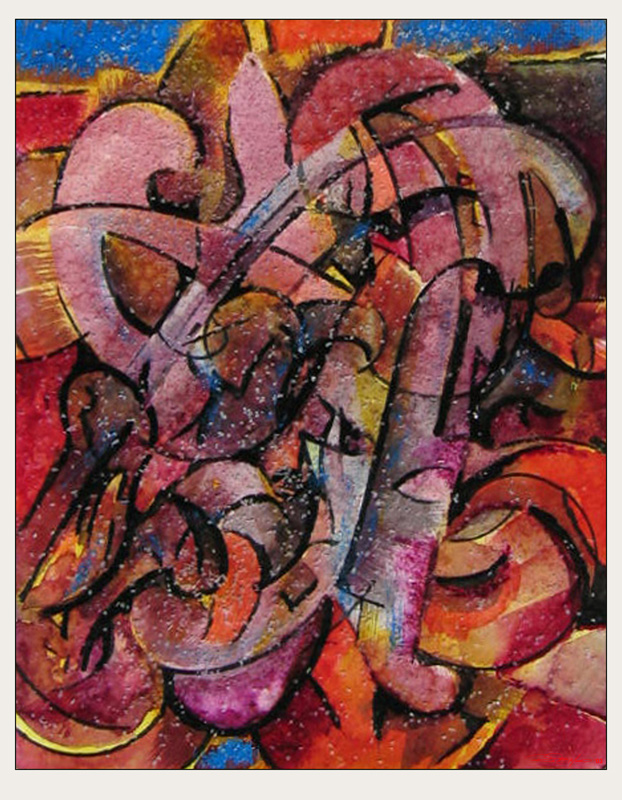
“Geometric Allegory” digital painting 2023 by Ricardo Morin (American visual artist born in Venezuela–1954)

*

Scope and Use

This entry forms part of the constitutional corpus presented in the Appendix, which comprises the twenty-five constitutions of Venezuela and is arranged for consultation rather than continuous reading.  Comparison proceeds through permanent rubric codes whose identity remains constant throughout the corpus; an absent rubric denotes constitutional silence, while a retired rubric is never reassigned.  Citations begin with the article number and follow the CIDEP recension linked at the end of the entry.  The complete definition of the corpus, its method, and its citation convention appear in the Scope and Use note that introduces the nineteenth-century constitutions, beginning with “Unmasking Disillusion: Series XI”: https://observationsonthenatureofperception.com/2026/06/15/unmasking-disillusion-series-xi/

Recensional note:  The quotations and article numbers have been collated against the electronic transcriptions published by CIDEP.  Only manifest transcription errors whose retention would misrepresent the antecedent have been normalized, including “Estada de Los Andes” and “no venta” in Articles 1 and 30 of the 1881 text; “Estado Caraboba,” normalized as “Estado Carabobo,” in Article 1 of the 1891 text; and the reference to “paragraph 23” of Article 13, restored as “paragraph 20,” in Article 81 of the 1891 text.  None of these normalizations alters the constitutional substance.  The marker cont. denotes substantive continuity notwithstanding orthographic, punctuation, or inflectional variation; cf. is reserved for changes that modify, remove, add, or redistribute constitutional content; and new identifies a provision without an antecedent in the immediately preceding Constitution.  At each point marked cf., the language producing the distinction is preserved according to the respective constitutional text.

Translation convention

Institutional names and constitutional terms are retained in italicized Castilian and followed by their contemporary English equivalents in brackets.  Constitutional quotations, including the Preámbulo [Preamble] and every antecedent introduced by cf., are rendered in contemporary Latinate English.  Comparative citations introduced by cf. are italicized as complete units.

Ricardo F. Morín

September 7, 2026

Bala Cynwyd, Pennsylvania


9). La Constitución de 1891

The Constitución de 1891 [Constitution of 1891], formally the Constitución de los Estados Unidos de Venezuela [Constitution of the United States of Venezuela], was adopted by the Congreso de los Estados Unidos de Venezuela [Congress of the United States of Venezuela] at Caracas on 9 April 1891 and promulgated by Presidente [President] Raimundo Andueza Palacio on 16 April 1891.

DOC-PRE—Preámbulo [Preamble]:

“The Congress of the United States of Venezuela, having considered and examined the petitions addressed by the nine States of the Venezuelan Federation through their respective Legislatures, requesting the reform of Article 118 of the Constitution of 1881; and considering: That not only does the majority required for that reform exist, but the vote of the autonomous Entities upon the matter is unanimous; and, That in this case reform is obligatory, and the National Legislature must undertake it in accordance with Articles 46 and 50 of the Compact of Union. Decrees:”

Although the Preámbulo [Preamble] identified Article 118 as the subject of the reform requested by the Estados [States], the enacted Constitución [Constitution] also altered the territorial organization established by Article 1 and extended the ordinary legislative session from sixty to seventy days in Article 30.

FND-TER—Territorio [Territory]:

The Constitución de 1891 [Constitution of 1891] provided that the Estados [States] declared independent and united by the Constitución de 28 de marzo de 1864 [Constitution of 28 March 1864], and known on 27 April 1881 as Apure, Bolívar, Barquisimeto, Barcelona, Carabobo, Cojedes, Cumaná, Falcón, Guzmán Blanco, Guárico, Guayana, Guzmán, Maturín, Nueva Esparta, Portuguesa, Táchira, Trujillo, Yaracuy, Zamora, and Zulia, were constituted as nine major political entities (Art. 1; cf. 1881, Art. 1: “The States that the Constitution of 28 March 1864 declared independent and united to form the Venezuelan Federation, and which are now denominated Apure, Bolívar, Barquisimeto, Barcelona, Carabobo, Cojedes, Cumaná, Falcón, Guzmán Blanco, Guárico, Guayana, Guzmán, Maturín, Nueva Esparta, Portuguesa, Táchira, Trujillo, Yaracuy, Zamora, and Zulia, are constituted as nine major political entities, namely:”).

Those nine political entities were Estado Bermúdez [State of Bermúdez], composed of Barcelona, Cumaná, and Maturín; Estado Miranda [State of Miranda], composed of Bolívar, Guzmán Blanco, Guárico, and Nueva Esparta; Estado Carabobo [State of Carabobo], composed of Carabobo and Nirgua; Estado Zamora [State of Zamora], composed of Cojedes, Portuguesa, and Zamora; Estado Lara [State of Lara], composed of Barquisimeto and Yaracuy, except the Departamento Nirgua [Department of Nirgua]; Estado de Los Andes [State of the Andes], composed of Guzmán, Trujillo, and Táchira; Estado Bolívar [State of Bolívar], composed of Guayana and Apure; Estado Zulia [State of Zulia]; and Estado Falcón [State of Falcón] (Art. 1; cf. 1881, Art. 1: “State of Oriente, composed of Barcelona, Cumaná, and Maturín; State of Guzmán Blanco, composed of Bolívar, Guzmán Blanco, Guárico, and Nueva Esparta; State of Carabobo, composed of Carabobo and Nirgua; South-Western State, composed of Cojedes, Portuguesa, and Zamora; North-Western State, composed of Barquisimeto and Yaracuy, except the Department of Nirgua; State of the Andes, composed of Guzmán, Trujillo, and Táchira; State of Bolívar, composed of Guayana and Apure; State of Zulia, by itself; and State of Falcón, also by itself.”).

Those entities were constituted in order to continue forming a single free, sovereign, and independent Nación [Nation] under the name Estados Unidos de Venezuela [United States of Venezuela] (Art. 1; cont. 1881, Art. 1).

The limits of the major Estados [States] remained those assigned to the former provinces by the Ley de 28 de abril de 1856 [Law of 28 April 1856], which had established the last territorial division, until that division should be reformed (Art. 2; cont. 1881, Art. 2).

The exterior limits of the Estados Unidos de la Federación Venezolana [United States of the Venezuelan Federation] remained those corresponding in 1810 to the former Capitanía General de Venezuela [Captaincy General of Venezuela] (Art. 3; cont. 1881, Art. 3).

The Estados [States] grouped into major political entities were denominated Secciones [Sections]. The Secciones [Sections] were equal among themselves; the constitutions governing their internal organization had to accord with the federal principles established by the Constitución [Constitution]; and undelegated soberanía [sovereignty] resided in the Estado [State], subject only to the limitations arising from the compact of association (Art. 4; cont. 1881, Art. 4).

POW-LEG—Congreso [Congress]:

The Constitución de 1891 [Constitution of 1891] vested the Legislatura Nacional [National Legislature] in two Cámaras [Chambers], one of Senadores [Senators] and the other of Diputados [Deputies] (Art. 18; cont. 1881, Art. 18). The Estados [States] determined the manner of electing the Diputados [Deputies] (Art. 19; cont. 1881, Art. 19). Each Estado [State] elected one Diputado [Deputy] for every thirty-five thousand inhabitants and another for any remainder of at least fifteen thousand, together with an equal number of suplentes [substitutes] (Art. 20; cont. 1881, Art. 20). The Diputados [Deputies] served four-year terms and were renewed in their entirety (Art. 21; cont. 1881, Art. 21). The Cámara de Diputados [Chamber of Deputies] examined the annual account presented by the Presidente [President], could adopt a vote of censure against the Ministros del Despacho [Ministers of State], and heard charges against the officer exercising the Ejecutivo Nacional [National Executive], the Ministros [Ministers], other national officers, and senior public officers of the Estados [States] in the cases prescribed by the Constitución [Constitution] (Arts. 22–24; cont. 1881, Arts. 22–24).

Each Legislatura estatal [State Legislature] elected three principal Senadores [Senators] and an equal number of suplentes [substitutes]. The Senadores [Senators] had to be Venezuelan by birth and at least thirty years of age, served four-year terms, and were renewed in their entirety (Arts. 25–27; cont. 1881, Arts. 25–27). The Senado [Senate] tried and determined the proceedings initiated in the Cámara de Diputados [Chamber of Deputies] and remained assembled for that purpose when a proceeding had not concluded during the legislative session (Arts. 28–29; cont. 1881, Arts. 28–29).

The Legislatura Nacional [National Legislature] assembled annually in the capital on 20 February, or on the earliest possible day thereafter, without prior convocation. Its sessions lasted seventy days and could be extended to ninety by decision of the majority (Art. 30; cf. 1881, Art. 30: “The National Legislature shall assemble each year in the capital of the United States on 20 February, or on the earliest possible day thereafter, without need of prior convocation. Sessions shall last sixty days and may be extended to ninety at the judgment of the majority.”). The Cámaras [Chambers] opened their sessions with at least two thirds of their members; after opening, they could continue with two thirds of those who had installed them, provided that number did not fall below half of all appointed members (Arts. 31–32; cont. 1881, Arts. 31–32). The Cámaras [Chambers] acted separately but assembled as Congreso [Congress] when the Constitución [Constitution] or the laws so required, or when either Cámara [Chamber] considered a joint session necessary; sessions were public or secret as each Cámara [Chamber] resolved (Arts. 33–34; cont. 1881, Arts. 33–34).

Each Cámara [Chamber] adopted its rules, corrected infractions, maintained order in the house of its sessions, disciplined spectators, removed impediments to the free exercise of its functions, executed its exclusive resolutions, determined the qualifications of its members, and heard their resignations (Art. 35; cont. 1881, Art. 35). Neither Cámara [Chamber] could suspend its sessions or change its place of meeting without the consent of the other; upon disagreement, the Cámaras [Chambers] assembled jointly and the decision of the majority prevailed (Art. 36; cont. 1881, Art. 36). The exercise of any public function was incompatible during the sessions with the office of Senador [Senator] or Diputado [Deputy]; the law fixed their indemnities, and an increase could not take effect before the period following the complete renewal of the Cámaras [Chambers] that enacted it (Art. 37; cont. 1881, Art. 37). Senadores [Senators] and Diputados [Deputies] enjoyed immunity from 20 January until thirty days after the sessions ended, consisting in the suspension of all civil or criminal proceedings, although a criminal investigation concerning an act punishable by corporal penalty could continue through the summary stage (Art. 38; cont. 1881, Art. 38). The Congreso [Congress] was presided over by the Presidente del Senado [President of the Senate], while the Presidente de la Cámara de Diputados [President of the Chamber of Deputies] served as Vicepresidente [Vice-President] (Art. 39; cont. 1881, Art. 39). miembros de las Cámaras [members of the Chambers] incurred no responsibility for opinions or speeches delivered therein (Art. 40; cont. 1881, Art. 40). A Senador [Senator] or Diputado [Deputy] who accepted an office or commission from the Ejecutivo Nacional [National Executive] thereby vacated his legislative seat (Art. 41; cont. 1881, Art. 41). Senadores [Senators] and Diputados [Deputies] could neither contract with the Gobierno Nacional [National Government] nor prosecute the claims of others before it (Art. 42; cont. 1881, Art. 42).

The Legislatura Nacional [National Legislature] exercised authority over disputes among Estados [States], the Distrito Federal [Federal District], customs, seaports and maritime coasts, national postal services, national codes, currency, national symbols, national offices, the national debt, public borrowing, the census and national statistics, the armed force, war and peace, treaties, public-works contracts, budgets, national prosperity and the advancement of the sciences and arts, weights and measures, amnesties, the Territorios [Territories], the procedure and penalties governing trials before the Senado [Senate], the population basis for the Diputados [Deputies], admission of foreigners to public service, military retirement and montepíos [survivors’ pensions], the responsibility of national and Estado [State] officers, military ranks and promotions, and election of the Consejo Federal [Federal Council] (Art. 43; cont. 1881, Art. 43). It could also enact the necessary general laws, while no law in conflict with the Constitución [Constitution] could be promulgated or executed (Art. 44; cont. 1881, Art. 44).

Bills and decrees could be introduced by members of either Cámara [Chamber], were subject to admission and three debates separated by at least one day, passed from one Cámara [Chamber] to the other, and followed the procedures governing amendments, insistence, rejection, pending bills, repeal, publication, nondelegation, and retroactivity (Arts. 45–60; cont. 1881, Arts. 45–60).

ECO-HAC—Hacienda [Public Finance]:

The Constitución de 1891 [Constitution of 1891] empowered the Legislatura Nacional [National Legislature] to organize all matters concerning the aduanas [customs houses], whose revenues formed the Tesoro de la Unión [Treasury of the Union] until replaced by other revenues; to determine all matters concerning the national debt; to borrow upon the credit of the Nación [Nation]; and to establish the annual budgets of public expenditure (Art. 43, nos. 3, 10, 11, and 18; cont. 1881, Art. 43, nos. 3, 10, 11, and 18). No expenditure could be made from the Tesoro Nacional [National Treasury] unless Congreso [Congress] had expressly appropriated a sum for it in the annual budget. Those who violated that rule were civilly liable to the Tesoro Nacional [National Treasury] for the sums paid, and ordinary expenses took precedence over extraordinary expenses in every disbursement of public funds (Art. 105; cont. 1881, Art. 105). Offices collecting national contributions and offices making payments had to remain separate, and the former could make no payments other than the salaries of their respective employees (Art. 106; cont. 1881, Art. 106). If no budget was enacted for a fiscal period, the budget for the immediately preceding period remained in force (Art. 107; cont. 1881, Art. 107). Exports from Venezuela were free of duty (Art. 101; cont. 1881, Art. 101).

POW-EXE—Ejecutivo [Executive]:

The Constitución de 1891 [Constitution of 1891] established a Consejo Federal [Federal Council] composed of one Senador [Senator] and one Diputado [Deputy] from each political entity, together with one additional Diputado [Deputy] for the Distrito Federal [Federal District], elected by Congreso [Congress] every two years from the respective representations of the Estados [States] and Distrito Federal [Federal District] (Art. 61 and §; cont. 1881, Art. 61 and §). The Consejo Federal [Federal Council] elected from among its members the Presidente de los Estados Unidos de Venezuela [President of the United States of Venezuela] and the person who would replace him upon a temporary or absolute vacancy. An election of a person who was not a member of the Consejo [Council] was void and without effect (Art. 62; cont. 1881, Art. 62). The miembros del Consejo [members of the Council] and the Presidente [President] served two-year terms and could not be reelected for the immediately succeeding period, although they resumed their legislative seats upon completing their service (Art. 63; cont. 1881, Art. 63). The Consejo Federal [Federal Council] resided in the Distrito Federal [Federal District], exercised the functions assigned by the Constitución [Constitution], required an absolute majority of its members to act, adopted its internal rules, and annually appointed the member who would preside over its sessions (Art. 64; cont. 1881, Art. 64).

The Presidente [President] appointed and removed the Ministros del Despacho [Ministers of State]; presided over the Gabinete [Cabinet]; received diplomatic representatives; signed official letters addressed to foreign sovereigns and presidents; executed the laws and decrees of the Legislatura Nacional [National Legislature]; promulgated resolutions and decrees approved by the Consejo Federal [Federal Council]; organized the Distrito Federal [Federal District]; issued navigation patents to national vessels; reported annually to Congreso [Congress] on the exercise of the powers conferred by Article 66; and performed the other functions assigned by national law (Art. 65; cont. 1881, Art. 65).

With the deliberative vote of the Consejo Federal [Federal Council], the Presidente [President] defended the Nación [Nation] against external attack; administered terrenos baldíos [public lands], mines, and saltworks by delegation from the Estados [States]; convened the Legislatura Nacional [National Legislature] in ordinary and extraordinary sessions; appointed diplomatic representatives and consuls; directed negotiations and concluded treaties subject to legislative approval; concluded contracts of national interest subject to legislative approval; appointed, removed, and suspended finance officers; declared war with prior authorization from Congreso [Congress]; exercised the powers conferred in the event of foreign war; employed the public force to restore constitutional order when an armed uprising threatened the institutions of the Nación [Nation]; employed the public force to end armed collision among Estados [States] and compel submission of their disputes to arbitration; directed the war and appointed the commander of the Ejército [Army]; organized the national force in time of peace; granted general or individual pardons; and defended the territory designated for the Distrito Federal [Federal District] when invasion was feared (Art. 66; cont. 1881, Art. 66).

The Presidente [President] was assisted in the conduct of business by the number of Ministros [Ministers] established by law, which determined their functions and duties and organized their departments (Art. 67; cont. 1881, Art. 67). A Ministro [Minister] had to be at least twenty-five years of age and either Venezuelan by birth or a national of five years’ standing (Art. 68; cont. 1881, Art. 68). The Ministros [Ministers] were the necessary organs of the Presidente [President], and every presidential act required their countersignature before it could be executed by authorities, officers, or private persons (Art. 69; cont. 1881, Art. 69). Ministros [Ministers] had to conform their acts to the Constitución [Constitution] and the laws; even a written presidential order did not absolve them of personal responsibility (Art. 70; cont. 1881, Art. 70). Matters other than the internal administration of the departments were determined by the Consejo de Ministros [Council of Ministers], whose responsibility was collective and joint (Art. 71; cont. 1881, Art. 71). Within the first five sessions of each year, the Ministros [Ministers] reported upon their departments, presented the annual budget and the general account for the preceding year, appeared before the Cámaras [Chambers] when summoned, and supplied the written or oral reports demanded of them, except for matters reserved in diplomatic negotiations (Arts. 72–74; cont. 1881, Arts. 72–74). Ministros [Ministers] were responsible for treason against the Nación [Nation], violation of the Constitución [Constitution] or laws, misappropriation of public funds, expenditures exceeding appropriations, bribery in matters within their office or in appointments, and failure to comply with decisions of the Consejo Federal [Federal Council] (Art. 75; cont. 1881, Art. 75).

The Ejecutivo Nacional [National Executive] was exercised by the Consejo Federal [Federal Council], the Presidente de los Estados Unidos de Venezuela [President of the United States of Venezuela] or the person acting in his stead, together with the Ministros del Despacho [Ministers of State], who were its organs. The Presidente [President] had to be Venezuelan by birth (Art. 86 and §; cont. 1881, Art. 86). The functions of the Ejecutivo Nacional [National Executive] could not be exercised outside the Distrito Federal [Federal District], except in the circumstance prescribed by Article 66, no. 10, attribution 5. When the Presidente [President], with the approval of the Consejo Federal [Federal Council], assumed command of the Ejército [Army] or left the Distrito [District] on business of public interest, he could exercise no other functions and was replaced by the Consejo Federal [Federal Council] pursuant to Article 62 (Art. 87; cont. 1881, Art. 87).

The Ejecutivo Nacional [National Executive] was directed to negotiate with the Gobiernos de América [Governments of the Americas] concerning compacts of alliance or confederation (Art. 116; cont. 1881, Art. 116).

POW-JUD—Poder Judicial [Judicial Power]:

The Constitución de 1891 [Constitution of 1891] established an Alta Corte Federal [High Federal Court] composed of one Vocal [Member] for each Estado de la Federación [State of the Federation]. Its Vocales [Members] had to be Venezuelan by birth and at least thirty years of age (Art. 76; cont. 1881, Art. 76). Congreso [Congress] elected one principal Vocal [Member] and one substitute for each Estado [State] from lists of candidates prepared by the respective Estado [State] delegations in Congreso [Congress] (Art. 77; cont. 1881, Art. 77). The law determined the functions of the Vocales [Members] and other officers of the Alta Corte Federal [High Federal Court] (Art. 78; cont. 1881, Art. 78). Principal Vocales [Members] and their suplentes [substitutes] served four-year terms and, while in office, could not accept an appointment from the Ejecutivo [Executive] without first resigning and obtaining lawful acceptance of the resignation; violation entailed four years’ disqualification from public office in Venezuela (Art. 79; cont. 1881, Art. 79).

The Alta Corte Federal [High Federal Court] had jurisdiction over civil and criminal proceedings involving diplomatic officers in the cases permitted by the Derecho de Gentes [Law of Nations]; proceedings that the Presidente [President] ordered to be brought against his Ministros [Ministers]; proceedings concerning ministerial responsibility; proceedings against diplomatic agents accredited abroad; civil proceedings against the Nación [Nation] when the law so provided; jurisdictional disputes among officers of different Estados [States]; political matters voluntarily submitted by the Estados [States]; determination of the governing law when national laws conflicted with one another or with Estado [State] laws; disputes arising from contracts or negotiations concluded by the Presidente de la Federación [President of the Federation]; prize causes; and other matters assigned by law (Art. 80; cont. 1881, Art. 80).

The Constitución [Constitution] also established a Corte de Casación [Court of Cassation] as a tribunal of the Estados [States], composed of one Vocal [Member] for each Estado [State], with four-year terms (Art. 81; cont. 1881, Art. 81). Vocales [Members] of the Corte de Casación [Court of Cassation] had to be practicing attorneys with at least six years of professional practice, Venezuelan, and over thirty years of age (Art. 82; cont. 1881, Art. 82). Every four years, each Legislatura estatal [State Legislature] prepared a list of attorneys equal in number to the Estados de la Federación [States of the Federation], from which the Consejo Federal [Federal Council] elected the Vocal [Member] corresponding to each Estado [State] (Art. 83; cont. 1881, Art. 83). After those elections, the Consejo Federal [Federal Council] compiled and published a general list of the remaining attorneys, from which absolute vacancies were filled by lot; temporary vacancies were filled as prescribed by law (Art. 84; cont. 1881, Art. 84).

The Corte de Casación [Court of Cassation] heard criminal and responsibility proceedings against senior officers of the Estados [States], applying the laws of the respective Estado [State] and, in the absence of a law of responsibility, the general legislation of the República [Republic]; determined the recurso de casación [appeal in cassation] in the manner prescribed by law; reported annually to the Legislatura Nacional [National Legislature] on impediments to uniform civil and criminal legislation; and resolved jurisdictional conflicts among judicial officers of different Estados [States] and, within a single Estado [State], when no authority existed to resolve them (Art. 85; cont. 1881, Art. 85).

The tribunals of justice of the Estados [States] were independent, and proceedings initiated before them terminated within the respective Estado [State], subject only to review by the Corte de Casación [Court of Cassation] in the cases permitted by law (Art. 89; cont. 1881, Art. 89). The law could also create such other national tribunals as were necessary (Art. 111; cont. 1881, Art. 111).

POW-SUB—Gobierno subnacional [Subnational Government]:

The Constitución de 1891 [Constitution of 1891] constituted the former Estados [States] as nine larger political entities, styled the Estados [States] of Bermúdez, Miranda, Carabobo, Zamora, Lara, Los Andes, Bolívar, Zulia, and Falcón, which continued to form one nation under the denomination Estados Unidos de Venezuela [United States of Venezuela] (Art. 1; cf. 1881, Art. 1: “The States that the Constitution of 28 March 1864 declared independent and united to form the Venezuelan Federation … are constituted as nine great political entities, namely:”). The territorial division established by the Ley de 28 de abril de 1856 [Law of 28 April 1856] determined the boundaries of those entities until amended by law (Art. 2; cont. 1881, Art. 2). The entities formed by the aggregation of former Estados [States] were denominated Secciones [Sections], declared equal among themselves, required to enact constitutions consonant with the federal principles established by the Constitución [Constitution], and retained the soberanía [sovereignty] not delegated, subject only to the limitations arising from the compact of association (Art. 4; cont. 1881, Art. 4).

The Estados [States] composing the Federación Venezolana [Venezuelan Federation] reciprocally recognized their respective autonomías [autonomies], declared themselves equal as political entities, and retained in full the sovereignty not expressly delegated by the Constitución [Constitution] (Art. 12; cont. 1881, Art. 12). The Constitución [Constitution] enumerated the obligations of the Estados [States], including organization according to the principles of popular, elective, federal, representative, alternative, and responsible government; enactment of constitutions consonant with the federal compact; preservation of sectional independence and the integrity of the Federación [Federation]; abstention from foreign political or diplomatic relations; cession of territory required for the Distrito Federal [Federal District] and other national purposes; recognition of specified federal powers and administrations; compliance with, and enforcement of, the Constitución [Constitution], federal laws, and federal judicial acts; organization of their tribunals; establishment of direct and public suffrage; provision of primary education and instruction in arts and trades; contribution of the contingent to the national public force; neutrality in disputes among Estados [States]; submission of interstate controversies to Congreso [Congress] or the Alta Corte Federal [High Federal Court]; recognition of federal jurisdiction over specified proceedings against the executive authorities of the Estados [States]; participation in the distribution of specified revenues; and the other duties enumerated in Article 13 (Art. 13; cont. 1881, Art. 13).

All matters not expressly attributed to the Administración General de la Nación [General Administration of the Nation] fell within the competence of the Estados [States] (Art. 88; cont. 1881, Art. 88). The tribunals of justice of the Estados [States] were declared independent, and proceedings initiated within an Estado [State] terminated there, subject only to review by the Corte de Casación [Court of Cassation] in the cases permitted by law (Art. 89; cont. 1881, Art. 89). Every act of Congreso [Congress] or the Ejecutivo Nacional [National Executive] that violated the rights guaranteed to the Estados [States] or assailed their independence had to be declared void by the Alta Corte Federal [High Federal Court] upon petition of a majority of the Legislaturas estatales [State Legislatures] (Art. 90; cont. 1881, Art. 90).

The Gobierno de la Federación [Government of the Federation] could maintain no resident officers exercising jurisdiction or authority within the Estados [States] other than the Estados [States]’ own officers. Officers of the Hacienda [Public Finance] and personnel assigned to forces garrisoning national fortresses, parks created by law, naval stations, and authorized ports were excepted; their jurisdiction was confined to their respective offices and precincts, without exempting them from the general laws of the Estado [State] in which they resided (Art. 97; cont. 1881, Art. 97).

The Gobierno Nacional [National Government] could station neither forces nor military commanders exercising command within an Estado [State] without the consent of its government (Art. 98; cont. 1881, Art. 98). Neither the Ejecutivo Nacional [National Executive] nor the Ejecutivos de los Estados [Executives of the States] could intervene by armed force in the domestic contests of an Estado [State], although they could tender their good offices toward a peaceful settlement (Art. 99; cont. 1881, Art. 99).

CON-AMD—Reforma de la Constitución [Constitutional Amendment]:

The Constitución de 1891 [Constitution of 1891] authorized its amendment by the Legislatura Nacional [National Legislature] upon application by the Legislaturas estatales [State Legislatures], but only upon the points on which a majority of the Estados [States] concurred (Art. 118; cf. 1881, Art. 118: “This Constitution may be amended in whole or in part by the National Legislature if a majority of the Legislatures of the States should so request. The decision of the majority renders the amendment obligatory; but the amendment shall never extend beyond the points upon which the applications concur.”). It further provided that one or more points could be amended when two thirds of the members of the Legislatura Nacional [National Legislature], acting separately and according to the procedure established for the enactment of laws, so resolved. An amendment adopted by that method had to be submitted to the Legislaturas de los Estados [State Legislatures] and was enacted only as to the point or points ratified by a majority of them (Art. 118; new).

CIV-SUF—Sufragio [Suffrage]:

The Constitución de 1891 [Constitution of 1891] made male Venezuelans over twenty-one years of age eligible for office, subject only to the exceptions established by the Constitución [Constitution] (Art. 7; cont. 1881, Art. 7). It guaranteed freedom of suffrage in popular elections, restricted only by minority under eighteen years of age (Art. 14, no. 11; cont. 1881, Art. 14, no. 11). It required the Estados [States] to establish direct and public suffrage in popular elections, render it obligatory, and secure it through the electoral census. Each vote had to be cast in full and public session of the respective electoral board, entered in the register prescribed by law, and signed by the elector or, if impeded or unable to write, by another at his request; without that formality, the vote was not deemed cast (Art. 13, no. 22; cont. 1881, Art. 13, no. 22).

The Diputados [Deputies] were elected by popular vote in the proportion established by the Constitución [Constitution], with an equal number of suplentes [substitutes] (Art. 20; cont. 1881, Art. 20). Each Legislatura estatal [State Legislature] elected three principal Senadores [Senators] and an equal number of suplentes [substitutes] (Art. 25; cont. 1881, Art. 25). The Consejo Federal [Federal Council] elected from among its members the Presidente de los Estados Unidos de Venezuela [President of the United States of Venezuela] and the person who would replace him upon temporary or absolute vacancy (Art. 62; cont. 1881, Art. 62). During periods of popular elections, the fuerza pública nacional y la de los Estados [national and State public forces] remained strictly confined to barracks throughout the electoral period (Art. 108; cont. 1881, Art. 108).

CIV-CIT—Ciudadanía [Citizenship]:

The Constitución de 1891 [Constitution of 1891] recognized as Venezuelans all persons born within the territory of Venezuela, irrespective of their parents’ nationality; children of a Venezuelan mother or father born in another territory who established domicile in the country and manifested their will to become Venezuelan; foreigners who had obtained a carta de nacionalidad [letter of naturalization]; and persons born in any of the Repúblicas hispanoamericanas [Spanish-American Republics] or the Antillas españolas [Spanish Antilles] who established residence in the República [Republic] and manifested their will to become its citizens (Art. 5; cont. 1881, Art. 5). Venezuelans who established domicile and acquired nationality in a foreign country did not thereby lose their Venezuelan status (Art. 6; cont. 1881, Art. 6). Male Venezuelans over twenty-one years of age were eligible for public office, subject only to the exceptions established by the Constitución [Constitution] (Art. 7; cont. 1881, Art. 7). Venezuelans were bound to serve the Nación [Nation] according to law, sacrificing their property and lives if necessary for its defense (Art. 8; cont. 1881, Art. 8). In every Estado [State] of the Unión [Union], they enjoyed the rights and immunities inherent in their status as citizens of the Federación [Federation] and were subject there to the same duties as native-born and domiciled inhabitants (Art. 9; cont. 1881, Art. 9).

Foreigners enjoyed the same civil rights as Venezuelans and the same security of person and property as nationals. They could resort to diplomatic channels only in accordance with public treaties and in cases permitted by law (Art. 10; cont. 1881, Art. 10). The law determined the rights incident to condición de extranjero [alien status], according as foreigners were domiciled or transient (Art. 11; cont. 1881, Art. 11).

RTS-GAR—Derechos [Rights]:

The Constitución de 1891 [Constitution of 1891] guaranteed Venezuelans the inviolability of life, abolishing capital punishment irrespective of the law prescribing it; property, subject only to legislatively imposed contributions, judicial decision, and expropriation for public works after indemnification and adversarial proceedings; the inviolability and secrecy of correspondence and other private papers; the inviolability of the domestic home, except to prevent the commission of a crime in accordance with law; personal liberty, including abolition of forced recruitment, perpetual proscription of slavery, freedom for slaves who entered Venezuelan territory, and the principle that no person is bound to do what the law does not command or prevented from doing what it does not prohibit; freedom of thought expressed orally or through the press without prior censorship, subject to judicial actions for calumny, insult, or injury to a third party; freedom of transit, change of domicile, departure from and return to the República [Republic] with one’s property; freedom of industry, with protection for discoveries and productions; freedom of peaceful, unarmed assembly and association; the right of petition and of obtaining a determination; freedom of suffrage in popular elections, restricted only by minority under eighteen years of age; freedom of instruction, with an obligation upon the public power to establish primary education and instruction in arts and trades without charge; religious freedom; individual security, with the guarantees enumerated in Article 14, no. 14; and equality before the law, including the prohibition of titles of nobility and hereditary honors and the official forms of address ciudadano [citizen] and usted [you] (Art. 14; cont. 1881, Art. 14).

The enumeration of guarantees did not restrict the power of the Estados [States] to accord their inhabitants additional guarantees (Art. 15; cont. 1881, Art. 15). Estado [State] laws prescribed penalties for violations of those guarantees and established procedures for making them effective (Art. 16; cont. 1881, Art. 16). Persons who issued, signed, executed, or ordered the execution of decrees, orders, or resolutions violating any guarantee accorded to Venezuelans were declared culpable and punished according to law, and every ciudadano [citizen] was competent to accuse them (Art. 17; cont. 1881, Art. 17).

All usurped authority was without effect, and its acts were void. Any decision procured by the direct or indirect requisition of the armed force or by an assembly of the people in a subversive posture was likewise void by operation of law and without effect (Art. 102; cont. 1881, Art. 102).

The Derecho de Gentes [Law of Nations] formed part of national legislation and governed especially in cases of civil war. Civil war could be concluded by treaties among the belligerents, who were required to observe the humanitarian usages of Christian and civilized nations; the guarantee of life remained inviolable in every case (Art. 117; cont. 1881, Art. 117).

REG-MIL—La fuerza armada [Armed Force]:

The Constitución de 1891 [Constitution of 1891] empowered the Legislatura Nacional [National Legislature] annually to fix the size of the naval and land forces, enact the ordinances of the Ejército [Army], prescribe rules for forming and replacing those forces, enact laws governing military retirement and montepíos [survivors’ pensions], and determine the manner of conferring military ranks and promotions (Art. 43, nos. 13, 14, 26, and 28; cont. 1881, Art. 43, nos. 13, 14, 26, and 28).

With the deliberative vote of the Consejo Federal [Federal Council], the Presidente de los Estados Unidos de Venezuela [President of the United States of Venezuela] organized the national force in time of peace, directed the war, appointed the commander of the Ejército [Army], declared war with prior authorization from Congreso [Congress], exercised the powers conferred in case of foreign war, employed the public force to restore constitutional order upon an armed uprising against the institutions of the Nación [Nation], employed the public force to terminate armed collision among Estados [States] and compel submission of their disputes to arbitration, and defended the territory designated for the Distrito Federal [Federal District] when invasion was feared (Art. 66, nos. 9–16; cont. 1881, Art. 66, nos. 9–16).

The national public force was divided into naval and land forces and consisted of the milicia ciudadana [citizen militia] organized by the Estados [States] pursuant to their laws (Art. 91; cont. 1881, Art. 91). The force placed at the charge of the Federación [Federation] consisted of a contingent, proportioned to population, supplied by each Estado [State] through the call to service of citizens required to render it under their internal laws (Art. 92; cont. 1881, Art. 92). In time of war, that contingent could be augmented by bodies of the milicia ciudadana [citizen militia] up to the number of men necessary to satisfy “the national requisition” (Art. 93; cf. 1881, Art. 93: “In case of war, the contingent may be augmented by bodies of the citizen militia up to the number of men necessary to satisfy the requisition of the National Government.”). The Gobierno Nacional [National Government] could replace the commanders of the public force supplied by the Estados [States] in the cases and with the formalities prescribed by national military law, whereupon it requested replacements from the respective Estados [States] (Art. 94; cont. 1881, Art. 94). Military and civil authority could never be exercised by the same person or corporation (Art. 95; cont. 1881, Art. 95).

All existing instruments of war belonged to the Gobierno Nacional [National Government], without prohibiting the Estados [States] from acquiring those required for their internal defense (Art. 97; cont. 1881, Art. 97).

The Gobierno Nacional [National Government] could station neither forces nor military commanders exercising command within an Estado [State] without the consent of its government (Art. 98; cont. 1881, Art. 98). Neither the Ejecutivo Nacional [National Executive] nor the Ejecutivos de los Estados [Executives of the States] could intervene by armed force in the domestic contests of an Estado [State], although they could tender their good offices toward a peaceful settlement (Art. 99; cont. 1881, Art. 99). During periods of popular elections, the fuerza pública nacional y la de los Estados [national and State public forces] remained strictly confined to barracks throughout the electoral period (Art. 108; cont. 1881, Art. 108). The armed force could not deliberate; it was “passive and obedient,” and no armed body could make requisitions or demand aid except through the civil authorities and in the manner prescribed by law (Art. 113; cont. 1881, Art. 113).

In cases of civil war, the provisions of the Derecho de Gentes [Law of Nations] incorporated into national legislation governed; belligerents could conclude treaties to terminate the war, were required to observe humanitarian usages, and could not violate the guarantee of life (Art. 117; cont. 1881, Art. 117).

REG-REL—Religión [Religion]:

The Constitución de 1891 [Constitution of 1891] guaranteed religious freedom (Art. 14, no. 13; cont. 1881, Art. 14, no. 13). It further provided that, the Nación [Nation] being in possession of the derecho de patronato eclesiástico [right of ecclesiastical patronage], that right would be exercised as prescribed by the governing law (Art. 96; cont. 1881, Art. 96).

CON-FIN—Disposiciones finales [Final Provisions]:

The Constitución de 1891 [Constitution of 1891] entered into force on the date of its official promulgation in each Estado [State]. It further directed that, in all public acts and official documents, the date of the Federación [Federation] be reckoned from 20 February 1859 and that of the Ley [Law] from 28 March 1864 (Art. 119; cont. 1881, Art. 119). The constitutional period for offices within the Administración General de la República [General Administration of the Republic] continued to be reckoned from 20 February 1882, the date upon which the amended Constitución [Constitution] was put into operation (Art. 120; cf. 1881, Art. 122: “The new constitutional period shall begin to be reckoned, for offices within the General Administration of the Republic, on 20 February 1882, when the present period terminates.”). For all civil and political acts of the Estados de la Federación [States of the Federation], the population basis was that determined by the latest census approved by the Legislatura Nacional [National Legislature] (Art. 121; cf. 1881, Art. 123: “For all acts in the civil and political life of the States of the Federation, their population basis is that determined by the census approved on 6 June 1874, until amended.”). The Constitución de 27 de abril de 1881 [Constitution of 27 April 1881] was repealed (Art. 122; cf. 1881, Art. 124: “The Federal Constitution enacted in 1874 is repealed.”).

The Constitución [Constitution] was adopted at Caracas, in the Palacio del Cuerpo Legislativo Federal [Palace of the Federal Legislative Body], on 9 April 1891, signed by the members of Congreso [Congress] there recorded, and ordered executed and observed at the Palacio Federal [Federal Palace] in Caracas on 16 April 1891 by Presidente [President] Raimundo Andueza Palacio and his Ministros [Ministers].

Note: the original text of the Constitución de 1891 [Constitution of 1891] may be consulted through CIDEP (Recopilación de Leyes y Decretos de Venezuela [Compilation of the Laws and Decrees of Venezuela]): https://cidep.online/files/constituciones/1891.pdf


10). La Constitución de 1893

La Constitución de 1893 [The Constitution of 1893] (Constitución de los Estados Unidos de Venezuela [Constitution of the United States of Venezuela]) was adopted by the Asamblea Nacional Constituyente [National Constituent Assembly] at Caracas on 12 June 1893 and promulgated by Presidente [President] Joaquín Crespo on 21 June 1893.

DOC-PRE—Preámbulo [Preamble]:

“We, the representatives of the people of Venezuela, assembled as a Constituent Assembly pursuant to the convocation contained in the Executive Decree of 1 January of the present year, invoking the favor and inspiration of the Supreme Legislator of the Universe, decree the following: CONSTITUTION OF THE UNITED STATES OF VENEZUELA”

FND-TER—Territorio [Territory]:

The Constitución de 1893 [Constitution of 1893] declared that the Estados [States] of Los Andes, Bermúdez, Bolívar, Carabobo, Falcón, Lara, Miranda, Zamora, and Zulia continued united as the Nación [Nation] under the denomination Estados Unidos de Venezuela [United States of Venezuela] (Art. 1; cf. 1891, Art. 1: “The States that the Constitution of 28 March 1864 declared independent and united … are constituted as nine great political entities, namely: the State of Bermúdez … the State of Miranda … the State of Carabobo … the State of Zamora … the State of Lara … the State of Los Andes … the State of Bolívar … the State of Zulia, by itself, and the State of Falcón, likewise by itself.”).

The boundaries of those Estados [States] were to be determined by those assigned to the former provinces by the Ley de 28 de abril de 1856 [Law of 28 April 1856], except that the former Departamento Nirgua [Department of Nirgua] formed part of the Estado Carabobo [State of Carabobo] (Art. 2; cf. 1891, Art. 2: “The boundaries of these great States are determined by those assigned to the former provinces by the Law of 28 April 1856, which fixed the last territorial division, until that division is amended.”).

The territory of the Estados Unidos de Venezuela [United States of Venezuela] was the same as that belonging in 1810 to the Capitanía General de Venezuela [Captaincy General of Venezuela] (Art. 3; cont. 1891, Art. 3).

Two or more Estados [States] could unite to form a single Estado [State] if their respective Asambleas Legislativas [Legislative Assemblies] so resolved. The former Estados [States] that the Constitución de 28 de marzo de 1864 [Constitution of 28 March 1864] had declared independent and that the Constitución de 27 de abril de 1881 [Constitution of 27 April 1881] had converted into Secciones [Sections] could recover the status of Estados [States] if two thirds of their Distritos [Districts], acting through their representatives in the Asamblea Legislativa [Legislative Assembly], so petitioned and their population exceeded one hundred thousand inhabitants. In the absence of that population, they could petition to separate from one Estado [State] and be annexed to another, provided that the Estado [State] from which they separated retained the requisite base of one hundred thousand inhabitants. In either case, notice was given to Congreso [Congress], the Ejecutivo Nacional [National Executive], and the other Estados [States] of the Federación [Federation], and the law regulated the procedure (Art. 4; new).

POW-LEG—Congreso [Congress]:

The Constitución de 1893 [Constitution of 1893] vested the legislative authority of the Nación [Nation] in the Congreso de los Estados Unidos de Venezuela [Congress of the United States of Venezuela], composed of a Cámara del Senado [Chamber of the Senate] and a Cámara de Diputados [Chamber of Deputies] (Arts. 18–19; cf. 1891, Art. 18: “The National Legislature shall be composed of two Chambers, one of Senators and the other of Deputies.”; cf. 1891, Art. 19: “The States shall determine the manner of conducting the election of Deputies.”).

Each Estado [State] elected one Diputado [Deputy] for every thirty-five thousand inhabitants and one additional Diputado [Deputy] for every excess of not less than fifteen thousand, with an equal number of suplentes [substitutes]; the Distrito Federal [Federal District] likewise elected its Diputados [Deputies] under the same rules (Arts. 20 and 23; cf. 1891, Art. 20: “To constitute the Chamber of Deputies, each State shall appoint by popular election, in conformity with paragraph 22 of Article 13 of this Constitution, one Deputy for every thirty-five thousand inhabitants and one additional Deputy for an excess of not less than fifteen thousand.”).

Diputados [Deputies] had to be Venezuelan by birth; their election was popular and conducted under paragraph 24 of Article 13; they served four-year terms, were renewed in their entirety, and their vacancies were filled according to law for the remainder of the term (Arts. 21–24 and sole paragraph to Art. 24; cf. 1891, Art. 21: “The Deputies shall serve four years in their offices and shall be renewed in their entirety.”).

The Asamblea Legislativa [Legislative Assembly] of each Estado [State] elected three principal Senadores [Senators] and three suplentes [substitutes]; Senadores [Senators] had to be Venezuelan by birth and at least thirty years of age, served four-year terms, and were renewed in their entirety (Arts. 26–29; cf. 1891, Art. 25: “To constitute this Chamber, each State, through its respective Legislature, shall elect three principal Senators and, to fill vacancies that may occur, an equal number of substitutes.”; cf. 1891, Art. 26: “To be a Senator, a person must: 1. Be Venezuelan by birth; and 2. Be thirty years of age.”; cf. 1891, Art. 27: “The Senators shall serve four years in their offices and shall be renewed in their entirety.”).

The Constitución [Constitution] prescribed the annual meeting of the Cámaras Legislativas [Legislative Chambers] in the capital of the Unión [Union] on 20 February, or on the nearest possible day, without prior convocation; sessions of seventy days, extendable to ninety; quorum requirements; public and secret sessions; the internal powers of each Cámara [Chamber]; the rule that neither Cámara [Chamber] could suspend its sessions or change its place of meeting without the consent of the other; incompatibility between legislative office and other public functions during the sessions; legislative indemnities; immunity; the presidency of Congreso [Congress]; nonliability for opinions or speeches; and the prohibition against Senadores [Senators] and Diputados [Deputies] contracting with the Ejecutivo Nacional [National Executive] or prosecuting the claims of others before it (Arts. 30–43; cf. 1891, Art. 30: “The National Legislature shall meet each year in the capital of the United States on 20 February, or on the nearest possible day, without need of prior convocation.”; cf. 1891, Art. 34: “The sessions shall be public, and secret when the Chamber so resolves.”; cf. 1891, Art. 38: “Senators and Deputies, from 20 January of each year until thirty days after the termination of the sessions, shall enjoy immunity.”; cf. 1891, Art. 40: “The members of the Chambers are not responsible for the opinions they express or the speeches they deliver therein.”; cf. 1891, Art. 42: “Nor may Senators and Deputies contract with the National Government or prosecute the claims of others before it.”).

The Constitución [Constitution] enumerated the powers of Congreso [Congress] over national taxes, aduanas [customs houses], ports, postal and telegraph offices, national codes, currency, national symbols, national offices, the national debt, public borrowing, statistics and the census, the armed force, war, treaties, contracts of national interest, the budget, amnesties, the Territorios [Territories], elections, official responsibility, military retirement and montepíos [survivors’ pensions], military ranks and promotions, and laws of a general character (Arts. 44–46; cf. 1891, Art. 43: “The National Legislature has the following powers:”; cf. 1891, Art. 44: “In addition to the preceding enumeration, the National Legislature may enact such laws of a general character as may be necessary …”).

The Constitución [Constitution] prescribed the introduction, debate, amendment, approval, promulgation, repeal, and publication of laws; required that a law amending another be drafted in full; provided that bills rejected during the sessions of one year could not be introduced anew except during those of another; declared the power of Congreso [Congress] to enact law nondelegable; and provided that no legislative provision would have retroactive effect, except in matters of judicial procedure and when imposing a lesser penalty (Arts. 47–59; cf. 1891, Art. 45: “The laws and decrees of the National Legislature may be introduced by members of either Chamber …”; cf. 1891, Art. 46: “… it shall receive three debates, with an interval of at least one day between each …”; cf. 1891, Art. 50: “A law amending another shall be drafted in full, and the prior law shall be repealed in all its parts.”; cf. 1891, Art. 52: “Bills rejected in one Legislature may not be introduced anew except in another.”; cf. 1891, Art. 58: “Laws shall not be in force until published with the prescribed solemnity.”; cf. 1891, Art. 59: “The power conferred to enact law is not delegable.”; cf. 1891, Art. 60: “No legislative provision shall have retroactive effect, except in matters of judicial procedure and when imposing a lesser penalty.”).

ECO-HAC—Hacienda [Public Finance]:

The Constitución de 1893 [Constitution of 1893] empowered the Congreso de los Estados Unidos de Venezuela [Congress of the United States of Venezuela] to decree national taxes and organize all matters concerning the aduanas [customs houses], determine all matters concerning the national debt and its interest, authorize borrowing upon the credit of the Nación [Nation], and frame the general budget of public revenues and expenditures, which in no case could fail to receive an annual vote (Art. 44, nos. 2, 9, 10, and 17; cf. 1891, Art. 43, nos. 3, 10, 11, and 18: “To organize all matters concerning the Customs Houses, whose revenues shall constitute the treasury of the Union until replaced by other revenues”; “To determine all matters concerning the National Debt”; “To borrow upon the credit of the Nation”; “To frame annually the budgets of public expenditure.”).

The Presidente de los Estados Unidos de Venezuela [President of the United States of Venezuela] was charged with administering terrenos baldíos [public lands], mines, and saltworks pursuant to law; negotiating the loans authorized by Congreso [Congress] in strict conformity with its provisions; and supervising and safeguarding the collection of national revenues (Art. 76, nos. 5, 15, and 16; cf. 1891, Art. 66, nos. 2, 10, and 7: “To administer the public lands, mines, and saltworks of the States by their delegation”; “To exact contributions in advance and negotiate the loans authorized by the National Legislature”; “To appoint officers of the Public Finance whose appointment is not attributed to another authority.”).

The Consejo de Gobierno [Council of Government] was required to supervise the lawful administration and application of national revenues, submitting annually to Congreso [Congress] such reports and observations as were warranted; to ensure the proper delivery of the sums assigned to the Estados [States] under Article 13, no. 32; and to ensure the detailed fortnightly publication of the movements of the Treasury (Art. 85, no. 4; new).

Within the first ten days of the second month of the Cámaras [Chambers]’ sessions, the Ministros del Despacho [Ministers of State] were required to present the general budget of revenues and expenditures and the general account for the preceding year (Art. 97; cf. 1891, Art. 73: “Within the same period, they shall present to the National Legislature the budget of public expenditures and the general account for the preceding year.”).

The Constitución [Constitution] declared exports from Venezuela free and prohibited every duty upon them; prohibited any expenditure from the Tesoro Nacional [National Treasury] for which Congreso [Congress] had not expressly appropriated a sum in the general budget of public expenditures; rendered violators civilly liable to the Tesoro Nacional [National Treasury] for the sums paid; required ordinary expenses to take precedence over extraordinary expenses; and required offices collecting national contributions and offices making payments to remain separate, the former making no payment other than the salaries of their respective employees (Arts. 136, 138, and 139; cf. 1891, Art. 101: “Exports from Venezuela are free, and no duty burdening them may be imposed.”; cf. 1891, Art. 105: “No expenditure shall be made from the National Treasury for which Congress has not expressly appropriated a sum in the annual budget …”; cf. 1891, Art. 106: “Offices collecting national contributions and offices making payments shall always remain separate …”).

POW-EXE—Ejecutivo [Executive]:

The Constitución de 1893 [Constitution of 1893] assigned the Administración general de la Nación [General Administration of the Nation], insofar as it was not conferred upon another authority, to the Ejecutivo Nacional [National Executive], exercised by the Presidente de los Estados Unidos de Venezuela [President of the United States of Venezuela] in union with the Ministros del Despacho [Ministers of State] and the Consejo de Gobierno [Council of Government] in the powers conferred upon it by the Constitución [Constitution] (Art. 60; cf. 1891, Art. 86: “The National Executive is exercised by the Federal Council, the President of the United States of Venezuela or the person acting in his stead, in union with the Ministers of State, who are its organs.”). funciones ejecutivas [executive functions] could not be exercised outside the Distrito Federal [Federal District], except in the constitutional circumstance of the temporary transfer of the Poder General [General Power]; when the Presidente [President] assumed command of the Ejército [Army] or left the Distrito Federal [Federal District] in exercise of the constitutional power, he was replaced by the presiding member of the Consejo de Gobierno [Council of Government] (Arts. 61–62; cf. 1891, Art. 87: “The functions of the National Executive may not be exercised outside the Federal District, except in the case provided in number 5, attribution 10, Article 66 of the Constitution. When the President, with the approval of the Council, assumes command of the Army or leaves the District because matters of public interest so require, he may exercise no other functions and shall be replaced by the Federal Council pursuant to Article 62 of this Constitution.”).

The Presidente [President] was elected by the citizens of the Estados [States] and the Distrito Federal [Federal District] through direct and secret voting; he had to be Venezuelan by birth and at least thirty years of age (Art. 63; cf. 1891, Art. 62: “The Federal Council elects from among its members the President of the United States of Venezuela and, in the same manner, the person who shall replace him upon temporary or absolute vacancies occurring during his term.”; cf. 1891, paragraph to Art. 86: “To be President of the United States of Venezuela, a person must be Venezuelan by birth.”). The Cámaras [Chambers] assembled as Congreso [Congress] conducted the scrutiny; the Constitución [Constitution] regulated missing returns, the absence of an absolute majority, the failure of Congreso [Congress] to organize, and the subsidiary intervention of the Alta Corte Federal [High Federal Court] (Arts. 64–69; new).

Temporary or absolute vacancies in the Presidencia [Presidency] were filled by the presiding member of the Consejo de Gobierno [Council of Government]; if an absolute vacancy occurred during the first two years of the term, elections were to be called to complete the remainder. The presidential term ran for four years from 20 February; the Presidente [President] was ineligible for the immediately succeeding term, a restriction also applicable to any person who had exercised the Presidencia [Presidency] during the last year of the prior term and to relatives specified by the Constitución [Constitution]. His salary could not be altered during the term, and the Presidente [President] was answerable for treason against the Nación [Nation], violation of the Constitución [Constitution] or laws, and common crimes (Arts. 70–75; cf. 1891, Arts. 62–63: “The members of the Federal Council serve two years, as does the President of the United States of Venezuela.”).

The Presidente [President] directly exercised the powers enumerated in Article 76; with the consultative vote of the Consejo de Gobierno [Council of Government], those in Article 77; and, after a deliberative vote of that Consejo [Council], those in Article 78. They included execution of the laws and decrees of Congreso [Congress]; appointment and removal of Ministros [Ministers] and officers; administration of the Distrito Federal [Federal District], terrenos baldíos [public lands], mines, and saltworks; negotiation of loans; supervision of revenues; executive regulation of the laws; external defense; extraordinary convocation of Congreso [Congress]; diplomatic relations; war; organization and direction of the national force; pardons; restoration of constitutional order; termination of armed collisions among Estados [States]; contracts of national interest; and exclusion of foreigners prejudicial to public order (Arts. 76–78; cf. 1891, Arts. 65–66: “The following are powers of the President of the United States of Venezuela:”; “Apart from the preceding powers, which belong exclusively to the President of the United States of Venezuela, he shall exercise the following with the deliberative vote of the Federal Council:”).

The Consejo de Gobierno [Council of Government] consisted of nine principal Vocales [Members] and their suplentes [substitutes], elected by Congreso [Congress] for the same four-year term as the Presidencia [Presidency]. Its members had to possess the qualifications required of the Presidente [President]; the Consejo [Council] elected its own officers, deliberated with the attendance of at least two thirds of its members, and exercised the consultative, deliberative, administrative, and fiscal functions established by the Constitución [Constitution]. The Consejeros [Councillors] were answerable for treason against the Nación [Nation], bribery, violation of the Constitución [Constitution] or laws, and common crimes (Arts. 79–89; cf. 1891, Arts. 61–64: “There shall be a Federal Council composed of one Senator and one Deputy from each of the political entities, and one additional Deputy for the Federal District.”).

The Presidente [President] had for the conduct of business the Ministros [Ministers] prescribed by law. Ministros [Ministers] had to be at least twenty-five years of age and Venezuelan by birth; they constituted the Consejo de Ministros [Council of Ministers] for matters within its competence and were the legal, sole, and necessary organs of the Presidente [President], whose acts were without effect absent the corresponding ministerial countersignature. They were required to conform their acts to the Constitución [Constitution] and laws, render accounts and reports to the Cámaras [Chambers], present the budget and general account, and answer in the cases enumerated by the Constitución [Constitution] (Arts. 90–99; cf. 1891, Arts. 67–75: “The President of the United States of Venezuela shall have for the conduct of business the Ministers prescribed by law.”).

POW-JUD—Poder Judicial [Judicial Power]:

The Constitución de 1893 [Constitution of 1893] vested the Poder Judicial de los Estados Unidos de Venezuela [Judicial Power of the United States of Venezuela] in the Alta Corte Federal [High Federal Court], the Corte de Casación [Court of Cassation], and the other Tribunales y Juzgados [Tribunals and Courts] established by law. Judicial officers were answerable in the cases determined by law and for treason against the Nación [Nation], bribery, violation of the Constitución [Constitution] or laws, and common crimes (Arts. 100–101; cf. 1891, Arts. 76–85 and 111: “The law shall create and designate such other national tribunals as may be necessary.”).

The Alta Corte Federal [High Federal Court] consisted of nine Vocales [Members], each with a substitute. A Vocal [Member] had to be Venezuelan by birth and at least thirty years of age. Each Asamblea Legislativa [Legislative Assembly] transmitted to Congreso [Congress] a nonaria [list of nine nominees] selected from outside its membership, from which Congreso [Congress] elected the corresponding principal Vocal [Member] and substitute; the Constitución [Constitution] regulated replacements, increases or decreases in the number of Estados [States], election every six years, and incompatibility with offices filled by executive appointment (Arts. 102–109; cf. 1891, Arts. 76–79: “The High Federal Court shall be composed of as many Members as there are States of the Federation.”).

The Alta Corte Federal [High Federal Court] heard accusations and proceedings against the person charged with the Presidencia [Presidency], the Consejeros [Councillors], the Ministros [Ministers], and members of both Cortes [Courts]; proceedings involving diplomatic officers and agents; civil proceedings against the Nación [Nation]; political or jurisdictional controversies among officers of different Estados [States]; conflicts of laws; the nullity of national or district acts emanating from usurped authority or from decisions obtained by force; prize causes; controversies arising from contracts concluded by the Presidente [President]; and the presidential scrutiny in the prescribed circumstances (Art. 110; cf. 1891, Art. 80: “The following matters fall within the competence of the High Federal Court:”).

The Corte de Casación [Court of Cassation] was a tribunal of the Estados [States] and consisted of nine Vocales [Members] serving six-year terms. Its Vocales [Members] had to be attorneys of the República [Republic] with six years of practice, Venezuelan by birth, and over thirty years of age; each Asamblea Legislativa [Legislative Assembly] elected one principal, one substitute, and a senaria [list of six nominees] for replacements. The Corte [Court] heard proceedings against senior Estado [State] officers, the nullity of Estado [State] acts emanating from usurped authority or from decisions obtained by force, the recurso de casación [appeal in cassation], and jurisdictional disputes, and reported to Congreso [Congress] on impediments to legislative uniformity (Arts. 111–115; cf. 1891, Arts. 81–85: “The Court of Cassation referred to in paragraph 20, Article 13, of this Constitution is a Tribunal of the States; it shall be composed of as many Members as there are States of the Federation, and they shall serve four years.”).

POW-SUB—Gobierno subnacional [Subnational Government]:

The Constitución de 1893 [Constitution of 1893] declared the Estados [States] composing the Unión Venezolana [Venezuelan Union] autonomous and equal as political entities (Art. 13; cf. 1891, Art. 12: “The States composing the Venezuelan Federation reciprocally recognize their respective autonomies, declare themselves equal as political entities, and retain in full the sovereignty not expressly delegated by this Constitution.”).

The Constitución [Constitution] required the Estados [States] to organize according to the principles of popular, elective, federal, representative, alternative, and responsible government (Art. 13, no. 1; cont. 1891, Art. 13, no. 1).

The Constitución [Constitution] required the Estados [States] to recognize in their respective constitutions the autonomía [autonomy] of the Municipio [Municipality] and its independence from the political power of the Estado [State] in all matters concerning its economic and administrative order (Art. 13, no. 2; cf. 1891, Art. 13, no. 2: “To establish the fundamental rules of their internal order and government in complete conformity with the principles of this Constitution.”).

The Constitución [Constitution] required the Estados [States] to defend themselves against all violence injuring their independence or the integrity of the Nación [Nation] (Art. 13, no. 3; cf. 1891, Art. 13, no. 3: “To defend themselves against all violence injuring sectional independence or the integrity of the Venezuelan Federation.”).

The Constitución [Constitution] required the Estados [States] neither to alienate any part of their territory to a foreign Power, nor implore its protection, nor establish or cultivate political relations with other nations (Art. 13, no. 4; cf. 1891, Art. 13, no. 4: “Neither to alienate any part of their territory to a foreign Power, nor implore its protection, nor establish or cultivate political or diplomatic relations with other nations, the latter being reserved to the Federal Power.”).

The Constitución [Constitution] required the Estados [States] neither to incorporate or ally themselves with another nation nor separate from Venezuela in diminution of its nationality or territory (Art. 13, no. 5; cont. 1891, Art. 13, no. 5).

The Constitución [Constitution] required the Estados [States] to cede to the Nación [Nation], for the Distrito Federal [Federal District], unpopulated land not exceeding one hundred square kilometers upon which the capital city of the Unión [Union] would be built; in the interim, the Distrito Federal [Federal District] comprised the city of Caracas and its outlying parishes of El Recreo, El Valle, La Vega, Antímano, Macarao, and Macuto (Art. 13, no. 6; cf. 1891, Art. 13, no. 6: “To cede to the Nation the land required for the Federal District.”).

The Constitución [Constitution] required the Estados [States] to cede to the Gobierno de la Nación [Government of the Nation] the territory necessary to erect forts, warehouses, shipyards, and other buildings indispensable to the Administración General [General Administration] (Art. 13, no. 7; cf. 1891, Art. 13, no. 7: “To cede to the Government of the Federation the territory necessary to erect forts, warehouses, shipyards, penitentiaries, and other buildings indispensable to the General Administration.”).

The Constitución [Constitution] required the Estados [States] to leave to the Gobierno de la Unión [Government of the Union] the unrestricted administration of the Territorios [Territories] of Colón and Amazonas, and provided that the Territorios [Territories] of Delta and Goagira would be reincorporated into the Estados [States] to which they had belonged before their erection as Territorios [Territories] (Art. 13, no. 8; cf. 1891, Art. 13, no. 8: “To leave to the Government of the Federation the administration of the territories of ‘Amazonas’ and ‘Goagira’ and of the islands belonging to the Nation until it becomes expedient to elevate them to another status.”).

The Constitución [Constitution] required the Estados [States] to reserve to the Poder General [General Power] all legislative and executive jurisdiction concerning maritime, coastal, and river navigation and national roads (Art. 13, no. 9; cont. 1891, Art. 13, no. 9).

The Constitución [Constitution] required the Estados [States] not to restrict by taxation the navigation of rivers and other navigable waters that had not required artificial canalization (Art. 13, no. 10; new).

The Constitución [Constitution] required the Estados [States] not to subject to contributions, before being offered for consumption, products or articles burdened by national taxes or exempted from taxation by law (Art. 13, no. 11; cont. 1891, Art. 13, no. 10).

The Constitución [Constitution] required the Estados [States] not to impose contributions upon livestock, goods, or merchandise of any kind in transit to another Estado [State] (Art. 13, no. 12; cont. 1891, Art. 13, no. 11).

The Constitución [Constitution] required the Estados [States] neither to prohibit consumption of the livestock, articles, and other products of other Estados [States] nor burden their consumption with taxes greater or lesser than those paid by their local equivalents (Art. 13, no. 13; cf. 1891, Art. 13, no. 12: “Neither to prohibit consumption of the products of other States nor burden foreign production with general or municipal taxes greater than those paid by locally produced goods.”).

The Constitución [Constitution] required the Estados [States] not to establish Aduanas [Customs Houses] for the collection of import duties, since only national Aduanas [Customs Houses] would exist (Art. 13, no. 14; cf. 1891, Art. 13, no. 13: “Not to establish maritime or inland Customs Houses for the collection of taxes, since there shall be only national Customs Houses.”).

The Constitución [Constitution] required the Estados [States] to reserve to each Estado [State] the right to dispose of its natural products (Art. 13, no. 15; cont. 1891, Art. 13, no. 14).

The Constitución [Constitution] required the Estados [States] to cede to the Gobierno de la Unión [Government of the Union] the administration of mines, saltworks, and terrenos baldíos [public lands] for the purposes expressed in the article (Art. 13, no. 16; cf. 1891, Art. 13, no. 15: “To cede to the Government of the Federation the administration of mines, public lands, and saltworks, so that the former may be governed by a uniform system of exploitation and the latter applied for the benefit of the peoples.”).

The Constitución [Constitution] required the Estados [States] to respect the properties, parks, and castles of the Nación [Nation] (Art. 13, no. 17; cont. 1891, Art. 13, no. 16).

The Constitución [Constitution] required the Estados [States] to comply with and ensure compliance with and execution of the Constitución y leyes de la Unión [Constitution and laws of the Union] and the decrees and orders issued by the Poderes nacionales [national Powers] in exercise of their lawful attributes and powers (Art. 13, no. 18; cf. 1891, Art. 13, no. 17: “To comply with and ensure compliance with and execution of the Constitution and laws of the Federation, and the decrees and orders issued by the Federal Power and the Tribunals and Courts of the Federation in exercise of their lawful attributes and powers.”).

The Constitución [Constitution] required the Estados [States] to accord full faith to, and ensure compliance with and execution of, the public acts and judicial proceedings of the other Estados [States] (Art. 13, no. 19; cont. 1891, Art. 13, no. 18).

The Constitución [Constitution] required the Estados [States] to organize their Tribunales y Juzgados [Tribunals and Courts] for the fullest administration of justice and to maintain uniform substantive civil, commercial, and criminal legislation and uniform laws of civil and criminal procedure (Art. 13, no. 20; cf. 1891, Art. 13, no. 19: “To organize their Tribunals and Courts for the administration of justice in the State, and to maintain for all of them uniform substantive civil and criminal legislation and uniform laws of civil and criminal procedure.”).

The Constitución [Constitution] required the Estados [States], through the Asamblea Legislativa [Legislative Assembly], to transmit to Congreso [Congress] the corresponding list for principal and substitute Vocales [Members] of the Alta Corte Federal [High Federal Court], and to elect Vocales [Members] of the Corte de Casación [Court of Cassation] (Art. 13, no. 21; cf. 1891, Art. 13, no. 20: “To present Members for the Court of Cassation and submit to the decisions of this Supreme Tribunal of the States.”).

The Constitución [Constitution] required the Estados [States] to submit to the decisions of the Corte de Casación [Court of Cassation] as Supremo Tribunal de los Estados [Supreme Tribunal of the States] (Art. 13, no. 22; cf. 1891, Art. 13, no. 20: “To present Members for the Court of Cassation and submit to the decisions of this Supreme Tribunal of the States.”).

The Constitución [Constitution] required the Estados [States] to inscribe extradition as a political principle in their respective constitutions (Art. 13, no. 23; cf. 1891, Art. 13, no. 21: “To inscribe criminal extradition as a political principle in their respective Constitutions.”).

The Constitución [Constitution] required the Estados [States] to establish direct and secret suffrage in popular elections (Art. 13, no. 24; cf. 1891, Art. 13, no. 22: “To establish direct and public suffrage in popular elections, render it obligatory, and secure it through the electoral census.”).

The Constitución [Constitution] did not reproduce the prohibition upon the Estados [States] assigning duties to national officers except in their capacity as citizens of the Estado [State] and insofar as those duties were compatible with national public service (cf. 1891, Art. 13, no. 25: “Not to impose duties upon national officers except in their capacity as citizens of the State and insofar as those duties are not incompatible with national public service.”).

The Constitución [Constitution] required the Estados [States] to establish primary instruction without charge and as obligatory, and instruction in arts and trades without charge (Art. 13, no. 25; cf. 1891, Art. 13, no. 23: “To establish primary education and education in arts and trades.”).

The Constitución [Constitution] required the Estados [States] to reserve to the Poderes de la Unión [Powers of the Union] the authority to enact the Código de Instrucción Pública Nacional [Code of National Public Instruction] (Art. 13, no. 26; cf. 1891, Art. 13, no. 24: “To reserve to the powers of the Federation the laws and measures necessary for the creation, preservation, and advancement of general schools, colleges, or universities devoted to instruction in the sciences.”).

The Constitución [Constitution] required the Estados [States] to furnish, without arms, the contingent proportionally incumbent upon them to compose the national public force in time of peace, as decreed annually by each Congreso Nacional [National Congress] (Art. 13, no. 27; cf. 1891, Art. 13, no. 26: “To furnish the contingent proportionally incumbent upon them to compose the national public force in time of peace or war.”).

The Constitución [Constitution] required the Estados [States] not to permit enlistments or levies whose object was or could be to assail liberty or independence, or disturb the public order of the Nación [Nation], other Estados [States], or another nation (Art. 13, no. 28; cont. 1891, Art. 13, no. 27).

The Constitución [Constitution] required the Estados [States] neither to declare nor wage war against another Estado [State] under any circumstance, and to maintain strict neutrality in all disputes arising among other Estados [States] (Art. 13, no. 29; cf. 1891, Art. 13, nos. 28–29: “To maintain strict neutrality in disputes arising in other States”; “Neither to declare nor wage war under any circumstance by one State against another.”).

The Constitución [Constitution] required the Estados [States] to defer and submit to the decision of the Alta Corte Federal [High Federal Court] every controversy arising between two or more Estados [States] when they could not by themselves and through peaceful means arrive at a settlement (Art. 13, no. 30; cf. 1891, Art. 13, no. 30: “To defer and submit to the decision of Congress or the High Federal Court every controversy arising between two or more States when they cannot by themselves and through peaceful means arrive at a settlement.”).

The Constitución [Constitution] required the Estados [States] to recognize the competence of the Corte de Casación [Court of Cassation] to hear proceedings instituted for treason against the Nación [Nation] or violation of the Constitución y leyes de la Unión [Constitution and laws of the Union] against those exercising the highest executive authority within the Estados [States] (Art. 13, no. 31; cf. 1891, Art. 13, no. 31: “To recognize the competence of Congress and the Court of Cassation to hear proceedings instituted for treason against the Nation or violation of the Constitution and laws of the Federation against those exercising executive authority within the States.”).

The Constitución [Constitution] required the Estados [States] to receive as their own revenue the total produced in all Aduanas [Customs Houses] of the República [Republic] by the tax collected as a transit contribution and the total produced by mines, terrenos baldíos [public lands], and saltworks administered by the Poder Federal [Federal Power] (Art. 13, no. 32; cf. 1891, Art. 13, no. 32: “To receive as the States’ own revenue two thirds of the total produced in all Customs Houses of the Republic by the tax collected as a transit contribution, and two thirds of the revenue produced by mines, public lands, and saltworks administered by the Federal Power.”).

The Constitución [Constitution] required that revenue to be distributed fortnightly among all Estados [States] of the Federación [Federation] in proportion to their respective populations (Art. 13, no. 33; cf. 1891, Art. 13, no. 32: “and to distribute that revenue among all States of the Federation in proportion to their respective populations.”).

The Constitución [Constitution] provided that, if one or more of the taxes referred to in Article 13, no. 32 were abolished or reduced by law, Congreso [Congress] would establish the manner of returning to the Estados [States] the portion of revenue thereby eliminated (Art. 13, no. 34; new).

The Constitución [Constitution] required the Estados [States] to keep away from their borders persons who sought asylum in an Estado [State] for political reasons whenever the interested Estado [State] so requested (Art. 13, no. 35; cont. 1891, Art. 13, no. 34).

The Constitución [Constitution] required the Estados [States] neither to coin money, nor issue paper money, nor make anything other than gold or silver coin valid for the payment of debts (Art. 13, no. 36; new).

All matters not expressly attributed to the Administración general de la Nación [General Administration of the Nation] fell within the competence of the Estados [States] (Art. 116; cont. 1891, Art. 88).

The Constitución [Constitution] declared the Tribunales de Justicia [Tribunals of Justice] in the Estados [States] independent and provided that proceedings initiated therein would terminate within the same Estados [States], subject only to review by the Corte de Casación [Court of Cassation] in the cases permitted by law (Art. 121; cont. 1891, Art. 89).

The Constitución [Constitution] provided that every act of the Cámaras Legislativas [Legislative Chambers] or the Ejecutivo Nacional [National Executive] violating the rights guaranteed to the Estados [States] or assailing their autonomía [autonomy] had to be declared void by the Alta Corte Federal [High Federal Court], even if the declaration of nullity was requested by only one Asamblea Legislativa estatal [State Legislative Assembly] (Art. 123; cf. 1891, Art. 90: “Every act of Congress or the National Executive that violates the rights guaranteed to the States by this Constitution or assails their independence shall be declared void by the High Court whenever a majority of the Legislatures so requests.”).

The Constitución [Constitution] provided that the Gobierno Nacional [National Government] would have no resident officers exercising jurisdiction or authority within the Estados [States] other than the Estados [States]’ own officers, subject to the exceptions enumerated in Article 131 (Art. 131; cf. 1891, Art. 97: “The Government of the Federation shall have no resident officers exercising jurisdiction or authority within the States other than the States’ own officers.”).

The Constitución [Constitution] provided that the Gobierno Nacional [National Government] could station neither forces nor commanders exercising command within an Estado [State] without the permission of the government of the Estado [State] in which the force was to be stationed (Art. 134; cont. 1891, Art. 98).

The Constitución [Constitution] declared that the Nación [Nation] and the Estados [States] would promote the immigration and colonization of foreigners in conformity with their respective laws (Art. 146; cont. 1891, Art. 114).

The Constitución [Constitution] required all public acts and official documents of the Nación [Nation] and the Estados [States] to cite the date of Independencia [Independence] from 5 July 1811 and that of the Federación [Federation] from 20 February 1859 (Art. 158; cf. 1891, Art. 119: “In all public acts and official documents, the date of the Federation shall be cited from 20 February 1859, and that of the Law from 28 March 1864.”).

CON-AMD—Reforma de la Constitución [Constitutional Amendment]:

The Constitución de 1893 [Constitution of 1893] permitted amendments and additions but prohibited the Congreso Nacional [National Congress] from decreeing them outside ordinary sessions or without the request of three quarters of the Asambleas Legislativas estatales [State Legislative Assemblies], likewise assembled in ordinary sessions. It also prohibited their entry into force before renewal of the Poderes Públicos de la Nación [Public Powers of the Nation] that had requested or enacted them (Art. 151; cf. 1891, Art. 118: “This Constitution may be amended by the National Legislature if the Legislatures of the States should so request; but the amendment shall never extend beyond the points upon which a majority of the States concur.”).

Amendments or additions had to proceed under the procedure established for the enactment of laws. Once adopted by the Legislatura Nacional [National Legislature], the Presidente del Congreso [President of Congress] had to submit them to the Asambleas Legislativas estatales [State Legislative Assemblies] for definitive ratification (Arts. 152–153; cf. 1891, Art. 118: “but in this second case, the adopted amendment shall be submitted to the Legislatures of the States and shall be enacted as to the point or points ratified by a majority of them.”).

Congreso [Congress] could initiate amendments or additions and adopt them under the same procedure, but they were not deemed enacted without ratification by three quarters of the Asambleas Legislativas estatales [State Legislative Assemblies] (Art. 154; cf. 1891, Art. 118: “an amendment may also be made upon one or more points when two thirds of the members of the National Legislature, acting separately and according to the procedure established for the enactment of laws, so resolve.”).

Irrespective of the initiating organ, the definitive vote of the Estados [States] had to return to the Congreso Nacional [National Congress], which was charged with scrutinizing it and ordering promulgation of the enacted amendment or addition (Art. 155; new).

CIV-SUF—Sufragio [Suffrage]:

The Constitución de 1893 [Constitution of 1893] guaranteed freedom of suffrage, subject to attainment of twenty-one years of age and to interdiction declared by a final judgment of the competent Tribunales [Tribunals] (Art. 14, no. 11; cf. 1891, Art. 14, no. 11: “Freedom of suffrage in popular elections, subject to no restriction other than minority under eighteen years of age.”).

The Constitución [Constitution] required the Estados [States] to establish direct and secret suffrage in popular elections (Art. 13, no. 24; cf. 1891, Art. 13, no. 22: “To establish direct and public suffrage in popular elections, render it obligatory, and secure it through the electoral census.”). Principal and substitute Diputados [Deputies] were popularly elected under that rule; the Asambleas Legislativas [Legislative Assemblies] elected the Senadores [Senators]; and the citizens of the Estados [States] and the Distrito Federal [Federal District] elected the Presidente [President] by direct and secret voting (Arts. 22, 26, and 63; cf. 1891, Arts. 20, 25, and 62: “To constitute the Chamber of Deputies, each State shall appoint by popular election, in conformity with paragraph 22 of Article 13 of this Constitution”; “To constitute this Chamber, each State, through its respective Legislature, shall elect three principal Senators”; “The Federal Council elects from among its members the President of the United States of Venezuela.”).

During electoral periods, the fuerza pública nacional o la de los Estados [national or State public force] was required to remain confined to barracks throughout the period of popular elections (Art. 140; cf. 1891, Art. 108: “During electoral periods, the national or State public force shall remain strictly confined to barracks throughout the period of popular elections.”).

CIV-CIT—Ciudadanía [Citizenship]:

The Constitución de 1893 [Constitution of 1893] distinguished Venezuelans by birth from Venezuelans by naturalization. Venezuelans by birth included persons born within the territory, irrespective of their parents’ nationality; specified children born abroad to a father or mother who was Venezuelan by birth; and legitimate children born abroad or at sea to a Venezuelan father exercising a diplomatic mission or attached to a Legación de la República [Legation of the Republic]. Venezuelans by naturalization included specified children born outside the country to naturalized Venezuelans; persons born in the Repúblicas hispanoamericanas [Spanish-American Republics] or the Antillas españolas [Spanish Antilles] who established residence and manifested their will to become Venezuelan; and foreigners who obtained a carta de naturaleza o de ciudadanía [letter of naturalization or citizenship] pursuant to law (Art. 5; cf. 1891, Art. 5: “The following are Venezuelans:”).

Male Venezuelans over twenty-one years of age were eligible for office, subject to the exceptions expressed in the Constitución [Constitution]. All Venezuelans were bound to serve the Nación [Nation] according to law, even to the sacrifice of their property and lives when necessary for its defense. In every Estado [State] and in the Distrito Federal [Federal District], they enjoyed the same rights and were subject to the same duties as native-born domiciled inhabitants (Arts. 6–8; cf. 1891, Arts. 7–9: “Male Venezuelans over twenty-one years of age are eligible for office, subject only to the exceptions contained in this Constitution.”).

Foreigners enjoyed the same civil rights as nationals and could exercise them, in substance, form, procedure, and remedies, upon the same terms. The Nación [Nation] recognized no obligations or liabilities in their favor other than those established for nationals in like cases; the Gobierno [Government] would conclude no treaties derogating from those principles, and the law would determine the rights and duties of foreigners not domiciled in the country (Arts. 9–12; cf. 1891, Arts. 10–11: “Foreigners shall enjoy the same civil rights as Venezuelans.”).

RTS-GAR—Derechos [Rights]:

The Constitución de 1893 [Constitution of 1893] guaranteed Venezuelans the effective enjoyment of the rights enumerated in Article 14 (Art. 14; cf. 1891, Art. 14: “The Nation guarantees Venezuelans:”).

The Constitución [Constitution] guaranteed the inviolability of life and abolished capital punishment, irrespective of the law prescribing it (Art. 14, no. 1; cont. 1891, Art. 14, no. 1).

The Constitución [Constitution] guaranteed property with all its franchises, rights, and privileges, subject only to legislatively imposed contributions and to appropriation for works of public utility after indemnification and adversarial proceedings (Art. 14, no. 2; cf. 1891, Art. 14, no. 2: “Property with all its attributes, franchises, and privileges; it shall be subject only to contributions decreed by the legislative authority, to judicial decision, and to appropriation for public works after indemnification and adversarial proceedings.”).

The Constitución [Constitution] guaranteed the inviolability of correspondence and other private papers, which could be seized only by order of the competent judicial authority and with the formalities of law, while the secrecy of domestic and private matters was invariably preserved (Art. 14, no. 3; cf. 1891, Art. 14, no. 3: “The inviolability and secrecy of correspondence and other private papers.”).

The Constitución [Constitution] guaranteed the inviolability of the domestic home, which could be entered only to prevent the commission of a crime and in conformity with law (Art. 14, no. 4; cont. 1891, Art. 14, no. 4).

The Constitución [Constitution] guaranteed personal liberty, abolished forced recruitment for military service, perpetually proscribed slavery, declared free any slaves who entered Venezuelan territory, recognized the right of every person to do or perform whatever did not injure another, and provided that no person was bound to do what the law did not command or prevented from doing what it did not prohibit (Art. 14, no. 5; cf. 1891, Art. 14, no. 5: “Personal liberty, and by virtue thereof: 1. Forced recruitment for military service is abolished; 2. Slavery is perpetually proscribed; 3. Slaves who enter the territory of Venezuela are free; and 4. No person is bound to do what the law does not command or prevented from doing what it does not prohibit.”).

The Constitución [Constitution] guaranteed the free expression of thought orally or through the press, preserved to the injured party, in cases of calumny or insult, recourse before the competent Tribunales de Justicia [Tribunals of Justice], and prohibited the arrest or imprisonment of the accused before the condemnatory judgment of a competent tribunal (Art. 14, no. 6; cf. 1891, Art. 14, no. 6: “Freedom of thought expressed orally or through the press, the latter without any restriction subjecting it to prior censorship. In cases of calumny, insult, or injury to a third party, the injured party retains recourse before the competent Tribunals of Justice in conformity with the general laws.”).

The Constitución [Constitution] guaranteed freedom to travel without a passport, change domicile in conformity with legal formalities, leave the República [Republic], and return to it, taking one’s property abroad and bringing it back (Art. 14, no. 7; cont. 1891, Art. 14, no. 7).

The Constitución [Constitution] guaranteed freedom of industry and, consequently, ownership of discoveries and productions, with the laws granting proprietors a temporary privilege or prescribing the manner of indemnification should they agree to publication (Art. 14, no. 8; cont. 1891, Art. 14, no. 8).

The Constitución [Constitution] guaranteed freedom of unarmed assembly and association, publicly or privately, without any act of inspection or coercion by the authorities (Art. 14, no. 9; cont. 1891, Art. 14, no. 9).

The Constitución [Constitution] guaranteed freedom of petition, with the right to obtain a determination from any officer, authority, or corporation; when a petition was submitted by several persons, the first five were answerable for the authenticity of the signatures and all for the truth of the facts (Art. 14, no. 10; cont. 1891, Art. 14, no. 10).

The Constitución [Constitution] guaranteed freedom of suffrage, subject to no restriction other than minority under twenty-one years of age and interdiction declared by a final judgment of the competent Tribunales [Tribunals] (Art. 14, no. 11; cf. 1891, Art. 14, no. 11: “Freedom of suffrage in popular elections, subject to no restriction other than minority under eighteen years of age.”).

The Constitución [Constitution] guaranteed freedom of instruction in its full extent and required the Poder Público [Public Power] to establish primary education and instruction in arts and trades without charge (Art. 14, no. 12; cont. 1891, Art. 14, no. 12).

The Constitución [Constitution] guaranteed religious freedom (Art. 14, no. 13; cont. 1891, Art. 14, no. 13).

The Constitución [Constitution] guaranteed individual security and prescribed the guarantees expressed in Article 14, no. 14, including limitations upon imprisonment for debt, quartering of military personnel, special tribunals or commissions, arrest or imprisonment, incommunicado detention, oaths or examination against oneself in criminal proceedings, criminal conviction without lawful hearing, continued imprisonment once its grounds had ceased to exist, corporal punishment exceeding ten years, deprivation of liberty for political causes, double jeopardy, torture, and infamous punishments (Art. 14, no. 14; cf. 1891, Art. 14, no. 14: “Individual security, and by virtue thereof:”).

The Constitución [Constitution] guaranteed equality, by virtue of which all persons were to be judged under the same laws and subjected to equal duties, services, and contributions; titles of nobility, hereditary honors and distinctions, and offices whose salaries or emoluments continued beyond service were prohibited; and officers and magistrates received no form of address other than ciudadano [citizen] and usted [you] (Art. 14, no. 15; cf. 1891, Art. 14, no. 15: “Equality, by virtue of which:”).

The Constitución [Constitution] provided that the preceding enumeration did not restrict the power of the Estados [States] to accord their inhabitants other rights (Art. 15; cf. 1891, Art. 15: “The present enumeration does not restrict the power of the States to accord their inhabitants other guarantees.”).

The Constitución [Constitution] declared culpable those who issued, signed, executed, or ordered the execution of decrees, orders, or resolutions violating any right guaranteed to Venezuelans; rendered them punishable according to law; authorized every ciudadano [citizen] to accuse them; and fixed a five-year limitation period for actions against them (Art. 16; cf. 1891, Art. 17: “Those who issue, sign, execute, or order the execution of decrees, orders, or resolutions that violate or infringe any of the guarantees accorded to Venezuelans are culpable and shall be punished as prescribed by law. Every citizen is competent to accuse them.”).

The Constitución [Constitution] provided that the rights recognized and consecrated in the preceding articles would not be diminished or injured by laws regulating their exercise and that laws producing either effect would be deemed unconstitutional and without effect (Art. 17; new).

REG-MIL—La fuerza armada [Armed Force]:

The Constitución de 1893 [Constitution of 1893] provided that the national public force was divided into naval and land forces and consisted of milicias ciudadanas [citizen militias] organized by the Estados [States] pursuant to their laws (Art. 125; cont. 1891, Art. 91).

The Constitución [Constitution] provided that the public force placed at the charge of the Poder Nacional [National Power] would consist of a contingent, proportioned to population, furnished by each Estado [State] through the call to service of citizens required to render it under their internal laws (Art. 126; cont. 1891, Art. 92).

The Constitución [Constitution] provided that in case of war the contingent could be augmented by bodies of the milicia ciudadana [citizen militia] up to the number of men necessary to satisfy “the requisition of the National Government” (Art. 127; cf. 1891, Art. 93: “In case of war, the contingent may be augmented by bodies of the citizen militia up to the number of men necessary to satisfy the national requisition.”).

The Constitución [Constitution] provided that the Gobierno Nacional [National Government] could replace the commanders of the forces furnished by the Estados [States] in the cases and with the formalities prescribed by national military law, whereupon replacements were requested from the Estados [States] (Art. 128; cont. 1891, Art. 94).

The Constitución [Constitution] provided that military and civil authority could never be exercised simultaneously by the same person or corporation (Art. 129; cf. 1891, Art. 95: “Military and civil authority shall never be exercised by the same person or corporation.”).

The Constitución [Constitution] provided that all instruments of war existing within the territory of the República [Republic] upon its promulgation belonged to the Gobierno Nacional [National Government] (Art. 132; cf. 1891, Art. 97: “All instruments of war now existing belong to the National Government …”).

The Constitución [Constitution] provided that the Estados [States] had the right to acquire the armament necessary for their militias and the instruments of war necessary for their internal security, and could import them free of all import duties upon compliance in each case with the formalities of the Código Militar [Military Code] and the applicable ley de Hacienda [public-finance law] (Art. 133; cf. 1891, Art. 97: “… without this being understood to prohibit the States from acquiring those required for their internal defense.”).

The Constitución [Constitution] provided that the Gobierno Nacional [National Government] could station neither forces nor commanders exercising command in any Estado [State], whether of the same or another Estado [State], without the permission of the government of the Estado [State] in which the force was to be stationed (Art. 134; cont. 1891, Art. 98).

The Constitución [Constitution] provided that, during electoral periods, the fuerza pública nacional o la de los Estados [national or State public force] would remain confined to barracks throughout the period of popular elections (Art. 140; cf. 1891, Art. 108: “During electoral periods, the national or State public force shall remain strictly confined to barracks throughout the period of popular elections.”).

The Constitución [Constitution] provided that the armed force could not deliberate, that it was passive and obedient, and that no armed body could make requisitions or demand aid of any kind except from the civil authorities and in the manner and form determined by law; it further provided that commanders who violated that precept would be tried and punished according to law (Art. 145; cf. 1891, Art. 113: “The armed force may not deliberate; it is passive and obedient. No armed body may make requisitions or demand aid of any kind except from the civil authorities and in the manner and form determined by law.”).

REG-REL—Religión [Religion]:

The Constitución de 1893 [Constitution of 1893] recognized the Nación [Nation]’s possession of the derecho de patronato eclesiástico [right of ecclesiastical patronage] and provided that it would exercise that right as prescribed by the governing law (Art. 130; cont. 1891, Art. 96).

The Constitución [Constitution] guaranteed religious freedom among the rights of Venezuelans (Art. 14, no. 13; cont. 1891, Art. 14, no. 13).

CON-FIN—Disposiciones finales [Final Provisions]:

The Constitución de 1893 [Constitution of 1893] provided that the constitutional periods would be reckoned from 20 February 1894 (Art. 156; new).

For all acts in the civil and political life of the Estados [States], the population basis would be that determined by the latest census of the República [Republic] approved by Congreso [Congress] (Art. 157; cf. 1891, Art. 121: “For all acts in the civil and political life of the States of the Federation, their population basis is that determined by the latest census approved by the National Legislature.”).

All public acts and official documents of the Nación [Nation] and the Estados [States] were required to cite the date of Independencia [Independence] from 5 July 1811 and that of the Federación [Federation] from 20 February 1859 (Art. 158; cf. 1891, Art. 119: “in all public acts and official documents, the date of the Federation shall be cited from 20 February 1859, and that of the Law from 28 March 1864.”).

The Constitución [Constitution] would enter into force upon its promulgation in the Distrito Federal [Federal District] and in each Estado [State] of the Unión [Union] (Art. 159; cf. 1891, Art. 119: “This Constitution shall enter into force on the date of its official promulgation in each State.”).

The Asamblea Nacional Constituyente [National Constituent Assembly] would establish by special law the rules for attaining the definitive and strictly constitutional organization of the República [Republic] (Art. 160; new).

The Constitución de 1893 [Constitution of 1893] repealed the Constitución de 16 de abril de 1891 [Constitution of 16 April 1891] (Art. 161; cf. 1891, Art. 122: “The Federal Constitution of 27 April 1881 is repealed.”).

Signed by the members of the Asamblea Constituyente [Constituent Assembly] present in the capital and bearing the cúmplase [executive order of compliance] of the Ejecutivo Nacional [National Executive], the Constitución [Constitution] was to be promulgated immediately in the Distrito Federal [Federal District] and, upon receipt, in the Estados de la Unión [States of the Union] (Art. 162; new).

The Constitución [Constitution] was adopted in the Cámara [Chamber] of the Palacio Legislativo [Legislative Palace] at Caracas, where the Asamblea Nacional Constituyente [National Constituent Assembly] held its sessions, on 12 June 1893, the eighty-third year of Independencia [Independence] and the thirty-fifth of the Federación [Federation]. It was ordered executed and observed at the Palacio Federal [Federal Palace] in Caracas on 21 June 1893 by Presidente [President] Joaquín Crespo and countersigned by his Ministros [Ministers].

Sources of Collation:


*

“Constitutional Authority and Venezuela:

September 6, 2026


Constitutional Authority and Venezuela
Ricardo F. Morín
2026

The constitutions of Venezuela and the United States frame petroleum as the material interest between two distinct constitutional orders.

Ricardo F. Morín
September 6, 2026

I have written to the President of the United States and to my representatives in Congress about recent United States actions involving Venezuela, its petroleum resources, sovereign revenues, reconstruction, and political transition.

I am publishing that correspondence because the questions raised by these actions belong in the public record.

My purpose is neither partisan nor dependent upon support for any Venezuelan political faction.  The same standard should apply to every American administration and to every government exercising authority in Venezuela.

The question at the center of this inquiry can be stated plainly:  who has the legal authority to make these decisions?

Under Article 5 of the Venezuelan Constitution, sovereignty resides in the Venezuelan people.  The institutions of the State exercise powers that come from that sovereignty; the institutions themselves are not sovereign.  Venezuela’s Constitution also places its hydrocarbon and mineral deposits within the public domain of the Republic and declares them inalienable and imprescriptible.  This raises a further question:  what constitutional power does any Venezuelan administration have to make long-term commitments involving those resources?

There is a separate American question.  What authority does the United States government have under the Constitution and federal law to acquire rights involving another nation’s sovereign resources and revenues?  What has Congress authorized?  What has Congress funded?  Which commitments belong to private investors, and which powers are being exercised by the United States government?

Private investment does not answer these questions.  A corporation can invest money and enter into contracts.  Corporate participation, however, cannot give either government constitutional powers that it does not otherwise possess.


THE DOCUMENTARY RECORD

The official record has become unusually specific.

In a Fact Sheet dated August 31, 2026, the White House states that an agreement involving North American Blue Energy Partners, or NABEP, gives the United States government “powerful governance rights, economic ownership, and guaranteed low-cost off-take,” meaning rights to purchase Venezuelan oil at favorable terms.

The same Fact Sheet explains what some of those rights are.  It states that the Department of War’s Office of Strategic Capital received a 35 percent ownership stake in NABEP’s corporate parent.  It states that the Department of State received the right to purchase 20 percent of the oil produced at production cost and the first opportunity to purchase the remaining 80 percent.

The governmental rights extend beyond ownership and oil purchases.  According to the Fact Sheet, the United States government can veto the appointment of any member of NABEP’s board of directors, and a majority of the board must be United States citizens.  The Fact Sheet also states that the United States government’s agreement with NABEP is governed by United States law and is subject to the jurisdiction of United States courts.

The White House further states that what it calls Venezuela’s “interim authorities” granted NABEP 100-year concessions covering 17 oil fields containing approximately 65 billion barrels of proven reserves.  I use “interim authorities” here only because that is the White House’s description.  Its use should not be read as my own determination of the constitutional status or authority of the Venezuelan officials involved.

The White House describes two related but distinct relationships.  Its August 31 Fact Sheet states that Venezuela’s “interim authorities” granted NABEP the 100-year concessions.  The September 2 release, meanwhile, states that the United States government’s agreement is with the private company, not with Venezuela’s interim government, and that no political process formed part of those negotiations.  The later statement identifies the counterparty to the United States agreement; it does not, on its face, withdraw the earlier statement about who granted NABEP the Venezuelan concessions.

The August 31 Fact Sheet describes NABEP’s proposed investment of as much as $100 billion in Venezuelan oil infrastructure as private investment and says that the agreement will cost American taxpayers nothing.

That distinction matters.  Private investment is not the same thing as public spending.  Money invested by a private company is not a congressional appropriation.  But private financing does not turn governmental powers into private acts.  A United States government ownership stake, government purchasing rights, authority over board appointments, control or monitoring of revenues, and other rights exercised by federal agencies remain governmental actions.  Their legal authority must be established separately.

A White House release dated September 2 again describes the agreement as giving the United States government “powerful governance rights, economic ownership, and guaranteed low-cost off-take.”  The same release places the agreement within the Administration’s broader program of “stabilization, reconstruction and democratic transition.”

Another official document raises a related question.

Executive Order 14373, issued January 9, 2026, states that specified Venezuelan oil revenues held by the United States remain property of the Government of Venezuela rather than property of the United States.  Section 4(b) is expressly titled “Custodial Nature of United States Possession” and states that the United States will hold these funds “solely in a custodial and governmental capacity.”

Section 4(c)(ii) further provides that the funds are to be held pending sovereign disposition for public, governmental, or diplomatic purposes determined by the Secretary of State on behalf of the Government of Venezuela.

In ordinary terms, the United States holds the revenues but does not own them, while a United States cabinet officer is given responsibility for determining their sovereign disposition on behalf of Venezuela.  Section 5 further directs the Treasury to identify the funds as sovereign property of the Government of Venezuela “held in custody by the United States.”  The Treasury is also directed to comply with instructions from the Secretary of State concerning transfers or disbursements of those funds.

The Order states the legal authority upon which it relies.  It invokes the Constitution, the International Emergency Economic Powers Act, the National Emergencies Act, and section 301 of title 3 of the United States Code.

The Order also expressly contemplates a continuing role for Congress.  Section 6(b) authorizes recurring and final reports to Congress concerning the national emergency under the reporting provisions of the National Emergencies Act and the International Emergency Economic Powers Act.  Section 7(b) states that implementation of the Order must be consistent with applicable law and is “subject to the availability of appropriations.”

Those provisions are part of the record and should not be overlooked.  They identify legal authorities asserted by the Executive Branch and recognize statutory reporting and appropriations constraints.  They do not, by themselves, answer the broader question of how far those authorities extend or establish the legal basis for every governmental action associated with Venezuela’s resources, reconstruction, or political transition.

This creates a question that deserves a clear answer:  what authority do the laws invoked by the Executive Order actually confer upon American officials to determine the disposition of sovereign Venezuelan property that the United States itself acknowledges it does not own?

The official documents establish what the Executive Branch says it has undertaken and identify some of the authority it relies upon.  They do not, by themselves, establish that every action described in them is constitutionally or statutorily authorized.

That distinction is the reason for this inquiry.

One set of questions must be answered under American law:  what powers do the Constitution and federal statutes give the Executive Branch, what has Congress authorized or funded, and where are the limits of those powers?

Another set must be answered under Venezuelan law:  did the Venezuelan officials entering these arrangements have the constitutional power to make them?

Neither question can answer the other.  American recognition cannot give Venezuelan officials powers that Venezuela’s own Constitution does not give them.  Venezuelan consent cannot give the United States government powers that the American constitutional system does not give it.

These are the questions addressed in the correspondence reproduced below.


PRIMARY DOCUMENTS

White House Fact Sheet, August 31, 2026
President Donald J. Trump Announces Historic Oil Agreement to Secure American Energy Dominance and Drive Venezuela’s Economic Recovery

https://www.whitehouse.gov/fact-sheets/2026/08/fact-sheet-president-donald-j-trump-announces-historic-oil-agreement-to-secure-american-energy-dominance-and-drive-venezuelas-economic-recovery

White House Release, September 2, 2026
President Trump Secures the Biggest Oil Deal in World History

https://www.whitehouse.gov/releases/2026/09/president-trump-secures-the-biggest-oil-deal-in-world-history

Executive Order 14373, January 9, 2026
Safeguarding Venezuelan Oil Revenue for the Good of the American and Venezuelan People

https://www.whitehouse.gov/presidential-actions/2026/01/safeguarding-venezuelan-oil-revenue-for-the-good-of-the-american-and-venezuelan-people

The Fact Sheet and September 2 release tell us how the Executive Branch describes the agreement.  They are not substitutes for the complete agreement itself.  Unless and until that agreement is made public, we can establish what the Executive Branch says the agreement contains, but we cannot independently examine all of its terms.


LETTERS TO CONGRESS

September 6, 2026

The following is reproduced as sent.

Ref. Constitutional Authority and United States Actions Concerning Venezuela

Dear Member of Congress:

I write as an American citizen concerned about a constitutional question that should transcend political affiliation:  the authority under which the Executive Branch is assuming governmental, financial, and proprietary powers concerning Venezuela, its sovereign assets, and its natural resources.

My concern is not whether the present policy toward Venezuela is politically desirable.  Nor is it a defense of Nicolás Maduro or of any Venezuelan political faction.  It concerns the limits of governmental authority under the constitutions of both nations and the corresponding responsibility of Congress.

Recent official statements describe a United States role in the stabilization, reconstruction, and democratic transition of Venezuela.  The White House has also announced arrangements giving agencies of the United States government substantial economic and governance rights associated with Venezuelan petroleum resources, including rights connected with concessions reportedly granted by Venezuela’s interim authorities.

These actions raise a question that cannot be answered exclusively under American law.

Article 5 of the Constitution of Venezuela places sovereignty in the Venezuelan people.  The organs exercising public power emanate from that sovereignty and are subject to it.  The government administering the State is therefore not itself the sovereign.

That distinction becomes especially consequential where national resources are concerned.  Venezuela’s Constitution places hydrocarbon and mineral deposits within the public domain of the Republic and declares them inalienable and imprescriptible.  Whatever authority a Venezuelan government possesses over those resources must consequently derive from the Venezuelan constitutional order.  Effective control of governmental institutions cannot by itself establish unlimited constitutional competence to dispose of them.

Recognition by the United States cannot answer that question.  Neither can participation by private enterprise.  A private corporation may possess contractual rights, but it cannot confer sovereign authority upon a Venezuelan administration or upon the government of the United States.  Nor can foreign recognition substitute for constitutional authority originating in the Venezuelan people.

There is a separate American constitutional question.  Congress possesses powers concerning appropriations, war, foreign commerce, and oversight that cannot simply be presumed to have passed to the Executive because an asserted foreign-policy objective is considered urgent or advantageous.  The involvement of private capital likewise does not eliminate the need to determine the legal authority for governmental rights, commitments, military involvement, administration of foreign sovereign property, or governmental direction accompanying that investment.

I therefore respectfully ask Congress to establish, through its constitutional powers of inquiry and oversight, the legal foundation for what has already occurred.

In particular, Congress should require public identification of the constitutional and statutory authority asserted for every significant United States governmental interest acquired in connection with Venezuelan resources; determine whether Congress authorized or appropriated funds for governmental activities associated with Venezuela’s stabilization, reconstruction, or political transition; obtain and examine the operative agreements rather than relying upon descriptions of them; determine the legal basis upon which United States officials purport to exercise governance, financial, custodial, or proprietary rights involving Venezuelan sovereign assets; and examine whether the Venezuelan parties purporting to authorize these arrangements possessed the constitutional competence to do so.

This inquiry should also address the antecedent question of Venezuelan popular sovereignty.  If any undertaking purports to exercise a power that the Venezuelan Constitution reserves to the people, the validity of that authority cannot logically be established merely by pointing to the signature of those presently exercising governmental control.

The principle at stake should apply irrespective of political party.  No Democratic or Republican President should acquire powers over another nation’s sovereign resources merely because the United States possesses sufficient economic or military power to make an arrangement effective in practice.

Effective power and lawful authority are different things.

I therefore ask Congress not simply whether current policy toward Venezuela is beneficial, but whether each exercise of American governmental power has been lawfully authorized, whether the Venezuelan constitutional authority upon which it depends actually exists, and whether Congress has permitted executive action to move beyond powers the Constitution assigns to it.

The answer should be established publicly and documentarily, before arrangements of extraordinary duration become accepted as accomplished facts.

Respectfully,

Ricardo F. Morín


LETTER TO THE PRESIDENT

September 6, 2026

The following is reproduced as sent.

President Donald J. Trump
The White House
1600 Pennsylvania Avenue NW
Washington, DC 20500

Ref. Constitutional Authority and United States Actions Concerning Venezuela

Dear Mr. President:

I write concerning the constitutional foundations of the United States government’s present actions involving Venezuela, particularly those affecting its petroleum resources, sovereign revenues, reconstruction, and political transition.

This is not a partisan objection, nor is it an argument for the restoration of Nicolás Maduro.  It concerns a principle that should bind every American administration regardless of party:  the power of the United States does not itself create the legal authority to exercise sovereign powers belonging to another nation.

Your Administration has publicly described a program of stabilization, reconstruction, and democratic transition for Venezuela.  It has also announced substantial United States governmental economic and governance rights associated with Venezuelan petroleum resources.

The fundamental constitutional question begins in Venezuela rather than in Washington.

Under Article 5 of the Venezuelan Constitution, sovereignty resides in the Venezuelan people.  Governmental institutions exercise authority emanating from popular sovereignty; governmental institutions do not possess that sovereignty.

The distinction is essential.  Effective possession of governmental institutions does not make an administration synonymous with the Nation, nor does recognition by the United States transfer Venezuelan sovereignty to the administration presently exercising governmental control.

Venezuela’s constitutional treatment of natural resources makes the question still more consequential.  Hydrocarbon and mineral deposits are constitutionally characterized as public-domain property of the Republic and as inalienable and imprescriptible.  The authority of any administration to make commitments concerning those resources must therefore be established from the Venezuelan constitutional order itself.

Private enterprise cannot supply missing sovereign authority.  A corporation may invest capital or undertake contractual obligations, but corporate participation cannot confer upon either government a constitutional power that the Venezuelan constitutional order has not granted.

Nor does describing an arrangement as privately financed resolve the separate question of American governmental authority.  Where agencies of the United States acquire governance rights, economic interests, control over revenues, rights concerning petroleum production, or responsibilities associated with another nation’s reconstruction and political transition, the source and limits of those United States governmental powers remain matters of constitutional importance.

Executive Order 14373 recognizes that Venezuelan oil revenues held by the United States remain sovereign Venezuelan property rather than property of the United States.  That recognition makes the underlying question unavoidable:  by what authority may American officials determine the disposition, governance, or economic use of property whose sovereign character the United States itself acknowledges?

I respectfully ask your Administration to make public the complete legal basis for these United States governmental actions, including the constitutional and statutory authority asserted by the United States; the operative agreements creating governmental rights or obligations; the legal basis for the authority claimed by the Venezuelan parties entering those agreements; and the basis for concluding that the agreements are compatible with Venezuelan constitutional sovereignty and applicable international law.

The question is not whether the United States believes that these arrangements will benefit Venezuela.  Constitutional government does not derive its legitimacy from a foreign government’s assessment that the arrangements will be beneficial.

Nor should military, economic, or diplomatic predominance be permitted to settle a constitutional question that precedes the exercise of military, economic, or diplomatic power.

The Venezuelan people are the source of Venezuelan sovereignty.  Neither an American President nor a Venezuelan administration can substitute itself for the Venezuelan people.  Recognition by the United States cannot create Venezuelan constitutional competence, and private investment cannot convert effective control into sovereign authority.

This principle should not depend upon who occupies the White House.  The same limitation should bind this Administration and every succeeding administration.

I therefore respectfully ask that the constitutional authority for United States actions already undertaken be disclosed and examined before additional commitments concerning Venezuela’s resources, reconstruction, or governmental transition are made irreversible in practice.

The distinction is fundamental:  the capacity to accomplish an act does not establish the lawful authority to perform that act.

Respectfully,

Ricardo F. Morín

LETTER TO THE SECRETARY OF STATE

September 6, 2026

The following is reproduced as sent.

The Honorable Marco Rubio
Secretary of State
U.S. Department of State
Washington, DC 20520

Ref. Constitutional Authority and United States Actions Concerning Venezuela

Dear Mr. Secretary:

I write concerning the constitutional and statutory authority underlying actions you have taken with respect to Venezuela in two distinct capacities: as a signatory to the recently announced petroleum agreement, and as the official whom Executive Order 14373 designates to determine the purposes for which Venezuelan sovereign revenues held by the United States may be disposed.

This is not a partisan objection, nor an argument for restoring Nicolás Maduro.  It concerns a principle that should bind every administration regardless of party: the power of the United States does not itself create the legal authority to exercise sovereign powers belonging to another nation.

Executive Order 14373 presents the contradiction directly.  The Order identifies the specified funds as property of the Government of Venezuela and states that the United States holds them “solely in a custodial and governmental capacity,” and not as a market participant.  Yet it provides that those funds are to be held pending sovereign disposition for public, governmental, or diplomatic purposes determined by the Secretary of State on behalf of the Government of Venezuela, and directs the Secretary of the Treasury to comply with your instructions concerning their disbursement or transfer.

Custody does not confer sovereignty.  An Executive Order may assign functions within the Executive Branch, but it cannot, by its own terms, create an authority greater than the constitutional and statutory authority from which it derives.  Executive Order 14373 identifies IEEPA, the National Emergencies Act, and 3 U.S.C. §301 among its sources of authority, but the Order does not establish how those authorities confer upon a United States cabinet officer Venezuelan sovereign competence to determine governmental purposes for the disposition of property that the Order itself recognizes as belonging to Venezuela.  The assertion of that power therefore does not resolve the antecedent question of lawful authority to exercise it.

A related defect arises from the petroleum agreement announced by the White House.  The White House describes that agreement as giving the United States government governance rights, economic ownership, and guaranteed rights to purchase Venezuelan oil in connection with concessions covering approximately 65 billion barrels of proven reserves.  Article 12 of the Venezuelan Constitution provides that hydrocarbon deposits within the territory and specified maritime areas belong to the Republic, constitute property in the public domain, and are therefore inalienable and imprescriptible.  Article 5 provides that sovereignty resides intransferably in the Venezuelan people and that the organs of the State emanate from popular sovereignty and are subject to it.

These provisions do not mean that every commercial interest in petroleum once lawfully produced is itself constitutionally inalienable.  They establish the antecedent constitutional question: the authority to create concessions and governmental rights concerning resources belonging to the Republic must itself derive from the Venezuelan constitutional order.

The participation of a private company does not cure that defect.  A private contractual act cannot substitute for sovereign competence, nor can a private entity confer upon the United States governmental rights that depend upon authority the Venezuelan constitutional order has not lawfully supplied.  The relevant question is not whether private investment may participate in Venezuelan petroleum development, but whether the concessions and governmental rights upon which this arrangement depends were created through constitutionally competent Venezuelan authority.

Effective control of governmental institutions does not itself establish constitutional competence.  United States recognition cannot create that competence, and the participation or consent of a private party cannot replace it.  Under Article 5, the source of Venezuelan sovereignty remains the Venezuelan people.

Accordingly, the publicly disclosed instruments do not establish the lawful authority necessary for the United States to exercise the sovereign functions described above.  Executive assertion cannot supply Venezuelan constitutional competence, and private agreement cannot convert effective control into sovereign authority.  If the United States maintains that enacted law and the Venezuelan constitutional order nevertheless authorize these actions, the operative agreements and the specific provisions upon which that position rests should be made public and subjected to examination against the constitutional limitations described here.

The Venezuelan people are the source of Venezuelan sovereignty.  Neither a United States official nor a private enterprise can substitute itself for them.

The distinction is fundamental: the capacity to accomplish an act does not establish the lawful authority to perform it.

Respectfully,

Ricardo F. Morín


LETTER TO THE U.S. DEPARTMENT OF WAR

September 6, 2026

The following is reproduced as sent.

The Honorable Pete Hegseth
Secretary of War
U.S. Department of War
Washington, DC 20301

Ref. Constitutional Authority and United States Actions Concerning Venezuela

Dear Mr. Secretary:

I write concerning the constitutional and statutory authority underlying your Department’s participation in the recently announced petroleum arrangement involving Venezuela, including the 35 percent equity interest that the White House states has been granted to the Office of Strategic Capital.

This is not a partisan objection, nor an argument for restoring Nicolás Maduro.  It concerns a principle that should bind every administration regardless of party: the possession of governmental power does not itself establish that its exercise has been lawfully authorized.

The White House states that North American Blue Energy Partners granted your Department’s Office of Strategic Capital a 35 percent equity stake in its corporate parent, representing what the White House describes as potentially hundreds of billions of dollars in value and dividends for the United States.  The fact that a private company purports to grant such an interest does not itself confer statutory authority upon a federal office to accept, hold, administer, or benefit from it.

The statutory framework governing the Office of Strategic Capital makes the defect particularly significant.  Section 149 of title 10 defines “capital assistance” as a loan, loan guarantee, or technical assistance and defines an eligible investment by reference to such capital assistance.  Its capital-assistance program provides for loans and loan guarantees, together with technical assistance, subject to the conditions Congress prescribed.

Congress subsequently considered the very authority implicated here.  The House included in its version of the National Defense Authorization Act for Fiscal Year 2026 a provision that would have provided equity-investment authority for the Office of Strategic Capital.  The final congressional agreement did not include that provision.  Congress enacted additional authorities for the Office while leaving the proposed equity-investment authority unenacted.

The publicly identified statutory framework therefore does not authorize the 35 percent equity holding described by the White House.  An executive office cannot treat its general investment-related responsibilities as equivalent to a specific power to acquire and hold equity where the governing statute defines the forms of capital assistance Congress authorized and Congress considered, but did not enact, an express equity-investment authority.  The White House’s assertion that the interest was obtained at no cost to the American taxpayer does not cure that statutory defect.  Absence of a purchase price is not an authorization to accept and hold property.

The White House further states that the United States government possesses veto power over appointments to the company’s board of directors and that a majority of the board must consist of United States citizens.  It characterizes the interests obtained by the United States as governance rights.  These governmental rights cannot derive their legal authority merely from the willingness of a private company to confer them.  A private agreement cannot enlarge the statutory powers of a federal agency.

A further and independent defect arises under the constitutional order of Venezuela.  Article 12 of the Venezuelan Constitution provides that the country’s hydrocarbon deposits belong to the Republic, constitute property in the public domain, and are therefore inalienable and imprescriptible.  Article 5 provides that sovereignty resides intransferably in the Venezuelan people and that the organs of the State emanate from popular sovereignty and are subject to it.

These provisions do not make every commercial interest in lawfully produced petroleum constitutionally inalienable.  They establish that the authority underlying concessions and governmental rights concerning the Republic’s hydrocarbon resources must itself arise within the Venezuelan constitutional order.

The participation of North American Blue Energy Partners does not answer that antecedent question.  A private entity may possess contractual rights, investment interests, and commercial capacity; it does not thereby possess sovereign competence to create governmental authority that Venezuelan law has not supplied, nor can its contractual grant enlarge the statutory authority Congress has conferred upon an office of the United States.

Neither effective control of Venezuelan governmental institutions nor recognition by the United States can itself create Venezuelan constitutional competence.  Likewise, neither private capital nor a purported private grant can cure the absence of governmental authority on the United States side.

Accordingly, the public legal record does not establish lawful authority for the Office of Strategic Capital to accept and hold the equity interest described by the White House.  If the Department maintains that a separate enacted authority defeats that conclusion, the specific statutory provision and the operative agreements upon which that position rests should be made public.  The same applies to the Venezuelan authority underlying the concessions and governmental rights upon which the arrangement depends.

The distinction is fundamental: the capacity to accomplish an act does not establish the lawful authority to perform it.

Respectfully,

Ricardo F. Morín


LETTER TO THE U.S. DEPARTMENT OF ENERGY

September 7, 2026

The Honorable Chris Wright
Secretary of Energy
U.S. Department of Energy
1000 Independence Avenue SW
Washington, DC 20585

Ref. Constitutional Authority and United States Actions Concerning Venezuela

Dear Mr. Secretary:

I write concerning the constitutional and statutory authority underlying your Department’s participation in United States governmental activities involving Venezuela’s petroleum resources, electrical infrastructure, economic stabilization, and reconstruction.

This is not a partisan objection, nor an argument for restoring Nicolás Maduro.  It concerns a principle that should bind every administration regardless of party: governmental power and private economic capacity do not themselves create lawful authority to exercise sovereign powers belonging to another nation.

On September 2, 2026, the Department of Energy announced that you traveled to Venezuela to oversee agreements involving Chevron, Eni, and GE Vernova.  Your Department describes these agreements as expanding petroleum production, unlocking billions of dollars in private-sector investment, modernizing Venezuela’s electrical grid, and advancing the Administration’s effort to rebuild the country’s critical energy infrastructure.

The Department further states that these agreements build upon an earlier arrangement establishing what it describes as “U.S. majority control” over an estimated 65 billion barrels of Venezuela’s proven petroleum reserves.

That description raises an antecedent question of governmental authority that private investment cannot answer.

Private companies may invest capital, enter contracts, assume commercial risks, and undertake infrastructure projects.  Their expenditures do not become congressional appropriations merely because United States officials encourage or facilitate them.  The distinction is fundamental.  Billions of dollars committed by private companies must not be represented as billions appropriated by Congress for Venezuelan reconstruction.

The converse is equally important.  Private financing does not transform governmental action into private action.  When a Cabinet Secretary travels to another nation to oversee agreements that his Department describes as implementing United States control over petroleum resources and rebuilding that nation’s critical infrastructure, the governmental role requires an independent source of lawful authority.  Private capital cannot confer powers upon the Department of Energy that Congress has not granted it.

The Venezuelan constitutional question is separate and equally fundamental.

Article 12 of the Constitution of Venezuela provides that hydrocarbon deposits within the national territory and corresponding maritime areas belong to the Republic, constitute property in the public domain, and are therefore inalienable and imprescriptible.  Article 5 provides that sovereignty resides intransferably in the Venezuelan people and that the organs of the State emanate from popular sovereignty and are subject to it.

These provisions do not mean that every commercial interest in petroleum once lawfully produced is itself constitutionally inalienable.  They establish the antecedent question: the governmental authority to create concessions, confer control, and undertake long-term commitments concerning resources belonging to the Republic must itself derive from the Venezuelan constitutional order.

Nor does the participation of Venezuelan officials, PDVSA, CORPOELEC, Chevron, Eni, GE Vernova, or any other private or state enterprise resolve that question.  Contractual capacity and sovereign competence are not interchangeable.  A corporation may possess authority to contract without possessing authority to confer sovereign powers, and effective control of governmental institutions does not itself establish unlimited constitutional competence to bind the Venezuelan nation or dispose of rights concerning its public domain.

I therefore do not presume that a national referendum is required for every energy contract or infrastructure undertaking.  The more fundamental question precedes that issue: what constitutionally competent Venezuelan authority authorized the concessions, governmental rights, and long-term commitments that the Department of Energy now describes as producing “U.S. majority control” over Venezuelan petroleum resources?

The United States constitutional question must be answered independently.  Venezuelan consent cannot enlarge powers that Congress has not conferred upon the Department of Energy, just as United States recognition or participation cannot create constitutional competence that Venezuelan officials do not possess.

Congress has previously enacted legislation addressing assistance, democratic institutions, elections, and other United States activities concerning Venezuela.  Those enactments demonstrate that Congress knows how to authorize particular governmental activities concerning Venezuela and to appropriate funds for them.  They do not establish a general Executive authority to administer Venezuela’s economy, direct its reconstruction, or assume governmental control over its natural resources.

The distinction between private investment and governmental commitment is therefore indispensable.  If Chevron, Eni, GE Vernova, or other private entities invest their own capital, that fact should be stated as such.  If the United States Government is committing federal funds, assuming financial obligations, directing reconstruction, administering infrastructure, acquiring control over Venezuelan resources, or otherwise exercising governmental authority, the enacted statutory and appropriations authority for each such undertaking should likewise be identified.

Accordingly, the public record presently establishes substantial United States governmental participation in arrangements concerning Venezuela’s energy resources and reconstruction, but it does not, merely by announcing those arrangements, establish the constitutional and statutory authority necessary to exercise every governmental power the Department describes.

If the Department maintains that enacted law authorizes its participation in these activities, I respectfully ask that it identify the specific statutory provisions upon which it relies; disclose any governmental agreements defining the Department’s authority, obligations, financial commitments, or supervisory role; distinguish federal expenditures and obligations from private-sector investments; and identify the Venezuelan constitutional authority upon which the United States relies for the concessions, control, and governmental rights involved.

The question is not whether increased petroleum production, electrical reliability, foreign investment, or economic reconstruction may benefit Venezuela or the United States.  Expected economic benefit cannot itself confer constitutional authority upon either government.

The Venezuelan people remain the source of Venezuelan sovereignty.  Neither foreign governmental power, effective domestic control, nor private economic investment can substitute for constitutionally competent authority.

The distinction is fundamental: the capacity to accomplish an act does not establish the lawful authority to perform it.

Respectfully,

Ricardo F. Morín


OFFICIAL PUBLIC CONTACT CHANNELS

The letters above record what I have written.  The source documents allow readers to examine the underlying government statements for themselves.

Readers may reach their own conclusions.  Anyone who independently decides to communicate with the federal government may write in their own words, adapt my correspondence, reproduce it, disagree with it, or take a different position.

For readers throughout the United States, the appropriate members of Congress are their own Representative and Senators.

Find Your Representative, United States House of Representatives

https://www.house.gov/representatives/find-your-representative

Contact United States Senators

https://www.senate.gov/senators/senators-contact.htm

Contact the White House

https://www.whitehouse.gov/contact

Contact The Secretary of State

https://register.state.gov/contactus

Contact the U.S. Department of War

No direct electronic address available except through the Cabinet https://www.whitehouse.gov/contact/

Contact the U.S. Department of Energy

The.Secretary@hq.doe.gov

The House lookup identifies the Representative currently serving a reader’s congressional district and provides access to that Representative’s website and contact page.  The Senate directs public-policy correspondence to the Senators representing the writer’s own state and provides access to their contact information.  The White House provides an electronic contact form.

These links are offered as public information, not as enrollment in a campaign.  What a reader does with the information is entirely that reader’s decision.


PUBLIC POSITION

The constitutional question does not depend upon whether someone believes the present policy is good or bad for the United States or Venezuela.  It should not depend upon which political party controls the government.

The question is more basic:  does the government have the legal authority to do what it is doing?

The White House has made consequential claims in public documents.  It describes United States government rights involving an ownership stake, oil purchases, appointments to a corporate board, Venezuelan revenues, and a broader program of stabilization, reconstruction, and democratic transition.

Those actions should be measured against the powers that the United States Constitution and federal law actually give the government.

A second question must be answered under Venezuela’s Constitution.  The United States cannot give Venezuelan officials powers that Venezuela’s own Constitution does not give them.  Nor can a private corporation do so.

Under Venezuela’s Constitution, the Venezuelan people are the source of Venezuelan sovereignty.  A foreign government cannot supply that sovereignty, and neither can a private company.

None of this determines in advance what the answers must be.  It establishes the questions that should be answered.

Government action should not become lawful merely because the government has enough power to carry it out.  Nor should an unresolved question of authority disappear simply because an arrangement has already been put into effect.

That is why I am placing the correspondence and the documents on which it is based before the public.


ADDITIONAL LETTERS

On September 9, 2026, the following correspondence was submitted by United States mail to Congressional Oversight Committees, United Nations Officials, and Selected Press, Requesting Independent Journalistic Examination.

Letters to Congressional Oversight Committees:

September 8, 2026

The Honorable James E. Risch
Chairman
Committee on Foreign Relations
United States Senate

The Honorable Jeanne Shaheen
Ranking Member
Committee on Foreign Relations
United States Senate

423 Dirksen Senate Office Building
Washington, DC 20510

Ref. Congressional Oversight of Constitutional Authority and United States Actions Concerning Venezuela

Dear Chairman Risch and Ranking Member Shaheen:

I write to place before the Committee a constitutional and statutory question arising from the expanding role of the United States Government in Venezuela and to request congressional examination of the authority underlying that role.

This is not a partisan objection, nor an argument for restoring Nicolás Maduro.  It concerns the allocation of governmental authority under the laws of the United States and the constitutional sovereignty of Venezuela.  The distinction is fundamental: the capacity to accomplish an act does not establish the lawful authority to perform it.

The Committee has already examined United States policy toward Venezuela and the conditions necessary for a democratic transition.  Members of both parties have affirmed that Venezuela’s political future must ultimately be determined through free and fair elections and by the Venezuelan people themselves.  That principle acquires additional constitutional importance as the Executive Branch enters long-term arrangements concerning Venezuelan petroleum resources, governmental revenues, economic reconstruction, and institutional control before that democratic transition has occurred.

Executive Order 14373 identifies specified Venezuelan natural-resource revenues as property of the Government of Venezuela and states that the United States holds those funds “solely in a custodial and governmental capacity.”  Yet the Order provides that the funds are to be held pending sovereign disposition for public, governmental, or diplomatic purposes determined by the Secretary of State on behalf of the Government of Venezuela, and directs the Secretary of the Treasury to comply with instructions concerning their disbursement or transfer.

Custody and sovereign authority are not equivalent.  An Executive Order may allocate functions within the Executive Branch, but it cannot by its own terms create authority greater than that conferred by the Constitution and laws from which it derives.

A further question arises from the petroleum agreement announced by the White House on August 31, 2026.  The White House states that the agreement gives the United States Government governance rights, economic ownership, guaranteed rights to acquire Venezuelan petroleum, and veto power concerning appointments to the board of the private company involved.  It further states that Venezuelan interim authorities granted North American Blue Energy Partners 100-year concessions covering 17 fields containing approximately 65 billion barrels of proven petroleum reserves.

The same announcement describes these arrangements as part of a three-stage program of stabilization, reconstruction, and democratic transition.  It identifies up to $100 billion in proposed Venezuelan petroleum infrastructure expenditures as private-sector investment.  That distinction must be preserved.  Private investment is not a congressional appropriation, and private capital cannot itself confer governmental authority upon an Executive department or agency.

The Venezuelan constitutional question is separate.

Article 12 of the Venezuelan Constitution provides that hydrocarbon deposits belong to the Republic, constitute property in the public domain, and are therefore inalienable and imprescriptible.  Article 5 provides that sovereignty resides intransferably in the Venezuelan people and that the organs of the State emanate from popular sovereignty and are subject to it.

These provisions do not make every commercial interest in petroleum once lawfully produced constitutionally inalienable.  They establish an antecedent question: the authority to create concessions and governmental rights concerning resources belonging to the Republic must itself derive from the Venezuelan constitutional order.

Neither United States recognition nor effective control of Venezuelan governmental institutions answers that question.  Nor does the participation of a private enterprise.  Contractual capacity cannot substitute for sovereign competence.

The duration of the arrangements makes the issue particularly consequential.  A 100-year concession purports to bind Venezuela far beyond the tenure of the officials presently exercising governmental power and beyond the democratic transition that the United States itself says remains to be completed.  A future election cannot retrospectively be presumed to supply constitutional authority for governmental commitments undertaken before that election.  The relevant inquiry is whether constitutionally competent authority exists at the time the Republic is purportedly bound.

There is also an unresolved congressional question concerning the extent of the United States governmental commitment.  Public reporting has described proposals for a substantial United States stabilization or reconstruction presence in Venezuela, including a proposal involving approximately 3,000 personnel and expenditures of approximately $3 billion.  I have not identified an enacted congressional authorization or appropriation establishing such a mission.  Nor should privately financed petroleum or infrastructure projects be treated as evidence that Congress has appropriated funds for a governmental reconstruction program.

I therefore respectfully ask the Committee to exercise its oversight authority to determine:

1. what enacted statutory authority supports the governmental rights, economic interests, petroleum acquisition rights, financial administration, and other sovereign functions the Executive Branch has undertaken or proposes to undertake concerning Venezuela;

2. what operative agreements, legal opinions, memoranda, or other instruments define those governmental rights and obligations;

3. what constitutional authority the United States relies upon for the Venezuelan officials presently exercising power to grant 100-year petroleum concessions and other long-term governmental rights affecting resources belonging to the Republic;

4. what federal funds have been appropriated, obligated, transferred, or expended for Venezuelan stabilization, reconstruction, administration, infrastructure, or related governmental activities, separately identifying expenditures of the United States Government from investments made by private enterprises;

5. whether any proposed deployment or assignment of approximately 3,000 United States personnel, or any approximately $3 billion stabilization or reconstruction program, has received statutory authorization, appropriations, or other congressional approval; and

6. what mechanisms exist for congressional audit and continuing oversight of Venezuelan sovereign revenues held or administered by the United States Government.

These questions do not depend upon whether the policies at issue are expected to produce economic benefits for Venezuela or strategic benefits for the United States.  Economic advantage cannot supply constitutional authority where that authority is otherwise absent.

Nor does the prospect of future democratic elections answer the present question.  If the Venezuelan people remain the source of Venezuelan sovereignty, the authority by which their Republic is bound today must be identifiable today.

I respectfully ask the Committee to obtain and examine the operative instruments and legal authorities upon which these arrangements depend and, to the extent consistent with legitimate requirements of confidentiality, to make that record available to Congress and the public.

The distinction is fundamental: the capacity to accomplish an act does not establish the lawful authority to perform it.

Respectfully,

Ricardo F. Morín


September 8, 2026

The Honorable Brian J. Mast
Chairman
Committee on Foreign Affairs
U.S. House of Representatives

The Honorable Gregory W. Meeks
Ranking Member
Committee on Foreign Affairs
U.S. House of Representatives

2170 Rayburn House Office Building
Washington, DC 20515

Ref. Congressional Oversight of Constitutional Authority and United States Actions Concerning Venezuela

Dear Chairman Mast and Ranking Member Meeks:

I write to place before the Committee a constitutional and statutory question arising from the expanding role of the United States Government in Venezuela and to request congressional examination of the authority underlying that role.

This is not a partisan objection, nor an argument for restoring Nicolás Maduro.  It concerns a principle antecedent to disagreements over policy: governmental power does not itself establish lawful governmental authority, and neither recognition nor private economic participation can supply constitutional competence that does not otherwise exist.

The Committee has already addressed Venezuela’s democratic transition.  Members representing differing political positions have nevertheless recognized that the Venezuelan people must ultimately determine their political future through a credible democratic process.  That proposition becomes particularly important as the Executive Branch undertakes long-term arrangements concerning Venezuelan petroleum resources, sovereign revenues, reconstruction, and governmental control before that democratic transition has occurred.

Executive Order 14373 identifies specified Venezuelan natural-resource revenues as property of the Government of Venezuela and states that the United States holds them “solely in a custodial and governmental capacity.”  Yet the Order provides that those funds are to be held pending sovereign disposition for public, governmental, or diplomatic purposes determined by the Secretary of State on behalf of the Government of Venezuela, and directs the Secretary of the Treasury to comply with instructions concerning their disbursement or transfer.

The Order therefore raises an antecedent question that its own assertion of Executive authority does not resolve: what enacted authority permits an officer of the United States to determine governmental purposes for the disposition of sovereign property that the Order itself recognizes as belonging to Venezuela?

The petroleum agreement announced by the White House on August 31 raises a related question.  The White House states that the agreement gives the United States Government governance rights, economic ownership, guaranteed petroleum acquisition rights, and veto power concerning appointments to the board of the private enterprise involved.  It further states that Venezuelan interim authorities granted North American Blue Energy Partners 100-year concessions covering 17 fields containing approximately 65 billion barrels of proven petroleum reserves.

The White House identifies these arrangements as a central component of an Administration program of stabilization, reconstruction, and democratic transition.

That sequence deserves congressional examination.  The democratic transition is described as prospective, while governmental and economic arrangements capable of extending for generations are being created in the present.

Article 5 of the Venezuelan Constitution provides that sovereignty resides intransferably in the Venezuelan people and that the organs of the State emanate from popular sovereignty and are subject to it.  Article 12 provides that hydrocarbon deposits belong to the Republic, constitute property in the public domain, and are therefore inalienable and imprescriptible.

These provisions do not establish that every commercial interest in petroleum once lawfully produced is constitutionally inalienable.  They establish the antecedent constitutional question: by what authority are concessions and governmental rights concerning resources belonging to the Republic being created?

Effective governmental control is not synonymous with constitutional competence.  United States recognition cannot itself create Venezuelan constitutional authority.  A private enterprise may possess contractual capacity, but it cannot confer sovereign competence upon Venezuelan officials or enlarge the statutory powers of an agency of the United States.

The 100-year duration attributed to the petroleum concessions makes that distinction especially important.  Such concessions purport to create rights extending far beyond the tenure of the present Venezuelan authorities and beyond the democratic transition the United States says it seeks.  A future election cannot simply be presumed to supply retrospectively the constitutional authority required for commitments undertaken before that election.

The United States side presents an independent question.

The White House describes up to $100 billion in proposed petroleum infrastructure expenditures as private investment.  Other Administration announcements likewise describe billions of dollars in prospective private-sector energy and infrastructure investment.  These amounts must be distinguished from appropriated federal funds.  Private investment is not a congressional appropriation.

The converse is equally important.  Private financing does not transform governmental conduct into private conduct.  When officers and agencies of the United States acquire governance rights, administer foreign sovereign revenues, exercise economic interests, supervise reconstruction, or assume governmental obligations, those acts require statutory authority regardless of whether private capital finances the underlying commercial projects.

Public reporting has also described a proposed United States stabilization or reconstruction mission involving approximately 3,000 personnel and approximately $3 billion.  I have not identified an enacted congressional authorization or appropriation establishing such a mission.  If no such authority exists, the distinction should be made explicit.  If authority has been enacted or funds have been obligated, the relevant legal instrument and appropriation should be identified.

I therefore respectfully ask the Committee, including through its appropriate subcommittees, to determine:

1. what enacted statutory authority supports the governance rights, economic interests, petroleum acquisition rights, administration of Venezuelan sovereign revenues, and other governmental functions undertaken by the Executive Branch;

2. what operative agreements, legal opinions, memoranda, or other instruments define those rights and obligations;

3. what Venezuelan constitutional authority the United States relies upon for the grant of 100-year petroleum concessions and other long-term governmental commitments by the authorities presently exercising power in Venezuela;

4. what federal funds have been appropriated, obligated, transferred, or expended for Venezuelan stabilization, reconstruction, administration, infrastructure, or related governmental activities, with federal expenditures distinguished from private-sector investment;

5. whether any proposed deployment or assignment of approximately 3,000 United States personnel, or an approximately $3 billion stabilization or reconstruction program, has received congressional authorization or appropriations;

6. what authority governs the acquisition or exercise by United States departments or agencies of equity interests, governance rights, veto powers, petroleum acquisition rights, or comparable economic interests arising from these arrangements; and

7. what mechanisms Congress has established, or should establish, for auditing Venezuelan sovereign revenues held or administered by the United States and for reviewing the governmental agreements now being implemented.

These questions do not require Congress first to determine whether the Administration’s economic policy will succeed or fail.  They precede that judgment.  A policy may be economically advantageous and still require constitutional and statutory authority for the governmental acts through which it is implemented.

The same principle applies in Venezuela.  Expected reconstruction, increased petroleum production, or future democratic elections cannot substitute for the authority required when long-term obligations are created.

If the Venezuelan people are to chart their own destiny, the governmental authority by which their Republic is being bound in the present must itself be capable of constitutional identification.

I respectfully ask the Committee to obtain and examine the operative agreements and legal authorities underlying these arrangements and, to the extent consistent with legitimate requirements of confidentiality, to make that record available to Congress and the public.

The distinction is fundamental: the capacity to accomplish an act does not establish the lawful authority to perform it.

Respectfully,

Ricardo F. Morín


September 8, 2026

The Honorable Mike Rogers
Chairman
Committee on Armed Services
U.S. House of Representatives

The Honorable Adam Smith
Ranking Member
Committee on Armed Services
U.S. House of Representatives

2216 Rayburn House Office Building
Washington, DC 20515

Ref. Congressional Oversight of the Office of Strategic Capital’s 35 Percent Equity Interest in the Venezuela Petroleum Arrangement

Dear Chairman Rogers and Ranking Member Smith:

I write to request congressional examination of the statutory authority under which the Department of War’s Office of Strategic Capital has accepted or holds the 35 percent equity interest described by the White House in connection with the recently announced petroleum arrangement involving Venezuela.

The question falls directly within the Committee’s legislative and oversight responsibilities because Congress has not merely legislated generally concerning the Office of Strategic Capital.  During consideration of the National Defense Authorization Act for Fiscal Year 2026, the House addressed the precise subject of equity-investment authority for that Office.

On August 31, 2026, the White House announced that North American Blue Energy Partners had granted the Office of Strategic Capital a 35 percent equity interest in its corporate parent.  The White House characterized that interest as having been obtained at no cost to the American taxpayer and as representing up to hundreds of billions of dollars in potential value and dividends for the United States.

Whether the interest was acquired without a purchase price does not answer the antecedent statutory question.  Authority to accept, hold, administer, exercise rights arising from, or receive distributions upon an equity interest must derive from law.  A private entity cannot enlarge the statutory powers of a federal office by offering property to it.

Section 149 of title 10 establishes the Office of Strategic Capital and gives it substantial investment-related responsibilities.  Its capital-assistance program, however, defines “capital assistance” as a loan, loan guarantee, or technical assistance and defines an eligible investment by reference to that capital assistance.

The legislative history of the Fiscal Year 2026 authorization is therefore particularly consequential.  The House included section 905, which the joint explanatory statement states “would provide equity investment authority for the Office of Strategic Capital.”  The Senate contained no similar provision.  The final congressional agreement did not include the House provision.

I do not treat the omission of section 905 as though it were, by itself, a judicial determination that every possible equity transaction by the Office is unlawful.  It establishes something narrower and directly relevant to congressional oversight: Congress considered express equity-investment authority for the Office, and that proposed authority was not included in the final agreement.

Against that legislative record, the subsequent acquisition or acceptance of a 35 percent equity interest requires identification of the enacted authority upon which the Department relies.

The White House announcement raises additional questions concerning the nature of the interest.  The United States Government is said to possess veto power over appointments to the company’s board, while a majority of the board must consist of United States citizens.  The White House expressly characterizes the arrangement as conferring governance rights and economic ownership upon the United States Government.

These are not merely descriptive references to private investment.  They concern governmental property interests and governmental rights purportedly held by an office within the Department of War.

The distinction between private and governmental action is therefore indispensable.  North American Blue Energy Partners may possess whatever contractual capacity applicable private law affords it.  That capacity does not determine what property or powers a federal office is authorized by Congress to accept or exercise.

I respectfully ask the Committee to determine:

1. the specific enacted statutory authority under which the Office of Strategic Capital accepted, acquired, or holds the 35 percent equity interest described by the White House;

2. whether the interest is held directly by the United States, by the Department of War, by the Office of Strategic Capital, through an intermediary, or under some other legal arrangement;

3. the legal instrument by which the interest was conveyed and the terms governing dividends, voting rights, disposition, valuation, liability, and governmental control;

4. the statutory authority for the United States Government’s veto power over appointments to the company’s board and any other governance rights associated with the interest;

5. whether the Department relies upon 10 U.S.C. §149 or upon some separate enacted authority, and, if upon separate authority, what provision Congress enacted;

6. how the Department reconciles the transaction with the FY2026 legislative history in which express equity-investment authority for the Office was proposed in the House but not included in the final congressional agreement;

7. whether any appropriated federal funds, guarantees, contingent liabilities, administrative expenditures, or other governmental financial commitments accompany the interest, separately from the private capital that the White House states will finance petroleum development in Venezuela; and

8. what reporting, audit, valuation, conflict-of-interest, disposition, and continuing congressional oversight requirements govern an equity interest that the White House values potentially in the hundreds of billions of dollars.

These questions do not depend upon whether the underlying petroleum investment proves commercially successful or advantageous to the United States.  Expected economic benefit cannot substitute for statutory authority.

Nor does the absence of a purchase price resolve the matter.  Governmental ownership of valuable property can create rights, obligations, liabilities, administrative responsibilities, and future revenues irrespective of whether money was initially paid to acquire it.

Congress possesses both the authority and the institutional record necessary to determine whether the Executive Branch is exercising a power Congress enacted or one that was proposed but left unenacted.

I respectfully ask the Committee to obtain the operative agreement and the Department’s legal analysis and to determine the statutory basis upon which the Office of Strategic Capital has accepted and now exercises the equity and governance rights described by the White House.

The distinction is fundamental: the capacity to accomplish an act does not establish the lawful authority to perform it.

Respectfully,

Ricardo F. Morín


September 8, 2026

The Honorable Roger F. Wicker
Chairman
Committee on Armed Services
United States Senate

The Honorable Jack Reed
Ranking Member
Committee on Armed Services
United States Senate

228 Russell Senate Office Building
Washington, DC 20510

Ref. Congressional Oversight of the Office of Strategic Capital’s 35 Percent Equity Interest in the Venezuela Petroleum Arrangement

Dear Chairman Wicker and Ranking Member Reed:

I write to request congressional examination of the statutory authority under which the Department of War’s Office of Strategic Capital has accepted or holds the 35 percent equity interest described by the White House in connection with the recently announced petroleum arrangement involving Venezuela.

This question warrants particular examination by the Senate Armed Services Committee because the legislative history of the National Defense Authorization Act for Fiscal Year 2026 records Congress’s consideration of the precise authority now implicated.

On August 31, 2026, the White House announced that North American Blue Energy Partners had granted the Office of Strategic Capital a 35 percent equity interest in its corporate parent.  The White House states that the interest was obtained at no cost to the American taxpayer and represents up to hundreds of billions of dollars in potential value and dividends for the United States.

The absence of a purchase price does not answer the statutory question.  Authority to accept, hold, administer, exercise rights arising from, or receive distributions upon an equity interest must derive from law.  A private company cannot confer statutory authority upon an office of the United States merely by purporting to grant property to it.

Section 149 of title 10 establishes the Office of Strategic Capital and assigns it substantial responsibilities concerning capital investment.  Its capital-assistance program, however, defines “capital assistance” as a loan, loan guarantee, or technical assistance and defines an eligible investment by reference to such capital assistance.

Congress considered going further.

The House version of the Fiscal Year 2026 National Defense Authorization Act contained section 905.  The joint explanatory statement states expressly that this provision “would provide equity investment authority for the Office of Strategic Capital.”  The Senate bill contained no similar provision, and the final congressional agreement did not include the House provision.

That legislative history should not be overstated.  Failure to include a proposed provision does not, standing alone, establish a judicial holding that every conceivable equity transaction is unlawful.  It does establish that express authority for the Office to make equity investments was presented to Congress and was not enacted as part of the final agreement.

The subsequent announcement that the Office possesses a 35 percent equity interest therefore presents a concrete question for the committees that negotiated that legislation: what enacted authority permits the Office to possess the interest now attributed to it?

The White House further states that the United States Government possesses veto power over appointments to the company’s board and that a majority of the board must consist of United States citizens.  It characterizes the arrangement as conferring governance rights and economic ownership upon the United States Government.

These features make the statutory question more, not less, consequential.  They concern governmental ownership and governmental control, not merely the facilitation of private investment.

I respectfully ask the Committee to determine:

1. the specific enacted statutory authority under which the Office of Strategic Capital accepted, acquired, or holds the 35 percent equity interest;

2. the legal form in which that interest is held and the governmental entity that legally owns it;

3. the operative instrument establishing the interest and the terms governing voting, dividends, valuation, transfer, disposition, liabilities, and governmental control;

4. the statutory authority for the United States Government’s veto power over appointments to the company’s board and any related governance rights;

5. whether the Department relies upon 10 U.S.C. §149 or another enacted provision as authority for the equity interest and, if another provision is relied upon, what provision that is;

6. how the Department reconciles its present position with the FY2026 legislative history in which the House proposed express equity-investment authority for the Office, the Senate contained no corresponding provision, and the final agreement did not include the House proposal;

7. whether federal appropriations, guarantees, administrative expenditures, contingent liabilities, or other governmental commitments accompany the interest, separately identifying them from the private-sector capital the Administration states will finance petroleum development in Venezuela; and

8. what congressional reporting, audit, valuation, ethics, disposition, and oversight requirements govern the interest and any revenues derived from it.

The distinction between private contractual capacity and governmental statutory authority is fundamental.  A private company may have legal capacity to offer an equity interest.  That does not establish that a federal office possesses legal authority to accept and hold it.

Likewise, the potential economic value of the transaction cannot resolve the question.  If anything, an interest that the White House describes as potentially representing hundreds of billions of dollars in value and dividends warrants correspondingly clear congressional authority and oversight.

I respectfully ask the Committee to obtain the operative agreement and the Department’s legal analysis and to determine whether the equity and governance rights announced by the White House fall within authority Congress enacted.

The distinction is fundamental: the capacity to accomplish an act does not establish the lawful authority to perform it.

Respectfully,

Ricardo F. Morín


September 8, 2026

The Honorable Mike Lee
Chairman
Committee on Energy and Natural Resources
United States Senate

The Honorable Martin Heinrich
Ranking Member
Committee on Energy and Natural Resources
United States Senate

304 Dirksen Senate Office Building
Washington, DC 20510

Ref. Congressional Oversight of Department of Energy Authority Concerning Venezuela

Dear Chairman Lee and Ranking Member Heinrich:

I write to request congressional examination of the statutory authority underlying the Department of Energy’s expanding governmental role concerning Venezuela’s petroleum resources, electrical infrastructure, and economic reconstruction.

On September 2, 2026, the Department announced that Secretary Chris Wright traveled to Venezuela to oversee the signing of agreements involving Chevron, Eni, and GE Vernova.  DOE states that these arrangements will expand petroleum production, unlock billions of dollars in private-sector investment, modernize Venezuela’s electrical grid, and advance the Administration’s effort to rebuild critical energy infrastructure.

DOE further states that these agreements build upon President Trump’s August 28 announcement of what DOE calls a “historic binational agreement with Venezuela,” which DOE describes as establishing “U.S. majority control” of an estimated 65 billion barrels of proven Venezuelan petroleum reserves.

Congress has authorized the Secretary of Energy to conduct certain international energy activities.  In particular, 42 U.S.C. §16341 directs the Secretary to carry out a program promoting Western Hemisphere energy cooperation, including activities intended to increase energy supplies, improve energy efficiency, and assist the development and transfer of energy-supply and efficiency technologies.

That authority is relevant and should be acknowledged.  It does not, on its face, answer the separate question presented by DOE’s own description of the present arrangements: what enacted authority supports a governmental role involving “U.S. majority control” over another nation’s petroleum resources, supervision of long-term commercial agreements, or direction of that nation’s energy reconstruction?

The distinction between cooperation and governmental control is legally consequential.

The same is true of the distinction between private investment and public expenditure.  DOE describes Chevron’s announced investment of more than $7 billion and other anticipated expenditures as private-sector investment.  Those investments are not congressional appropriations.  Conversely, the fact that private companies finance commercial projects does not transform governmental action by the Secretary or Department into private conduct.

If DOE is committing federal funds, assuming obligations, administering agreements, directing reconstruction, exercising governmental control, or otherwise undertaking functions beyond facilitating lawful private energy cooperation, each such governmental act requires an identifiable source of statutory authority and, where federal funds are involved, an applicable appropriation.

The Venezuelan side presents a separate question.  DOE states that Eni and PDVSA entered a 25-year arrangement concerning the Junín 5 field and that Secretary Wright joined the Venezuelan interim President in witnessing an agreement between GE Vernova and CORPOELEC concerning Venezuela’s electrical system.  DOE simultaneously describes an earlier arrangement as establishing United States majority control over approximately 65 billion barrels of Venezuelan reserves.

Article 12 of the Venezuelan Constitution provides that hydrocarbon deposits belong to the Republic, constitute property in the public domain, and are inalienable and imprescriptible.  Article 5 provides that sovereignty resides intransferably in the Venezuelan people and that the organs of the State emanate from popular sovereignty and are subject to it.

Those provisions do not make every commercial interest in lawfully produced petroleum inalienable, nor do I presume that every energy agreement requires a national referendum.  They do require identification of the constitutionally competent Venezuelan authority by which long-term concessions and governmental rights affecting resources belonging to the Republic are created.

I therefore respectfully ask the Committee to determine:

1. the specific statutory authorities upon which DOE relies for Secretary Wright’s participation in and supervision of the Venezuela agreements announced on September 2;

2. whether DOE relies upon 42 U.S.C. §16341, the Department of Energy Organization Act, another enacted statute, presidential delegation, or some combination of authorities, and the scope DOE attributes to each;

3. the identity and legal character of the “historic binational agreement with Venezuela” that DOE states President Trump announced on August 28, including the parties, operative provisions, duration, and governmental obligations created by it;

4. how that instrument relates to the separately described agreement between the United States Government and North American Blue Energy Partners and to the petroleum concessions granted by Venezuelan interim authorities;

5. what DOE means legally by “U.S. majority control” over approximately 65 billion barrels of Venezuelan proven petroleum reserves and what governmental rights DOE itself possesses under that arrangement;

6. whether DOE has obligated or expended federal funds, assumed contingent liabilities, provided guarantees, committed personnel or resources, or undertaken other governmental financial obligations in connection with Venezuelan stabilization, reconstruction, petroleum development, or electrical infrastructure;

7. which announced expenditures constitute private-sector investment and which, if any, constitute obligations or expenditures of the United States Government;

8. what Venezuelan constitutional authority the United States relies upon for the long-term concessions and governmental rights involved; and

9. what reporting, audit, records-preservation, and continuing congressional oversight mechanisms apply to DOE’s participation.

The question is not whether greater petroleum production, reliable electricity, or private investment may benefit Venezuela or the United States.  Those are policy and economic judgments.  They cannot themselves determine the scope of authority Congress conferred upon an Executive department.

I respectfully ask the Committee to obtain the operative agreements and DOE’s legal analysis so that Congress can distinguish authorized international energy cooperation from any governmental authority over Venezuela’s resources or reconstruction that requires a separate statutory foundation.

The distinction is fundamental: the capacity to accomplish an act does not establish the lawful authority to perform it.

Respectfully,

Ricardo F. Morín


September 8, 2026

The Honorable Brett Guthrie
Chairman
Committee on Energy and Commerce
U.S. House of Representatives

The Honorable Frank Pallone, Jr.
Ranking Member
Committee on Energy and Commerce
U.S. House of Representatives

2125 Rayburn House Office Building
Washington, DC 20515

Ref. Congressional Oversight of Department of Energy Authority Concerning Venezuela

Dear Chairman Guthrie and Ranking Member Pallone:

I write to request congressional examination of the statutory authority underlying the Department of Energy’s expanding governmental role concerning Venezuela’s petroleum resources, electrical infrastructure, and economic reconstruction.

On September 2, 2026, DOE announced that Secretary Chris Wright traveled to Venezuela to oversee agreements involving Chevron, Eni, and GE Vernova.  The Department states that the agreements will expand petroleum production, unlock billions in private-sector investment, modernize Venezuela’s electrical grid, and advance the Administration’s effort to rebuild critical energy infrastructure.

DOE further states that these agreements build upon President Trump’s August 28 announcement of what DOE describes as a “historic binational agreement with Venezuela,” which DOE says establishes “U.S. majority control” of approximately 65 billion barrels of proven Venezuelan petroleum reserves.

Congress has granted the Secretary authority to undertake specified international energy activities.  Under 42 U.S.C. §16341, the Secretary is directed to promote Western Hemisphere energy cooperation through activities including increased energy production, improved efficiency, and assistance in the development and transfer of energy technologies.

The existence of that authority makes it important to identify its boundary rather than to assume either that DOE possesses no international role or that international energy cooperation confers unlimited governmental authority.

DOE’s September 2 announcement goes beyond describing technical cooperation.  It places the Secretary personally in the supervision of agreements involving Venezuelan petroleum production and electrical infrastructure and connects those agreements to what DOE itself calls United States majority control over a substantial portion of Venezuela’s proven petroleum reserves.

I respectfully ask the Committee, exercising its jurisdiction over the Department of Energy, to determine the statutory basis and limits of that governmental role.

The financial record also requires clarification.  DOE describes billions of dollars committed by Chevron and other companies as private-sector investment.  Those expenditures should remain analytically distinct from federal appropriations, obligations, guarantees, administrative expenditures, or other commitments of the United States Government.

Private financing cannot supply governmental authority that Congress has not enacted.  Conversely, governmental encouragement or facilitation does not convert private corporate capital into public expenditure.  Both sides of that distinction are necessary if Congress and the public are to understand the actual financial commitments being made in Venezuela.

I therefore respectfully ask the Committee to determine:

1. the specific statutory authority for Secretary Wright’s participation in and supervision of the Venezuela agreements;

2. the extent to which DOE relies upon 42 U.S.C. §16341, the Department of Energy Organization Act, presidential delegation, or other enacted authority;

3. the identity, parties, terms, and legal status of the “historic binational agreement with Venezuela” that DOE states President Trump announced on August 28;

4. the legal meaning of DOE’s statement that this arrangement establishes “U.S. majority control” over approximately 65 billion barrels of proven Venezuelan petroleum reserves;

5. the governmental rights, obligations, supervisory functions, or financial commitments DOE itself possesses or exercises under the arrangement;

6. the relationship between the agreement described by DOE as announced on August 28 and the separately announced United States Government agreement with North American Blue Energy Partners;

7. all federal funds, personnel, guarantees, administrative resources, contingent liabilities, or other governmental commitments used or contemplated in connection with Venezuelan energy reconstruction;

8. the amounts that instead represent investments undertaken solely by Chevron, Eni, GE Vernova, North American Blue Energy Partners, or other private entities;

9. the Venezuelan constitutional authority upon which the United States relies for the long-term concessions and governmental rights involved; and

10. the mechanisms by which Congress can review the operative agreements, expenditures, legal opinions, and implementation of DOE’s activities.

The public interest is not served by collapsing governmental commitments and private investment into a single figure or by treating the economic desirability of an arrangement as evidence of legal authority.

Congress has established DOE’s powers by statute.  If those statutes authorize the governmental functions now being exercised in Venezuela, the provisions should be identifiable.  If additional authority is required, that determination belongs to Congress rather than arising from the accomplished fact of Executive action.

I respectfully ask the Committee to obtain the operative instruments and the Department’s legal analysis and to examine whether DOE’s activities remain within the authority Congress enacted.

The distinction is fundamental: the capacity to accomplish an act does not establish the lawful authority to perform it.

Respectfully,

Ricardo F. Morín


Letters to United Nations Officials

September 8, 2026

His Excellency António Guterres
Secretary-General of the United Nations
United Nations
New York, NY 10017

Ref. Venezuela, Sovereign Authority, and Subsequent United States Governmental Arrangements

Dear Mr. Secretary-General:

I write concerning developments in Venezuela subsequent to the United States military action of January 3, 2026, and the principles of sovereignty, political independence, territorial integrity, and the sovereign will of the Venezuelan people that you placed before the Security Council on January 5.

In the remarks delivered on your behalf to the Council, you expressed concern that rules of international law had not been respected in connection with the January 3 military action.  You recalled the Charter prohibition against the threat or use of force against the territorial integrity or political independence of a State and called for an inclusive democratic process in which Venezuelans could determine their own future, with full respect for the sovereign will of the Venezuelan people.

Developments since then raise a related but distinct question.  The issue is no longer confined to the military action itself.  The United States Government has announced long-term governmental and economic arrangements concerning Venezuela while the democratic transition that the United States itself says should ultimately establish representative government remains incomplete.

On August 31, 2026, the White House announced a petroleum arrangement that it describes as giving the United States Government powerful governance rights, economic ownership, and guaranteed rights to acquire Venezuelan petroleum.  According to the White House, Venezuelan interim authorities granted a private company, North American Blue Energy Partners, 100-year concessions covering 17 petroleum fields containing approximately 65 billion barrels of proven reserves.

The White House further states that the United States Government possesses veto power over appointments to the company’s board and that a majority of its directors must be United States citizens.  The arrangement is described as a central component of a program of stabilization, reconstruction, and eventual democratic transition.

Separate governmental action concerns Venezuelan sovereign revenues.  Executive Order 14373 identifies specified Venezuelan natural-resource revenues as property of the Government of Venezuela and states that the United States holds them solely in a custodial and governmental capacity.  Yet the Order provides for their sovereign disposition for public, governmental, or diplomatic purposes determined by the United States Secretary of State on behalf of the Government of Venezuela.

These arrangements present questions that extend beyond the domestic law of either country.

I do not ask the United Nations to adjudicate the meaning of the Constitution of Venezuela or the statutory powers of an agency of the United States.  Those questions belong to the competent institutions of the respective legal orders.  Their international consequences, however, cannot be separated entirely from the principles you articulated on January 5.

Article 5 of the Venezuelan Constitution provides that sovereignty resides intransferably in the Venezuelan people and that the organs of the State emanate from popular sovereignty and are subject to it.  Article 12 provides that hydrocarbon deposits belong to the Republic, constitute property in the public domain, and are therefore inalienable and imprescriptible.

These provisions do not mean that every commercial interest in petroleum once lawfully produced is constitutionally inalienable.  Nor do I presume that every energy agreement requires a national referendum.  They do raise an antecedent question concerning the constitutional competence by which long-term concessions and governmental rights affecting resources belonging to the Republic are created.

That question acquires an international dimension when another State accepts governmental rights, economic ownership, control arrangements, or authority over sovereign revenues on the basis of those acts.

The distinction between effective governmental control and constitutional authority is therefore important.  Recognition by another State cannot, by itself, resolve the internal constitutional competence of those who purport to bind a nation for generations.  Nor can anticipated economic benefit answer a question concerning the source of sovereign authority.

The duration of the petroleum concessions makes the issue particularly consequential.  A 100-year concession would extend far beyond the tenure of the authorities presently exercising power and beyond the democratic transition that the United States says remains to be completed.

A future democratic government may make its own decisions concerning Venezuela’s resources and international economic relations.  The prospect of such a government, however, cannot simply be presumed to confer retrospectively the authority required for commitments undertaken before it exists.

I therefore respectfully ask that the subsequent governmental arrangements concerning Venezuela be considered in light of the principles expressed in your January 5 statement: respect for the Charter, the sovereignty and political independence of States, the rule of law, and the sovereign will of the Venezuelan people.

The question is not whether Venezuela should receive foreign investment, reconstruct its infrastructure, increase petroleum production, or maintain economic relations with the United States.  It is whether governmental arrangements of exceptional duration and consequence preserve the principle that Venezuelans themselves remain the source of authority by which their Republic is bound.

The transition from intervention to stabilization and reconstruction does not make that principle less important.  It makes the identification of lawful sovereign authority more important.

The distinction is fundamental: the capacity to accomplish an act does not establish the lawful authority to perform it.

Respectfully,

Ricardo F. Morín


September 8, 2026

The Honorable Mike Waltz
Representative of the United States of America
to the United Nations
United States Mission to the United Nations
799 United Nations Plaza
New York, NY 10017

Ref. United States Representations at the United Nations and Governmental Arrangements Concerning Venezuela

Dear Mr. Ambassador:

I write concerning the relationship between the position of the United States at the United Nations regarding Venezuela and the governmental arrangements subsequently announced by the United States concerning Venezuelan petroleum resources, sovereign revenues, stabilization, and reconstruction.

The question is distinct from whether the United States regards the former Maduro government as legitimate or whether its policies toward Venezuela are expected to produce economic or strategic benefits.  It concerns the international legal principle that the governmental power of one State does not itself establish authority to exercise sovereign functions belonging to another.

The situation in Venezuela came before the Security Council following the United States military action of January 3, 2026.  In that forum, questions of sovereignty, political independence, territorial integrity, self-determination, and the Charter obligations of Member States were placed directly before the United States and the Council.

Subsequent actions have expanded the question beyond the January military operation.

On August 31, the White House announced an arrangement that it describes as giving the United States Government powerful governance rights, economic ownership, and guaranteed low-cost rights to acquire Venezuelan petroleum.  The White House states that Venezuelan interim authorities granted North American Blue Energy Partners 100-year concessions covering 17 fields containing approximately 65 billion barrels of proven reserves.

The White House further states that the United States Government possesses veto power over appointments to the company’s board and that a majority of the board must consist of United States citizens.

Executive Order 14373 presents another dimension of the same problem.  It recognizes specified Venezuelan natural-resource revenues as property of the Government of Venezuela and states that the United States holds them solely in a custodial and governmental capacity.  Yet it provides for sovereign disposition of those funds for public, governmental, or diplomatic purposes determined by the United States Secretary of State on behalf of the Government of Venezuela.

The Administration describes the broader policy as proceeding through stabilization and reconstruction toward democratic transition.

That sequence raises a question the United States should be able to answer before the international institution in which it represents its adherence to the Charter.

What is the international legal basis upon which the United States distinguishes assistance to Venezuela from the acquisition or exercise of governmental and economic rights belonging to Venezuela?

The domestic constitutional questions are important but separate.  Article 5 of the Venezuelan Constitution provides that sovereignty resides intransferably in the Venezuelan people.  Article 12 provides that hydrocarbon deposits belong to the Republic, constitute property in the public domain, and are inalienable and imprescriptible.

Those provisions do not make every commercial interest in petroleum once lawfully produced inalienable, and they do not establish that every energy agreement requires a referendum.  They do establish the antecedent question of what constitutionally competent Venezuelan authority can create the concessions and governmental rights upon which the United States arrangements depend.

Recognition by the United States cannot itself answer that question.  Effective control of governmental institutions is a fact; constitutional competence to bind a Republic is a question of authority.

The 100-year duration attributed to the petroleum concessions makes the distinction particularly consequential.  Those concessions would survive the authorities that granted them, the present United States Administration, and the democratic transition that the United States itself says remains to occur.

A future Venezuelan election cannot simply be presumed to ratify retrospectively every governmental commitment made before that election.  If the United States maintains that the present Venezuelan authorities possess constitutional competence to create these long-term rights, the basis for that conclusion should be capable of articulation independently of United States recognition.

I therefore respectfully ask the United States Mission to identify how the Government reconciles the arrangements announced since January with the Charter principles of sovereign equality and political independence and with the principle that the political future of Venezuela is to be determined by the Venezuelan people.

I further ask whether the United States regards the governance rights, economic ownership, administration of sovereign revenues, and other governmental functions it has announced as temporary incidents of a transition; contractual rights intended to survive that transition; or sovereign governmental powers exercised on behalf of Venezuela.  The legal distinction among those possibilities is substantial.

Private-sector investment does not resolve it.  Private capital may finance petroleum development or reconstruction, but it cannot itself supply sovereign authority to either government.  Nor should private investment be confused with expenditures or obligations of the United States Government.

The United States has an interest in demonstrating at the United Nations that the principles it invokes concerning sovereignty and self-determination are principles of law rather than rules whose application depends upon the identity or power of the State concerned.

The Venezuelan people remain the source of Venezuela’s political future.  The governmental arrangements made before they are again able to express that future through a credible democratic process should therefore be capable of justification under the same principles of sovereignty and political independence that the United States expects other States to observe.

The distinction is fundamental: the capacity to accomplish an act does not establish the lawful authority to perform it.

Respectfully,

Ricardo F. Morín


September 8, 2026

His Excellency Jérôme Bonnafont
President of the United Nations Security Council
Permanent Representative of France to the United Nations
One Dag Hammarskjöld Plaza
245 East 47th Street, 44th Floor
New York, NY 10017

Ref. Venezuela: Subsequent Developments Concerning a Matter Formally Placed Before the Security Council

Dear Mr. President:

I write concerning subsequent developments bearing upon a matter that the Bolivarian Republic of Venezuela formally placed before the United Nations following the United States military action of January 3, 2026.

On that date, the Permanent Representative of Venezuela transmitted identical letters to the Secretary-General and the President of the Security Council, subsequently circulated as documents A/80/586–S/2026/5.  Venezuela characterized the United States military action as an armed aggression with implications for regional and international peace and security and invoked, among other principles, Article 2, paragraph 4, of the Charter of the United Nations.

On January 8, Venezuela transmitted further material, circulated as A/80/592–S/2026/19, containing statements by several groups of States concerning the January 3 action.

I recognize that the allegations contained in those communications are the position of Venezuela and that their circulation as United Nations documents does not constitute an adjudication of their legal merits.  Their significance for the present submission is procedural and documentary: the situation between Venezuela and the United States was formally placed before the Security Council, and the Council convened on January 5 under the agenda item “Threats to international peace and security.”

At that meeting, the Secretary-General expressed concern that rules of international law had not been respected in connection with the January 3 military action.  He recalled the Charter principles of sovereignty, political independence, territorial integrity, and the prohibition of the threat or use of force.  He further called for an inclusive democratic process respecting the sovereign will of the Venezuelan people.

France took a position of particular relevance to the developments that have followed.

Speaking before the Council, the representative of France stated that the military operation resulting in the capture of Nicolás Maduro contravened the principles of peaceful settlement of disputes and non-use of force.  France reaffirmed its commitment to the Charter and declared that Venezuela’s transition must be peaceful, democratic, respectful of the choices of the sovereign Venezuelan people, and “led by and for the Venezuelans.”

France now holds the presidency of the Security Council for September 2026.  I therefore respectfully submit that subsequent governmental arrangements concerning Venezuela warrant consideration against the principles already placed before the Council and expressly affirmed by France.

The circumstances have materially developed since January.

On August 31, 2026, the White House announced a petroleum arrangement that it describes as granting the United States Government governance rights, economic ownership, guaranteed petroleum acquisition rights, and veto power concerning appointments to the board of the private enterprise involved.  According to the White House, Venezuelan interim authorities granted North American Blue Energy Partners 100-year concessions covering 17 petroleum fields containing approximately 65 billion barrels of proven reserves.

The United States Government has separately established arrangements governing Venezuelan natural-resource revenues.  Executive Order 14373 recognizes specified funds as property of the Government of Venezuela and states that the United States holds them solely in a custodial and governmental capacity.  At the same time, the Order provides for their sovereign disposition for public, governmental, or diplomatic purposes determined by the United States Secretary of State on behalf of the Government of Venezuela.

The United States Department of Energy has since described an arrangement concerning those petroleum resources as establishing “U.S. majority control” over approximately 65 billion barrels of Venezuelan proven reserves and has announced the participation of the United States Secretary of Energy in agreements concerning petroleum production and the reconstruction of Venezuela’s electrical infrastructure.

The United States presents these measures as components of stabilization, economic reconstruction, and an eventual democratic transition.

Those subsequent developments raise a question that was not before the Council in its present form on January 5.

The issue is no longer limited to the legality of the military action that precipitated the Council’s meeting.  It now concerns the governmental and economic arrangements being established in its aftermath, their intended duration, and their relationship to the sovereign authority of the Venezuelan people during a transition that the United States itself acknowledges remains incomplete.

Article 5 of the Venezuelan Constitution provides that sovereignty resides intransferably in the Venezuelan people and that the organs of the State emanate from popular sovereignty and are subject to it.  Article 12 provides that hydrocarbon deposits belong to the Republic, constitute property in the public domain, and are inalienable and imprescriptible.

I do not ask the Security Council to adjudicate the meaning of those provisions.  Nor do I contend that every commercial transaction involving lawfully produced petroleum requires direct popular approval.  The constitutional provisions identify an antecedent question whose international consequences are relevant here: by what sovereign authority are governmental rights and concessions of exceptional duration being created and accepted during a transition that has not yet restored the democratic expression of the Venezuelan people?

A 100-year petroleum concession is not intrinsically transitional.  It purports to create rights capable of surviving the officials who granted them, the present United States Administration, and generations of future Venezuelan governments.

The same distinction applies to governmental control.  Assistance to a State during a transition is one thing.  Acquisition by another State of governance rights, economic ownership, control over natural-resource arrangements, or authority concerning sovereign revenues presents a different question.

That distinction becomes especially significant in light of France’s January position that the Venezuelan transition must be “led by and for the Venezuelans.”

If that principle is to retain substantive meaning, the transition cannot be defined solely by the identity of the officials presently exercising governmental functions.  It must also encompass the source and limits of their authority to bind the Venezuelan people through commitments extending far beyond the transitional period itself.

I do not submit that the January communications from Venezuela predetermined the Council’s legal conclusion.  They did not.  I submit instead that they established a formal documentary record before the Council concerning the consequences of United States action for Venezuelan sovereignty and international peace and security.  The governmental arrangements announced since then constitute subsequent developments directly relevant to that record.

Nor does opposition to the former Maduro government resolve the question.  France itself demonstrated on January 5 that these propositions are not contradictory: it rejected Nicolás Maduro’s democratic legitimacy while simultaneously insisting upon the Charter, the prohibition on the use of force, Venezuelan sovereignty, and a transition determined by Venezuelans themselves.

That distinction is important.  International law does not require a State to approve the government of another State before respecting the sovereignty of its people.

I therefore respectfully request, during France’s presidency of the Security Council, that these subsequent developments be brought to the attention of the members of the Council in connection with the matter already considered on January 5 and the documentary record established by S/2026/5 and subsequent communications.

In particular, I respectfully submit for the Council’s consideration whether governmental and economic arrangements of exceptional duration, undertaken before the completion of the democratic transition invoked to justify them, are consistent with the principles of sovereign equality, political independence, self-determination, and respect for the sovereign will of the Venezuelan people that were placed before the Council in January.

The question does not require endorsement of Nicolás Maduro, opposition to foreign investment, or rejection of Venezuela’s economic reconstruction.  It requires only that the means employed to accomplish those objectives remain subject to the principles of law governing relations among States.

France stated before the Council that those principles must be applied “at all times and in all places.”  The developments since January provide an occasion to apply that proposition to the transition now occurring in Venezuela.

The distinction is fundamental: the capacity to accomplish an act does not establish the lawful authority to perform it.

Respectfully,

Ricardo F. Morín


Letters to Selected Press, Requesting Independent Journalistic Examination

September 8, 2026

Editors
The Washington Post
1301 K Street NW
Washington, DC 20071

Ref. Venezuela: The Unresolved Question of Authority Behind the United States Petroleum Arrangement

Dear Editors:

Your September 8 report, “Rubio enjoyed major support among Venezuelans. Then came Trump’s oil deal,” by Adam Taylor, Samantha Schmidt, and Helena Carpio, places in the public record a temporal and constitutional question that deserves further investigation.  The United States is entering long-term governmental and economic arrangements concerning Venezuela while the democratic government that American officials say should ultimately govern the country remains prospective.

I write as a Venezuelan-born naturalized American citizen who has been examining the public constitutional and statutory record surrounding these actions.  I do not write in defense of Nicolás Maduro, nor to oppose economic reconstruction, petroleum development, or American investment in Venezuela.  My concern is narrower: the distinction between the capacity of governments and private parties to accomplish an act and the lawful authority by which they may do so.

Your report makes that distinction especially concrete.  Secretary of State Marco Rubio told Sergio Novelli that “There is much more to be done, including the issues of democracy and elections.”  Asked before departing on his Latin American trip about the Venezuela oil arrangement, he further said that the petroleum fields would generate royalties and revenues for the Venezuelan people “eventually, through a democratically elected government, hopefully sooner rather than later.”

Those statements need not be characterized as a contradiction.  They establish two different temporal facts.  Long-term petroleum and governmental arrangements exist in the present; the democratically elected Venezuelan government through which Secretary Rubio says the revenues will eventually benefit the Venezuelan people remains a future objective.  The unresolved question lies between those facts: if the democratically elected government remains prospective, what is the source of authority by which commitments intended to endure for a century are being made in the present?

The documentary record permits that question to be examined without speculation.

On August 31, the White House announced that Venezuelan interim authorities had granted North American Blue Energy Partners 100-year concessions covering 17 petroleum fields with approximately 65 billion barrels of proven reserves.  The White House simultaneously described the United States Government as receiving “powerful governance rights,” “economic ownership,” guaranteed low-cost petroleum off-take, and veto authority concerning appointments to the company’s board.

The arrangement contains another feature deserving scrutiny.  The White House states that NABEP granted the Department of War’s Office of Strategic Capital a 35 percent equity interest in its corporate parent, potentially representing hundreds of billions of dollars in value and dividends.

Congress’s own record makes that transaction particularly significant.

The current text of 10 U.S.C. §149 gives the Office of Strategic Capital investment-related responsibilities but defines “capital assistance” as a loan, loan guarantee, or technical assistance.  During consideration of the Fiscal Year 2026 National Defense Authorization Act, the House included section 905, which, according to the Joint Explanatory Statement, “would provide equity investment authority for the Office of Strategic Capital.”  The Senate contained no similar provision.  The final congressional agreement did not include the House provision.

That legislative history does not by itself constitute a judicial determination that every conceivable federal equity transaction is unlawful.  It does, however, produce a concrete question for independent reporting: what enacted authority does the Administration contend permits the Office of Strategic Capital to accept, hold, administer, and derive value from the 35 percent equity interest announced by the White House?

There is an equally important Venezuelan question.

Article 5 of Venezuela’s Constitution provides that sovereignty resides intransferably in the people and that the organs of the State emanate from popular sovereignty and are subject to it.  Article 12 places hydrocarbon deposits within the Republic’s public domain and declares them inalienable and imprescriptible.

Article 12 should not be overstated.  It does not necessarily make every commercial interest in petroleum after lawful extraction inalienable.  Nor do I suggest that every Venezuelan energy contract requires a referendum.  The antecedent question is instead one of constitutional competence: what authority permits officials exercising power during a transition to grant 100-year concessions and governmental rights concerning resources belonging to the Republic?

The duration matters.  One hundred years is not a transitional interval.  The concessions would survive the officials who granted them, the present American Administration, the contemplated Venezuelan democratic transition, and generations of future governments.

There is also a separate question concerning Venezuelan revenues.  Executive Order 14373 states that specified Venezuelan natural-resource revenues remain property of the Government of Venezuela and that the United States holds them solely in a custodial and governmental capacity.  Yet it provides for their sovereign disposition for public, governmental, or diplomatic purposes determined by the Secretary of State on behalf of the Government of Venezuela.

Each element may have an explanation grounded in enacted law and operative agreements.  If so, those authorities should be identifiable.

I respectfully ask The Washington Post to examine the documentary chain independently and seek answers to several questions: What is the complete operative petroleum agreement?  What enacted statute authorizes the Office of Strategic Capital equity interest?  What governmental rights does “economic ownership” actually convey?  What is the legal character of the United States board veto?  What Venezuelan constitutional authority supports concessions extending for a century?  Which expenditures are genuinely private investment and which create federal obligations or governmental liabilities?  And how are commitments intended to survive a transition reconciled with Secretary Rubio’s acknowledgment, reported by the Post, that democratically elected government remains prospective?

These questions need not be partisan.  They do not depend upon approval of Maduro, President Trump, the Venezuelan interim authorities, or the petroleum companies involved.  Nor should the existence of questions be treated as an accusation of wrongdoing against private participants.

They concern something more durable than the individuals presently holding office: whether governmental power is being exercised pursuant to authority that can be identified in law.

The documents are public.  The consequences may endure for a century.  Independent examination by the press is therefore warranted.

The distinction is fundamental: the capacity to accomplish an act does not establish the lawful authority to perform it.

Respectfully,

Ricardo F. Morín


September 8, 2026

Editors
The New York Times
620 Eighth Avenue
New York, NY 10018

Ref. Venezuela: A Documentary Question Concerning Sovereign Authority, Petroleum, and the United States Government

Dear Editors:

I respectfully submit for independent examination a developing matter concerning United States actions in Venezuela whose importance extends beyond the policy merits of the Administration’s approach to that country.

The question is one of authority.

Since the United States military action of January 3, 2026, the Administration has moved from intervention into stabilization, petroleum development, economic reconstruction, and what it describes as an eventual democratic transition.  The public record now documents governmental arrangements of extraordinary duration and consequence undertaken during that interval.

On August 31, the White House announced an agreement concerning Venezuelan petroleum under which Venezuelan interim authorities granted North American Blue Energy Partners 100-year concessions covering 17 fields containing approximately 65 billion barrels of proven reserves.

The White House describes the United States Government as receiving “powerful governance rights,” “economic ownership,” guaranteed low-cost petroleum off-take, and veto authority concerning appointments to the company’s board.  It further states that NABEP granted the Department of War’s Office of Strategic Capital a 35 percent equity interest in the company’s corporate parent.

These descriptions raise questions in two separate legal systems.

Under United States law, 10 U.S.C. §149 establishes the Office of Strategic Capital and gives it substantial investment-related responsibilities.  The statute nevertheless defines “capital assistance” as a loan, loan guarantee, or technical assistance, and defines an eligible investment by reference to that capital assistance.

The legislative history adds an unusual fact.  During consideration of the Fiscal Year 2026 National Defense Authorization Act, the House adopted a provision that the Joint Explanatory Statement says “would provide equity investment authority for the Office of Strategic Capital.”  The Senate contained no similar provision.  The final agreement did not include the House provision.

The omission does not establish, without more, that every conceivable equity transaction by the federal government is unlawful.  It does establish something narrower and independently verifiable: Congress considered express equity-investment authority for this particular office and did not enact that provision in the final agreement.

What statutory authority, then, does the Administration contend permits the Office to accept and hold the 35 percent equity interest announced by the White House?  If another enacted statute supplies that authority, identifying it should resolve the question.

Venezuelan law presents a different inquiry.

Article 5 of Venezuela’s Constitution provides that sovereignty resides intransferably in the Venezuelan people.  Article 12 provides that hydrocarbon deposits belong to the Republic, constitute property in the public domain, and are inalienable and imprescriptible.

Those provisions should be read carefully.  Article 12 does not necessarily make every commercial interest in petroleum following lawful extraction inalienable, and I do not suggest that every petroleum contract requires direct popular approval.

The more fundamental issue precedes either proposition: what constitutionally competent Venezuelan authority may create concessions and governmental rights of exceptional duration concerning the Republic’s petroleum resources?

The 100-year term makes that question difficult to dismiss as an incident of temporary administration.  The concessions are designed to survive the present interim authorities and bind Venezuelan governments that do not yet exist.

At the same time, the United States continues to describe democratic transition and elections as future objectives.

There is a further governmental arrangement worthy of examination.  Executive Order 14373 identifies specified Venezuelan natural-resource revenues as property of the Government of Venezuela and states that the United States possesses them solely in a custodial and governmental capacity.  The same Order provides that they are held pending sovereign disposition for public, governmental, or diplomatic purposes determined by the United States Secretary of State on behalf of the Government of Venezuela.

The juxtaposition deserves careful reporting rather than premature conclusion.  Custody is not ownership.  Private investment is not congressional appropriation.  Recognition of an interim government is not necessarily constitutional competence to bind a nation indefinitely.  Effective control is not synonymous with lawful authority.

The international record supplies another dimension.  Venezuela formally placed the January 3 United States military action before the United Nations in documents A/80/586–S/2026/5.  On January 5, the Secretary-General told the Security Council that he remained deeply concerned that rules of international law had not been respected and invoked sovereignty, political independence, territorial integrity, and the prohibition against the threat or use of force.

None of that adjudicates the legality of the subsequent petroleum arrangement.  It establishes that the international consequences of United States action concerning Venezuelan sovereignty were already formally before the United Nations before the century-long petroleum arrangements were announced.

I therefore respectfully ask The New York Times to investigate the complete legal and documentary chain rather than accept either the Administration’s characterization or its opponents’ conclusions.

The operative agreements should be obtained.  The statutory authority for the federal equity interest should be identified.  The legal meaning of “governance rights,” “economic ownership,” and “U.S. majority control” should be established.  Federal financial commitments should be distinguished from private investment.  The Venezuelan authority supporting century-long concessions should be examined.  And the relationship between commitments made now and democratic authority expected later should be confronted directly.

The inquiry requires neither hostility toward the United States nor defense of the government it displaced.  Constitutional government depends upon a more elementary proposition: desirable objectives do not create governmental authority merely because those possessing power are capable of achieving them.

The distinction is fundamental: the capacity to accomplish an act does not establish the lawful authority to perform it.

Respectfully,

Ricardo F. Morín


September 8, 2026

Opinion Editor
The Reader’s Forum
Miami Herald
11410 NW 20th Street
Suite 222
Miami, FL 33172

Ref. Venezuela’s Oil Agreement and the Democratic Authority That Has Yet to Exist

Dear Editor:

For Venezuelans in South Florida, the debate over the United States petroleum arrangement with Venezuela presents a choice that should not be reduced to support for Nicolás Maduro on one side and support for American intervention on the other.

There is a third and more fundamental position: Venezuela’s future should belong to Venezuelans, and the authority to bind that future should be established before commitments lasting generations are treated as accomplished facts.

I am a Venezuelan-born naturalized American citizen.  I oppose any attempt to restore the former Maduro government.  I also recognize the importance of investment, increased petroleum production, restoration of Venezuela’s electrical infrastructure, and economic recovery after decades of institutional and economic deterioration.

But economic desirability and constitutional authority are different questions.

On August 31, the White House announced what it calls the largest oil agreement in history.  According to its own account, Venezuelan interim authorities granted North American Blue Energy Partners 100-year concessions for 17 petroleum fields containing approximately 65 billion barrels of proven reserves.

The White House says the arrangement gives the United States Government powerful governance rights, economic ownership, guaranteed low-cost petroleum off-take, and veto authority concerning appointments to the company’s board.  It also says NABEP granted the Department of War’s Office of Strategic Capital a 35 percent equity interest in its corporate parent.

Two days later, the Department of Energy described the arrangement as establishing “U.S. majority control” of approximately 65 billion barrels while announcing Secretary Chris Wright’s participation in agreements involving Chevron, Eni, and GE Vernova to increase petroleum production and reconstruct Venezuela’s electrical infrastructure.

The private investment may be beneficial.  That does not answer the question of governmental authority.

Article 5 of Venezuela’s Constitution states that sovereignty resides intransferably in the people and that the organs of the State emanate from popular sovereignty and are subject to it.  Article 12 places hydrocarbon deposits within the Republic’s public domain and declares them inalienable and imprescriptible.

Article 12 should not be converted into a claim that every barrel of petroleum lawfully extracted can never become the subject of commerce.  Nor does every energy contract require a referendum.  The prior question is simpler: what constitutionally competent authority can grant concessions over Venezuela’s petroleum resources for a century?

One hundred years is not a transition.

The concessions could remain in force through governments elected by Venezuelans who had no opportunity to approve the political circumstances in which those commitments originated.  Yet American officials continue to describe democratic elections and a fully democratic Venezuelan government as objectives still to be achieved.

That sequence deserves examination.

There is an American statutory question as well.  The White House says the Office of Strategic Capital received a 35 percent equity interest.  Current federal law gives that Office investment-related responsibilities but defines its capital-assistance mechanism in terms of loans, loan guarantees, and technical assistance.

More strikingly, the House of Representatives included in its Fiscal Year 2026 defense authorization bill a provision expressly providing equity-investment authority for the Office of Strategic Capital.  The Senate contained no similar provision, and the final congressional agreement did not include the House proposal.

That fact does not by itself prove that the announced equity interest is unlawful.  It makes the question unavoidable: what enacted authority does permit it?

Another question concerns Venezuelan petroleum revenues now held by the United States.  Executive Order 14373 acknowledges that specified funds remain property of the Government of Venezuela and says the United States holds them solely in a custodial and governmental capacity.  Yet their public, governmental, or diplomatic purposes are determined by the United States Secretary of State on behalf of Venezuela.

These are questions capable of documentary answers.

The complete petroleum agreements can be disclosed.  The statutory authority for the federal equity interest can be identified.  The meaning of “U.S. majority control” can be explained.  Private investment can be separated from federal expenditure and liability.  And the Venezuelan constitutional authority for commitments extending a century can be stated and examined.

Venezuelans should not have to choose between the authoritarian government from which they sought liberation and unquestioning acceptance of whatever arrangements follow its displacement.

Democracy means more than replacing one set of officials with another.  It means preserving for Venezuelans the sovereign capacity to determine the institutions, resources, and obligations through which their country will be governed.

Economic recovery matters.  Investment matters.  Stable relations with the United States matter.  But none requires abandoning the question of authority.

Indeed, if these arrangements are lawful, transparent examination should strengthen them rather than threaten them.

The distinction is fundamental: the capacity to accomplish an act does not establish the lawful authority to perform it.

Respectfully,

Ricardo F. Morín


September 8, 2026

Editors
The Philadelphia Inquirer
100 S. Independence Mall West
Suite 600
Philadelphia, PA 19106

Ref. Venezuela: A Request for Independent Examination of United States Governmental Authority

Dear Editors:

I write as a Venezuelan-born naturalized American citizen with a residence in the Philadelphia area concerning a matter that I have also placed before my elected representatives in Congress and appropriate federal officials.

My purpose is not to defend Nicolás Maduro, oppose Venezuela’s economic reconstruction, or contest the desirability of foreign investment.  It is to ask whether governmental actions of exceptional duration and consequence now being undertaken by the United States concerning Venezuela rest upon authority that can be identified in law.

The public documentary record presents questions that warrant independent journalistic examination.

On August 31, 2026, the White House announced a petroleum arrangement under which Venezuelan interim authorities granted North American Blue Energy Partners 100-year concessions covering 17 petroleum fields containing approximately 65 billion barrels of proven reserves.

The White House describes the United States Government as receiving powerful governance rights, economic ownership, guaranteed low-cost petroleum off-take, and veto authority concerning appointments to the company’s board.  It further states that NABEP granted the Department of War’s Office of Strategic Capital a 35 percent equity interest in its corporate parent, potentially representing hundreds of billions of dollars in value and dividends.

That equity interest raises a specific congressional question.

Under 10 U.S.C. §149, the Office of Strategic Capital possesses substantial investment-related responsibilities, but its statutory capital-assistance mechanism is defined in terms of loans, loan guarantees, and technical assistance.

During consideration of the National Defense Authorization Act for Fiscal Year 2026, the House included a provision that, according to the congressional Joint Explanatory Statement, “would provide equity investment authority for the Office of Strategic Capital.”  The Senate contained no similar provision.  The final congressional agreement did not include the House provision.

That legislative history does not, by itself, establish that every conceivable federal equity transaction is unlawful.  It establishes a narrower and verifiable fact: Congress considered express equity-investment authority for this Office and did not enact that provision in the final agreement.

The resulting question should have a documentary answer: what enacted authority permits the Office of Strategic Capital to accept, hold, administer, and receive value from the 35 percent equity interest announced by the White House?

A separate question arises under Venezuelan law.

Article 5 of Venezuela’s Constitution provides that sovereignty resides intransferably in the Venezuelan people and that the organs of the State emanate from popular sovereignty and are subject to it.  Article 12 provides that hydrocarbon deposits belong to the Republic, constitute property in the public domain, and are inalienable and imprescriptible.

Those provisions should not be overstated.  Article 12 does not necessarily make every commercial interest in petroleum following lawful extraction inalienable.  Nor do I contend that every Venezuelan energy contract requires a national referendum.

The antecedent question is one of constitutional competence: what authority permits officials exercising power during a transition to grant petroleum concessions lasting 100 years and to create governmental rights intended to survive that transition?

One hundred years is not a transitional interval.

The concessions would extend beyond the tenure of the Venezuelan officials who granted them, beyond the present American Administration, beyond the democratic transition that the United States says remains to be completed, and through generations of future Venezuelan governments.

There is an additional question concerning Venezuelan sovereign revenues.  Executive Order 14373 identifies specified Venezuelan natural-resource revenues as property of the Government of Venezuela and states that the United States holds them solely in a custodial and governmental capacity.  Yet the Order provides for their sovereign disposition for public, governmental, or diplomatic purposes determined by the United States Secretary of State on behalf of the Government of Venezuela.

The Department of Energy has since described the broader petroleum arrangement as establishing “U.S. majority control” over approximately 65 billion barrels of Venezuelan proven reserves.  Secretary of Energy Chris Wright has participated in agreements concerning petroleum development and reconstruction of Venezuela’s electrical infrastructure.

Here another distinction is essential.  The investments publicly announced by Chevron, Eni, GE Vernova, and other private actors should not be characterized as congressional appropriations merely because United States officials facilitated or participated in the arrangements.  Conversely, private financing cannot convert the exercise of governmental authority into private conduct or confer powers upon a federal agency that Congress has not granted.

The international record now adds another dimension.  Venezuela formally placed the January 3 United States military action before the United Nations Security Council.  On January 5, the Secretary-General invoked the principles of sovereignty, political independence, territorial integrity, and the sovereign will of the Venezuelan people.  France, now holding the September presidency of the Security Council, stated at that meeting that Venezuela’s transition should be peaceful, democratic, respectful of the choices of its sovereign people, and led by Venezuelans themselves.

None of these facts independently establishes a judicial conclusion that the subsequent petroleum arrangements are unlawful.  Together, however, they establish questions sufficiently concrete to be investigated.

The operative agreements can be obtained and examined.  The statutory authority for the Office of Strategic Capital equity interest can be identified.  The legal meaning of “governance rights,” “economic ownership,” and “U.S. majority control” can be established.  Private investment can be distinguished from federal expenditure, guarantees, administrative costs, and governmental liabilities.  The constitutional authority asserted by the Venezuelan officials granting century-long concessions can be examined.  And the relationship between commitments undertaken during the present transition and the authority of a future democratically elected Venezuelan government can be investigated.

I have raised these questions with federal officials and members of Congress because they concern governmental accountability.  I raise them separately with The Philadelphia Inquirer because an independent press serves a different function.  Government should not be the sole institution responsible for examining the legal authority underlying its own conduct.

This inquiry need not begin with a conclusion.  It requires neither support for Maduro nor opposition to President Trump.  It requires only a willingness to follow the documentary record and ask whether the governmental authority claimed is the governmental authority that law actually provides.

If the necessary authority exists, its identification would strengthen the public record.  If it does not, the magnitude and duration of the arrangements make that absence a matter of public consequence.

The distinction is fundamental: the capacity to accomplish an act does not establish the lawful authority to perform it.

Respectfully,

Ricardo F. Morín


SUBSEQUENT CORRESPONDENCE TO CONGRESS

On September 15, 2026, the following letter was addressed to Representative Raja Krishnamoorthi in response to his September 4 congressional inquiry concerning the governmental agencies, funds, financing mechanisms, guarantees, insurance, and other taxpayer-supported resources associated with the United States petroleum arrangement concerning Venezuela. The letter places before him the documentary record published here and identifies related questions of constitutional and statutory authority that extend beyond the source of private investment.

LETTER TO REPRESENTATIVE RAJA KRISHNAMOORTHI

September 15, 2026

The Honorable Raja Krishnamoorthi
United States House of Representatives
2367 Rayburn House Office Building
Washington, DC 20515

Re: Constitutional and Statutory Authority Concerning United States Actions in Venezuela

Dear Representative Krishnamoorthi:

I write in connection with your September 4, 2026 inquiry requesting disclosure of the United States government agencies, funds, financing mechanisms, guarantees, insurance, or other taxpayer-supported resources that may be used in connection with the recently announced Venezuela petroleum arrangement.

Between September 6 and September 9, I submitted related correspondence to the President, the Secretaries of State, War, and Energy, and the chairs and ranking members of congressional committees possessing jurisdiction over foreign affairs, the Armed Forces, energy, and federal expenditures.   I am submitting this additional letter because your inquiry independently reaches several of the questions raised in that correspondence.

My concern is not whether private investment in Venezuela should occur.   The White House has characterized the contemplated investment of as much as $100 billion in Venezuelan petroleum infrastructure as private capital and has stated that it will entail no cost to American taxpayers.    Private investment, however, is analytically distinct from governmental expenditure, federal financial exposure, and the exercise of governmental authority.

The same announced arrangement attributes to the United States Government an economic interest, rights concerning petroleum purchases, and authority affecting corporate governance.   Those governmental rights raise questions different from the source of the private investment itself.  They require identification of the constitutional and statutory authority under which an agency or instrumentality of the United States may acquire, accept, administer, or exercise them.

Executive Order 14373 presents a related but separate question.   The Order describes designated Venezuelan oil revenues as sovereign property of Venezuela held by the United States in a custodial and governmental capacity.   If any such Venezuelan sovereign revenues are to finance stabilization, reconstruction, petroleum infrastructure, governmental administration, or other activities, the public record should distinguish those funds from congressional appropriations, private capital, and any financial obligation undertaken by the United States Government.

A further question arises from Venezuela’s own constitutional order.  Article 5 of the Venezuelan Constitution places sovereignty in the Venezuelan people, while Article 12 places hydrocarbon deposits within the public domain and declares them inalienable and imprescriptible.   Recognition by the United States of Venezuelan governmental authorities does not itself determine the constitutional competence those authorities possess under Venezuelan law to undertake commitments affecting the Republic’s sovereign resources.

I therefore respectfully ask that your continuing inquiry consider, in addition to the questions contained in your September 4 letter:

  1. What enacted statutory authority permits any federal department, agency, office, or instrumentality to acquire or exercise the governmental economic and corporate-governance rights announced in connection with the petroleum arrangement?
  2. What federal funds, guarantees, insurance, credit support, contracts, personnel, or other governmental resources have been committed or may be committed, separately from private-sector investment?
  3. Are Venezuelan sovereign revenues held pursuant to Executive Order 14373 being used, pledged, committed, or contemplated for stabilization, reconstruction, petroleum development, or governmental administration, and under what legal authority?
  4. What operative agreements establish the respective rights and obligations of the United States Government, Venezuelan authorities, and the private parties participating in these arrangements?
  5. What legal determination has been made concerning the constitutional competence of the Venezuelan authorities entering commitments affecting petroleum resources and sovereign revenues of the Republic?

These questions do not presume their answers.    They seek to distinguish private investment from public expenditure, Executive policy from enacted statutory authority, presidential recognition from Venezuelan constitutional competence, and governmental capacity from lawful governmental authority.

I am attaching my published documentary record, Constitutional Authority and Venezuela: A Public Record of Correspondence, which contains the correspondence and official documents upon which these questions are based.  The publication is available at:

https://observationsonthenatureofperception.com/2026/09/06/constitutional-authority-and-venezuela/

Your September 4 inquiry now places several of these questions independently within congressional oversight.  I respectfully submit the record for consideration in connection with that continuing inquiry.

The distinction remains fundamental:  the capacity to accomplish an act does not establish the lawful authority to perform that act.

Respectfully,

Ricardo F. Morín


THE CONSTITUTIONAL ORDER IN FOREIGN AFFAIRS

The constitutional powers of the United States do not operate in foreign affairs with equal scope, independence, or immediacy.  The President conducts diplomacy, recognizes foreign governments, serves as Commander in Chief, and exercises constitutional and statutory authorities that do not in every instance depend upon prior congressional authorization.  Congress possesses different and substantial powers:  it legislates, controls appropriations, regulates foreign commerce, exercises oversight, and holds enumerated powers concerning war and the Armed Forces.  The federal judiciary may determine the legality of governmental action when a controversy capable of judicial resolution properly comes before it.

These powers coexist, but they do not become effective through the same institutional process or at the same moment.  The President may exercise certain foreign-affairs powers through Executive action.  Congress, when legislation is required to authorize, condition, prohibit, or defund governmental action, must act collectively through the legislative process.  A federal court cannot intervene merely because a constitutional question exists; a controversy within its jurisdiction must first come before it.

The resulting constitutional arrangement is therefore not symmetrical.  Executive action may establish consequential facts before Congress has enacted a restraint and before a federal court has occasion to determine the limits of the authority asserted.  Congress may possess the constitutional power to legislate, appropriate, investigate, authorize, prohibit, or withhold funds, but possession of those powers does not make their restraint contemporaneous with Executive action.  Judicial review may remain available in principle without producing an adjudication while the governmental action proceeds.

The distinction is particularly consequential in foreign relations because “foreign affairs” does not constitute a single governmental power.  Recognition of a foreign government, diplomatic negotiation, administration or disposition of foreign sovereign revenues, acquisition of governmental economic or governance rights, acceptance of a federal equity interest, expenditure of United States funds, deployment of American personnel, and participation in the stabilization, reconstruction, or administration of another State present different questions of constitutional and statutory authority.  Authority sufficient for one does not necessarily supply authority for another.

The actions concerning Venezuela give this distinction a concrete referent.  Recognition of Venezuelan authorities may fall within presidential authority that does not depend upon congressional concurrence.  That proposition does not determine the statutory authority for a federal office to acquire an equity interest, the authority to expend federal funds, the legal basis for administering Venezuelan sovereign revenues, or the constitutional and statutory authority required for other governmental commitments.  Nor does presidential recognition of Venezuelan officials determine the competence that Venezuela’s own constitutional order gives those officials to bind the Republic.

The absence of a specific congressional authorization therefore cannot by itself establish that every Executive action concerning Venezuela is unauthorized.  Conversely, the existence of independent presidential authority in foreign affairs cannot establish that every governmental action undertaken in the name of foreign policy belongs to that authority.  The inquiry must remain particular:  which actions arise from powers the Constitution assigns independently to the President; which arise from authority Congress has enacted; which depend upon the interaction of presidential and congressional powers; and which require authority that has not been identified?

The institutional record introduces a further difficulty.  Members of Congress have raised objections and proposed restrictions concerning United States action in Venezuela, but proposals that have not been enacted impose no binding statutory restraint.  No judicial decision identified in this record has determined the limits of the governmental authority exercised or asserted in the arrangements examined here.  Meanwhile, governmental actions and long-term arrangements concerning Venezuelan petroleum, sovereign revenues, reconstruction, and political transition have proceeded.

The absence of a binding congressional restraint does not establish Executive authority.  The absence of a judicial decision does not establish illegality.  An Executive assertion of authority does not establish its own constitutional limits.  Each proposition describes an institutional fact; none can substitute for the legal authority whose identification this record seeks.

The problem disclosed by those facts reaches beyond institutional inaction.  It concerns the relation between the immediacy with which governmental power can act and the time required for constitutional restraint to acquire legal effect.

A constitutional order may divide governmental power in law while permitting one institution to establish consequential facts before the institutions possessing powers of restraint make those restraints effective.  The existence of checks and balances then presents a question different from their formal allocation:  whether those checks remain capable of governing the power they were constituted to check.

The contradiction therefore has two boundaries. Within the United States, Executive power may act while congressional restraint and judicial review have yet to acquire operative effect. Beyond the United States, that Executive power encounters a sovereignty that neither presidential recognition nor American military command can create, enlarge, or transfer. The constitutional autonomy of the American Executive may determine how the United States acts; it cannot, by itself, determine what belongs to Venezuela.

There the distinction with which this record began becomes unavoidable. Power may establish possession, control, compliance, or accomplished fact. None is synonymous with sovereign authority. If the constitutional authority of Venezuela ends where a transfer of sovereignty is forbidden, the superior capacity of another State to compel the act cannot supply the authority that the Venezuelan constitutional order has withheld. It demonstrates power precisely where authority remains in question.


“The Uncertain Meaning of a Bond”

September 5, 2026

Ricardo F. Morín
Golden Landscape
22” x 30”
Watercolor and ink
2010

What can be entrusted to fellowship when its meaning is not the same for the people who share it?

No relationship answers this question in advance.  Affection may cause unease; silence may preserve a connection or allow it to disappear.  Communication begins before either person knows what the encounter will reveal about the bond between them.

Two people may recognize the same bond without giving it the same meaning.  For one person, familiarity allows spontaneous contact; for another, connection does not itself grant access.  The difference remains hidden while conversation follows familiar paths.  It appears when something unexpected enters the relationship: a confidence, a memory, a visit, or a written reflection.

When one person shares something personal, more than content passes between them.  Something of an inner life is entrusted to the bond, and the bond itself is placed in the care of both people.  The recipient receives what has been shared along with the confidence that the relationship can bear it.  That confidence may be moving and may also bring attention, memory, or obligation for which no space has been prepared.

The person who shares gives up control over how the gesture will be understood.  The person who receives it must respond to something whose meaning and demands are not yet known.  Their vulnerabilities meet but do not match.  Neither position reveals the whole meaning of the exchange.

The difference may first appear as discomfort.  Irritation, apprehension, pressure, or fatigue search for an explanation and find one in the visible circumstances: poor timing, an unexpected visit, a repeated message, a difficult subject.  A rule about how future contact should occur then gives a clear shape to a feeling that is not yet understood.

A limit may become known only when an encounter reaches it.  Before that moment, the person who approached could not anticipate it, while the person who felt pressure may not have known how to name it.  If the limit is then applied as though it had always been clear, the encounter is judged by terms that arose from the encounter itself.

A rule about future contact may prevent the same disturbance from returning.  The visit must be planned, the message preceded by a request, the subject introduced only after permission has been given.  These arrangements may make contact possible and also narrow what can enter the relationship.  Affection remains, but less of either person’s life is entrusted to the bond.

Grief makes this uncertainty especially visible.  After a death, relatives meet while carrying different memories of the same person.  Affection, anger, loyalty, resentment, sorrow, and relief may occupy the same emotional space before any of them can be expressed.  A visit may carry care and also bring the emotional history of the family nearer.  Rules about timing, duration, privacy, or hospitality give practical form to feelings that have not yet found words.

Writing also entrusts something personal to a relationship.  A personal essay arrives after its author has already lived with the memories and decisions that shaped it; the recipient encounters everything the text contains at once.  Digital media places intimate reflection beside notices, links, and passing remarks.  Frequency, length, and placement become immediately visible, while the work and trust placed in the writing remain less apparent.

Prior permission may protect the recipient’s time and attention.  It also changes what the relationship is understood to allow.  For one person, asking first provides a way for contact to continue; for another, it means that spontaneous confidence no longer belongs to the bond.  The same rule can therefore carry a different meaning for each person without resolving what the fellowship itself has become.

People learn what a relationship permits through repeated experience, often before any rule is stated.  Children observe which subjects change the atmosphere, which visitors create tension, and which expressions of need cause withdrawal.  Without being told, they learn what may be shared, who may approach, and how much closeness the relationship can bear.  Through repetition, a response to one event may come to seem like part of the family’s natural order.

Assumptions can enter a relationship before either person knows they are present. Some are imposed from outside through the judgments of others; some are carried into an encounter and left untested. Bias may then shape what is perceived before the gesture has been fully understood. Caution may answer a present circumstance, an earlier experience, or an expectation that has never been tested. Behavior alone does not reveal which possibility is at work.

When the terms of the bond remain unspoken, anticipation may take the place of communication.  Subjects are avoided, invitations are withheld, and each person acts according to what the other is expected to refuse.  Less is entrusted to the relationship, so the relationship offers less evidence of what it can bear.  Limited familiarity sustains caution; caution preserves limited familiarity.

Within this narrowing, a reaction born from vulnerability may become an account of another person’s conduct.  An outward rule provides a clear explanation while the feeling that required it remains unexplored.  One person may know what cannot be received without yet knowing why.  The other may know what was intended without knowing how it arrived.  Each knows only part of the encounter.

The bond remains recognizable even when its meaning is no longer shared.  Each new gesture arrives marked by what was previously received, refused, or left unanswered.  Neither person holds the whole meaning of the relationship.  What may be entrusted to it remains uncertain, as does what another encounter might reveal.

Ricardo F. Morín

September 5, 2026

Bala Cynwyd, Pennsylvania


“The Dignity of the Puncture”

September 4, 2026


Ricardo F. Morín
Left: Infinite Landscape, Triangulation I
22 × 30 inches
Body color, sanguine, sepia, and Sumi ink on paper
2005
Right: Reconstruction of the punctured television canvas
Digital reconstruction, 2026

In 2007, Thomas A. Walsh telephoned me unexpectedly from Los Angeles.  By then, Tom was the production designer of Desperate Housewives, the ABC series for which he had designed the pilot and much of its visual world.  He wanted permission to use the image from one of the postcards I had sent him as the basis for a prop.

The call did not arise from an incidental professional contact.  Tom and I had known one another for many years.  I had worked with him as an associate on the 1989 American national tour of Cabaret.  I later served as an art director when he was production designer of two Turner television productions: MGM: When the Lion Roars, a 1992 documentary about the history of Metro-Goldwyn-Mayer, and In Search of Dr. Seuss, produced for TNT in 1994.  The latter received a 1995 Emmy nomination for its art direction, and I was among those nominated.

These collaborations belonged to the formative period of my professional life in production design.  Tom’s interest in me, however, extended beyond what I contributed as an associate or art director.  We became close friends.

That closeness changed after I entered disability because of AIDS.  The professional life within which our friendship had developed was no longer available to me, and the ordinary continuities produced by shared work gradually receded.  I nevertheless continued writing to Tom every Christmas.  Along with each letter, I enclosed a postcard reproducing one of my recent artworks.

The postcards became a modest annual record of the work I continued to make after illness had removed me from the professional world we had shared.  They did not ask anything of him.  They simply placed before him, once a year, evidence that my artistic life had continued.

At one point I offered Tom some of my paintings.  He explained that his house in Los Angeles consisted largely of glass walls and afforded almost no surface upon which paintings could be hung.  I understood the practical impossibility.  The paintings could not enter his house, but their images continued to reach him through the postcards.

Years later, one of those images found another house.

Tom called to ask whether Desperate Housewives could use the image reproduced on one of my postcards.  I agreed immediately and unconditionally.  I did not ask for payment, impose restrictions, or inquire about the prominence the work would receive.  A friend who had followed my work across many years had found a place for one of its images within a production he was designing.  That was sufficient.

The image was Part One (Infinity Landscape, or Triangulation One), from a triptych titled Triangulations.  The original was a drawing on paper and was bought at auction by one of my cousins, who lives in Kissimmee, Florida.  ABC enlarged its photographic reproduction and transferred the image to canvas, transforming it into a painting that could exist as a prop within the fictional world of the series.

The result appeared in the fourth-season episode “You Can’t Judge a Book by Its Cover,” broadcast on November 11, 2007.  Within the narrative, the canvas belongs to Carlos.  When the work is shown, a large opening has been punched through its surface.  Edie holds the damaged painting before him and remarks, “I don’t get modern art either.”

The remark treats the painting as a joke, but the image resists the joke.

Within the resulting image, however, the torn opening appears neither incidental nor passive.  The diagonals produced by the damage cut across the sepia fields and meet the black lines already traversing the composition.  Rather than appearing as an isolated absence, the puncture enters the network of planes, displacements, and directional forces through which the image was constructed.

What had been intended solely as damage produced an unforeseen visual relation.

I could not regard the occurrence simply as an insult.  The reproduction had been fabricated for the requirements of a narrative, and the opening belonged to the action for which it had been made.  Yet the resulting image exceeded that function.  The puncture seemed to intensify the internal geometry rather than diminish it.  An external force had acted upon the canvas, but the composition retained its order.

Around this time, I was corresponding by email with the artist William Giles, whom I knew as Will.  He was the husband of Lee Bontecou, one of the most consequential American artists of the postwar period.  Will and I never met in person, but for a time we exchanged thoughts about art and life, and I shared some of my poetry with him.

After the episode appeared, I told Will what had happened and shared the available images with him.  I no longer possess our correspondence, and I would not attempt to reconstruct his language as though I remembered it verbatim.  What remains clear is the meaning of his response.

Will did not interpret the punctured canvas as a degradation of the artwork.  He related the opening to expressive and material conditions present in some of his own work.  The damaged surface had not ceased to possess artistic dignity merely because another force had entered it.  The puncture had become part of the condition through which the image now had to be perceived.

His response neither denied the violence done to the reproduction nor inflated a brief television appearance into a form of consecration.  He looked at what had occurred as an artist.  He recognized that the opening had acquired a visual function and that the image had survived the intervention without losing its coherence.

His attention moved me more profoundly than the broadcast itself.

During those years, I was struggling with the absence of recognition in the New York art world.  The difficulty was not simply the scarcity of exhibitions or professional opportunities.  It was the more intimate attrition produced when work sustained over decades repeatedly encounters indifference.  An artist may continue without institutional confirmation, but independence does not eliminate the human need to be seen with intelligence.

Tom’s telephone call revealed that the postcards had not passed before him unnoticed.  The artwork he could not hang upon the glass walls of his own house entered, through his intervention, one of the fictional houses he helped create for television.

Will received the subsequent occurrence and gave it another order of meaning.  He recognized a material event within the life of an image.  His understanding gave me respite because it did not depend upon institutional approval, social obligation, or the expectation of advantage.  He looked carefully, and his care allowed the work to exist without having to argue for itself.

Will also spoke of Lee in a manner that remained with me.  He described her as a universal force whose creative intensity manifested itself throughout their family life.  The concentration she brought to preparing a meal was, in his account, continuous with the concentration through which she conceived and made her art.  Creation was not an activity she entered and later abandoned.  It was the manner in which her attention inhabited the world.

I understood from the tenderness of his description that he was not reducing her art to domestic life.  He was saying precisely the opposite.  The same generative force passed through both, without accepting the divisions through which culture ordinarily separates consequential acts from ordinary ones.  A meal could receive the fullness of her invention because invention was not reserved for the studio.

Eventually, Will and I lost contact for reasons I do not know.  No disagreement marked the end of the correspondence.  It simply ceased, as certain human connections do, without yielding an explanation proportionate to what they once contained.  His presence in my life was brief, but the compassion and intelligence of that presence remained.

The emails have disappeared.  I do not know what became of the canvas fabricated for the episode after the scene was completed.

What survives of the television appearance is an image of Edie holding the pierced reproduction, the memory of Tom’s unexpected telephone call, and the recollection of Will looking at the puncture without diminishing either the artwork or me.

The television appearance was public but fleeting.  The two acts of attention that surrounded it endured.

The puncture entered the history of the image.  Absence acquired form.  The composition received a force that had never belonged to its conception without surrendering its internal order.

Tom gave the image a place in the visible world.  Will taught me how to understand what happened to it there.

Ricardo F. Morin

September 4, 2026

Bala Cynwyd, Pennsylvania


Frame from Desperate Housewives, “You Can’t Judge a Book by Its Cover,” season 4, episode 7, ABC, broadcast November 11, 2007.

“A Common Surface”

September 3, 2026


“Collage”
2026

Today I placed a printed image over several scraps of paper carrying marks left by earlier processes.  The arrangement was accidental.  Neither the print nor the scraps had been made in anticipation of the other.  I had not planned how they would meet.  Once they occupied the same field, however, the image ceased to appear as it had before.

The printed image belonged to a series of portraits from 2003, which I had developed for a new edition of Samuel R. Delany’s The Motion of Light in Water: Sex and Science Fiction Writing in the East Village, 1957-1965.  A photograph of Delany in his youth had served as the model (today, he is 84 years old).  For the version ultimately selected, I enhanced the photographic likeness with my drawing of the portrait, allowing the photograph to remain as a transparent overlay.  The result stayed close enough to its source to preserve the immediacy of a photographic image while being underpinned by the structure of the drawing.

Commissioned portraiture never formed the basis of my career.  This commission nevertheless gave me an opportunity to explore variants.  Even when I worked in commercial or stage design, I did not suspend my identity in order to carry out someone else’s interpretation.  The purpose could determine where the work appeared or what use it served.  It could not determine the temperament from which I worked.

In one of the variants, the original drawing was digitally processed as a computer-generated image.  Air appeared encapsulated within rising bubbles, while light seemed to move through them as though the person had been submerged.  The device allowed the title to assume a visual form:  a body placed beneath the surface might permit light to be perceived in motion through water.

Delany ultimately chose the version closer to the photograph from which the series had begun.  One image served the purpose for which the portraits had been commissioned; the others remained as material consequences of my own process.

In 2006, this variant was selected by Jim Furlong for Unusual Portraits, a group exhibition presented at Hudson Guild, Gallery II, in New York City.  These facts belong to the history of the portrait, but they do not determine what it has now become.

In 2018, the underwater portrait was sold at auction from my residence in Massachusetts.  The print that remained with me preserved the image after the work itself had left my possession.  Its later incorporation into the collage therefore did not alter the exhibited portrait, but gave one of its reproductions a separate material life.

When I happened to place the print over several scraps of marked paper, I recognized that their meeting altered the image’s references to Delany.  I decided that the accidental arrangement should endure and committed it to the surface.

The print remained visually dominant.  Its scale, recognizable figure, concentration of color, and placement continued to distinguish it from the less structured strokes and abrasions surrounding it.  The portrait still governed the surface as figure.  What it no longer governed was the meaning of the surface as a whole.

Before I brought them together, the scraps carried evidence of earlier processes.  The portrait referred to Delany, to the photograph from which I had drawn him, and to the title that had prompted the submerged figure and its rising bubbles.  Once they met, none of these elements lost its visible character.  The strokes remained strokes, the abrasions remained abrasions, and Delany’s face remained recognizable.  What changed was that none of them could decide what the others meant any longer.

The scraps no longer functioned merely as remnants of something that had preceded them.  The portrait no longer functioned merely as an image of Delany or as a visual expression of the title of his book.  Those references remained, but the collage had become more than they could contain.

The bubbles make this easiest to see.  They began in direct response to the title, giving visual form to light moving through water.  They can still recall air, submersion, and refracted light, but the title no longer tells us how they must be read.  They remain as sensations within the image rather than instructions for what the image must mean.

This is what I mean by flattening the image’s meaning.  Flattening does not make the elements visually equal or diminish their differences.  It prevents one visible order from making every other order serve its reference.  The portrait remains dominant as figure without remaining sovereign as meaning.

I had not chosen the position of each mark or adjusted the spaces among them.  The arrangement had appeared without my intending it.  My decision concerned whether it should last, not how its parts should be organized.  I decided that the relation I had encountered was worth preserving and continuing to look at.

An accident alone does not make an artwork, but artistic intention need not precede every material relation within one.  Recognition may arrive after the event it recognizes.  The artistic act can consist in deciding that an unplanned condition should endure.

The accidental placement therefore offered more than an arrangement.  It allowed a new vocabulary to emerge.  The figurative image was not absorbed into the surrounding marks, nor did the marks acquire the representational force of the portrait.  Together, however, they no longer required the viewer to read them only through what each had been before.

The photograph, the drawing, the digital processing, the proposed publication, the exhibition, the sale of the portrait, the surviving print, and today’s scraps of marked paper remain present in the material or in its history.  Nothing has been erased, corrected, or superseded.  Yet none of those earlier conditions can determine by itself what the collage has become.

What remains is not the conclusion of a sequence, but a surface on which its different moments remain visible after ceasing to observe their former order.

Ricardo F. Morín

September 1, 2026

Bala Cynwyd, Pennsylvania


“UNTITLED”

September 2, 2026
Untitled 013
22″ x 30″
Watercolors, charcoal, oil, white-out and ink on paper
2006

*

*

PREFATORY THRESHOLD

This text speaks from before knowing.  It does not begin from opposition or certainty, but from attention.  It was written without an imagined adversary and without the expectation that clarity must arrive through force.  What follows is not an effort to prevail, but an effort to remain intact in the face of reduction.  It resists haste not as a stylistic preference, but as an ethical necessity.  If it asks anything of the reader, it is only this:  to allow thought to unfold without being pressed into position too quickly, and without mistaking firmness for hardness.  What follows was written to be answerable to itself before it was released to others.

AUTHOR’S NOTE

i.  Certain explanatory habits persist across cultures with remarkable resilience.  Among them is the tendency to attribute intellectual capacity to lineage, proximity to power, or inherited authority, while treating social order as evidence of cognitive superiority.  This tendency presents itself as realism.  It often claims to see through idealism, sentiment, or abstraction, offering instead a hierarchy of who thinks and who merely follows.  Yet this posture rests on a conceptual shortcut:  it conflates intelligence with authority, competence with legitimacy, and institutional efficiency with civic authorship.

ii.  Such reasoning is not confined to any one society or political system.  It appears wherever technical success is mistaken for intellectual depth, and wherever constraint on expression is interpreted as proof of cultural immaturity rather than as a condition requiring separate examination.  In these contexts, intelligence is presumed to reside in visible centers of power or wealth, while its broader social distribution remains unexamined.  The result is a recurring fallacy:  the reduction of intellectual life to pedigree, affiliation, or command, rather than to the slow, cumulative reproduction of cognitive capacity across a society.

iii.  The pages that follow proceed from the premise that this fallacy can be examined without polemic and without recourse to moral ranking.  They do so by separating what is often collapsed:  intellectual maturity, civic agency, and political structure.  By attending carefully to population-level indicators and institutional continuity, the analysis seeks to clarify how intelligence circulates, how it is reproduced, and under what conditions it adapts.  The aim is not to correct opinion, but to render certain assumptions untenable once their terms are made explicit.

Ricardo F Morín

Dec. 23, 2025

Kissimmee, Fl


1.  Claims about the intellectual character of societies often circulate without reference to how such claims could be tested.  They rely instead on surface indicators—visible wealth, administrative order, or the presence of foreign professionals—and treat these as sufficient evidence of cognitive hierarchy.  In this way, intelligence is inferred from outcomes rather than examined as a social condition.  What remains unasked is whether intellectual capacity is narrowly concentrated or broadly reproduced, whether it is episodic or sustained, and whether it belongs to a few visible actors or to the structure of society itself.

2.  To address this gap, it is necessary first to separate questions that are routinely collapsed.  Intellectual maturity refers to the distribution of learned capacity within a population:  literacy, analytical competence, and the ability to engage with complex systems over time.  Civic agency concerns the extent to which members of a society participate in the authorship of political norms and decisions.  Political structure describes how authority is organized and exercised.  None of these can be inferred reliably from the others.  A society may display high levels of cognitive competence while limiting political participation, just as a system may permit formal participation without cultivating broad intellectual depth.

3.  Once these distinctions are held, the inquiry can proceed on empirical rather than impressionistic grounds.  The question is no longer who appears to govern effectively or who occupies visible positions of expertise, but how intellectual capacity is reproduced across a population.  This shifts attention to measurable features:  population composition, access to education, continuity of learning across generations, and the dispersion of professional competence.  These indicators do not capture the full texture of intellectual life, but they do establish whether intelligence functions as a social norm or as a specialized exception.

4.  Population structure is the first of these features.  The proportion of citizens to non-citizens, the permanence of residency, and the pathways through which individuals are incorporated into social institutions all bear directly on claims of intellectual self-reliance.  Where a society depends heavily on transient or externally sourced populations for skilled labor, intellectual capacity may be present without being socially reproduced.  Conversely, where the majority of the population passes through shared educational and civic institutions, cognitive competence is more likely to become a generalized condition rather than a segmented one.

5.  Education, in this sense, is not treated as an index of prestige or international ranking, but as a mechanism of continuity.  What matters is not the existence of elite institutions, but whether learning is organized as a public system through which successive cohorts acquire comparable capacities.  When educational access is uneven, discontinuous, or stratified by origin, intellectual life tends to cluster.  When it is broadly accessible and institutionally stable, cognitive competence diffuses across social strata, becoming an ordinary feature of the society rather than an exceptional attribute of a few.

6.  Comparable learning assessments, while necessarily limited, provide a further point of orientation.  Their value lies less in absolute ranking than in the dispersion of results.  A system in which high performance is confined to a narrow segment differs fundamentally from one in which competence is widely distributed and low performance is comparatively rare.  When variance is low and outcomes cluster toward shared standards, intellectual capacity functions as a collective baseline.  When variance is high, intelligence appears as an unevenly allocated resource, often reinforcing existing social or institutional divisions.

7.  Workforce composition extends this analysis beyond schooling into adult social life.  The question here is whether professional and technical competence emerges predominantly from within the society or is supplied from outside it.  Where expertise is internally generated, careers form predictable trajectories that link education, training, and institutional participation over time.  Where expertise is externally concentrated, knowledge circulates instrumentally, often detached from long-term social integration.  In such cases, intellectual capacity may sustain systems effectively without becoming a shared social inheritance.

8.  When these elements are considered together—population structure, educational continuity, learning dispersion, and workforce formation—a clearer picture of intellectual life emerges.  The issue is no longer whether intelligence is present, but whether it is socially anchored.  An intellectually self-reliant society is one in which cognitive competence persists independently of particular individuals or external inflows, because it is reproduced through ordinary institutional pathways.  Where such anchoring is absent, intellectual life may remain visible and effective, yet it functions as an adjunct to the system rather than as a property of the society itself.

9.  Political constraint enters the analysis at this point as a separate consideration.  Limits on civic agency shape how intellectual life is expressed, not whether it exists.  Where participation in political authorship is restricted, individuals and institutions adjust by directing intellectual effort toward domains that remain accessible:  administration, technical problem-solving, economic organization, and academic inquiry.  This adjustment does not diminish cognitive capacity, but it alters the pathways through which intelligence circulates, favoring modes of expression that are compatible with institutional stability and personal security.

10.  Such adaptation should not be mistaken for intellectual passivity.  It reflects an awareness of boundaries rather than their absence.  Where civic agency is constrained, intellectual life often assumes a transactional character, advancing through alignment, reformulation, and indirect influence rather than open contestation.  This mode of circulation allows intelligence to remain active and cumulative while avoiding unnecessary exposure.  The presence of constraint, therefore, does not negate intellectual maturity;  it defines the conditions under which that maturity is exercised and sustained.

11.  These considerations allow the analysis to move from general structure to a specific empirical case without altering its terms.  Singapore presents a society in which intellectual maturity is not confined to visible elites or foreign enclaves, but is reproduced internally across the population through stable educational pathways, shared linguistic frameworks, and predictable institutional trajectories.  The presence of political constraint does not obscure this pattern;  it clarifies it.  Intellectual life remains socially anchored and cumulative, even as its public expression is shaped by the limits placed on civic authorship.

12.  A different configuration appears where intellectual capacity is not socially reproduced at scale but assembled through external concentration.  In Qatar and Dubai, technical and professional competence is highly visible and often effective, yet it is demographically segmented and institutionally detachable.  Expertise enters these systems largely through contractual or expatriate pathways, circulates instrumentally, and exits without forming a cumulative social inheritance.  In such contexts, intellectual life supports governance and economic performance, but it does not become a generalized condition of the citizenry, nor does it generate expectations of civic authorship.

13.  The contrast between these formations is therefore not a matter of cultural refinement or comparative intelligence.  It turns on whether intellectual maturity is embedded in the ordinary reproduction of society or appended to it as a functional resource.  Where intelligence is socially distributed, it persists even under political constraint and shapes expectations across generations.  Where it is externally concentrated, it remains contingent on continued importation and administrative management.  Treating these configurations as variations of the same model obscures the structural conditions under which intellectual life either takes root or remains peripheral to the society that hosts it.

14.  It is at this juncture that the neocolonial fallacy becomes fully visible.  By attributing intellectual capacity to foreign origin, visible authority, or inherited command, it misreads structural dependence as cognitive superiority and social reproduction as mere execution.  The fallacy persists because it draws its confidence from outcomes rather than from processes, mistaking managed efficiency for intellectual depth and treating constraint as evidence of immaturity.  Once the distinction between socially reproduced intelligence and externally concentrated expertise is held, this mode of reasoning loses its explanatory force, not through rebuttal, but through exposure of the assumptions on which it relies.

15.  Once these distinctions are maintained, certain claims no longer remain available.  Assertions that equate order with intelligence, or that locate intellectual capacity primarily in foreign provenance, cease to function as descriptions and can only persist as gestures of authority.  What remains is a bounded field in which societies may be examined without recourse to pedigree or presumption:  by the ways intelligence is reproduced, constrained, or assembled, and by the limits such arrangements place on civic authorship.  Beyond that boundary, comparison gives way to classification, and the fallacy that initiated the inquiry no longer governs how the facts may be read.

16.  At that point, the inquiry closes of its own accord.  When intellectual life is examined as a function of social reproduction rather than lineage or command, the terms that sustain neocolonial comparison no longer apply.  What remains is not a hierarchy to be defended or overturned, but a set of conditions that delimit what can plausibly be said about intelligence, authority, and society.  The analysis does not ask for agreement;  it leaves behind a narrower field in which claims must now stand or fall by the structures they invoke, rather than by the confidence with which they are asserted.

EPILOGIC THRESHOLD

This text speaks from after having seen.  Nothing that has been examined here requires assent.  But some ways of speaking no longer remain neutral once their conditions have been made visible.  After attending to how intelligence is reproduced, constrained, or assembled, certain reductions cannot be returned to without cost.  What remains is not a conclusion to defend, but a narrower field in which claims now stand exposed to the structures they rely upon.  If the text leaves anything behind, it is this responsibility:  not to undo with ease what required care to see.


APPENDIX:  ANNOTATED BIBLIOGRAPHY

OECD (Organisation for Economic Co-operation and Development).  2019.  PISA 2018 Results (Volume I):  What Students Know and Can Do.  Paris:  OECD Publishing.  https://www.oecd.org/pisa/publications/pisa-2018-results-volume-i-5f07c754-en.htm.

OECD (Organisation for Economic Co-operation and Development).  2019.  PISA 2018 Results:  Country Profiles—Singapore, Qatar, United Arab Emirates.  Paris:  OECD.  https://gpseducation.oecd.org/.

OECD (Organisation for Economic Co-operation and Development).  2023.  Education at a Glance 2023:  OECD Indicators.  Paris:  OECD Publishing.  https://www.oecd.org/education/education-at-a-glance/.

Singapore Department of Statistics.  2023.  Population Trends 2023.  Singapore.  https://www.singstat.gov.sg/publications/population/population-trends.

Singapore Ministry of Education.  2022.  Education Statistics Digest.  Singapore.  https://www.moe.gov.sg/resources/statistics.

Qatar Planning and Statistics Authority.  2023.  Qatar Statistical Yearbook.  Doha.  https://www.psa.gov.qa/en/statistics/Statistical%20Yearbook/.

Federal Competitiveness and Statistics Centre (United Arab Emirates).  2023.  Statistical Yearbook of the United Arab Emirates.  Abu Dhabi.  https://fcsc.gov.ae/en-us/Pages/Statistics/StatisticalYearbook.aspx.

World Bank.  2023.  World Development Indicators.  Washington, DC.  https://databank.worldbank.org/source/world-development-indicators.

UNDP (United Nations Development Programme).  2022.  Human Development Report 2021/2022.  New York.  https://hdr.undp.org/content/human-development-report-2021-22.

“Axis II: Identity as Mnemonic Construction”

September 2, 2026
Ricardo F. Morín
Templates II
40"h. x 30"w.
Watercolor on paper
2003
Ricardo F. Morín
Templates II
40″h. x 30″w.
Watercolor on paper
2003

People come to know who they are over time rather than all at once.  A person recognizes themselves through earlier actions, remembered choices, and past commitments, even though the conditions under which those moments occurred no longer remain the same.  What feels continuous is not encountered directly, but pieced together through recollection and interpretation as circumstances change.  Because of this, uncertainty enters any effort to maintain a stable sense of self, not through confusion or deceit, but through the simple passage of time.

A person’s relation to themselves is therefore never fixed at its origin.  It is mediated by memory, revision, and reassessment as life unfolds.  What once made sense as a response to a particular moment must be understood again under different conditions.  Identity does not remain secured by intention alone, because continuity can only be reconstructed after the fact rather than preserved intact.

Once identity must be reconstructed instead of taken as given, expectations of consistency begin to exert pressure.  Past actions, statements, and commitments are treated as benchmarks against which the present self is measured, even when the circumstances that produced them no longer exist.  Continuity is demanded where only relation is possible.  What once functioned as a response to a specific situation is asked to stand as proof of an enduring self.

Because people encounter identity through memory and interpretation rather than direct access, identity becomes subject to demands for legibility.  Others rely on familiar patterns of speech, behavior, and commitment to orient their expectations.  When those patterns persist, continuity is assumed.  When they shift, uncertainty arises.  What cannot be readily recognized is often treated as absence rather than transformation.

Under these conditions, adjustment is frequently misread as violation.  Changes made in response to altered circumstances are interpreted as departures from an assumed core rather than as necessary recalibrations.  Earlier expressions of self are treated as binding commitments even when the conditions that produced them have changed.  What is experienced internally as adaptation is therefore received externally as betrayal, not because trust has been broken, but because the expectation of fixity has remained in place.

After reconstruction is complete, identity offers no fixed origin.  It offers only a coherence that must be maintained under changing conditions of recognition.  Efforts to settle distress about identity fail when they ignore a simple fact:  people change before others adjust their expectations.  The difficulty does not arise from change itself, but from being required to remain readable according to standards that no longer apply.

Ricardo F. Morín

January 31, 2026

Oakland Park, Fl


“A Directive of Survival”

September 1, 2026

Triangulation Series Nº 45
10″ × 16½″
Oil on linen
2009

At a recent gathering in the building where David and I live, I became so absorbed in conversations with our neighbors that nearly three hours passed before I thought of taking any photographs.  By then, the buffet and barbecue were being put away, and the tables I had helped arrange were being cleared.

During the party, a neighbor who had written a book about living with Parkinson’s disease called me over.  She introduced me to a friend, a biographer and published author, and then asked about a Floridian friend of mine who also has Parkinson’s.  I had bought her book for him, and she wanted to know what had become of it.

“I don’t think he remembers the book anymore,” I said.  “He still has many moments of lucidity, though.  He’s brilliant.  In some people, motor and cognitive abilities seem to deteriorate together.”

She began telling us about a recent consultation with her specialist.  At one point, I interrupted her.

“I believe memory is overrated.  Everyone interprets what they remember anew each time.”

All three of us laughed, partly because I had said it so abruptly.

My remark led us from memory to writing, and to Kafka’s instruction that much of his unpublished work be destroyed.  None of us could say exactly why, but we wondered whether he feared that unfinished or fragmentary works would be misread and allowed to shape how readers understood the books he had chosen to publish.

“We don’t control our destiny,” I said.  “Why bother with legacies?”

Before we parted, I said, “It is better to embrace what we can do now than to let the future distract us.”

Only later did I wonder whether anything from that conversation would outlast the evening, and who might carry it forward.  I did not yet see that my own presence there already owed something to another person’s life.

A neighbor who died two years ago had once reminded me how important it was to engage and mingle within the community.  She had even put my name forward as a possible volunteer for the social committee.  I came to understand that her counsel had been earned through life.  She knew that staying among others required deliberate effort.

Her suggestion also unsettled me:  why did I spend so much of my time writing, a solitary habit that could itself become a form of withdrawal?  Was I attending to life through writing, or replacing proximity with reflection?

I had not fully understood her at the time.  Yet there I was, helping arrange a communal gathering and moving from one conversation to the next until the evening had nearly escaped my notice.  I was acting on her counsel whether or not I had consciously meant to follow it.  Her words had entered my life without either of us arranging for them to do so.

Another neighbor once told me that she was afraid of losing her memory.  From the outside, it was difficult to see the change she had already begun to recognize in herself.  She remained aware enough to fear its progression.  She had died only sixteen days before I began writing this.

My claim that memory is overrated may sound callous beside such fear.  I did not mean that losing memory is inconsequential, or that the terror of feeling one’s past recede can be explained away.  I meant that a person cannot be measured solely by the uninterrupted possession of memory.  My Floridian friend remains brilliant even when recollection fails him.  Memory does not return experience to us intact; every act of remembering interprets the past from the position of the present.

The neighbor who called me over at the party had illustrated this without meaning to.  Although she lives with Parkinson’s, she remembered my friend, the book she had written, and the gesture by which I had tried to connect their experiences.  The person whose memory and movement might be judged by others was the person remembering someone else.

Age shows itself unevenly throughout the building.  One woman, now eighty-five, appears decades younger in both appearance and spirit.  She has spoken publicly about the commitment she has sustained throughout her life to helping young entrepreneurs in the arts.  Her youthful presence comes not only from how she looks but from where she directs her attention:  toward work still beginning and people whose futures remain before them.

During our conversation, I told her that my sister had died in February 2025.  Her death had devastated me not only because I had lost her, but because I could no longer define myself through concern for her well-being.  She told me that her brother had died two years earlier and that she had felt the same way:  “Grief wanes,” she said, “but sorrow never does.”  In each case, the death had also altered how each of us understood who we were.

Her words prompted me to mention an idea I then associated with quantum physics; I now think I had in mind something closer to what some physicists, drawing on Einstein’s relativity, have called the block universe.  It is one interpretation among others, according to which past, present, and future do not come into existence one after another but coexist within a single spacetime, while what we experience as time passing may be less a physical fact than a habit of perception.  I wondered, without insisting on it, whether those we have lost might still occupy that same continuum within a temporal order that our experience does not allow us to perceive in its entirety.  I did not know what to do with that thought then, and I am not sure I know now.

Another neighbor, now ninety-three and widowed only a few years ago, has made room in her life for companionship again.  After reading my diagnostic essays on mathematics, linguistics, and artificial intelligence, she wrote:

“They make me think in ways I haven’t thought before and consider ideas I hadn’t considered before.  Thank you for sharing them with me.”

Her message conveyed more than appreciation.  At ninety-three, she remained willing to let unfamiliar ideas alter the boundaries of what she had previously considered.  Her new companionship and her response to the essays revealed two forms of the same receptivity:  an openness to affection not presumed finished, and to thought not presumed complete.

The eighty-five-year-old neighbor and the ninety-three-year-old remain open to what may still occur.  That openness does not erase what either woman has lost.  Their vitality reveals one form survival may take when fortune permits it.

Only a few days before the gathering, I crossed paths with another woman whose wit and classical beauty I had long admired.  Two years ago, she had served as a witness during a neighborhood election.  She said little, but whenever she spoke, one understood that she was a serious person of substance.  I found her intimidating and feared that whatever I might say would not measure up.

During our recent encounter near the elevator, she looked at me with a depth of sorrow whose cause I had no right to presume.  Her appearance had changed, and her skin no longer possessed the luminosity I remembered.  Yet the dignity with which she met my gaze was as present as the sorrow in her eyes.

I felt the old intimidation, now joined by regret.  I had admired her without taking the opportunity to know her.  The alteration of her beauty was not mine to examine.  What belonged to me was the distance I had allowed to remain between recognition and acquaintance.

The illnesses and bereavements of my neighbors cannot be arranged into a consoling argument about resilience.  Fortune has not treated them equally, and their lives do not exist to furnish instruction for mine.  Still, encounters have consequences:  what passes between people can remain active long after the occasion itself has disappeared.

I cannot settle my uncertainty about writing merely by declaring it another form of attention.  This essay may show that I listened; it may also be another interval in which I write about my neighbors instead of sitting with them.  The email from my ninety-three-year-old neighbor complicates that division.  Words written in solitude had entered a relationship and returned to me through another person’s thought.  The exchange does not settle the question, but it prevents me from treating solitude and relation as simple opposites.

Writing cannot restore those who have died or arrest what age and illness alter.  At most, it can register the changes their lives have produced in mine.  Whether that registration becomes engagement or retreat depends on what I do when the page ends.

Kafka had tried to decide what the future would not receive.  My neighbor had simply advised me to remain among others.  Two years after her death, I had spent the evening doing exactly that, no longer the person I had been before my sister died.

By the time I understood what the evening had disclosed, the buffet and barbecue had been put away.  The tables had been cleared, but the conversations remained.

Ricardo F. Morín

September 1, 2026

Bala Cynwyd, Pennsylvania